Josef von Sternberg’s drama of a professor’s infatuation is compelling, though its heavy hand sometimes hurts it. Marlene Dietrich gives Lola Lola enough wit and independence to complicate the film’s suspicion of a woman who attracts attention.
Josef von Sternberg’s The Blue Angel is an absorbing, uncomfortable melodrama about wanting someone who has little reason to want the same things. A professor becomes infatuated with a cabaret singer, and the film watches his awkwardness with a patience that sometimes feels unkind. The danger is that his distress will explain everything, including the woman. Marlene Dietrich makes Lola Lola too lively and too independent for that, giving her a playful manner that survives the professor’s solemn attention.
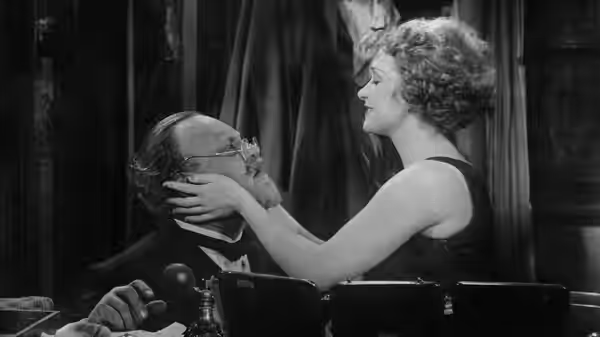
Emil Jannings plays Immanuel Rath as a man whose authority does little to help him when he wants to be liked. The awkwardness is compelling because the performance allows us to see the effort behind his dignity, and how badly he needs other people to respect it. We felt painfully embarrassed for him in the cabaret scenes; his inability to seem at ease makes amusement at his expense increasingly uncomfortable. When Emil Jannings pushes harder, however, the acting begins to tell us too firmly how much pity is required.
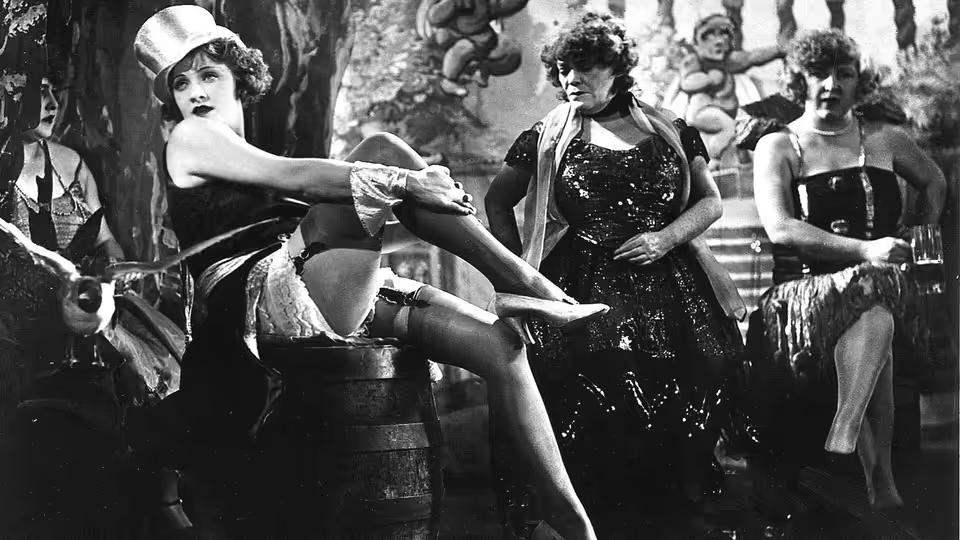
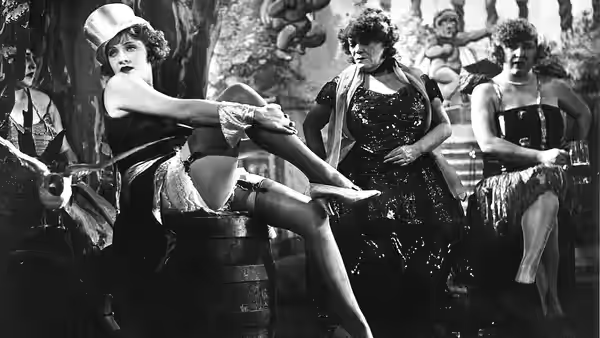
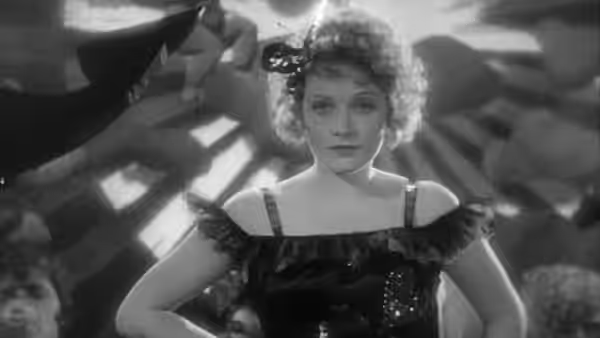
Marlene Dietrich is less insistent, and more persuasive. Her singing and her playful manner give Lola Lola a life that does not depend on the professor being present to witness it. She can seem casually cruel without suggesting that she spends every waking moment planning someone else’s misery. The performance allows us to consider that she might simply enjoy the attention, with no obligation to attach the importance to it that Rath does.
The cinematography by Günther Rittau and Hans Schneeberger is most effective in the cabaret, where the singer commands our attention even when the professor’s discomfort might seem more urgent. Her attraction has to be convincing for the story to work, and the images make it so. Friedrich Hollaender’s music gives Marlene Dietrich something to do besides receive an admiring gaze: she sings, works and holds an audience. The audible contrast between stage performance and backstage life also helps keep the cabaret from becoming merely somewhere for a professor to lose his composure.
The editing by Sam Winston and Walter Klee gives the performances time, although the pace can become heavy. At 108 minutes, the film sometimes dwells on an emotional point after the actors have already made it clear. We understand the professor’s vulnerability without needing every passage to press upon it quite so firmly. The slower stretches are especially noticeable because Marlene Dietrich can establish a mood with so little apparent effort.
Judged as a melodrama, the film has good reason to make desire and shame larger than ordinary conversation would allow. Our reservation is about how readily the professor’s suffering can encourage us to treat a woman’s independence as cruelty. The film becomes more interesting whenever that judgement feels questionable, and Marlene Dietrich repeatedly gives us reasons to question it. Her Lola Lola does not seem obliged to explain herself simply because Rath has become infatuated.
There is enough here to reward attention beyond the central attraction, particularly in the uncomfortable changes in our sympathy for Rath. Emil Jannings can overstate his distress, but he also makes it difficult to dismiss a man whose need for respect has become so painfully visible. We recommend it with some tolerance for deliberate pacing and emphatic acting. If tonight calls for a reassuring romance, choose something else.