Film review

The Bourne Legacy

2012 · Directed by Tony Gilroy · 2h 15m · MPA PG-13

In a sentenceJason Bourne is elsewhere, so the grown-ups sit in an office for two hours and talk about him

ActionThriller

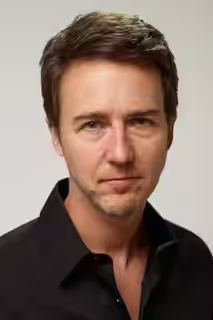
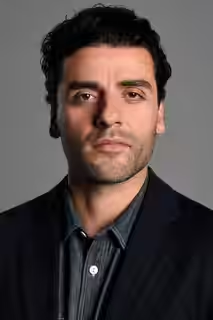
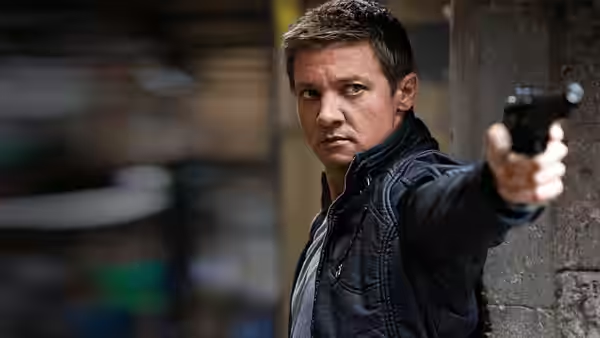
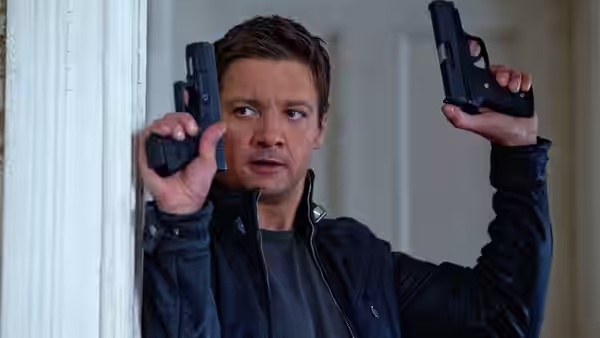
Aaron Cross (Jeremy Renner) is alone in the Alaskan wilderness, swimming frozen rivers and counting his pills. He is an agent of Outcome, a programme that sharpens its people chemically, and he is heading for a cabin where another Outcome man (Oscar Isaac) is waiting out the cold. In Washington, Jason Bourne has put Treadstone on the front page, and a programme manager called Byer (Edward Norton) decides Outcome must be shut down along with everyone in it. A drone finds the cabin. In a Maryland laboratory, Dr. Marta Shearing (Rachel Weisz), who has spent years dosing agents she has never met, watches a colleague lock the doors and take out a gun. Cross wants his medication and a way out; Byer wants nobody left to ask about either.

Plays from YouTube when you press play; nothing loads from them until then.

Fi1m review

Tony Gilroy has the actors, the cameraman and a good final chase, and he spends the first ninety minutes explaining a programme nobody asked about. Renner and Weisz make it watchable; the film around them is a briefing with a motorbike chase attached.

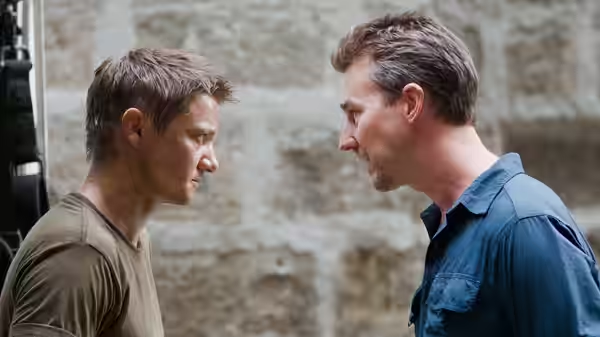
Tony Gilroy wrote all three of the Bourne films that starred Matt Damon, and The Bourne Legacy is what he made when Damon and director Paul Greengrass did not come back for a fourth. His answer is a sideways step: keep the world, lose the man. Aaron Cross (Jeremy Renner) belongs to Outcome, a programme running alongside Treadstone, and when Bourne’s exposure of Treadstone threatens to bring everything else down with it, Byer (Edward Norton) starts killing his own people to keep it quiet. That is a workable idea for a thriller. The trouble is that Gilroy has decided to explain it, at length, before anything else is allowed to happen.

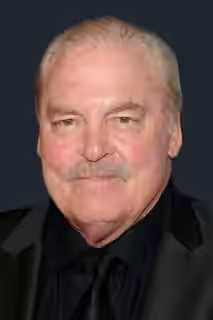
The first hour crosscuts between Cross in Alaska, Marta Shearing (Rachel Weisz) in her laboratory and a great many men in shirtsleeves in rooms full of screens. Gilroy is good at rooms; Michael Clayton was mostly rooms. Norton plays Byer as a tired administrator who believes what he is doing is necessary and takes no pleasure in it, and Stacy Keach, as Turso, gets to be blunt where Norton is careful. But the dialogue keeps circling the same four facts: there is a programme, there are pills, the pills are dangerous, the programme must go. We were bored, and then we were irritated about it, because we could see how much talent was waiting outside the door.

When the film does go outside, Robert Elswit shoots it in clean wide frames rather than the shaken handheld the series became known for under Greengrass. The Alaskan passages have real cold in them: Cross hauling himself out of a river, a cabin under grey light, a drone circling over white ground. John Gilroy cuts these sequences with patience, holding a shot long enough for us to read the landscape before something arrives in it. It is a different idea of how a Bourne film should look, and a defensible one.

The scene in Marta’s laboratory is the best thing in the film, and we will say only that it comes early and that it is horrible. A colleague locks a door. The camera stays with Weisz’s face as she works out what is happening, and James Newton Howard’s score does almost nothing, which is the right call. We were frightened in a way the chases never manage, because for once nobody on screen has been trained for what is in front of them. It shows Gilroy can do this when he lets the talking stop.

Renner and Weisz keep the middle upright. Renner plays Cross as rougher and chattier than Bourne, quick with a sour joke and plainly worried about his own head, and he sells the odd premise that the hero’s overriding goal is a refill. Weisz, given a scientist who has spent years dosing people she never met, does the guilt without speeches. Their scenes together in her house and on the road are the warmest in the film, and if Gilroy had trusted them with more of the running time he would have a better picture. Oscar Isaac has one good scene in a cabin. Joan Allen, David Strathairn, Scott Glenn and Albert Finney turn up for a line or two each and serve mainly to remind you of films you liked more.

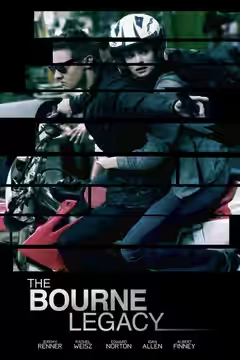
Then Manila. The motorbike chase through its streets is long, fast and staged with real skill, Elswit low behind the wheels and John Gilroy cutting on the movement. Kevin Thompson’s production design is at its best here, in a city of concrete, tin and traffic pressed close enough to touch. It is what the whole film has been saving up for. It is also a good deal longer than it needs to be, and by its last minutes we had stopped feeling anything except a mild wish for it to finish. At 135 minutes the film runs the length of a Bourne picture with about half the action of one.

Against the series’ own standards it is the weakest of the four, and against Gilroy’s own it is a script that would have been shorter if someone else had been directing it. The reviews so far are split down the middle, and we can see both halves. If watching Edward Norton run a meeting is your idea of an evening, and there are evenings for that, the first hour is for you. Everyone else will want one of the Damon three.

Critical consensus AI synthesised

51
Positive
5
Mixed
8
Negative
9

The reviews split almost evenly, with more negative notices than positive and a large middle ground of mild disappointment. Where critics agree, it is on the cast: Jeremy Renner is widely credited with a committed, rougher lead performance, and Rachel Weisz is singled out alongside him for keeping the film human. The Manila motorbike chase near the end is the one set piece named again and again as the film doing what the series promises.

The complaints cluster just as tightly. Most critics find the film weighed down by exposition about the agency’s inner workings, with too little action and a plot that leans heavily on the previous trilogy; the absence of Matt Damon is felt throughout. The spread is wide: the Los Angeles Times calls it an exemplary thriller worthy of its predecessors, while The Telegraph finds it overlong and close to parody. The warmest notices come from American outlets; the British press is largely unimpressed.

Los Angeles Times
9 August 2012 · Kenneth Turan
85*

The critic calls it an exemplary espionage thriller that lives up to its predecessors, praising its complex plotting, resonant emotional moments, and impeccable cast including Renner, Weisz, and Norton. Gilroy expands the Bourne universe effectively while maintaining the franchise's cool intelligence.

Read the full review →
Screen Daily
6 August 2012
85*

Swapping in Renner for Damon and expanding the narrative to a parallel story, the film delivers smart action kicks as a fantastic, well-constructed piece of pop entertainment with an air of erudite emotional remove. Strong performances root and elevate it, with mystery, danger, scheming, and action in balanced order.

Read the full review →
Film Comment
10 August 2012 · John Wildman
70*

The critic notes that the film works against lowered expectations for a fourth entry without Matt Damon, crediting Gilroy's direction and Renner's charismatic lead performance alongside Weisz. It delivers grounded acting and adrenaline-fueled action while keeping the franchise's spirit alive as an effective bridge.

Read the full review →
Radio Times
★★★ · Alan Jones
60

After a convoluted opening that confusingly links to the earlier films, the director picks up the pace in this smaller-scale but well-crafted thriller. Highlights include a tense shoot-out and a motorbike chase finale through Manila's streets.

Read the full review →
The New Yorker
6 August 2012 · David Denby
60*

The critic finds the film enjoyable with strong set pieces like the motorcycle chase but notes it lacks the continuous momentum of prior entries and feels more conventional. Without Matt Damon, the series loses much of its soul and emotional depth despite Renner's capable performance.

Read the full review →
Vulture
10 August 2012 · David Edelstein
60*

The film has a botched opening, limp ending, and uneven action but delivers a paranoid rush in the middle, particularly through one well-executed sequence and Rachel Weisz's performance. It leans on franchise familiarity for its appeal despite cynical execution.

Read the full review →

Cast

Awards

SAG Awards, 2013

Nominated
Outstanding Performance by a Stunt Ensemble in a Motion Picture

If you liked this, try…