Damon and Greengrass return after nine years with two of the best chases in the series and a story that has nowhere left to go. The Athens riot is worth the evening on its own; the rest is capable people going through familiar motions.
Nine years after The Bourne Ultimatum, and one Jeremy Renner detour later, Matt Damon and Paul Greengrass have come back to the man with the memory problem. The question hanging over Jason Bourne is whether there was anything left for him to find out. The film’s answer is a file about his father, a villain in a good suit talking about privacy, and two chases of real quality. It is a good action film and a thin Bourne film, and the two facts are related.
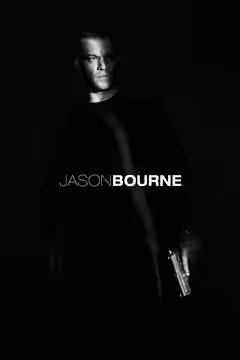
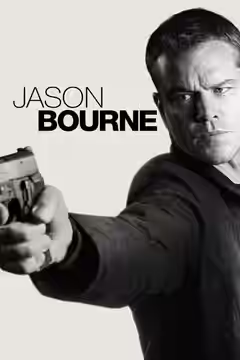
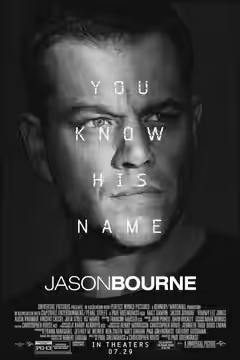
Greengrass and his editor Christopher Rouse wrote it together, and the script follows the old pattern to the letter: a hack, a leak, a meeting in a crowd, a room in Langley full of people watching it all on screens. The difference is that The Bourne Identity (2002) and The Bourne Supremacy (2004) had a man trying to work out who he was, and the answer changed what he did next. Here Bourne already knows his name; the poster says so. What he is handed instead is a piece of family history, delivered in a few grainy flashbacks, and Damon greets each revelation with the same set jaw. He is on screen nearly all the time and speaks, by our rough count, less than anyone else in the cast. In 2002 that silence was a mystery. Here it looks like a man who has been told to keep the plot moving.
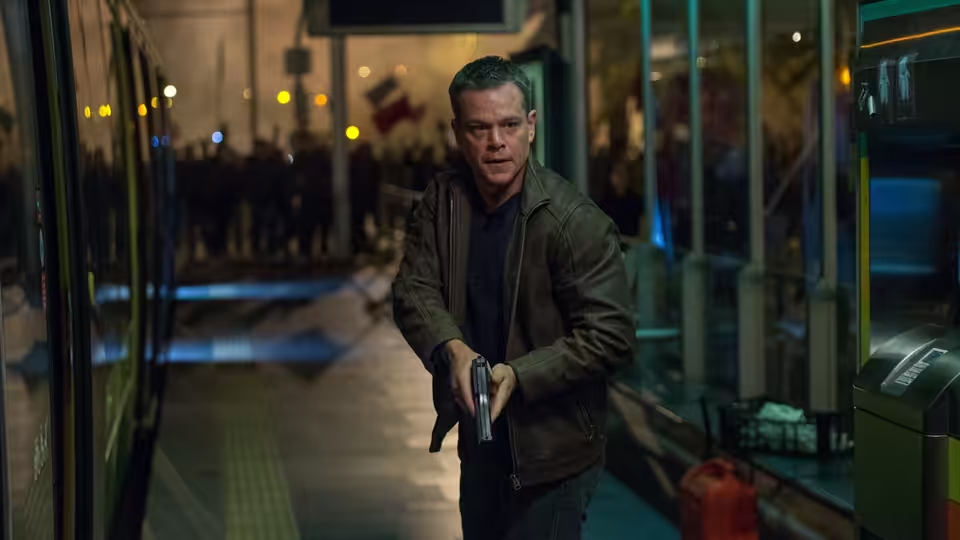
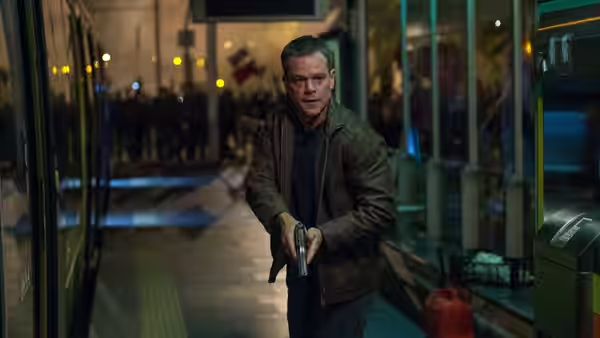
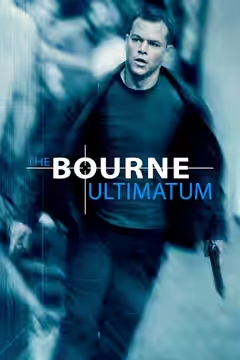
Athens is the reason to see it. Bourne and Nicky Parsons (Julia Stiles) try to meet in a square that is on fire, with riot police on one side, petrol bombs on the other, and the Asset (Vincent Cassel) on a rooftop with a rifle and the CIA in his ear. Barry Ackroyd shoots it handheld from inside the crowd, so the smoke and the sparks are in the lens with the actors, and Rouse cuts it so that we always know where three people are in relation to each other, which is harder than it looks and is the thing Greengrass does that his imitators cannot. We were properly gripped for twenty minutes, sat forward, the way we were in the Waterloo sequence of Ultimatum. It is the best passage in the film and it is over before the half-hour mark.
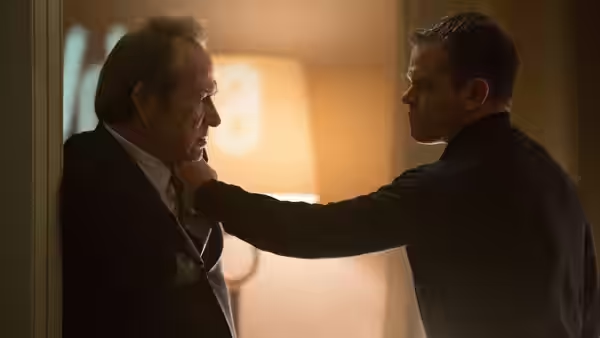
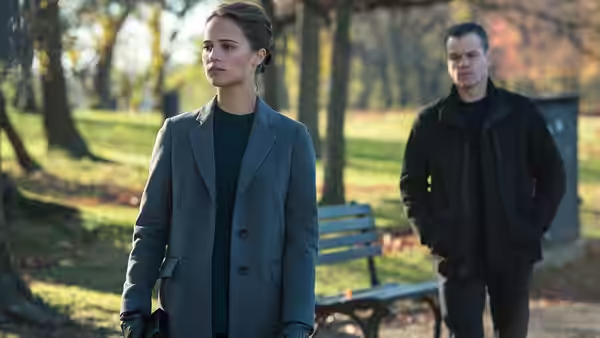
The new faces do what they can. Alicia Vikander plays Heather Lee with a stillness that reads as ambition rather than loyalty, and she is the one performer who seems to be thinking a scene ahead of the script. Tommy Lee Jones plays Dewey as a tired grandfather growling about the greater good; he could do it asleep, and it works, but the film asks him for nothing else. Riz Ahmed’s Aaron Kalloor, the tech founder whose social network has been built with agency money, is the film’s stab at the present day, and it is a fair idea sketched in two scenes and then dropped for a shootout. Cassel is given a grudge, a rifle and no line we could quote back.
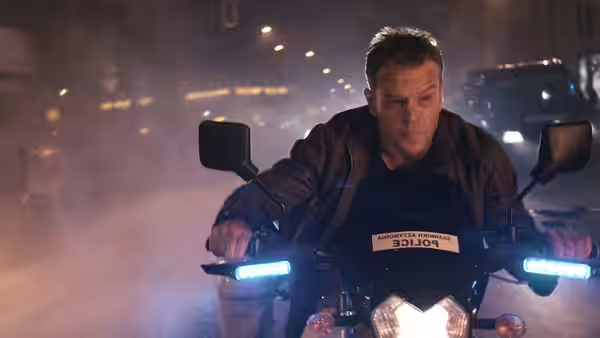
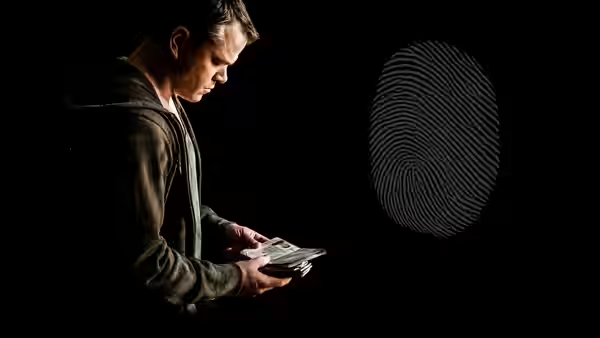
Then Las Vegas, where the Asset steals an armoured police truck and drives it down the Strip through what feels like a mile of stationary cars, flattening them one after another. It is staged with great skill. We laughed, and we do not think we were meant to. The earlier films fought in bathrooms and stairwells with a rolled-up magazine, and their point was that Bourne was smaller and cleverer than the machine chasing him. Here the machine is the show. Paul Kirby’s production design makes the same argument without meaning to: the CIA rooms are walls of monitors and blue glass, the Vegas hotel is gold and marble, and Bourne, in the grey hoodie Mark Bridges keeps him in for most of the film, looks like a man who has wandered into the wrong picture.
John Powell and David Buckley bring back the familiar pulse under the chases, and it does its job of telling us the clock is running. There is no new tune. That is true of the film generally.
Against the series it is the weakest of the four with Damon in it, and a long way better than The Bourne Legacy (2012), which is a low bar and a real one. It runs 123 minutes and carries a 12A. See it for Athens, and for Vikander, and try to be kind about Vegas. The man in the hoodie has done all of this before, and he did it when it meant something.