Eamonn Owens makes Neil Jordan’s troubled-childhood comedy worth the discomfort. Its jaunty handling of distress can be a distraction, but the performances give us good reason to stay.
Neil Jordan’s The Butcher Boy is a good, disquieting film with a habit of enjoying its own mischief for too long. Adapting Patrick McCabe’s novel, the director and novelist build the screenplay around a troubled child’s account of his world. The difficulty is that Francie Brady can be entertaining even when his troubles should make us pause. For much of the film that tension holds our attention; occasionally the comedy carries on when we need a little quiet.
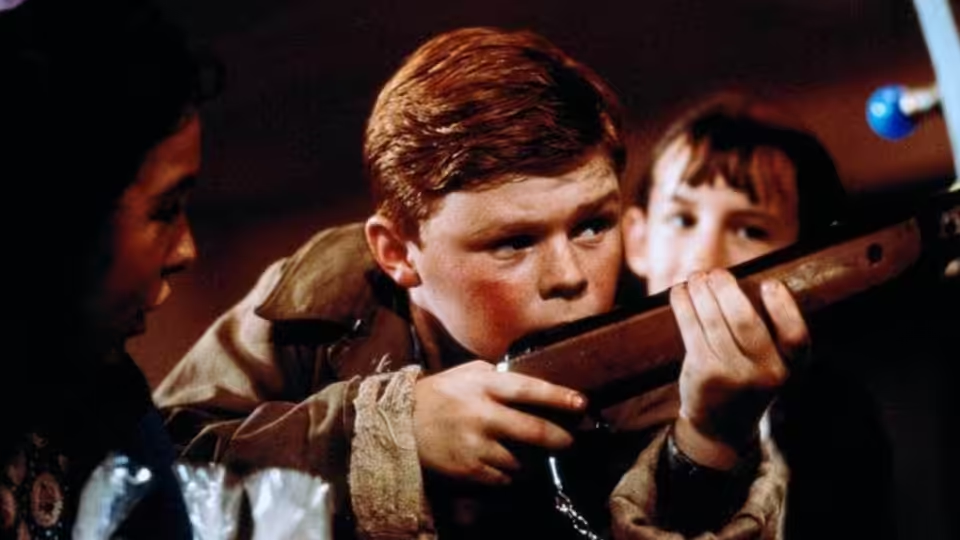
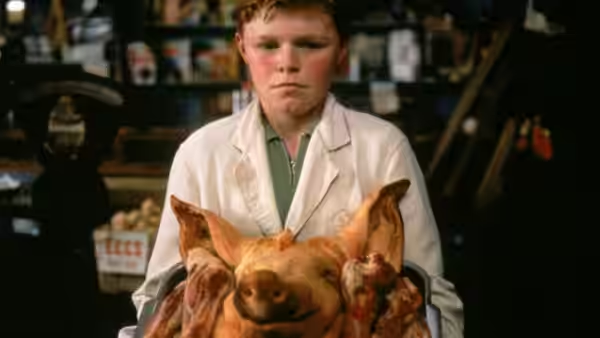
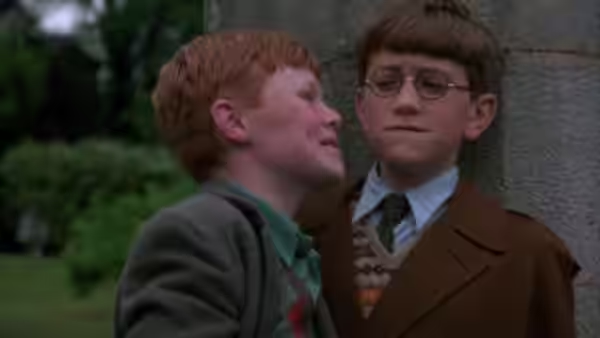
Eamonn Owens is the reason it works as often as it does. He gives Francie a conviction that makes him hard to dismiss, and the performance never settles into mere cuteness. We laughed at Francie’s self-assurance, then felt uneasy about how readily we had taken to him. His energy makes us want to keep watching, which matters when the film asks for attention that a more dutifully solemn performance might have lost.
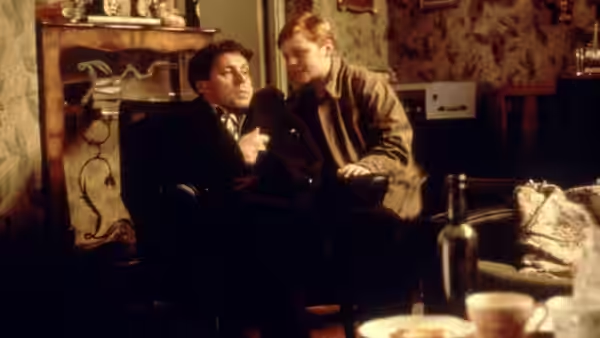
Stephen Rea’s Da Brady gives the film weight without forcing it into a different style. There is an unhappiness in the performance that the comedy cannot quite clear away. Fiona Shaw’s Mrs. Nugent is sharply drawn, although the narrowness of Francie’s perspective can make an adult seem fully explained simply because he has decided what to think of her. Both performances matter because they give us something to attend to beyond the boy’s account.
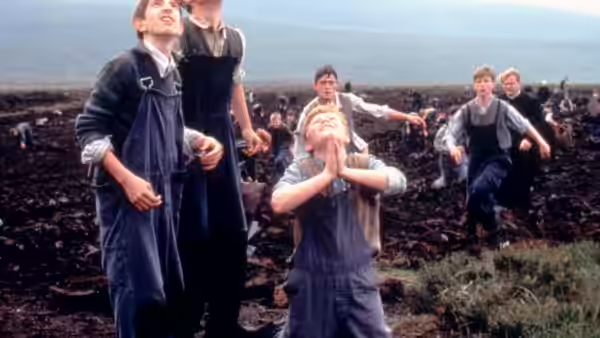
Adrian Biddle’s cinematography makes the grotesque inviting enough to sustain that viewpoint, without making the film feel weightless. Anthony Pratt’s production design helps give the adults’ world a presence of its own. That solidity is useful in a story so closely attached to one child’s perspective: there must be something beyond him, even when he absorbs most of our attention. The work is assured, although its polish occasionally softens the discomfort.
Tony Lawson’s editing keeps the comedy moving, but it also exposes the limitation of the film’s jauntiness. There are stretches when a change of emotional pace would help more than continued momentum. Elliot Goldenthal’s music is effective in sustaining unease, less so when it seems to encourage the film’s appetite for mischief. Sometimes we need a moment to consider Francie’s experience without being hurried towards the next source of amusement.
A coming-of-age film need not provide a reassuring explanation of its child, and this one is right to resist that obligation. The screenplay is strongest when it allows Francie to remain difficult without supplying an adult correction. Its weakness is the tendency to keep him entertaining at almost any cost. We can accept a child’s distorted judgement without needing every unsettling moment to arrive with the same comic energy.
This is worth an evening for viewers willing to feel implicated in their own amusement. Anyone wanting a gentle childhood recollection should look elsewhere, and anyone impatient with a relentlessly lively telling may find the tone wearing. Go for the performances, and allow yourself to stop laughing before the film does.