Niels Arden Oplev’s crime thriller is worth seeing for Noomi Rapace and Michael Nyqvist, whose rapport keeps a familiar mystery engaging. Its treatment of violence against women deserves more scepticism than its detective work.
Niels Arden Oplev’s The Girl with the Dragon Tattoo is a good crime thriller, made worth the time by its central pair. Adapted from Stieg Larsson’s novel by Nikolaj Arcel and Rasmus Heisterberg, it has the pleasures of a whodunit and the occasional impatience to get its people into position for the next discovery. Noomi Rapace makes that machinery considerably less noticeable whenever Lisbeth Salander is on screen. We recommend it for her and for the partnership with Michael Nyqvist, with a firm warning about the violence.
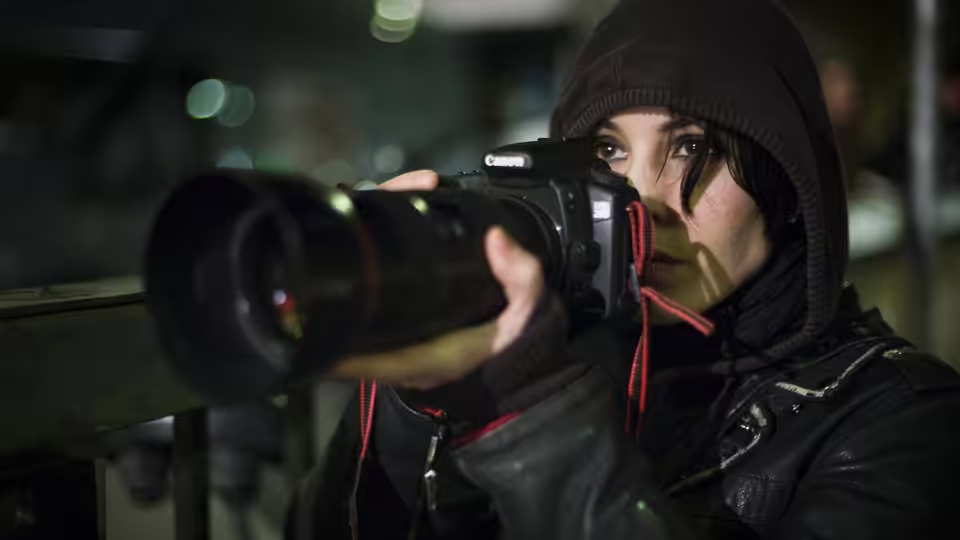
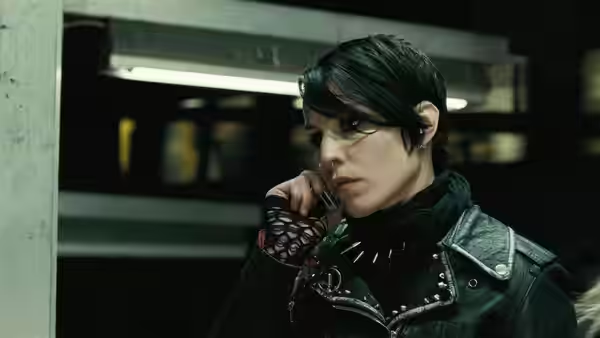
Noomi Rapace plays Lisbeth as an angry, resourceful woman who can still be hurt. We found her vulnerability moving because the performance never asks us to forget her anger in order to sympathise with her. There is a risk with such a character that every difficulty becomes another demonstration of how formidable she is, until concern gives way to waiting for the next display of competence. Noomi Rapace keeps us concerned for Lisbeth even when the writing seems chiefly interested in what she can do.
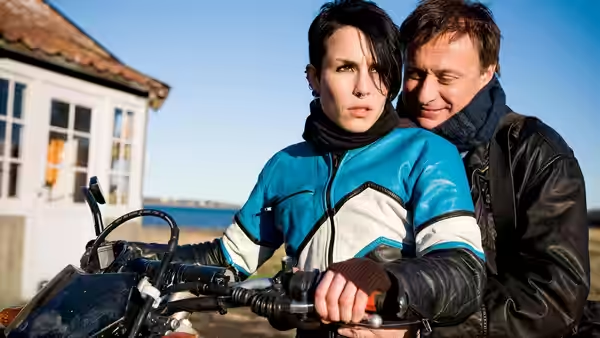
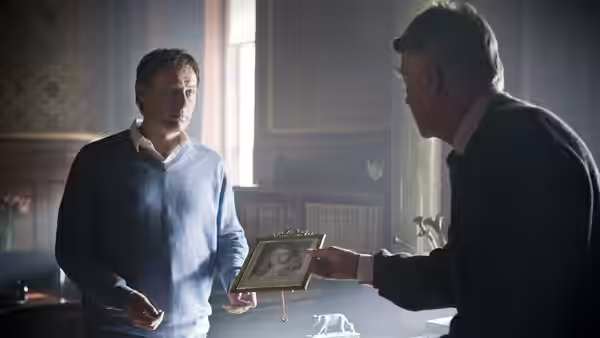
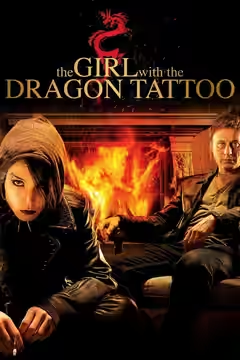
Michael Nyqvist’s Mikael Blomkvist is essential to that effect, even if he attracts less attention. His performance gives Noomi Rapace someone to work with, and their rapport supplies an interest that does not depend on the next answer to the mystery. We enjoy their scenes because neither performer seems to be competing to make the stronger impression. For a crime film with so much else to accommodate, it is sensible to leave room for two people to hold our attention without another complication being introduced.
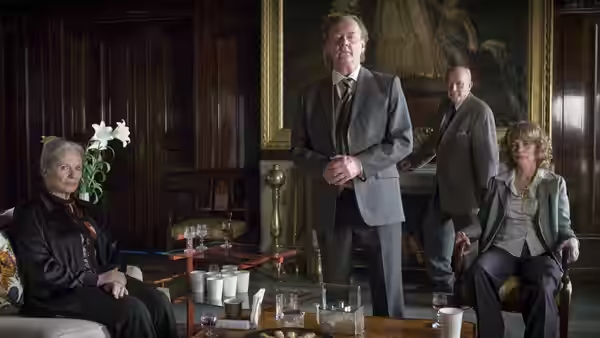
Eric Kress’s cinematography sustains the bleak atmosphere without making the images the only reason to keep watching. Niels Sejer’s production design contributes to that severity, giving the drama a suitably unwelcoming setting. The visual restraint works because the story supplies enough ugliness of its own. Niels Arden Oplev is generally sensible about letting the cast carry the tension, though some of the more emphatic thriller effects are less persuasive.
Anne Østerud’s editing keeps the investigation understandable, although a little more compression would have helped. At 152 minutes, the film has stretches in which we remain interested without feeling much pressure to discover what comes next. Jacob Groth’s music reinforces the gravity of the material, but it contributes less to the tension than the performers do. The screenplay by Nikolaj Arcel and Rasmus Heisterberg holds our attention through these passages, even when its more familiar turns seem to take too long to arrive.
The more serious reservation concerns the violence against women. The film recognises misogyny as something its characters live with, yet some scenes of brutality press the point harder than they need to. We were horrified by that violence, and sometimes troubled by the insistence with which it is presented. Niels Arden Oplev gives Lisbeth’s anger sufficient weight, but there are moments when the thriller seems too interested in making us recoil.
Against the standards of the crime thriller, this is strongest in its performances and fairly conventional in the mechanics of its mystery. The characters remain worth following through the less surprising stretches, and that is enough to justify the length for us. An 18 certificate is worth taking seriously here, particularly if violence against women rules a film out for the evening. Choose it for the two leads, and do not mistake the recommendation for a promise of comfortable viewing.