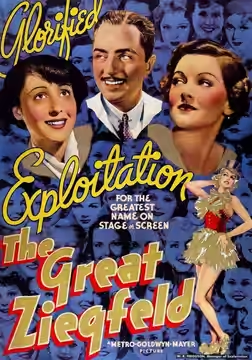
Robert Z. Leonard’s three-hour life of Broadway’s showman is lavish where it counts and slack everywhere else. The ‘A Pretty Girl Is Like a Melody’ number and Luise Rainer’s telephone call are worth the evening; much of what surrounds them is not.
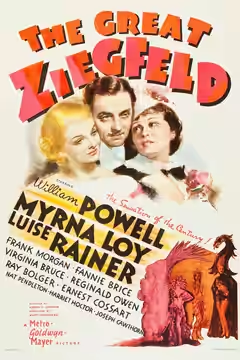
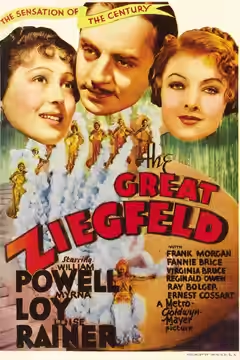
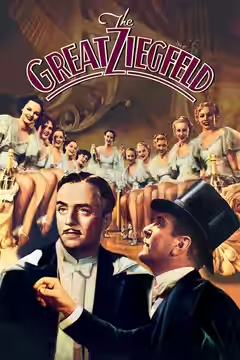
Florenz Ziegfeld put more women on more staircases than any man in the American theatre, and Robert Z. Leonard’s film, produced by Hunt Stromberg from a screenplay by William Anthony McGuire, sets out to do two things. It wants to tell his life, from a Chicago midway to a Broadway with his name over the door, and it wants to put his shows on screen bigger than he could ever have built them. It manages the second. The first it gets round to when it remembers, and at 185 minutes there is a great deal of remembering to do.
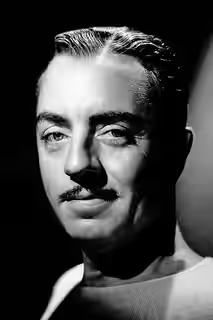
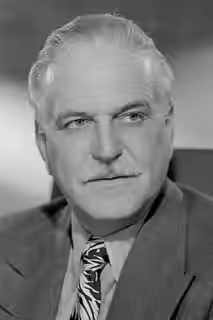
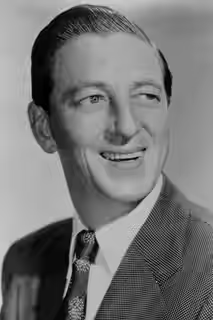
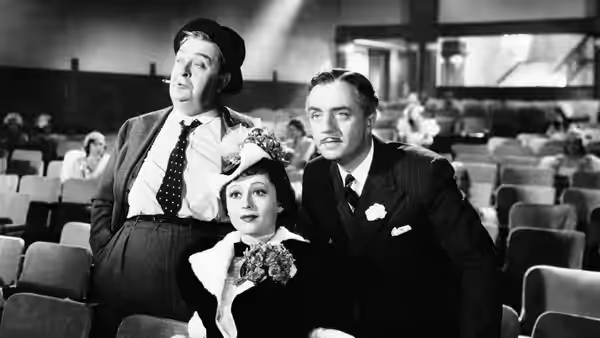
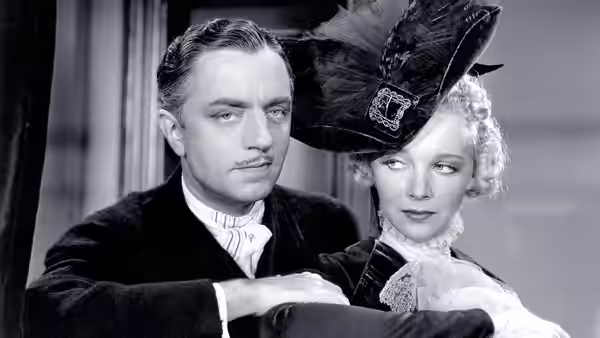
William Powell plays Ziegfeld as a man who never has money and never appears to need any, and he is the best reason to stay with the early stretch. The Chicago section, with Nat Pendleton’s Sandow flexing for the ladies while Frank Morgan’s Billings watches his own audience walk next door, is the film at its most relaxed. Morgan spends the picture having acts stolen from him and forgiving the thief over a drink, and his slow double-takes are worth more than most of McGuire’s dialogue. The dialogue, it should be said, is the sort where people announce their feelings to the furniture and then leave.
Luise Rainer arrives as Anna Held with a Parisian accent, a tower of curls and a wardrobe from Adrian that makes her look like something Ziegfeld has ordered rather than met. Rainer knows this and plays against it; her Anna is vain, quick to tears and shrewder than the men give her credit for. Late in the film, and we will not say where or why, she makes a telephone call in which she congratulates a man on his happiness while her own face comes apart. It moved us more than we expected, and we are honest enough to say the film had not earned it. Rainer earned it, alone, in one shot, with a receiver.
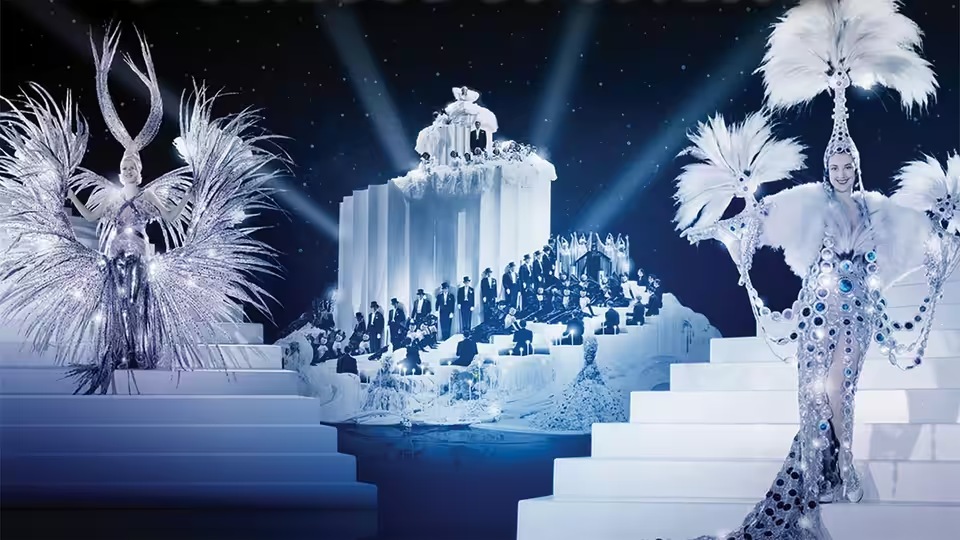
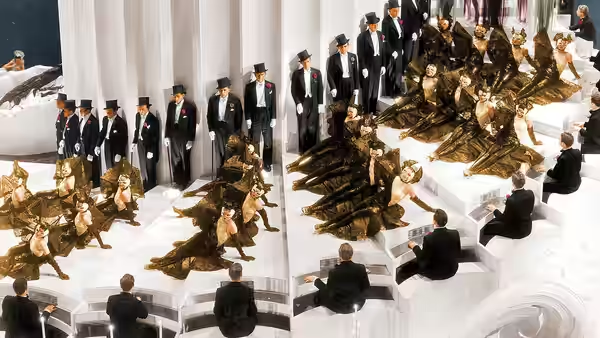
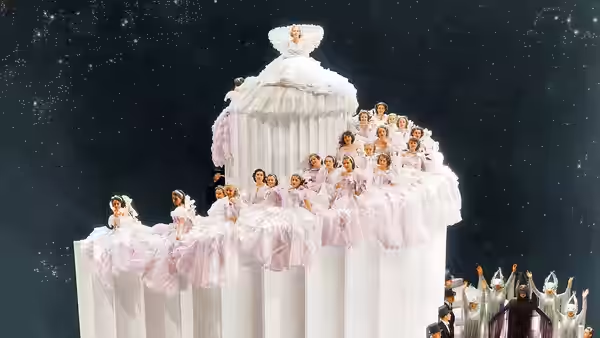
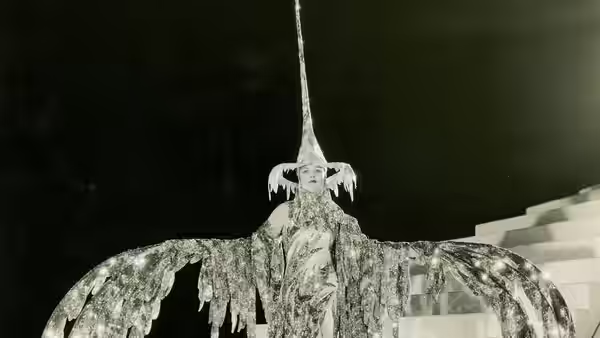
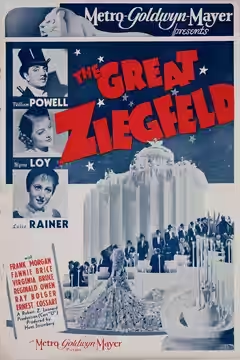
The numbers are what the money went on, and it shows. Five cinematographers are credited, Ray June, Oliver T. Marsh, Karl Freund, Merritt B. Gerstad and George J. Folsey, and the centrepiece, ‘A Pretty Girl Is Like a Melody’, is built around a set shaped like a wedding cake, a spiral of steps rising out of frame, with Dennis Morgan as the singer at its foot and what seems like the entire studio payroll draped along the tiers in Adrian’s silks. The camera climbs with them in one long movement and the curtain keeps rising to show another level. We sat up. It is the one moment in the film that makes Ziegfeld’s appeal plain without anyone having to explain it.
Fanny Brice plays herself, and her audition, in which she is hired before she has finished the song and does not quite believe it, is the funniest stretch of the three hours. Ray Bolger, also as himself, gets a dance built on falling over and standing up again. Arthur Lange’s music does its job in the theatre scenes and goes quiet and reverent whenever the story does, which is often.
The trouble is everything between the numbers. McGuire tells the life as a sequence of announcements: a show opens, a show closes, a cheque bounces, a new woman is discovered, and the film cuts from one to the next as if turning pages. Myrna Loy, who was Powell’s best partner in other films, arrives late as Billie Burke and is given almost nothing to do except be gracious about it. By the third hour we were checking our watches, and then we were annoyed at a film that could stage a wedding cake the size of a house but could not find ten minutes to cut.
The backstage musicals Warner Bros. were making in the same years had less money and far more speed. Here the biography is the interval between the spectacles, and the spectacles are the point. Watch it at home, where you can pause, and skip forward with a clear conscience when the announcements begin. It is a U certificate, and the staircase will still be there when you get back.