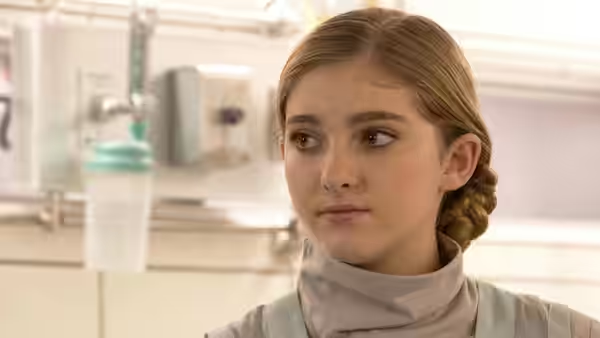
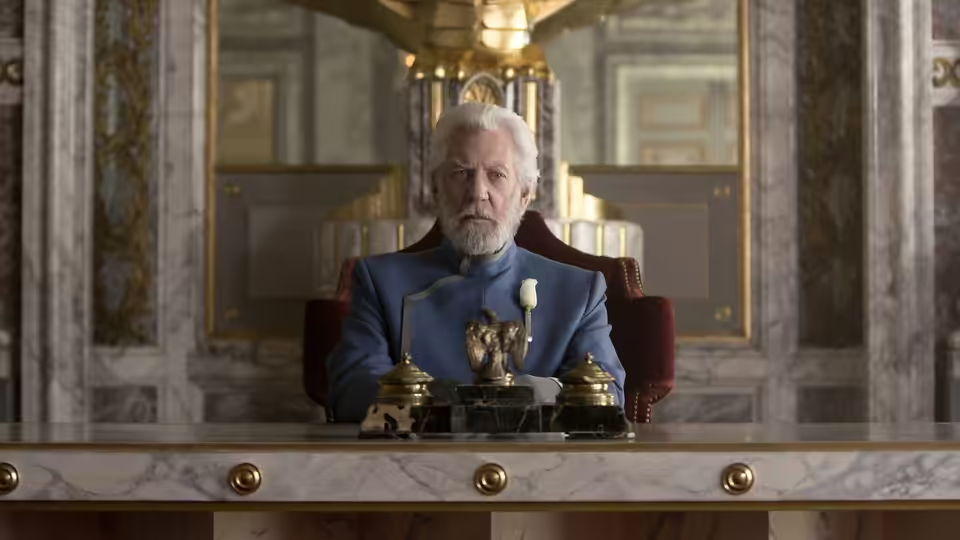
President Snow (Donald Sutherland) sits behind a desk in an ornate room
Film review

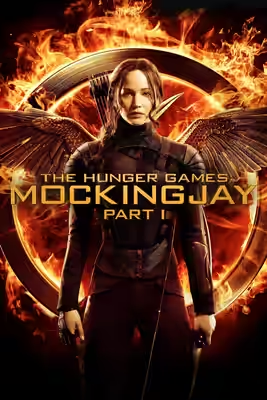
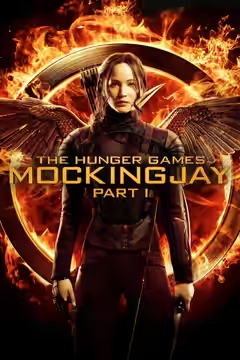
The Hunger Games: Mockingjay - Part 1

2014 · Directed by Francis Lawrence · 2h 03m · CNC 12

In a sentenceA revolution run by its marketing department, and even the marketing department can tell it is only half a film

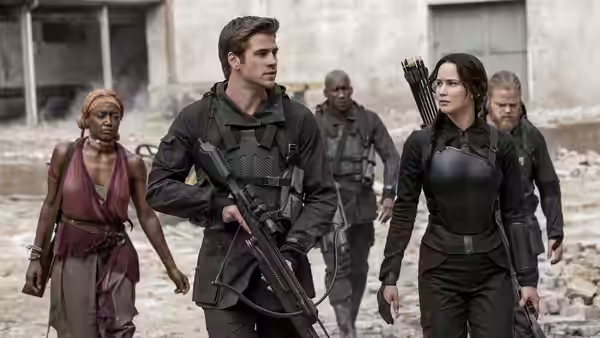
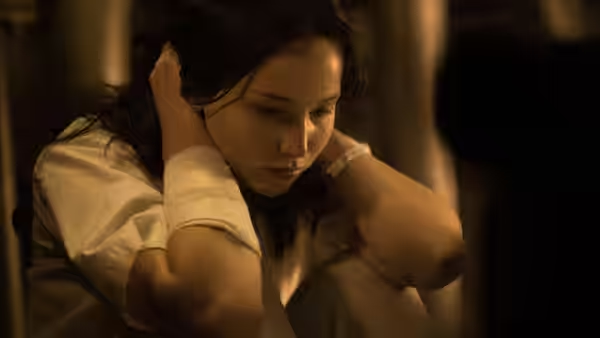
Katniss Everdeen (Jennifer Lawrence) wakes in a hospital bed deep underground in District 13, which the Capitol has long claimed does not exist. The arena is broken, District 12 has been bombed to ash, and Peeta Mellark (Josh Hutcherson) was left behind and is now a prisoner of President Snow (Donald Sutherland). President Alma Coin (Julianne Moore) runs 13 as a grey bunker of ration cards and timetables, and wants Katniss as the Mockingjay, the face of the rebellion, in filmed broadcasts that Plutarch Heavensbee (Philip Seymour Hoffman) will beam into the districts. Katniss refuses. Then she is flown over the ruins of her home, watches Peeta on Capitol television calling for a ceasefire beside Caesar Flickerman (Stanley Tucci), and names her price.

Plays from YouTube when you press play; nothing loads from them until then.

Fi1m review

The third Hunger Games film has no games in it, an interesting idea for an hour and a stalling tactic for the second. Jennifer Lawrence and Philip Seymour Hoffman keep it alive; cutting one book in two nearly kills it.

Suzanne Collins’s third book has been cut in two, and this is the half without the ending. Peter Craig and Danny Strong’s screenplay takes Katniss Everdeen out of the arena for good and puts her in a bunker, where the war is fought mainly with cameras: the rebels need a face for their broadcasts, and the Capitol already has one in Peeta. For an hour that is the sharpest idea the series has had. Then the film runs out of book, and it knows it.

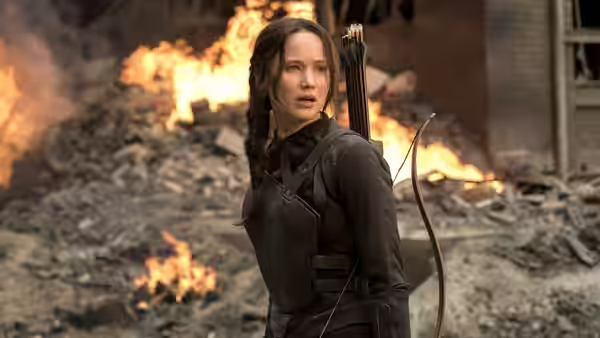
Francis Lawrence directs the bunker with care. Philip Messina designs District 13 as a place with no colour in it, concrete corridors, stencilled numbers, a canteen where everyone eats the same grey food at the same hour, and Jo Willems lights it with the flat overhead glare of a hospital at night. Bart Mueller and Kurt Swanson put the whole population in identical boiler suits, which leaves Elizabeth Banks’s Effie Trinket, down to one headscarf, with the film’s only running joke. Above ground, Willems shoots the ash of District 12 in a weak white daylight that makes it look as if it were still cooling.

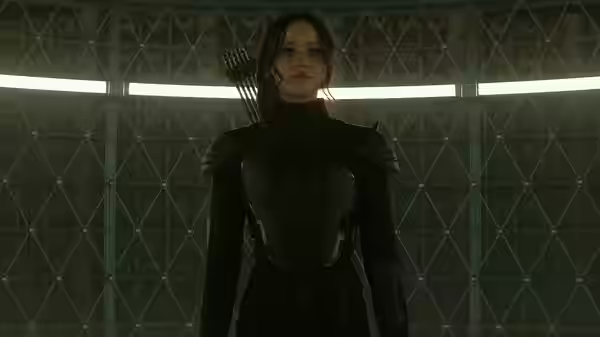
Philip Seymour Hoffman is the best thing in it. Plutarch Heavensbee, the Capitol’s old gamesmaker now running the rebels’ propaganda, is played as a television producer who has changed networks and is delighted by a good shot whichever side it serves. He gives Julianne Moore’s President Coin, pale and exact, somebody to be amused by. The first attempt to film Katniss as a revolutionary, on a studio floor with a green screen, a smoke machine and a script, is funny and then quietly damning: the series has at last admitted that its heroine was always a product. Woody Harrelson’s Haymitch, drying out in a district with nothing to drink, turns up to say so out loud.

Jennifer Lawrence plays the reluctance as something close to illness. Katniss does not want the job, cannot act, and goes grey and sick each time Peeta appears on Capitol television, and Lawrence lets the camera sit on all of it without asking for sympathy. Then, by the water in the ruins, she sings a folk song almost under her breath, and the film cuts to crowds of workers taking it up as they march on a dam. We did not expect to be moved by that and we were, badly. James Newton Howard keeps his orchestra out until the crowd has the tune, and Alan Edward Bell and Mark Yoshikawa cut the song against the march so that each carries the other.

The hospital in District 8 is the other sequence that stays. Katniss walks among the wounded, is recognised, and steps outside in time to watch the Capitol’s planes flatten the building, and we were horrified, hand over mouth. We were then a little ashamed, because the film has timed the horror to produce the speech she makes into the camera straight afterwards, and it worked on us exactly as it works on the districts. That is the film being honest about what it is. Nothing after it is as good.

The second hour is a holding pattern. Liam Hemsworth’s Gale is given more to do and there turns out to be less in him than the script needs. Josh Hutcherson spends the film on monitors, thinner each time, which is effective and gives him nothing to play. Donald Sutherland’s President Snow smiles and sends roses, and the final stretch is a rescue mission that the heroes, and we, watch on screens from the bunker. We will not describe how it ends, except to say that it does not. We were bored by the last forty minutes and then annoyed at being bored, because the first hour had earned better.

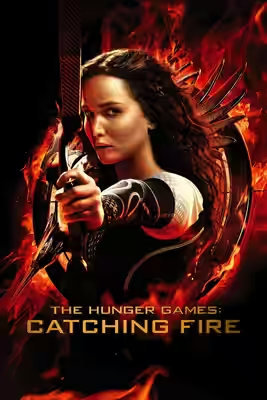
Catching Fire (2013) had an arena to deliver and delivered it. This one has none and for a while is the better film for it. Taken on its own, it is a well-made case against cutting books in two. It runs 123 minutes and carries a 12A, and it is best watched with the next part to hand, as the first half of one long evening.
Critical consensus AI synthesised

61
Positive
12
Mixed
7
Negative
6

Most critics give it a cautious pass, and nearly all of them agree on why it works at all: Jennifer Lawrence. Review after review singles out her Katniss as the thing holding the film together, even where the rest is found wanting. The second cluster of praise goes to the film’s treatment of propaganda and the selling of a revolutionary as a brand, which several reviews find sharp. Little White Lies goes furthest, calling it the best of the series so far, and The Guardian picks out Philip Seymour Hoffman’s Plutarch as the most fully rounded figure on screen.

The reservations are about the split. Most reviews say this is half a film: slow to start, short on action and left without an ending. The spread is wide. The Evening Standard thinks it simply treads water until the next instalment, Eye for Film finds the script full of holes, and The Hollywood Reporter calls it bland and needlessly stretched.

Little White Lies
19 November 2014 · 2/5/4 · Sophie Monks Kaufman
100

The critic calls it the series’ best film so far, praising its emotionally powerful, self-aware treatment of propaganda and filmmaking. She particularly singles out the moments when collective acts of solidarity become soaring emotional set pieces.

Read the full review →
Radio Times
★★★★ · Emma Simmonds
80

The critic finds the film an effective but imperfect bridge in the series, lacking the satisfying self-contained narrative of earlier instalments. The available review text singles out that lack of closure as a weakness.

Read the full review →
Time Out
11 November 2014 · ★★★★ · Cath Clarke
80

The available standfirst frames the split-book sequel as risking a derailment. The review text is unavailable, so its verdict and specific praise or complaint cannot be established.

Read the full review →
Total Film
11 November 2014 · ★★★★ · Kevin Harley
80

Harley finds the film a gutsy, considered adaptation that mostly holds up despite its slower, politically focused plot. He praises Jennifer Lawrence’s portrayal of Katniss’s fraught humanity and the way the action builds tension.

Read the full review →
Slant Magazine
19 November 2014 · ★★★/4 · Richard Scott Larson
75

The review finds the film uneven but ultimately intriguing, especially as it sets up a dramatic conclusion. It praises the film’s ambiguity about media and trust, while criticizing its simplistic view of propaganda and lack of catharsis.

Read the full review →
Film Comment
· Michael Sragow
70*

Sragow presents the film as a performance-driven and engaging first half of the finale. He singles out the performances as more compelling than the explosions.

Read the full review →

Straight answers AI written, from our review

Is The Hunger Games: Mockingjay - Part 1 worth watching?
The Hunger Games: Mockingjay - Part 1 is worth watching for anyone already following the series, and we scored it 60. The first hour, in which the rebellion is fought with propaganda broadcasts rather than an arena, is the sharpest idea the films have had; the second hour marks time until the next part. Best watched as half of one long evening.
How long is The Hunger Games: Mockingjay - Part 1, and what is it rated?
The Hunger Games: Mockingjay - Part 1 runs 2h 03m and is rated 12 by the CNC in France. It is a science fiction and adventure film.
Where can I watch The Hunger Games: Mockingjay - Part 1 in France?
The Hunger Games: Mockingjay - Part 1 is streaming on Amazon Prime Video in France, and it is also available to rent from Amazon Prime Video and Apple TV from €3.99. Availability is checked daily; the links above go straight to each service.
How violent or frightening is The Hunger Games: Mockingjay - Part 1, and is it suitable for children?
The Hunger Games: Mockingjay - Part 1 carries a 12A certificate, and its violence is mostly aftermath rather than combat: a bombed district reduced to ash, a hospital of wounded flattened from the air, a prisoner looking thinner on each broadcast. We found the hospital sequence horrifying. It suits teenagers and older children who have seen the earlier films; younger or more easily upset children may find the mood bleak.
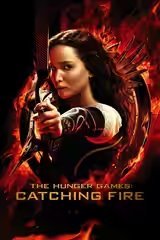
How does The Hunger Games: Mockingjay - Part 1 compare to The Hunger Games: Catching Fire?
The Hunger Games: Mockingjay - Part 1 is the stranger, slower film next to The Hunger Games: Catching Fire, which had an arena to deliver and delivered it. This one has no games at all and is, for an hour, the better film for it, before it runs out of story. Viewers who want adventure should prefer the earlier film; those interested in how a revolution is sold will find more here.
Is The Hunger Games: Mockingjay - Part 1 based on a true story or a book?
The Hunger Games: Mockingjay - Part 1 is based on the third novel in Suzanne Collins's series, not on a true story. The book has been cut in two for the screen, and this film is the half without the ending, which is its central problem. Knowing the novel is not necessary, though readers will recognise where the material thins.
Do you need to have seen the other The Hunger Games films before The Hunger Games: Mockingjay - Part 1?
The Hunger Games: Mockingjay - Part 1 does not stand alone and is a poor place to start. It opens with Katniss already pulled from the broken arena of the previous film, assumes you know who Peeta, Haymitch and Plutarch are, and ends without ending. Newcomers should begin at the first film and arrive here in order.
What should I watch after The Hunger Games: Mockingjay - Part 1?
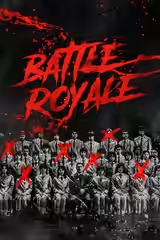
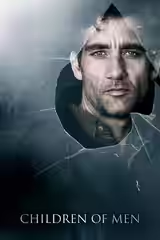
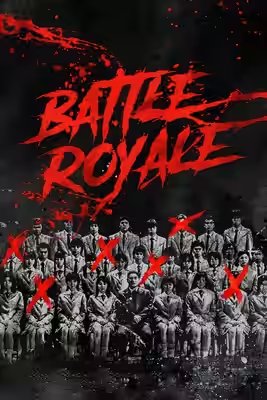
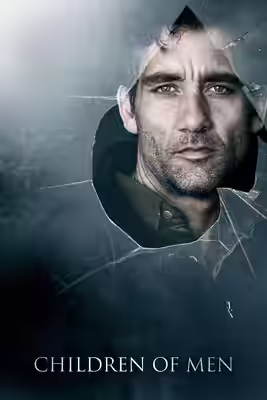
After The Hunger Games: Mockingjay - Part 1, try The Hunger Games: Catching Fire (2013, Fi1m 80): The same director with an arena to fill, and the series at its most assured. Then Battle Royale (2000, Fi1m 83): The Japanese schoolchildren-on-an-island film that got there first, and is far nastier; and Children of Men (2006, Fi1m 85): A collapsing state, a reluctant hero and a refugee camp shot like news footage.
What order should I watch the The Hunger Games films in?
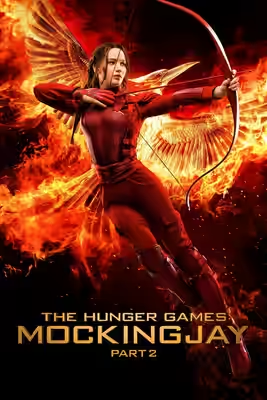
Release order is the safe choice for The Hunger Games, and it is the order our collection page lists them in. The Hunger Games: Mockingjay - Part 1 is number 3 of the 4 The Hunger Games titles on Fi1m; before it comes The Hunger Games: Catching Fire and after it The Hunger Games: Mockingjay - Part 2. The full order.

Part of · 3 of 4

The Hunger Games

4 films on Fi1m · 2012–2015 · average 68 · best The Hunger Games: Catching Fire 80

All 4 in order

Cast

Awards

Kids' Choice Award for Favorite Movie, 2015

Won
Kids' Choice Award for Favorite Movie

TV Krant Filmposter Award, 2014

Won
TV Krant Filmposter Award

If you liked this, try…

  1. The Hunger Games: Catching Fire (2013, Fi1m 80)The same director with an arena to fill, and the series at its most assured.

  2. Battle Royale (2000, Fi1m 83)The Japanese schoolchildren-on-an-island film that got there first, and is far nastier.

  3. Children of Men (2006, Fi1m 85)A collapsing state, a reluctant hero and a refugee camp shot like news footage.

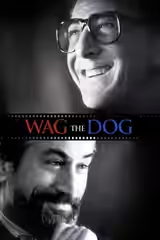
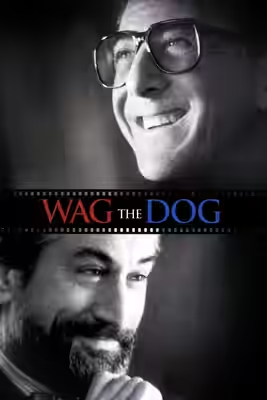
  4. Wag the Dog (1997, Fi1m 77)A producer stages a war for television; Hoffman’s Plutarch would have taken notes.

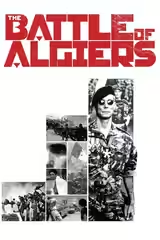
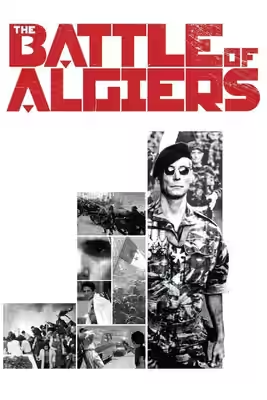
  5. The Battle of Algiers (1966, Fi1m 93)An uprising filmed as if by a newsreel crew, with no side let off the hook.

Free account

Know what to watch tonight

Two lists that know where things are streaming, collections you can share, your own score beside ours, and Discover that remembers what you have seen.

  • Want to see, sorted by what is streaming now
  • Seen, with your score out of ten
  • No adverts, ever