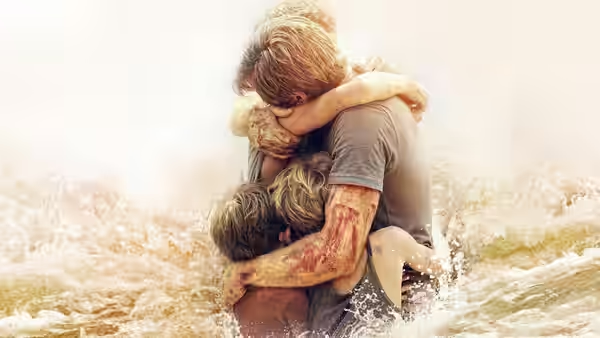
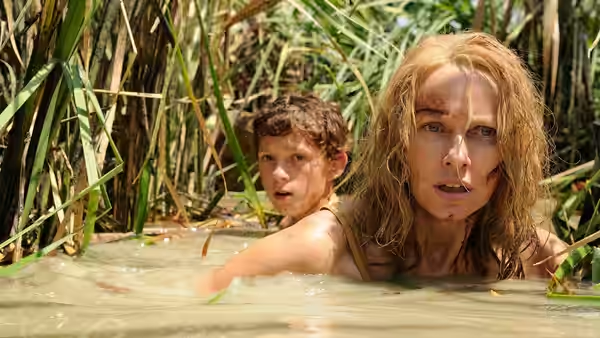
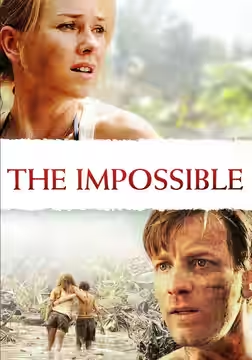
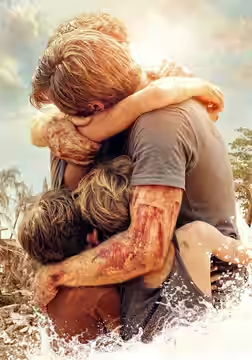
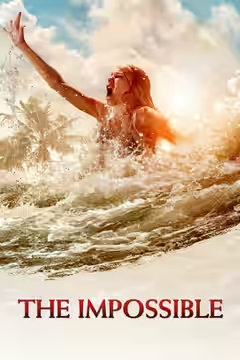
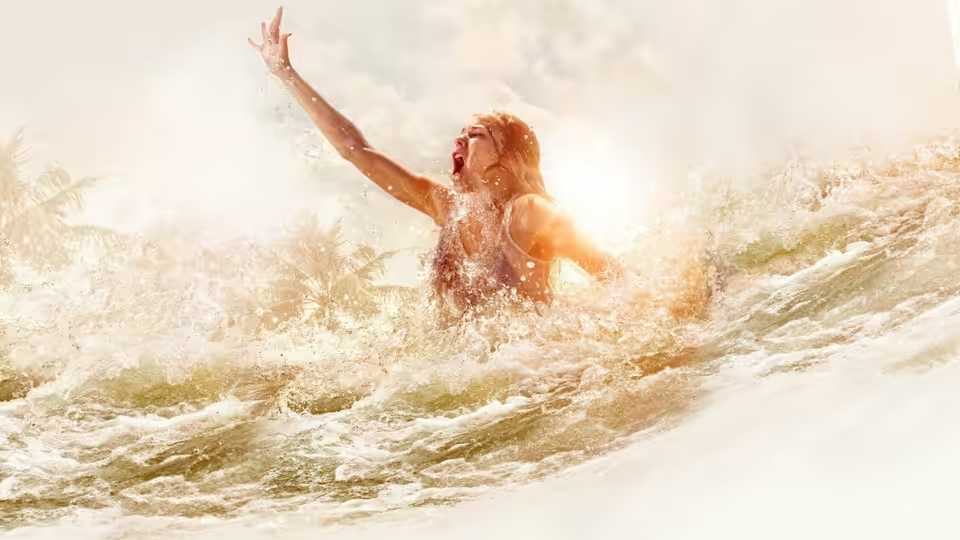
Maria Bennett (Naomi Watts) reaches upward amid surging floodwater
Film review

The Impossible

2012 · Directed by J. A. Bayona · 1h 53m · ACB M

In a sentenceNaomi Watts and Tom Holland can make us cry without the musical supervision

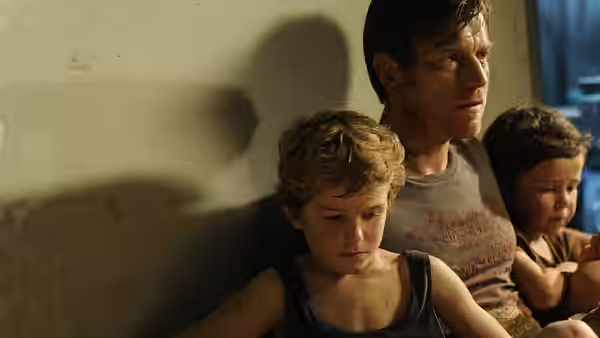
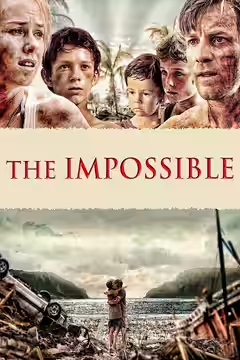
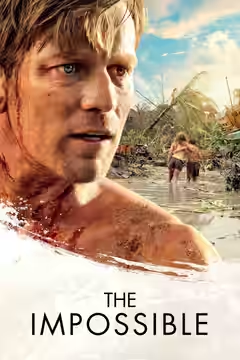
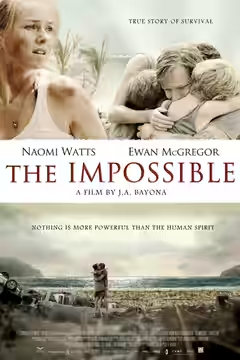
A tsunami strikes Thailand, and the Bennett family faces a struggle for survival. Maria Bennett (Naomi Watts) confronts the disaster alongside her son Lucas Bennett (Tom Holland), whose own fear competes with the need to help his mother. Henry Bennett (Ewan McGregor), Thomas Bennett (Samuel Joslin) and Simon Bennett (Oaklee Pendergast) are also caught in the catastrophe. Around them, Thai people endure the same devastation while helping the visitors. Maria and Lucas need safety, but the people they turn to are struggling with the disaster too. Staying alive requires help from strangers as well as from each other.

Plays from YouTube when you press play; nothing loads from them until then.

Fi1m review

J. A. Bayona makes the tsunami frightening and the family worth caring about. The Impossible is gripping, often moving filmmaking, weakened by insistent sentiment and its limited interest in the Thai people caught in the same catastrophe.

The Impossible is a gripping disaster thriller, with performances strong enough to survive its more insistent efforts to make us cry. J. A. Bayona brings us close to one family facing a tsunami, and the physical terror is hard to shake. Following a handful of people makes the disaster comprehensible without lengthy explanation. The trouble is that the Thai people enduring it remain so much harder to know.

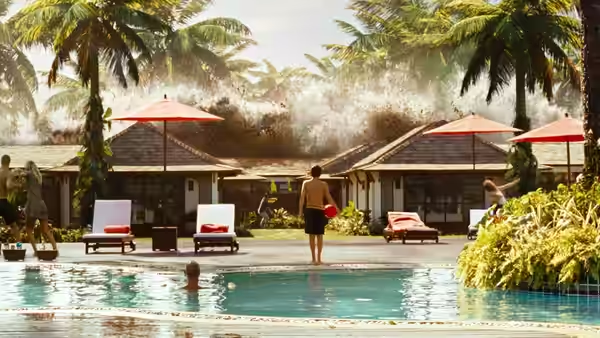
We were frightened by the tsunami sequence, because the force of the water and the battering sound leave so little room to recover. Óscar Faura’s cinematography gives the water a punishing physical presence, without making the destruction something to sit back and admire. The editing by Bernat Vilaplana and Elena Ruiz Guitart sustains that pressure without blunting each separate shock. Eugenio Caballero’s production design makes the damage feel substantial, and the combined effect is properly distressing.

Naomi Watts gives the family drama its credibility through the physical strain of her largely wordless performance. She makes Maria Bennett’s concern for her son immediate, even when the script is working hard to underline it. Tom Holland is particularly good as Lucas Bennett, allowing fear to remain visible beneath the demands being made of him. Their dependence on each other keeps the film moving emotionally when the writing becomes too eager to tell us how much human beings can endure.

Ewan McGregor also finds something convincing in a parent who cannot maintain his composure. His distress feels awkward and exposed, which helps in a film that can otherwise seem rather practised at producing tears. Sergio G. Sánchez’s screenplay gives the family relationships enough clarity for us to understand what everyone needs from everyone else. It is less sure when private suffering begins to stand for the experience of an entire disaster, and the later melodrama presses harder than these actors require.

Thai survivors receive too little attention for the film’s appeals to shared humanity to feel earned. They chiefly provide help, while the Bennetts receive the detailed fears and feelings that make characters matter. A family drama cannot follow everybody, but it can be curious about the people its family depends on. We learn too little about those doing the helping.

Fernando Velázquez’s music adds to the pressure, sometimes past the point of usefulness. The performances already communicate fear and attachment clearly, and the score’s emotional insistence can make an affecting scene feel overmanaged. The same problem troubles the later pacing: there is less trust in our response, and more time spent encouraging it. After the directness of the tsunami, these repeated appeals become tiring, though the bond between mother and son remains persuasive.

By the standards of disaster thrillers, the physical danger is unusually convincing, and the family gives us a reason to stay with it. We recommend it for the acting and the frightening clarity of the tsunami sequence, with a firm caveat about the sentiment that follows. The restricted attention to Thai suffering remains troubling even while the family’s ordeal holds us. A 12A certificate is no promise of a comfortable family evening.
Critical consensus AI synthesised

61
Positive
10
Mixed
4
Negative
7

The reviews lean modestly positive, with broad agreement on the force of the tsunami sequence and much less agreement on the drama around it. Critics repeatedly praise the effects, editing and sound for making the disaster frighteningly physical. Naomi Watts and Tom Holland attract particular praise, especially for their scenes together. Supporters find that the close attention to one family makes an immense catastrophe emotionally comprehensible without softening its horror.

The spread is wide, and the reservations concern both sentimentality and whose suffering receives attention. Several critics find the later melodrama overworked, even when the performances move them. Empire admires the physical filmmaking but questions the emphasis on Western victims over Asian victims. Slant Magazine takes that objection much further, condemning the treatment of Thai people chiefly as helpers to white survivors. The central divide is over whether the family focus brings intimacy or an unacceptable narrowing of the tragedy.

The Hollywood Reporter
10 September 2012 · festival review · Deborah Young
90*

The critic calls it an emotionally realistic and frightening disaster film, praising its sustained tension and performances. She singles out Tom Holland’s portrayal of Lucas and the tsunami sequence’s visceral impact.

Read the full review →
Los Angeles Times
20 December 2012 · Betsy Sharkey
85*

Sharkey finds the film profoundly moving and affecting, praising its balance between disaster spectacle and intimate family drama. She particularly singles out the poignant bond between Maria and Lucas and the sensitivity with which the film depicts the tsunami’s human cost.

Read the full review →
The Guardian
12 September 2012 · festival review · Damon Wise
80*

Wise finds the film affecting and powerful, praising its emotional immediacy and human scale. He singles out Naomi Watts and Ewan McGregor’s performances, especially Watts’s scenes with Tom Holland.

Read the full review →
Total Film
9 December 2012 · ★★★★ · Kevin Harley
80

Harley finds the film smart, sensitive and deeply affecting, praising Bayona’s careful balance of tragedy and hope. He singles out the tsunami sequence’s visceral force and the cast’s performances, especially Naomi Watts and Tom Holland.

Read the full review →
Variety
10 September 2012 · festival review · Justin Chang
78*

Chang praises the film as a harrowing, masterfully made disaster drama, while noting that its emotional manipulation and imposed-feeling conclusion blunt its later impact. He singles out the visceral tsunami sequence and detailed soundscape for their extraordinary physical intensity.

Read the full review →
Empire
21 August 2012 · Guy Lodge
75*

Lodge finds the film a rousing, superbly acted feat of physical filmmaking, despite its Anglicised approach to the tragedy. He praises the tsunami sequence’s effects and sound design, while criticizing the focus on Western victims over Asian victims.

Read the full review →

Straight answers AI written, from our review

Is The Impossible worth watching?
The Impossible is worth watching for its convincing physical danger and affecting family performances; we score it 72 out of 100. Naomi Watts and Tom Holland give us reason to care beyond the spectacle. We recommend it to disaster-thriller viewers who can tolerate insistent sentiment, with a further reservation about how little attention it gives Thai survivors.
How long is The Impossible, and what is it rated?
The Impossible runs 1h 53m and is rated M by the ACB in Australia. It is a drama and thriller film.
Where can I watch The Impossible in Australia?
The Impossible is streaming on Stan in Australia. Availability is checked daily; the links above go straight to each service.
How violent or frightening is The Impossible, and is it suitable for children?
The Impossible has a UK 12A certificate, but its frightening tsunami sequence makes it a poor choice for younger or easily distressed children. We found the force of the water and the battering sound properly distressing, while the family’s fear adds emotional pressure. It is better suited to teenagers comfortable with sustained danger than to a relaxed family evening.
How does The Impossible compare to The Sweet Hereafter?
The Impossible offers immediate physical terror and an emotional family survival story, while The Sweet Hereafter observes grief after catastrophe more patiently and with less reassurance. We favour The Sweet Hereafter for a quieter treatment of bereavement, though its fragmented storytelling can feel conspicuously arranged. The Impossible is the stronger choice for viewers seeking a gripping disaster thriller.
What should I watch after The Impossible?
After The Impossible, try The Sweet Hereafter (1997, Fi1m 88): For the grief after a catastrophe, observed without much appetite for reassurance. Then The Rescue (2021, Fi1m 78): A documentary about rescue that makes competence as absorbing as danger.

Cast

Awards

Academy Awards, 2013

Nominated
Best Actress

European Film Award for Best Actress, 2013

Nominated
European Film Award for Best Actress

European Film Award – People's Choice Award for Best European Film, 2013

Nominated
European Film Award – People's Choice Award for Best European Film

If you liked this, try…

  1. Aftershock (2010) · not on Fi1m yetAnother family faces a natural catastrophe, with more room for the aftermath.

  2. The Wave (2015) · not on Fi1m yetA Norwegian disaster thriller with clear geography and an equally vulnerable family.

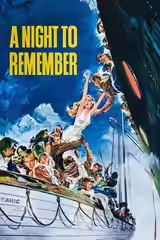
  3. A Night to Remember (1958) · not on Fi1m yetPatient, unsentimental disaster filmmaking that keeps looking beyond its most prominent passengers.

  4. The Sweet Hereafter (1997, Fi1m 88)For the grief after a catastrophe, observed without much appetite for reassurance.

  5. The Rescue (2021, Fi1m 78)A documentary about rescue that makes competence as absorbing as danger.