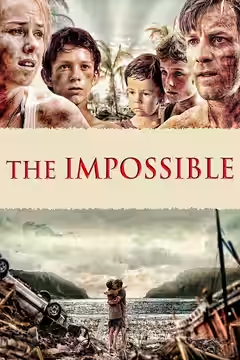
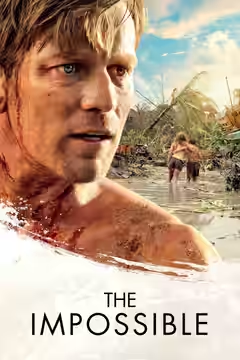
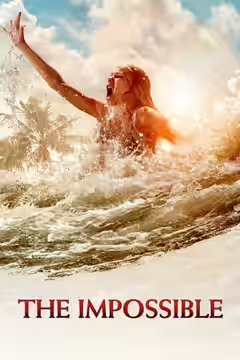
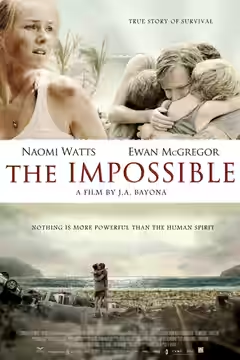
J. A. Bayona makes the tsunami frightening and the family worth caring about. The Impossible is gripping, often moving filmmaking, weakened by insistent sentiment and its limited interest in the Thai people caught in the same catastrophe.
The Impossible is a gripping disaster thriller, with performances strong enough to survive its more insistent efforts to make us cry. J. A. Bayona brings us close to one family facing a tsunami, and the physical terror is hard to shake. Following a handful of people makes the disaster comprehensible without lengthy explanation. The trouble is that the Thai people enduring it remain so much harder to know.
We were frightened by the tsunami sequence, because the force of the water and the battering sound leave so little room to recover. Óscar Faura’s cinematography gives the water a punishing physical presence, without making the destruction something to sit back and admire. The editing by Bernat Vilaplana and Elena Ruiz Guitart sustains that pressure without blunting each separate shock. Eugenio Caballero’s production design makes the damage feel substantial, and the combined effect is properly distressing.
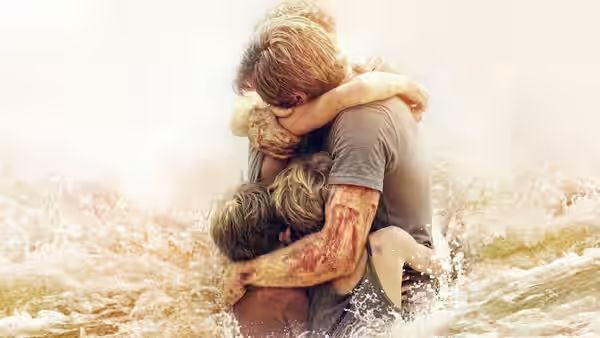
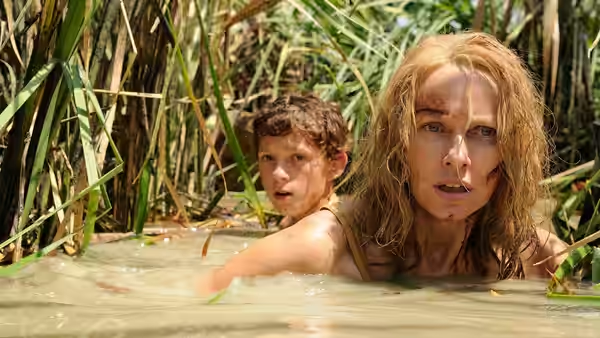
Naomi Watts gives the family drama its credibility through the physical strain of her largely wordless performance. She makes Maria Bennett’s concern for her son immediate, even when the script is working hard to underline it. Tom Holland is particularly good as Lucas Bennett, allowing fear to remain visible beneath the demands being made of him. Their dependence on each other keeps the film moving emotionally when the writing becomes too eager to tell us how much human beings can endure.
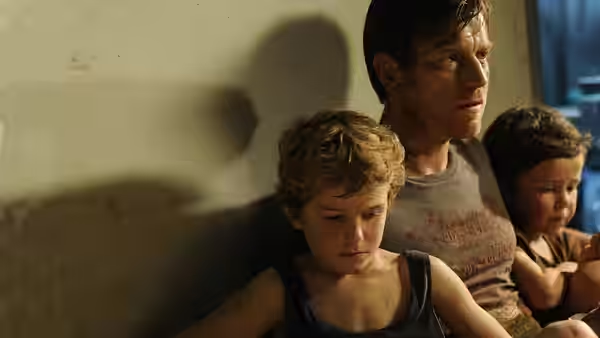
Ewan McGregor also finds something convincing in a parent who cannot maintain his composure. His distress feels awkward and exposed, which helps in a film that can otherwise seem rather practised at producing tears. Sergio G. Sánchez’s screenplay gives the family relationships enough clarity for us to understand what everyone needs from everyone else. It is less sure when private suffering begins to stand for the experience of an entire disaster, and the later melodrama presses harder than these actors require.
Thai survivors receive too little attention for the film’s appeals to shared humanity to feel earned. They chiefly provide help, while the Bennetts receive the detailed fears and feelings that make characters matter. A family drama cannot follow everybody, but it can be curious about the people its family depends on. We learn too little about those doing the helping.
Fernando Velázquez’s music adds to the pressure, sometimes past the point of usefulness. The performances already communicate fear and attachment clearly, and the score’s emotional insistence can make an affecting scene feel overmanaged. The same problem troubles the later pacing: there is less trust in our response, and more time spent encouraging it. After the directness of the tsunami, these repeated appeals become tiring, though the bond between mother and son remains persuasive.
By the standards of disaster thrillers, the physical danger is unusually convincing, and the family gives us a reason to stay with it. We recommend it for the acting and the frightening clarity of the tsunami sequence, with a firm caveat about the sentiment that follows. The restricted attention to Thai suffering remains troubling even while the family’s ordeal holds us. A 12A certificate is no promise of a comfortable family evening.