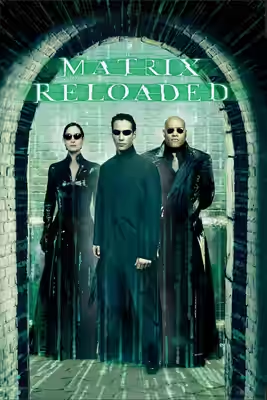
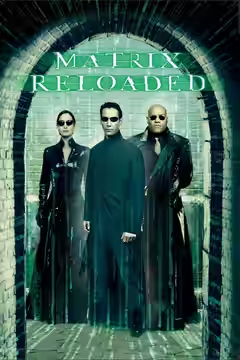
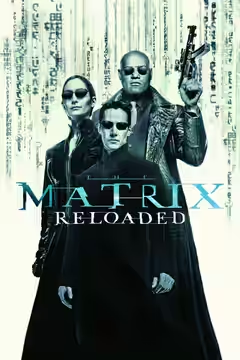
The Wachowskis’ sequel contains two action sequences that were worth the four-year wait and a script that stops every twenty minutes for a speech about choice. The fights are better than the speeches, and there are more speeches.
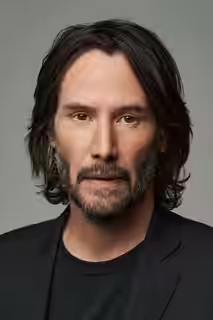
Four years after The Matrix (1999), the Wachowskis return with a sequel. The job this time is to widen the world: show us Zion, the last human city, explain what the machines want, and tell us whether Neo (Keanu Reeves) really is the One. The film does the first of those well, the second at great length, and the third it declines to answer. It is a 138-minute action film with two superb sequences and about forty minutes of talk.
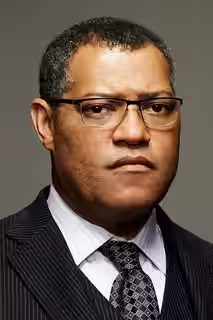
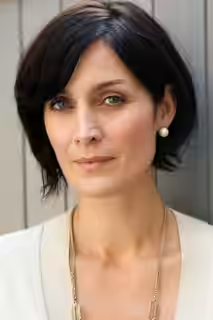
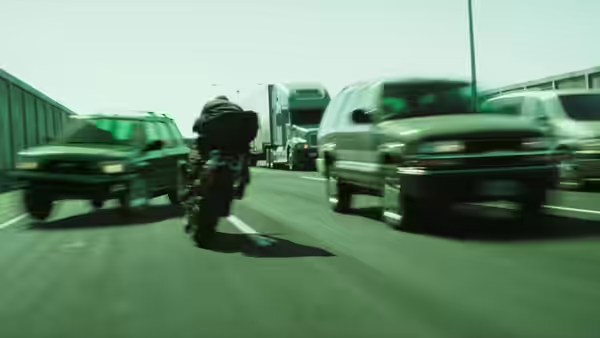
The motorway chase is the thing people remember. Trinity (Carrie-Anne Moss) rides a motorbike against the traffic with the Keymaker (Randall Duk Kim) on the pillion; Morpheus (Laurence Fishburne) fights an agent on the roof of a moving lorry with a sword; cars fold under other cars. Bill Pope shoots it in hard daylight, so the metal looks heavy, and Zach Staenberg cuts it so we always know where everyone is, which is rarer than it sounds. We sat forward and stayed there until it was over.
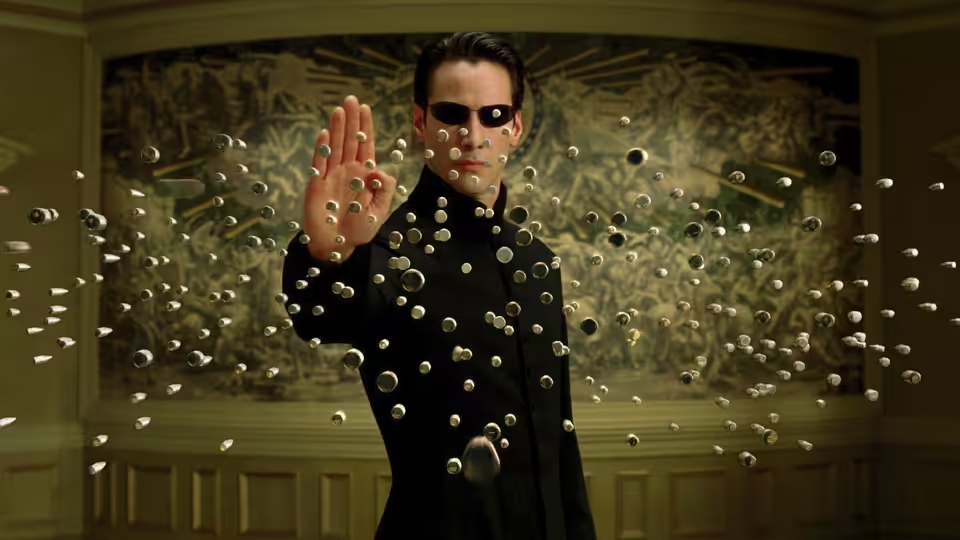
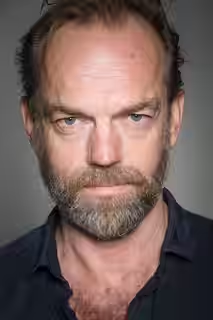
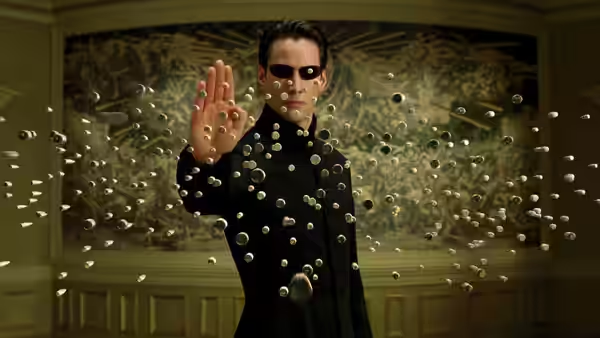
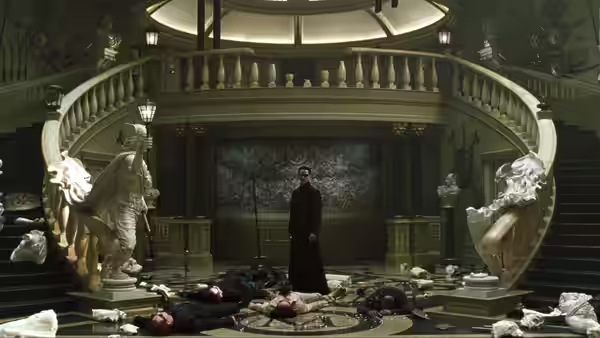
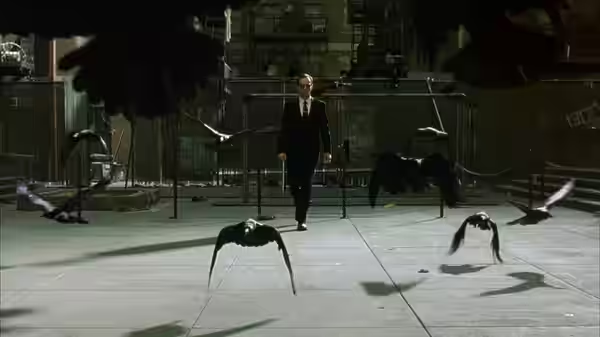
The other sequence belongs to Agent Smith (Hugo Weaving), who has come back able to copy himself onto anyone he touches. He arrives in a courtyard with a dozen of himself and then a hundred, all in Kym Barrett’s identical suits and dark glasses, and Neo takes them on with a steel pole. For three minutes it is the best fight the series has staged, and then the camera pulls back and the two men become figures of weightless digital rubber. Once Neo was no longer a man, nothing in that courtyard could hurt him, and we stopped caring whether it did.
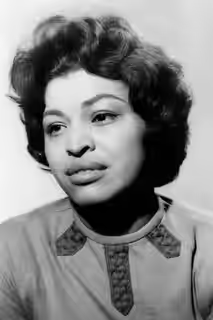
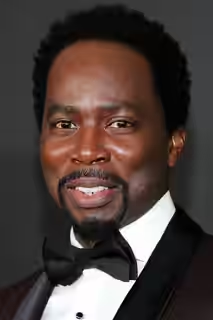
Between the fights, people sit down and explain. Morpheus preaches to Zion from a balcony. Commander Lock (Harry Lennix) tells him he is a fanatic, and is not wrong. The Merovingian (Lambert Wilson), a Frenchman who runs a restaurant and keeps a prisoner, delivers a lecture on cause and effect while watching a woman eat cake. The Oracle (Gloria Foster) tells Neo he has already made his choice and is here to understand it. Each speech is about choice, and by the fourth we were looking at our watch.
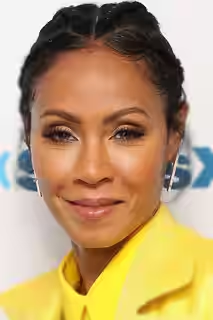
Zion itself is a mixed success. Owen Paterson builds it as a vast cave of rusted gantries and pipework. The Wachowskis then stage a rave in it, intercut with Neo and Trinity in bed, over Don Davis’s drums and choir, and we were bored and then slightly embarrassed on everyone’s behalf. The people of Zion are better than the party. Harold Perrineau’s Link, the new operator, and Nona Gaye’s Zee give the city a marriage to worry about, and Jada Pinkett Smith’s Niobe has a sharpness nobody else in the cast is allowed.
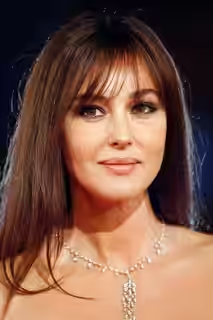
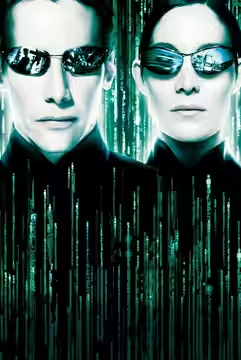
Reeves plays Neo as a man who has already won and is politely waiting to be told what he has won, and it is hard to fear for him. Fishburne is given sermons and delivers them like sermons. Moss keeps the stakes human; the dream of her falling backwards through a window is the only image in the film we were afraid of. Monica Bellucci, as the Merovingian’s wife Persephone, wears a white dress that appears to have been applied rather than put on, and her scene is sillier than anyone involved seems to think.
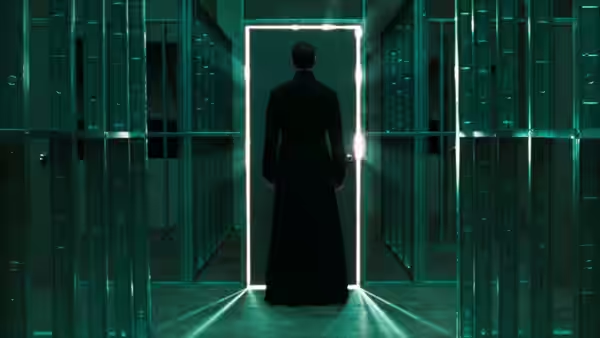
The Matrix had one idea, that the world is a cage you cannot see, and spent its whole length showing us the bars. Reloaded has a dozen ideas, most of them about free will, and says them rather than shows them. The motorway alone is worth an evening. Watch it at home with someone who loved the first one; you will both enjoy the chase, talk through the Merovingian, and argue about the rest. It carries a 15 certificate and came out in British cinemas on 21 May 2003.