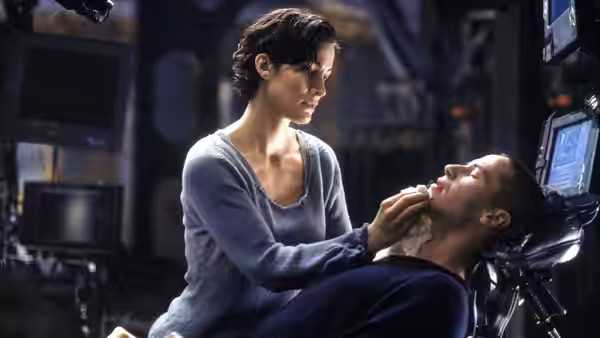
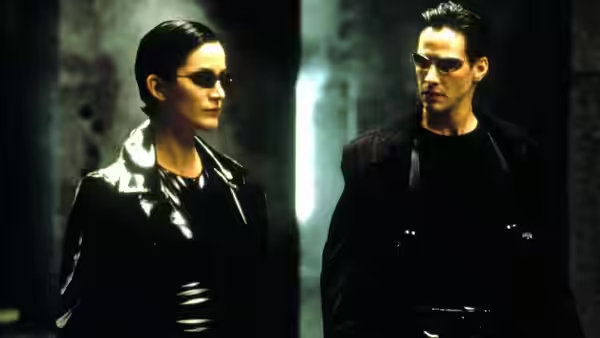
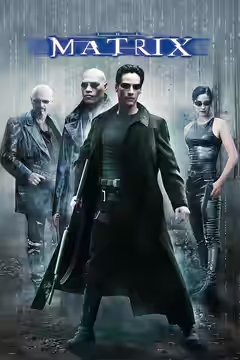
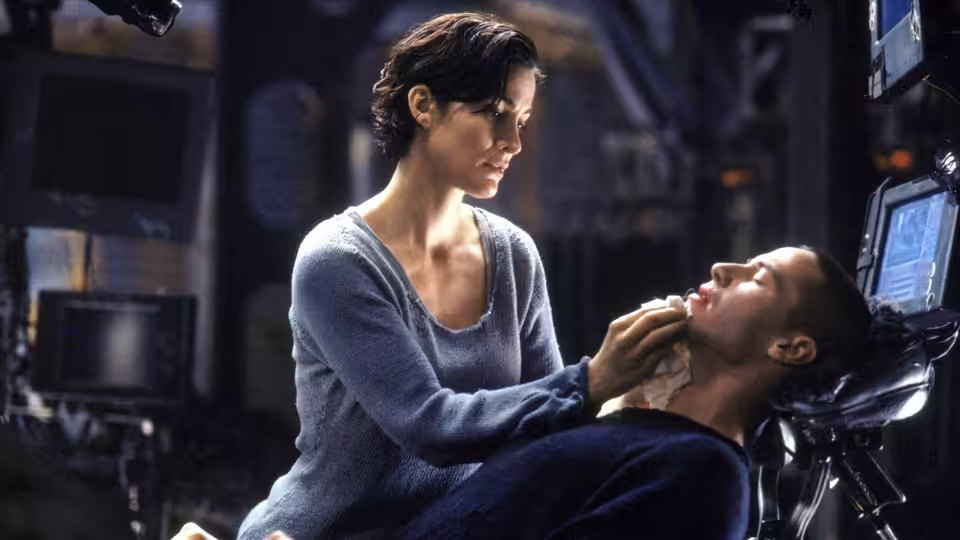
Trinity (Carrie-Anne Moss) leaning over Neo (Keanu Reeves) in a control room
Film review

The Matrix

1999 · Directed by Lana Wachowski, Lilly Wachowski · 2h 16m · LPF 18SG

In a sentenceThe laws of physics take one look at Carrie-Anne Moss and quietly excuse themselves

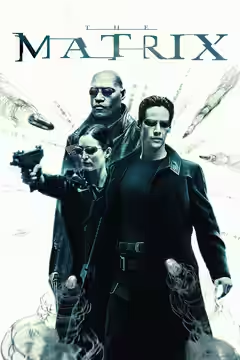
Neo (Keanu Reeves) faces questions about the nature of reality and who controls it. Morpheus (Laurence Fishburne), Trinity (Carrie-Anne Moss) and Agent Smith (Hugo Weaving) are part of the world he must navigate. The story moves through a dystopian setting, mixing science fiction with martial arts and gun battles as it explores how much of an apparently settled reality can be trusted. Written and directed by Lana and Lilly Wachowski, the film also stars Gloria Foster as the Oracle and Joe Pantoliano as Cypher.

Plays from YouTube when you press play; nothing loads from them until then.

Fi1m review

The Wachowskis turn familiar questions about reality into thrilling physical action, with Keanu Reeves and Carrie-Anne Moss giving the spectacle a human centre. The explanations can be heavy-handed; the fights make us eager to listen.

The Matrix is an excellent action film with a weakness for explaining itself. Lana and Lilly Wachowski, who write and direct, understand how much more interesting a question about reality becomes when it changes what a body can do on screen. We recommend it warmly, despite dialogue that sometimes seems to have brought its own lectern. The film takes its ideas seriously enough to let them determine how the action works, and that is a substantial part of the pleasure.

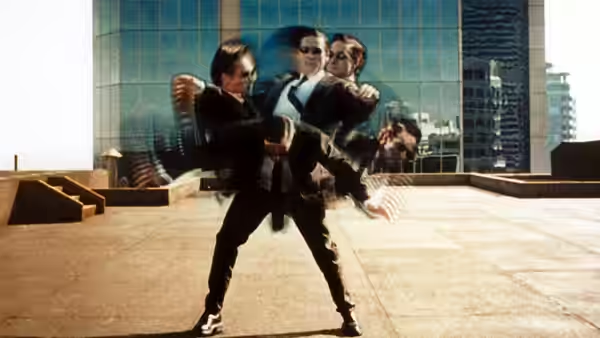
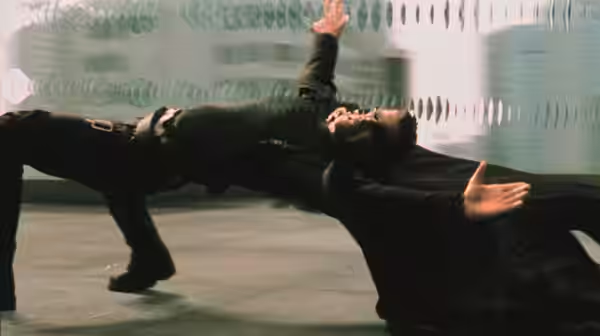
Bill Pope’s cinematography gives us time to appreciate movements that would otherwise pass too quickly to register. Bullet time slows a movement enough for us to inspect it, while the wire-assisted martial arts retain a satisfying sense of physical effort. We were thrilled by the sight of bodies suspended in mid-movement, because the impossible still looked strenuous. The effects invite close attention to the performers, which makes these sequences more involving than a succession of ingenious tricks would be.

Zach Staenberg’s editing preserves the shape of a fight even as its speed changes. We can enjoy an individual movement without losing our interest in what comes next, and the pauses become something to anticipate rather than endure. Don Davis’s score keeps the pressure on, giving the action urgency without making it feel frantic. Together, the cutting and music prevent all that admiration for a particular image from bringing the film to a halt.

Owen Paterson’s production design gives the dystopian setting a severity that suits the film’s concern with control, although the effect can be oppressive. Kym Barrett’s costumes provide some welcome theatrical pleasure amid all that seriousness. Carrie-Anne Moss, as Trinity, has the composure to make the styling feel natural, and her chemistry with Reeves gives the film warmth that its explanations cannot supply. The screenplay could afford to spend more time on that connection and less on making sure we understand its premises.

Reeves’s Neo works because his reserve leaves room for uncertainty. He does not supply a separate expression for every stage of a thought, and the restraint is useful in a film so anxious to explain what deserves thinking about. Laurence Fishburne brings Morpheus the gravity the material asks for, even when it asks too much. Hugo Weaving’s Agent Smith is more immediately entertaining, with an amused precision that makes the solemnity around him easier to bear. Weaving finds room for humour without making his performance seem detached from the film.

Some of the explanations continue after we have understood them. At 136 minutes, the film has room for people as well as ideas, yet supporting characters can remain thin while the dialogue insists on its importance. The screenplay is more confident about how its world works than about how much conversation we need to grasp it. Those stretches are a real limitation, particularly when the physical storytelling has already demonstrated how quickly the film can make a complicated proposition clear.

The questions about reality and control are familiar science-fiction material, so their presence alone would not justify the solemnity. What distinguishes the Wachowskis’ approach is the combination of martial arts and computer effects: both make the limits of ordinary movement worth questioning. That gives the film a persuasive reason to pursue its ideas through action, even when the dialogue has exhausted our patience with them. Give the fights your full attention; the explanations can withstand a raised eyebrow.
Critical consensus AI synthesised

79
Positive
5
Mixed
0
Negative
1

Most critics respond warmly to The Matrix, with praise concentrated on its visual effects, martial arts choreography and stylised action. Bullet-time photography and the combination of wirework with computer effects are recurring strengths: the reviews credit the Wachowskis with finding fresh ways to stage familiar action. Several also welcome the film’s handling of science-fiction ideas, while Hugo Weaving’s performance draws approval even from a detractor.

The disagreement centres on how much substance supports that spectacle, and the spread is wide despite the positive lean. The New York Times finds the plotting potentially pretentious, while Sight and Sound sees little originality in the ideas about reality and control but admires their presentation. Time Out is the clearest dissenter, arguing that an ingenious opening gives way to routine action, thin characters and simplistic heroics. The divide is over whether the action develops the premise or wastes it.

Empire
11 June 1999 · Ian Nathan
90*

The Wachowskis deliver a dazzling sci-fi action spectacle that reinvents the cyberpunk genre with groundbreaking visual effects and non-stop excitement. The film stands out for its innovative 'flo-mo' technique and perfect fusion of style, content and cool factor.

Read the full review →
Total Film
11 June 1999
90*

The Matrix is the action movie of the millennium, a mind-bending sci-fi thriller that pushes the boundaries of the genre with spectacular effects and intelligent plotting. The Wachowskis craft an ultra-cool, no-limits filmmaking experience remembered alongside Star Wars for 1999.

Read the full review →
The Hollywood Reporter
· David Hunter
85*

The review is highly positive, calling the film a technologically stunning cyber sci-fi thriller that will be a big hit and further the genre with its visual effects and storytelling. It singles out the stylish action sequences, including wirework and bullet-time photography, along with strong performances especially from Hugo Weaving.

Read the full review →
Time Out
· GA
40*

The first hour works as an ambitious dystopian fantasy with ingenious reality switches and slick visuals, but the promising premise is wasted as it becomes a routine action picture with paper-thin characters and facile heroics. It ends as overlong high-concept hokum despite some engaging elements like Weaving's performance.

Read the full review →
Sight and Sound
1 July 1999 · Philip Strick

The Wachowskis deliver a visually innovative spectacle blending martial arts choreography with computer effects, creating astonishing images in a wonderland of tricks and stunts. The film offers little originality in its message about reality and control but excels in method and unexpected perspectives.

Read the full review →
The New York Times
31 March 1999 · Janet Maslin

The critic praises the film's visual bravado, martial arts stunts, and inventive special effects as its strongest selling points. She notes the pretentious plotting as a potential drawback but highlights its stylish cyberescapism and action dynamics.

Read the full review →

Straight answers AI written, from our review

Is The Matrix worth watching?
The Matrix is worth watching for anyone who enjoys action films that let their ideas shape the fights, and we scored it 88. Bill Pope's slowed, wire-assisted sequences make impossible movement look strenuous, and Carrie-Anne Moss and Keanu Reeves give the spectacle warmth. The dialogue explains itself at length, so viewers with little patience for lectures should brace for those stretches.
How long is The Matrix, and what is it rated?
The Matrix runs 2h 16m and is rated 18SG by the LPF in Malaysia. It is an action and science fiction film.
Where can I watch The Matrix in Malaysia?
The Matrix is streaming on HBO Max in Malaysia, and it is also available to rent from Apple TV from RM 9.90. Availability is checked daily; the links above go straight to each service.
How violent or frightening is The Matrix, and is it suitable for children?
The Matrix is a UK 15 certificate film, with sustained martial arts fights and gun battles throughout its 136 minutes. The violence is stylised and choreographed rather than dwelt upon, and the mood is severe and oppressive rather than frightening. It is not for young children; older teenagers who can take extended action should manage it comfortably.
How does The Matrix compare to Dark City?
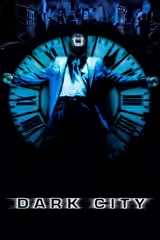
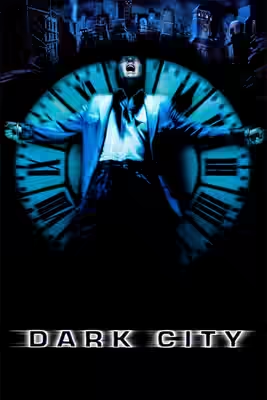
The Matrix is the better film of the two, while Dark City is the stranger and quieter one. Both are set in uneasy cities where learning the rules makes life harder, but the Wachowskis turn that discovery into physical action, where Alex Proyas keeps it a mystery of mood and design. Choose Dark City for atmosphere and The Matrix for fights with a human centre; each struggles to give its supporting characters depth.
What should I watch after The Matrix?
After The Matrix, try Dark City (1998, Fi1m 76): Another uneasy city where discovering the rules only makes life harder. Then Ghost in the Shell (1995, Fi1m 83): Animation that gives questions about identity room to trouble us; and A Touch of Zen (1971, Fi1m 86): For martial arts whose physical grace carries a spiritual charge.
What order should I watch the The Matrix films in?
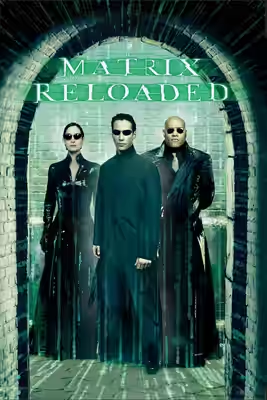
Release order is the safe choice for The Matrix, and it is the order our collection page lists them in. The Matrix is the first of the 3 The Matrix titles on Fi1m; after it The Matrix Reloaded. The full order.

Part of · 1 of 3

The Matrix

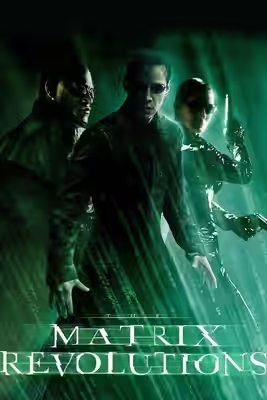
3 films on Fi1m · 1999–2003 · average 65 · best The Matrix 88

All 3 in order

Cast

Awards

Academy Awards, 2000

Won
Best Film Editing
Won
Best Sound
Won
Best Sound Editing
Won
Best Visual Effects

BAFTA Film Awards, 2000

Won
Best Sound
Won
Best Special Visual Effects

Saturn Awards, 2000

Won
Best Director
Won
Best Science Fiction Film

If you liked this, try…

  1. Dark City (1998, Fi1m 76)Another uneasy city where discovering the rules only makes life harder.

  2. Ghost in the Shell (1995, Fi1m 83)Animation that gives questions about identity room to trouble us.

  3. World on a Wire (1973) · not reviewed yetA slower, colder encounter with reality that refuses to behave.

  4. A Touch of Zen (1971, Fi1m 86)For martial arts whose physical grace carries a spiritual charge.

  5. eXistenZ (1999) · not reviewed yetA stranger, stickier companion for anyone still suspicious of ordinary reality.

Free account

Know what to watch tonight

Two lists that know where things are streaming, collections you can share, your own score beside ours, and Discover that remembers what you have seen.

  • Want to see, sorted by what is streaming now
  • Seen, with your score out of ten
  • No adverts, ever