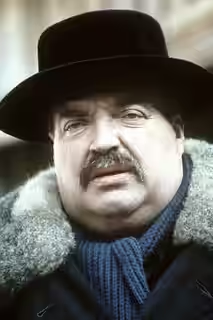
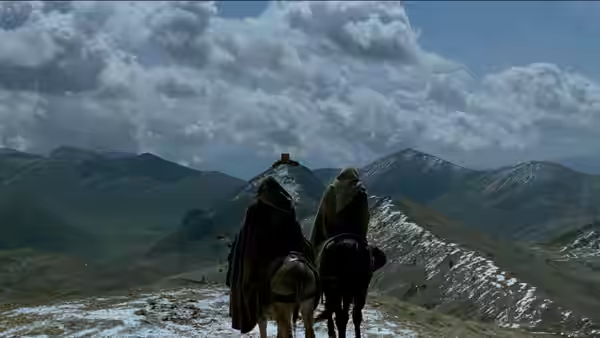
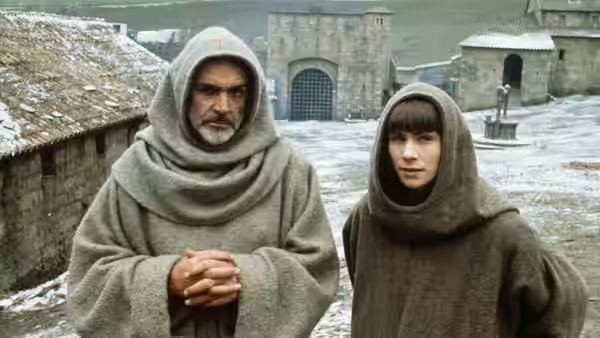
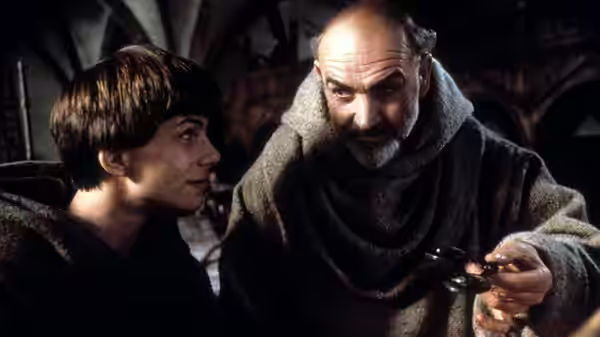
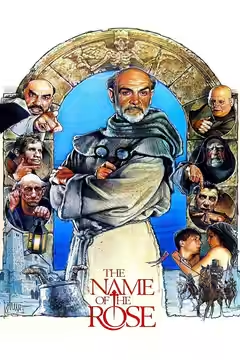
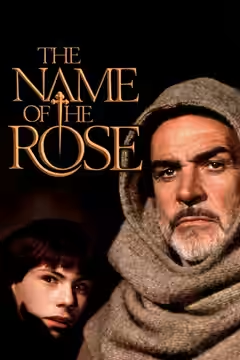
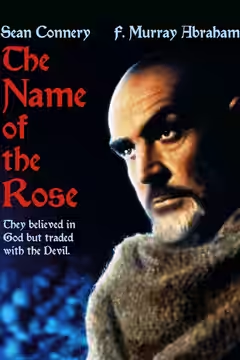
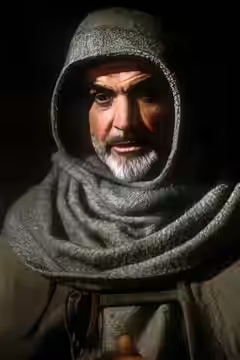
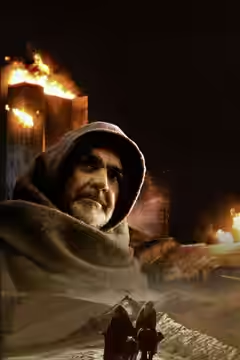
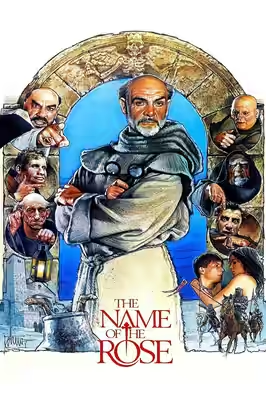
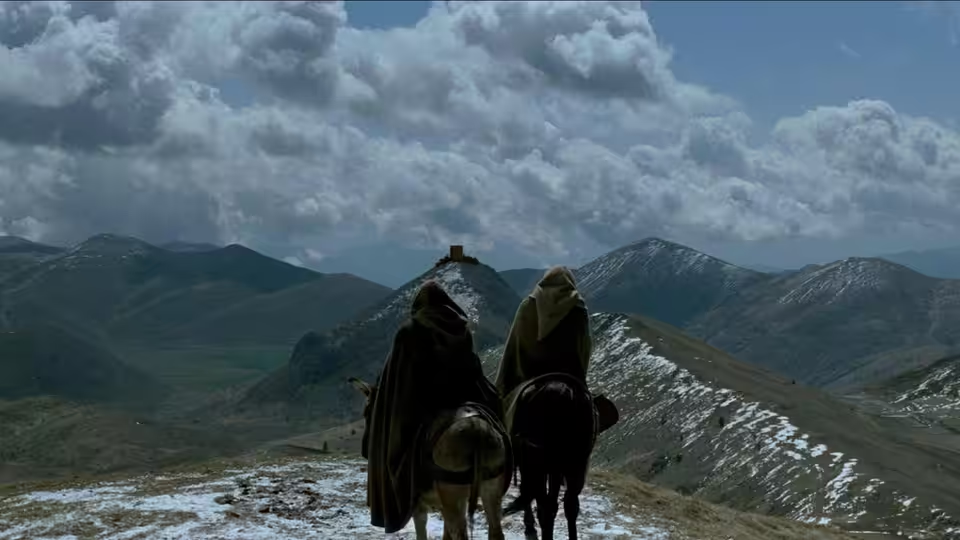
William of Baskerville (Sean Connery) and Adso of Melk ride toward a mountain monastery
Film review

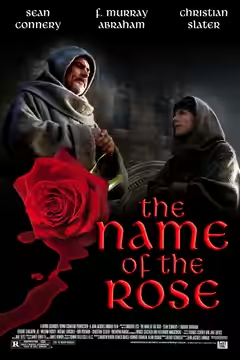
The Name of the Rose

1986 · Directed by Jean-Jacques Annaud · 2h 10m · INCAA 16

In a sentenceSean Connery is excellent company in a medieval abbey that could put anyone off a religious vocation

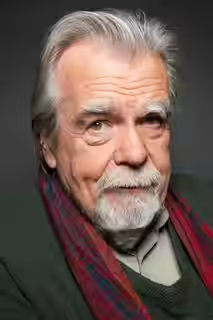
In a medieval abbey, William of Baskerville (Sean Connery) tries to solve a murder through observation and deduction. Adso of Melk (Christian Slater) accompanies him, while The Abbot (Michael Lonsdale) presides over the religious community. William’s inquiry takes him through the abbey’s labyrinthine interiors and into questions of faith. He wants an explanation for what has happened, but the community’s religious concerns complicate the search. As William and Adso work their way through the mystery, they must make sense of the people around them as well as the building that contains them.

Fi1m review

Sean Connery gives this medieval mystery warmth and intelligence, and the abbey is a persuasive place to get lost. The investigation sometimes drags, but patient mystery lovers should find enough to reward an evening.

The Name of the Rose is a good detective film whose chief pleasure is watching Sean Connery think. Jean-Jacques Annaud’s adaptation of Umberto Eco’s novel places a mystery inside a medieval abbey and gives questions of faith considerable room. It is absorbing, though not consistently urgent, and anyone expecting an efficient succession of clues will need to adjust. We recommend it for the company and the surroundings, with a warning that the investigation sometimes takes longer than it should.

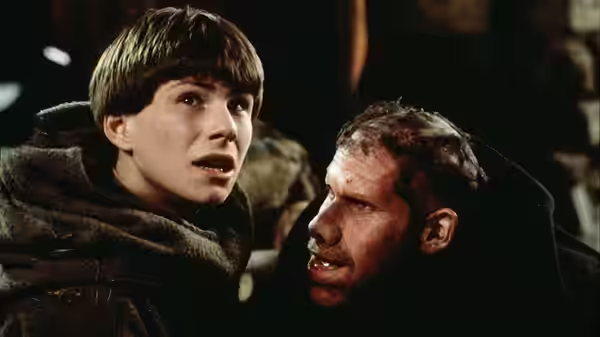
As William of Baskerville, Sean Connery makes intelligence attractive without making it forbidding. There is an ease to his performance that helps when the story grows complicated, and his authority never quite excludes our curiosity. We warmed to William and Adso because the companionship Sean Connery and Christian Slater establish gives this severe place some ordinary human affection. Christian Slater’s Adso of Melk benefits from having someone worth accompanying, and we share that feeling.

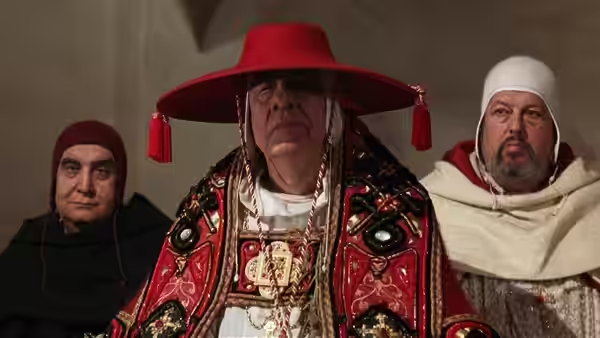
Dante Ferretti’s production design is crucial: the abbey’s labyrinthine interiors make the investigation feel difficult before anyone explains a thing. Their complexity is a pleasure in itself, although it can compete with the business of following the story. Tonino Delli Colli’s cinematography gives these spaces an imposing presence, so that the setting keeps our attention even when the mystery falters. The ornate treatment suits an institution whose religious concerns dominate the film.

The screenplay by Howard Franklin, Gérard Brach, Andrew Birkin and Alain Godard retains an appetite for the novel’s mingling of detection and religious thought. That is a worthwhile complication for a whodunit: beliefs affect how people understand a mystery, and a satisfactory explanation has to contend with them. The film gives us more to consider than the identity of a culprit. Its seriousness is welcome, particularly when Sean Connery makes the thinking feel like something a person might actually enjoy.

The difficulty comes when that consideration turns into delay. Jane Seitz’s editing does not always maintain the pressure an investigation needs, and stretches of the mystery feel held in place while the atmosphere continues to thicken. We can admire the abbey and still want the story to move on. At those points, the film asks its central performance to do work that a clearer sense of progress should have done, leaving Sean Connery to sustain our interest.

James Horner’s music helps sustain the unease, though the film scarcely needs encouragement to take its surroundings seriously. The score works best as part of the abbey’s oppressive atmosphere; the relationship between William and Adso provides the relief. Jean-Jacques Annaud is wise to allow that warmth to survive the solemnity. It keeps the religious setting from becoming forbidding enough to shut us out.

Against the demands of a detective thriller, this is slower than we would like. But there is sufficient interest in the people, the place and the questions being asked to justify its 130 minutes. Come for a mystery with time for conversation and thought, rather than a race to the answer. For an evening that needs a quick pulse, choose something else.
Critical consensus AI synthesised

64
Positive
4
Mixed
1
Negative
2

Most critics respond favourably to The Name of the Rose, with praise clustering around Sean Connery’s authority as William of Baskerville and the film’s richly detailed medieval setting. His performance gives the mystery a compelling centre, even for reviewers unconvinced by the storytelling. The more enthusiastic reviews find an intelligent, inventive whodunit that makes room for questions of faith and medieval thought. Sets and cinematography also earn credit for preserving some of the novel’s depth.

The spread is wide, however, and the chief disagreement concerns whether the mystery sustains its pace and makes sense on screen. Time Out regards the blend of detection and metaphysics as a success, while Variety finds the adaptation confusing and sluggish. The Los Angeles Times likewise faults the editing and lack of urgency, though it values the warmth between William and Adso. Connery and the surroundings attract considerably more agreement than the film’s handling of its story.

Time Out
· AMac
85*

The critic presents the adaptation as an intelligent success. They praise its handling of Umberto Eco’s blend of mystery and medieval metaphysics.

Read the full review →
Radio Times
★★★★ · Tom Hutchinson
80

The review is positive, praising the film’s ornate visual style and Sean Connery’s commanding performance. It singles out Connery’s deductive brilliance as the force that makes the story work.

Read the full review →
Empire
1 January 2000 · Ian Nathan
78*

Nathan finds the adaptation a refreshing, inventive whodunit, though its themes may not appeal to everyone. He particularly praises Sean Connery’s compelling performance as William of Baskerville.

Read the full review →
Los Angeles Times
24 September 1986 · SHEILA BENSON
35*

Benson finds the film ambitious and visually atmospheric but ultimately a soggy, poorly paced mystery. She praises the warmth of the relationship between Connery’s William and Slater’s Adso, while faulting the editing and lack of urgency.

Read the full review →
Variety
31 December 1985 · Variety Staff
25*

The critic calls the adaptation confusing, sluggish, and a failure to bring the story to the screen. Connery’s performance and the abbey’s labyrinthine interiors are singled out as its few strengths.

Read the full review →
Collider
31 December 2024 · Liam Gaughan
85*

Gaughan finds the film an electrifying thriller that provokes thoughtful discussion about faith. He especially praises Sean Connery’s performance and the authority he brings to William of Baskerville.

Read the full review →

Straight answers AI written, from our review

Is The Name of the Rose worth watching?
The Name of the Rose is worth watching for patient mystery lovers, and we score it 77 for Sean Connery’s warm, intelligent performance and the persuasive medieval abbey. The investigation sometimes drags across its 130 minutes, so we recommend it for thoughtful detection and companionship rather than a fast succession of clues.
How long is The Name of the Rose, and what is it rated?
The Name of the Rose runs 2h 10m and is rated 16 by the INCAA in Argentina. It is a drama and thriller film.
Where can I watch The Name of the Rose in Argentina?
The Name of the Rose is not on any streaming or rental service in Argentina at the moment. It is available in 9 other countries; change your country at the top of the page to see where. Availability is checked daily.
How violent or frightening is The Name of the Rose, and is it suitable for children?
The Name of the Rose carries a UK 18 certificate, making it an adult choice rather than suitable viewing for children or younger teenagers. The murder investigation unfolds in an oppressive abbey, with music that sustains the unease; the certificate is the clearest guide to suitability, rather than any assurance that the violence or frightening material is mild.
How does The Name of the Rose compare to The Third Man?
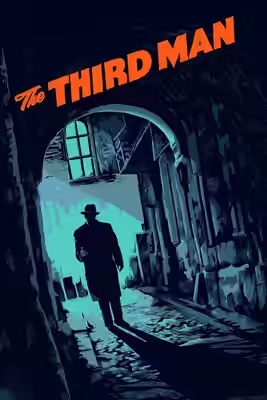
The Name of the Rose is the slower, more contemplative mystery; we recommend The Third Man more strongly for a gripping investigation with humour alongside its moral unease. Both gain from architecture and difficult company, but Connery’s warmth and the questions of faith make the medieval film a worthwhile choice when pace matters less.
Is The Name of the Rose based on a true story or a book?
The Name of the Rose is adapted from Umberto Eco’s novel, rather than presented as a true-story account. The screenplay retains the book’s mingling of detection and religious thought, though we would not claim fidelity beyond that. Reading the novel first is not necessary: Connery gives us an approachable guide, even when the mystery grows complicated.
What should I watch after The Name of the Rose?
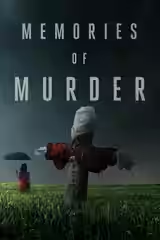
After The Name of the Rose, try The Third Man (1949, Fi1m 92): Another investigation made richer by architecture, moral uncertainty and difficult company. Then A Man for All Seasons (1966, Fi1m 81): More patient argument about faith, conscience and the dangers of authority; and Memories of Murder (2003, Fi1m 91): For the frustration of detection and investigators whose company sustains the search.

Cast

If you liked this, try…

  1. The Third Man (1949, Fi1m 92)Another investigation made richer by architecture, moral uncertainty and difficult company.

  2. The Return of Martin Guerre (1982) · not reviewed yetA historical mystery that takes belief, identity and ordinary attachments seriously.

  3. A Man for All Seasons (1966, Fi1m 81)More patient argument about faith, conscience and the dangers of authority.

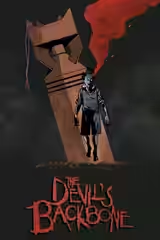
  4. The Devil's Backbone (2001) · not reviewed yetFor enclosed spaces, uneasy loyalties and a mystery steeped in dread.

  5. Memories of Murder (2003, Fi1m 91)For the frustration of detection and investigators whose company sustains the search.

Free account

Know what to watch tonight

Two lists that know where things are streaming, collections you can share, your own score beside ours, and Discover that remembers what you have seen.

  • Want to see, sorted by what is streaming now
  • Seen, with your score out of ten
  • No adverts, ever