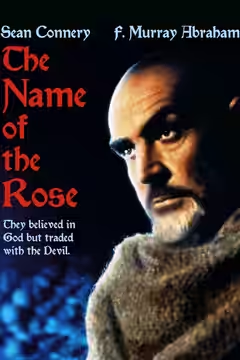
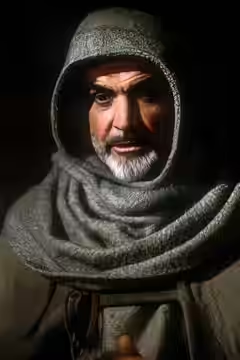
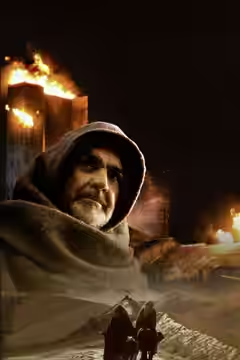
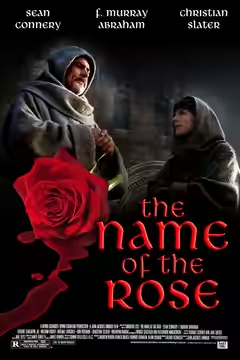
Sean Connery gives this medieval mystery warmth and intelligence, and the abbey is a persuasive place to get lost. The investigation sometimes drags, but patient mystery lovers should find enough to reward an evening.
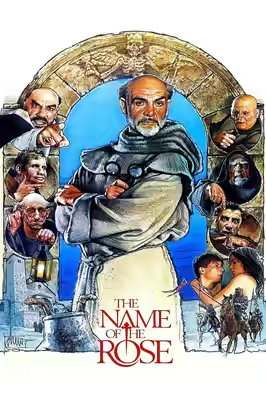
The Name of the Rose is a good detective film whose chief pleasure is watching Sean Connery think. Jean-Jacques Annaud’s adaptation of Umberto Eco’s novel places a mystery inside a medieval abbey and gives questions of faith considerable room. It is absorbing, though not consistently urgent, and anyone expecting an efficient succession of clues will need to adjust. We recommend it for the company and the surroundings, with a warning that the investigation sometimes takes longer than it should.
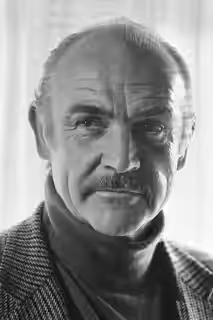
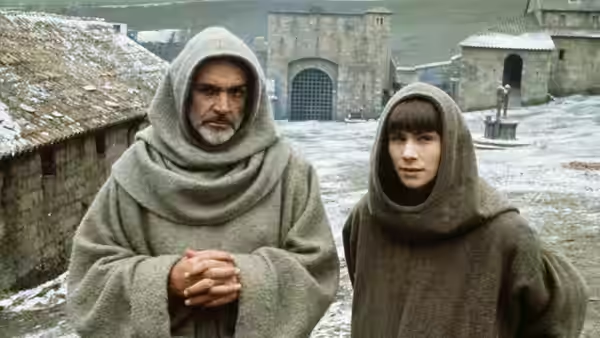
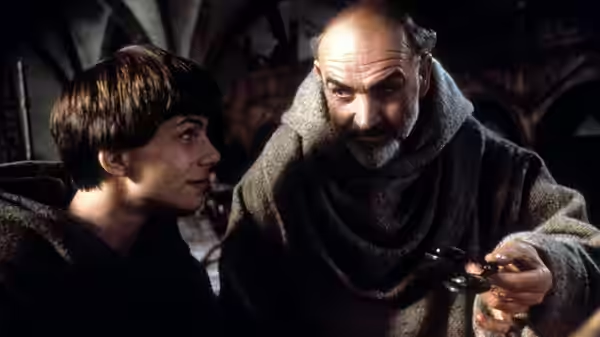
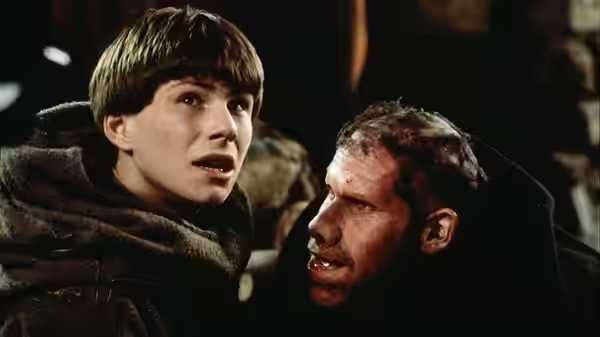
As William of Baskerville, Sean Connery makes intelligence attractive without making it forbidding. There is an ease to his performance that helps when the story grows complicated, and his authority never quite excludes our curiosity. We warmed to William and Adso because the companionship Sean Connery and Christian Slater establish gives this severe place some ordinary human affection. Christian Slater’s Adso of Melk benefits from having someone worth accompanying, and we share that feeling.
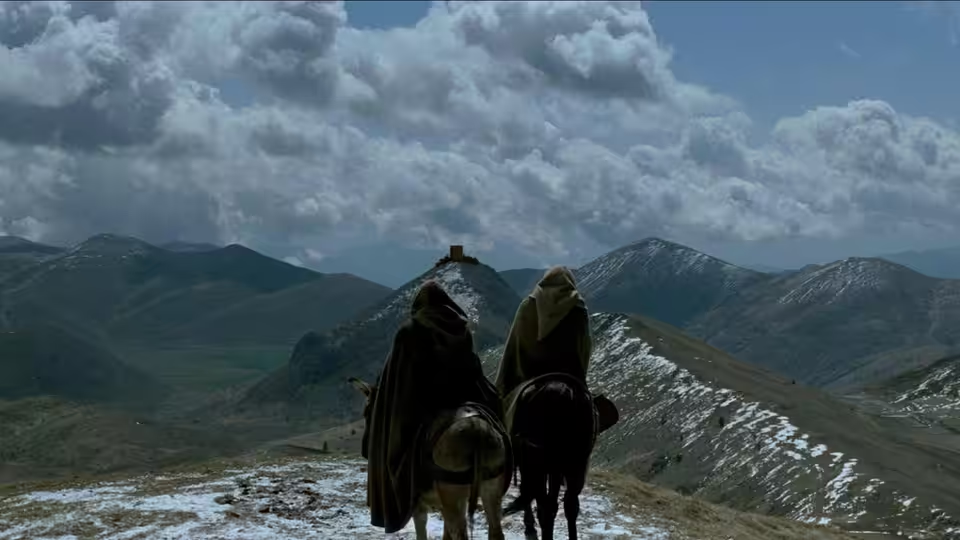
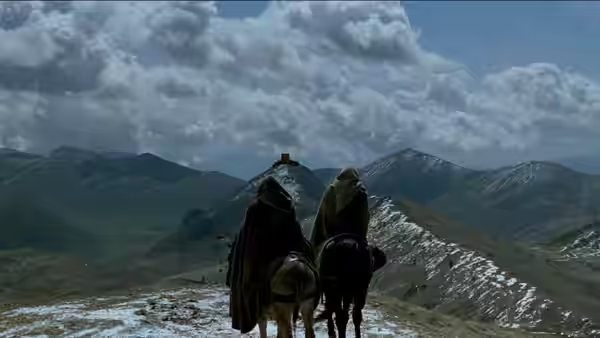
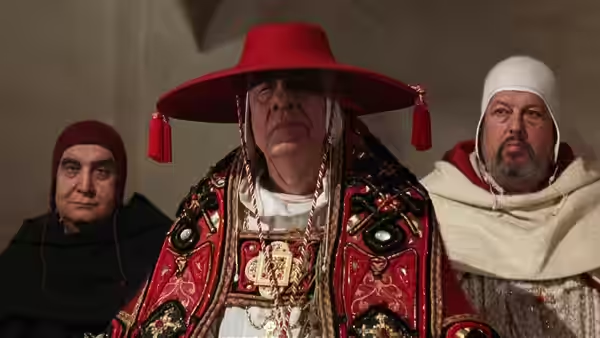
Dante Ferretti’s production design is crucial: the abbey’s labyrinthine interiors make the investigation feel difficult before anyone explains a thing. Their complexity is a pleasure in itself, although it can compete with the business of following the story. Tonino Delli Colli’s cinematography gives these spaces an imposing presence, so that the setting keeps our attention even when the mystery falters. The ornate treatment suits an institution whose religious concerns dominate the film.
The screenplay by Howard Franklin, Gérard Brach, Andrew Birkin and Alain Godard retains an appetite for the novel’s mingling of detection and religious thought. That is a worthwhile complication for a whodunit: beliefs affect how people understand a mystery, and a satisfactory explanation has to contend with them. The film gives us more to consider than the identity of a culprit. Its seriousness is welcome, particularly when Sean Connery makes the thinking feel like something a person might actually enjoy.
The difficulty comes when that consideration turns into delay. Jane Seitz’s editing does not always maintain the pressure an investigation needs, and stretches of the mystery feel held in place while the atmosphere continues to thicken. We can admire the abbey and still want the story to move on. At those points, the film asks its central performance to do work that a clearer sense of progress should have done, leaving Sean Connery to sustain our interest.
James Horner’s music helps sustain the unease, though the film scarcely needs encouragement to take its surroundings seriously. The score works best as part of the abbey’s oppressive atmosphere; the relationship between William and Adso provides the relief. Jean-Jacques Annaud is wise to allow that warmth to survive the solemnity. It keeps the religious setting from becoming forbidding enough to shut us out.
Against the demands of a detective thriller, this is slower than we would like. But there is sufficient interest in the people, the place and the questions being asked to justify its 130 minutes. Come for a mystery with time for conversation and thought, rather than a race to the answer. For an evening that needs a quick pulse, choose something else.