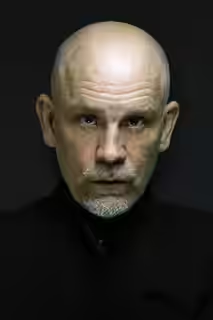
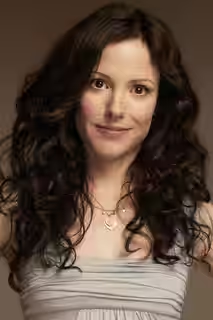
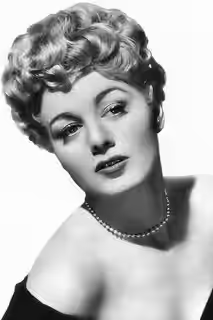
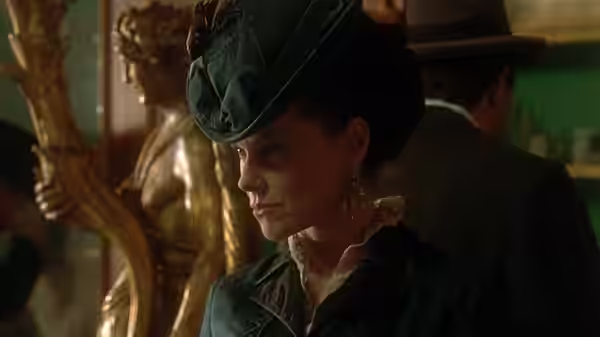
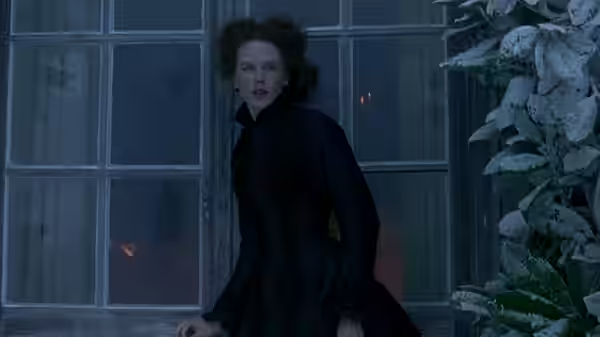
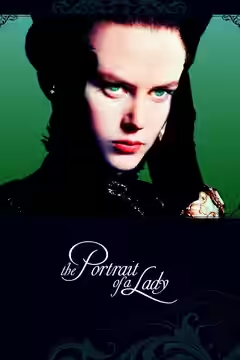
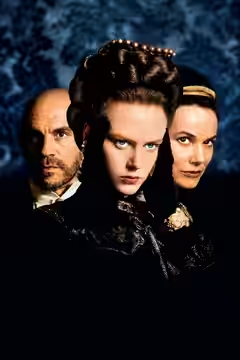
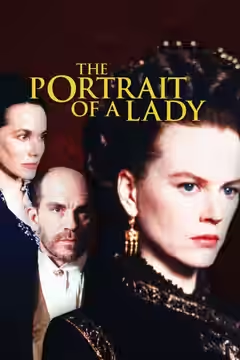
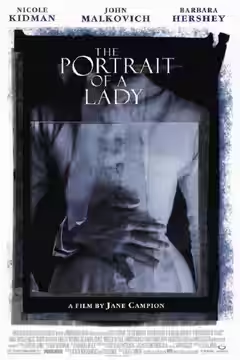
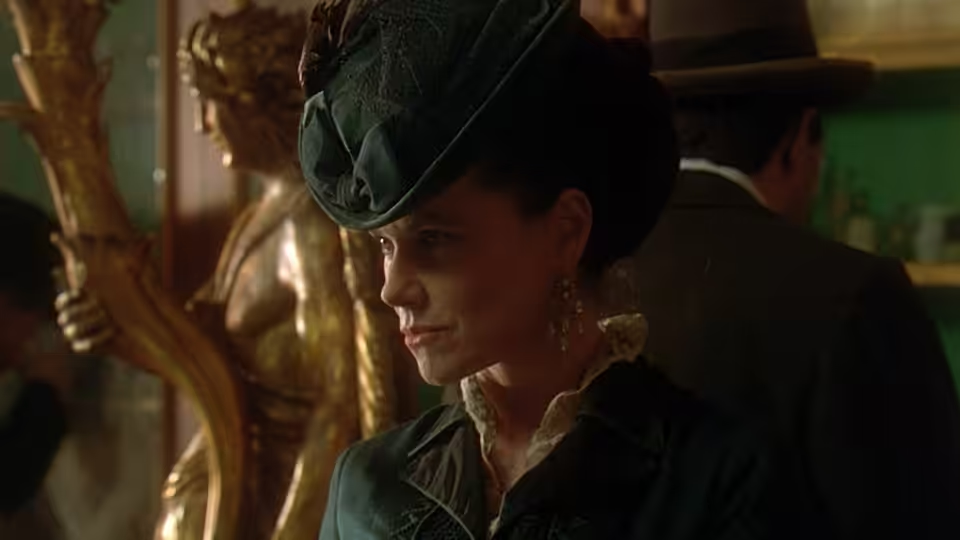
A woman in a dark hat stands indoors as a man faces away behind her
Film review

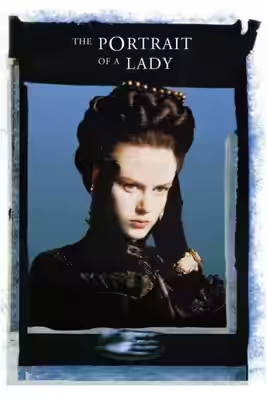
The Portrait of a Lady

1996 · Directed by Jane Campion · 2h 24m

In a sentenceTwo hours of beautiful rooms, and Nicole Kidman chooses to be unhappy in the darkest one

England, the 1870s. Isabel Archer (Nicole Kidman), a young American with no money and firm ideas about her own freedom, is staying at Gardencourt, the country house of her aunt Mrs. Touchett (Shelley Winters) and her dying uncle (John Gielgud). Her consumptive cousin Ralph (Martin Donovan) adores her from a distance. Lord Warburton (Richard E. Grant) proposes; she refuses him. Caspar Goodwood (Viggo Mortensen), who has followed her from America, is refused too. Ralph quietly arranges for his father to leave her a fortune, so that she can do whatever she likes. What she does is travel, with her journalist friend Henrietta Stackpole (Mary-Louise Parker), to Florence, where the worldly Madame Merle (Barbara Hershey) introduces her to Gilbert Osmond (John Malkovich), a widowed collector with a convent-raised daughter and little money of his own.

Plays from YouTube when you press play; nothing loads from them until then.

Fi1m review

Jane Campion’s Henry James is cold, strange and often beautiful, and it never quite lets us near its heroine. Nicole Kidman holds it together; John Malkovich nearly pulls it apart. For patient viewers who like their costume dramas uncomfortable.

Jane Campion follows The Piano with Henry James, which is not the obvious next move, and she makes it less obvious still by opening in the present day. Before a single bonnet appears, young women talk, first in voiceover and then in black and white, about what it is like to be kissed. Only then do we reach England in the 1870s and Nicole Kidman’s Isabel Archer being proposed to in a garden. The Portrait of a Lady is a handsome, cold, deliberately awkward film, worth 144 minutes of a patient viewer’s evening.

Laura Jones’s screenplay keeps James’s bones: a young American with ideas and no money inherits a fortune, is pursued by three men, and chooses the one she should not. Campion is less interested in the plot than in what wanting does to Isabel. Having turned down Lord Warburton (Richard E. Grant) and Caspar Goodwood (Viggo Mortensen), Isabel lies on a bed and imagines them, and her cousin Ralph too, touching her all at once. Her tour of the world is played as a mock silent film. Most critics either admired these moments or winced at them; we did both.

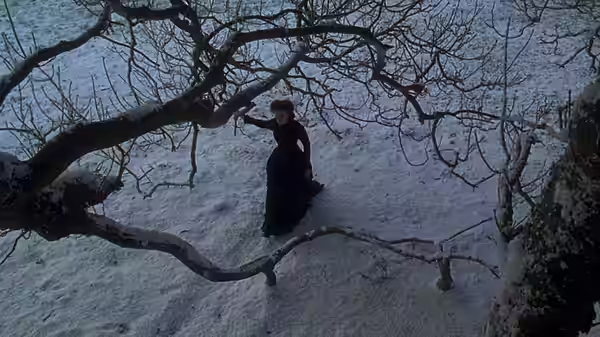
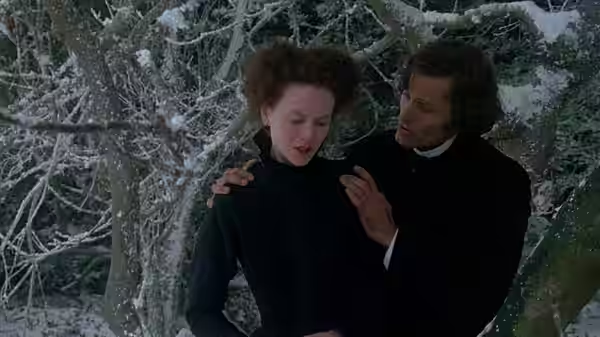
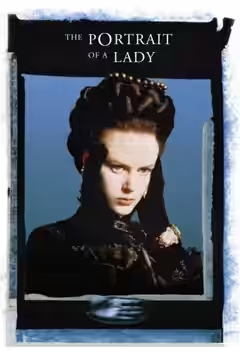
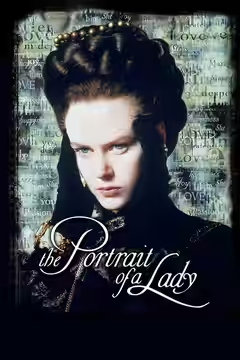
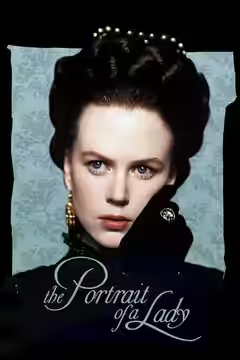
Stuart Dryburgh shoots England in wet greys and greens, and Italy not in sunshine but in shadow. Osmond’s rooms in Florence are so dark that faces come out of them one feature at a time. Janet Patterson, doing both production and costume design, fills those rooms with chipped antiquities and puts Kidman in black bodices buttoned to the throat, so the woman who talks most about freedom is the most tightly laced. Wojciech Kilar’s score is grave strings and a slow pulse, and it does the emotional work the characters will not do aloud. Veronika Jenet cuts the fantasies in without warning and out again without apology.

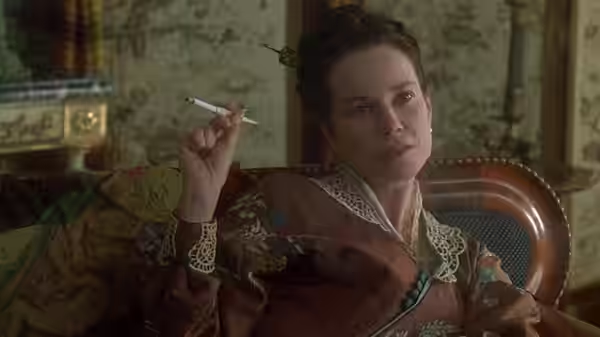
Kidman is the reason to watch. She plays Isabel as a woman who has read about independence and has not yet tested it, bright and quick and slightly pleased with herself, and lets that brightness go out a little at a time over years. Most of it is done in the face: the mouth set, the eyes doing the arguing. Martin Donovan’s Ralph, dying by inches and in love without saying so, is the film’s warmest presence. Barbara Hershey plays Madame Merle as the most agreeable woman in Europe and lets us wonder, as Isabel does not, why. Mary-Louise Parker’s Henrietta is loud, American and right about everything. Shelley Duvall, as Osmond’s sister the Countess Gemini, is in the film for about five minutes and we wanted twenty.

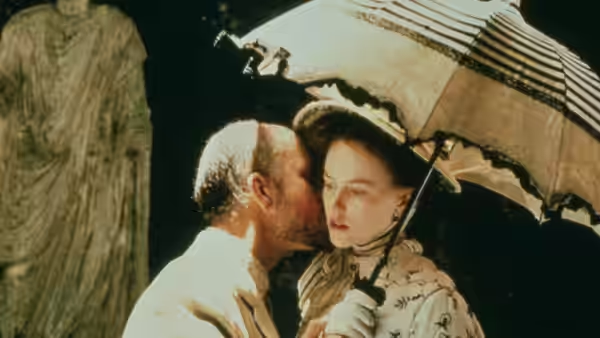
Then there is John Malkovich. His Gilbert Osmond is a soft-voiced collector who talks about taste the way other men talk about money, and the trouble is that he is plainly the villain from his first line. When he follows Isabel into the ruins in Rome and declares himself under her parasol, twirling it as he kisses her, we were unsettled, which is right; we also could not see what she saw in him, which is not. Kidman has to carry the whole of Isabel’s mistake on her own, and she nearly does. By the long middle stretch in a Roman palazzo, we were impatient with her for a choice the film had not sold us, then annoyed at blaming her rather than the casting.

The Piano was about a woman who would not speak, and Campion spoke for her, loudly. Here everyone talks beautifully and almost nobody says what they mean, and Campion declines to raise her voice to help. Most critics have found the film chilly. We think the chill is the subject rather than a loss of nerve. We also think two hours and twenty-four minutes is a long time to be kept at arm’s length, and the film does not always know the difference between restraint and reluctance.

See it for Kidman, for Dryburgh’s dark rooms, and for the nerve of that opening. Watch it at home, where the gloom of the Florence scenes is a problem of your curtains rather than the projection, and where the second half can be paused for a drink.
Critical consensus AI synthesised

65
Positive
2
Mixed
3
Negative
0
Empire
4 May 2021 · Beth Webb
75*

Webb finds Campion’s adaptation fresh, challenging, and disturbingly seductive. She particularly praises its female-gaze framing and Stuart Dryburgh’s luminous cinematography.

Read the full review →
Time Out
· GA
70*

The review appears to regard the adaptation as a success. It singles out Campion and Laura Jones’s translation of Henry James’s novel to the screen.

Read the full review →
The New York Times
27 December 1996
64*

The article appears to be a review, but its verdict is unavailable. The page provides no readable text identifying what the critic praises or criticizes.

Read the full review →
Radio Times
★★★ · Lorien Haynes
60

Haynes finds the costume drama compelling, though less successful than Campion’s The Piano. She praises Nicole Kidman’s captivating performance and the film’s beautiful cinematography.

Read the full review →
Variety
9 September 1996 · Todd McCarthy
55*

McCarthy finds the adaptation intelligent and beautifully crafted, but emotionally remote and dramatically unclear. He particularly praises its ravishing cinematography and performances, while criticizing the story’s fuzzy, inconclusive resolution.

Read the full review →

Straight answers AI written, from our review

Is The Portrait of a Lady worth watching?
The Portrait of a Lady is worth watching for patient viewers who like their costume dramas cold and uncomfortable, and we scored it 68. Nicole Kidman carries it, letting Isabel Archer's brightness go out a little at a time, but John Malkovich's Osmond is so plainly the villain that her mistake is never sold to us. At 144 minutes it keeps you at arm's length for a long time.
How long is The Portrait of a Lady, and what is it rated?
The Portrait of a Lady runs 2h 24m. It is a drama and romance film.
Where can I watch The Portrait of a Lady in the Netherlands?
The Portrait of a Lady is not on any streaming or rental service in the Netherlands at the moment. It is available in 10 other countries; change your country at the top of the page to see where. Availability is checked daily.
How violent or frightening is The Portrait of a Lady, and is it suitable for children?
The Portrait of a Lady carries a UK 12 certificate, and there is no violence to speak of; its discomfort is emotional rather than frightening. The adult content runs to a fantasy of Isabel imagining three men touching her at once, and a kiss under a parasol we found unsettling. Younger children will be bored long before they are troubled.
How does The Portrait of a Lady compare to The Heiress?
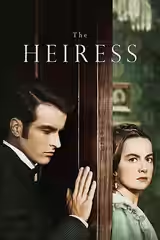
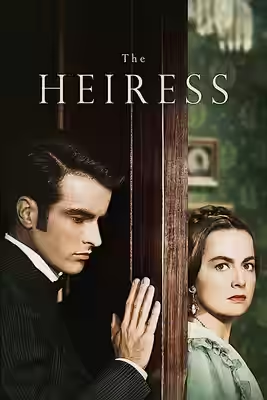
The Portrait of a Lady and The Heiress are both Henry James adaptations about a young woman learning what a fortune attracts, and the earlier film is the better of the two. William Wyler's is exact and never sentimental, and it hurts; Jane Campion's is stranger, darker and more deliberately awkward, and it never quite lets us near its heroine. Start with The Heiress, come to Campion for Kidman.
Is The Portrait of a Lady based on a true story or a book?
The Portrait of a Lady is based on Henry James's novel of the same name, not on a true story. Laura Jones's screenplay keeps James's bones, though Jane Campion adds a present-day opening and fantasy sequences the book does not have. Knowing the novel is not required, but readers may find Osmond's hold on Isabel easier to believe than the film makes it.
What should I watch after The Portrait of a Lady?
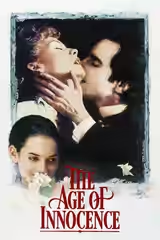
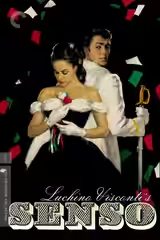
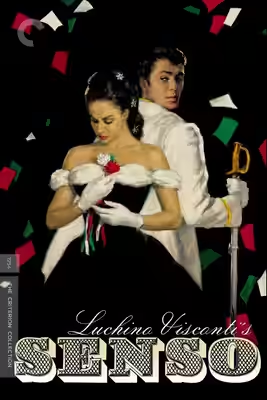
After The Portrait of a Lady, try The Heiress (1949, Fi1m 90): Henry James again, with Olivia de Havilland learning the hard way what a fortune attracts. Then The Age of Innocence (1993, Fi1m 86): Scorsese does Edith Wharton: the same gilded rooms, the same people saying nothing and meaning everything; and Senso (1954, Fi1m 79): Visconti’s Venetian countess ruins herself for an unworthy man, in colours Campion would envy.

Cast

Awards

Academy Awards, 1997

Nominated
Best Costume Design
Nominated
Best Supporting Actress

If you liked this, try…

  1. The Heiress (1949, Fi1m 90)Henry James again, with Olivia de Havilland learning the hard way what a fortune attracts.

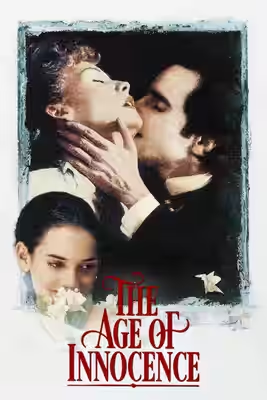
  2. The Age of Innocence (1993, Fi1m 86)Scorsese does Edith Wharton: the same gilded rooms, the same people saying nothing and meaning everything.

  3. Senso (1954, Fi1m 79)Visconti’s Venetian countess ruins herself for an unworthy man, in colours Campion would envy.

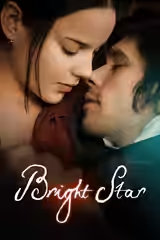
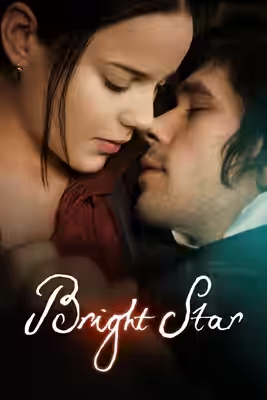
  4. Bright Star (2009, Fi1m 82)Campion returns to the nineteenth century, warmer this time, with Keats and a seamstress.

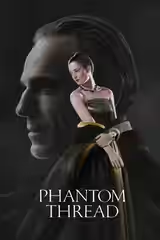
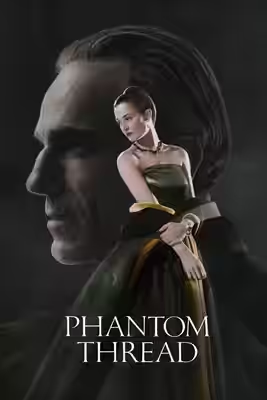
  5. Phantom Thread (2017, Fi1m 87)A woman marries a controlling man of taste and finds, slowly, how to live with him.

Free account

Know what to watch tonight

Two lists that know where things are streaming, collections you can share, your own score beside ours, and Discover that remembers what you have seen.

  • Want to see, sorted by what is streaming now
  • Seen, with your score out of ten
  • No adverts, ever