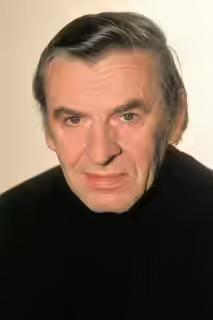
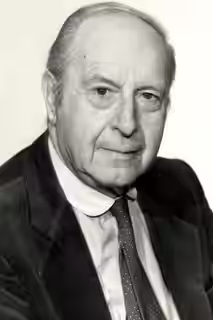
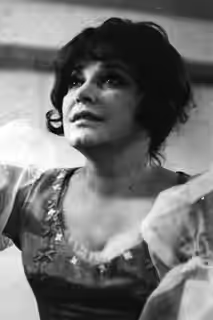
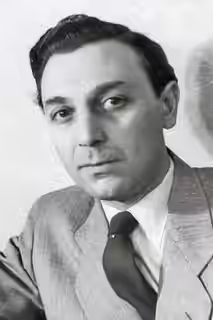
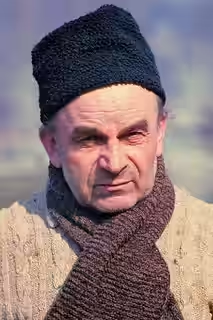
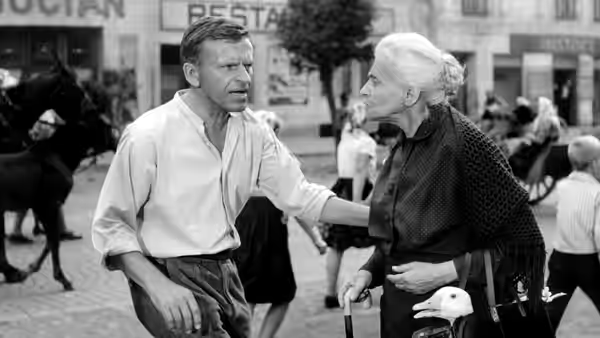
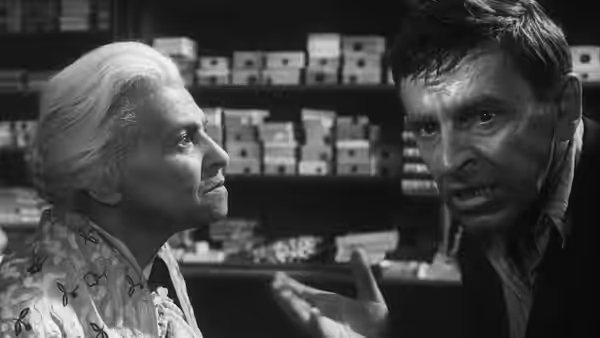
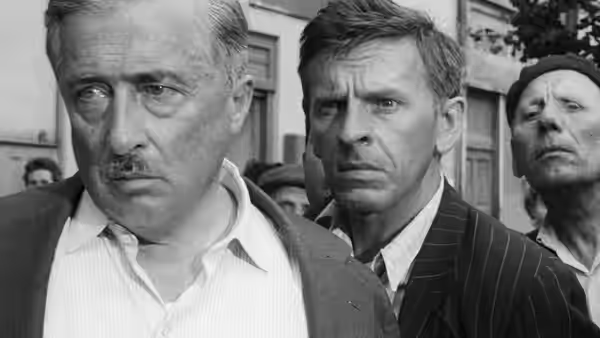
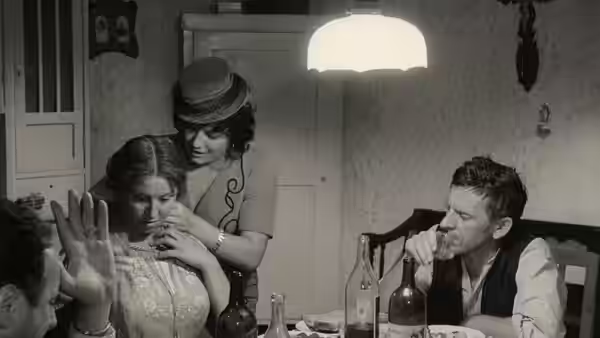
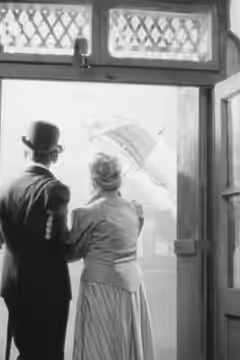
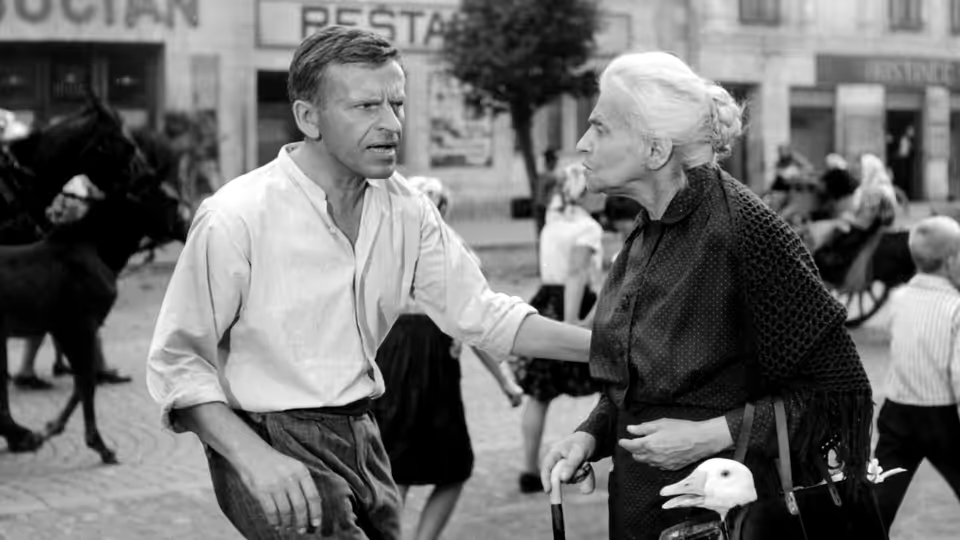
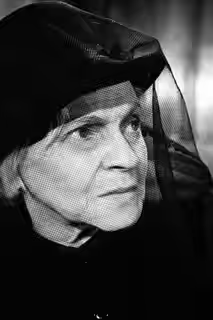
Tono Brtko (Jozef Kroner) speaks with Rozalia Lautmannová (Ida Kamińska) in the street
Film review

The Shop on Main Street

1965 · Directed by Ján Kadár, Elmar Klos · 2h 08m

In a sentenceTwo people sharing lunch in a shop that sells nothing, while the town builds a tower outside

Slovakia, 1942, under a government allied with Hitler. Antonin ‘Tono’ Brtko (Jozef Kroner) is a carpenter with too little work and a wife, Evelyna (Hana Slivková), who wants to know where the money is. His brother-in-law Markus Kolkocký (František Zvarík), who commands the local Guard, arrives with food, drink and a paper making Tono ‘Aryan controller’ of a button shop on the main street. The shop belongs to Rozalia Lautmannová (Ida Kamińska), an elderly Jewish widow, nearly deaf, who does not understand what is happening. It sells almost nothing. Tono’s friend Imro Kuchár (Martin Hollý) arranges for the Jewish traders to pay him to sit there and leave her be. She takes him for a new assistant. In the square, the Guard is building a wooden tower.

Fi1m review

Ján Kadár and Elmar Klos spend an hour letting a shambling carpenter and a deaf old widow get used to each other, then show what a whole town’s cowardice does to them. Patient, funny, and finally terrible. We would send a stranger to see it.

Ján Kadár and Elmar Klos, working from Ladislav Grosman’s novel, set out to show how a decent and weak man becomes part of a crime without ever deciding to. That is a large ambition for a film about a button shop, and they get there by refusing to hurry. For a good hour The Shop on Main Street is close to comedy. Then it is something else, and it is one of the few films on this subject we would tell a stranger to see.

Jozef Kroner plays Tono Brtko as a man who has never won an argument in his life. He shuffles, he scratches, he says yes when he means no, and when his brother-in-law hands him another man’s shop he protests for about as long as it takes to pour a drink. František Zvarík makes Kolkocký a loud, well-fed bully who is enjoying his uniform, and Hana Slivková’s Evelyna sees the shop the way she sees everything, as money she has not yet been given. The film is clear-eyed about all three and cruel to none of them.

Ida Kamińska is the reason the film works. Her Rozalia Lautmannová hears almost nothing, misreads everything, and treats the stranger who has been installed in her shop as a slightly slow young man who needs feeding. Kroner tries to explain the law to her and gets a plate of soup. She shows him the ledger, the drawers of buttons, the empty till, and he sits there with his cap in his hands. Kamińska plays her with a small, busy dignity, and the scenes of the two of them in the shop, saying nothing much, are the heart of the film.

Vladimír Novotný shoots the square in a hard, bright black and white, the sun flat on the cobbles and the Guard’s flags, and the shop as a dim grey room lit from one window. The difference matters: outside is where the town performs, inside is where two people eat lunch. Karel Škvor’s tower goes up plank by plank in the background of scene after scene, the town’s only construction project, and nobody needs to say what it is for. Zdeněk Liška gives the Sunday promenade a brass-band waltz, and when the tune comes back later it does not sound the same. Jaromír Janáček holds the shop scenes long and cuts to the loudspeaker in the square when he wants to remind us where we are.

Not everything lands. There are dream sequences, shot soft and bleached, in which Tono and Rozalia stroll arm in arm in their Sunday best, and they tip toward the whimsical in a film that has no need of it. Kolkocký’s scenes lean on the actor’s bulk and volume more than on anything written. And the tower is a symbol of the kind that stands in the square and asks to be noticed. The reviews so far rate it well below where we do; we think they have taken the slow first hour for slackness. Without it the last day would be melodrama.

The final movement takes place over a single day, and we will not describe it. We were frightened for two people in a button shop in a way no thriller has managed, and we knew exactly why: the film had spent an hour letting us watch them eat, and argue about the ledger, and wear their good clothes. When the fear arrived it had somewhere to go. We sat through the last twenty minutes without moving and were some time getting up afterwards.

Most films about this period go to the ghetto or the camp and ask us to grieve. This one stays on one street and asks a worse question, which is what we would have done with the paper in our hand and the drink in front of us. Kroner never asks for sympathy and never quite loses it. Kadár and Klos hold him to account and do not sneer.

See it, and see it with someone, because you will want to talk. It runs 128 minutes and carries a 15 certificate, and the first hour is gentler than the second.
Critical consensus AI synthesised

1 of 6
Positive
0
Mixed
1
Negative
0
The New York Times
20 February 1966 · Bosley Crowther
64*

The page appears to be a review of the 1965 film, but its text is inaccessible, so the critic’s verdict cannot be established. No specific praise or complaint can be confirmed from the available page content.

Read the full review →

Straight answers AI written, from our review

Is The Shop on Main Street worth watching?
The Shop on Main Street is worth watching for anyone prepared to sit through a slow, funny first hour to reach a terrible last day, and we scored it 90. Most critics rate it lower than we do; we think they mistook the patience for slackness. See it with someone, because you will want to talk afterwards.
How long is The Shop on Main Street, and what is it rated?
The Shop on Main Street runs 2h 08m. It is a drama and war film.
Where can I watch The Shop on Main Street in the Philippines?
The Shop on Main Street is not on any streaming or rental service in the Philippines at the moment. It is available in 1 other country; change your country at the top of the page to see where. Availability is checked daily.
How violent or frightening is The Shop on Main Street, and is it suitable for children?
The Shop on Main Street carries a UK 15 certificate and is frightening in the way of dread rather than gore, with the fear built entirely from watching two people in a button shop while a town turns on them. The first hour is close to comedy; the second is not. It is not for young children, and older teenagers should know how hard the ending lands.
How does The Shop on Main Street compare to Au Revoir les Enfants?
The Shop on Main Street and Au Revoir les Enfants both watch wartime cowardice destroy a friendship, but Kadár and Klos stay on one street and ask what we would have done, while Malle looks back at a boarding school from memory. We recommend both; the Slovak film is the harsher and more frightening, Malle's the gentler and more carefully arranged.
Is The Shop on Main Street based on a true story or a book?
The Shop on Main Street is based on Ladislav Grosman's novel, not on a documented true story, though it is set in Slovakia in 1942 under a government allied with Hitler. Our review does not judge how closely it follows the book. Knowing the novel is not needed; the film explains everything it wants you to understand in the shop itself.
What should I watch after The Shop on Main Street?
After The Shop on Main Street, try Closely Observed Trains (1966, Fi1m 82): Another small Czechoslovak station of the war, funnier still and just as sad. Then Au revoir les enfants (1987, Fi1m 90): Malle’s boarding school, where one boy’s carelessness costs more than he knows; and The Garden of the Finzi-Continis (1970, Fi1m 78): De Sica watches a rich Italian family refuse to see what is coming.

Cast

Awards

Academy Awards, 1967

Nominated
Best Actress

Targa d'Oro, 1967

Won
Targa d'Oro

Academy Awards, 1966

Won
Best International Feature Film

International Submission to the Academy Awards, 1966

Nominated
International Submission to the Academy Awards

New York Film Critics Circle Award for Best Foreign Language Film, 1966

Won
New York Film Critics Circle Award for Best Foreign Language Film

If you liked this, try…

  1. Closely Observed Trains (1966, Fi1m 82)Another small Czechoslovak station of the war, funnier still and just as sad.

  2. Au revoir les enfants (1987, Fi1m 90)Malle’s boarding school, where one boy’s carelessness costs more than he knows.

  3. The Garden of the Finzi-Continis (1970, Fi1m 78)De Sica watches a rich Italian family refuse to see what is coming.

  4. Ida (2013, Fi1m 85)A Polish novice and her aunt drive into what a village did in the war.

  5. Umberto D. (1952, Fi1m 91)An old man, a dog and a city that has no use for him; unbearably tender.