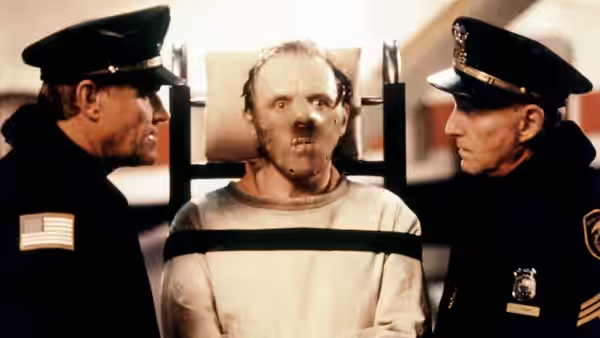
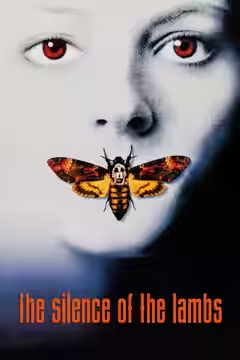
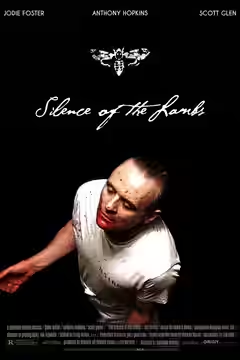
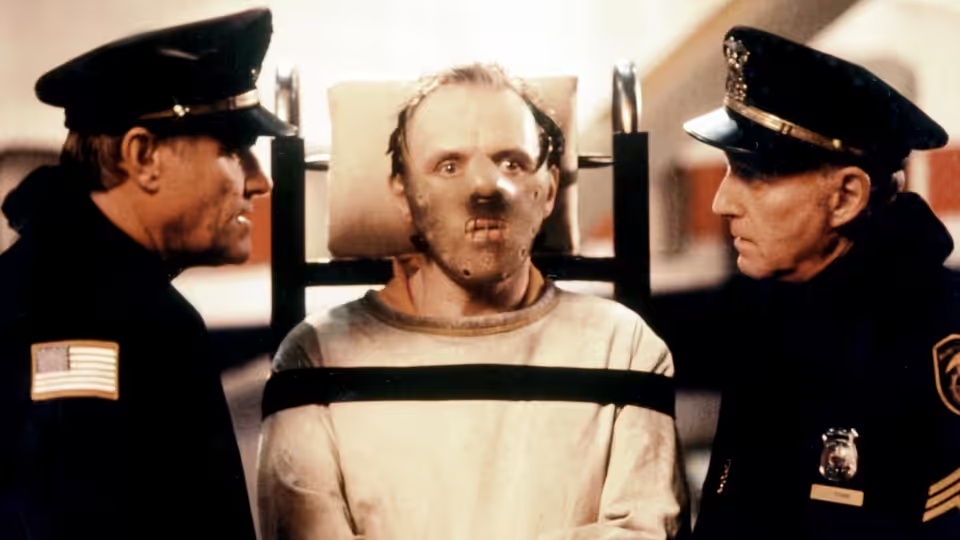
Dr. Hannibal Lecter (Anthony Hopkins) strapped in a restraint chair between two officers
Film review

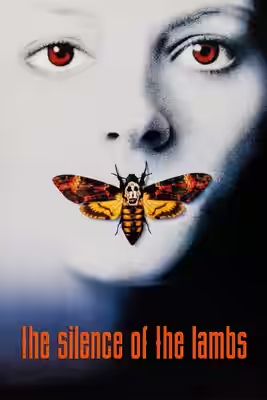
The Silence of the Lambs

1991 · Directed by Jonathan Demme · 1h 59m · BBFC 18

In a sentenceAnthony Hopkins listens so carefully that we would prefer him to interrupt

FBI trainee Clarice Starling (Jodie Foster) becomes involved in the pursuit of a serial killer known as Buffalo Bill (Ted Levine). Her encounters with Dr. Hannibal Lecter (Anthony Hopkins) turn the investigation towards questions of motive, fear and her own past. As Clarice tries to understand the people she is dealing with, Lecter studies her in return, and their conversations become a contest of observation and nerve. Jonathan Demme directs Ted Tally’s adaptation of Thomas Harris’s novel, with Scott Glenn as Jack Crawford and Anthony Heald as Dr. Frederick Chilton.

Plays from YouTube when you press play; nothing loads from them until then.

Fi1m review

Jonathan Demme’s thriller is frightening because it keeps us close to Clarice Starling, with Jodie Foster holding her ground against Anthony Hopkins. The investigation sometimes comes second to their encounters, but this is a thriller we would recommend without hesitation.

The Silence of the Lambs is an exceptionally good thriller, and we would recommend it even to someone who usually avoids the genre. Jonathan Demme takes the pursuit of a serial killer and keeps our attention on the FBI trainee trying to understand him. Ted Tally’s adaptation of Thomas Harris’s novel makes Clarice Starling’s vulnerability part of the suspense. That gives the questioning an unusual pressure: she has to keep working while her own reactions are being examined.

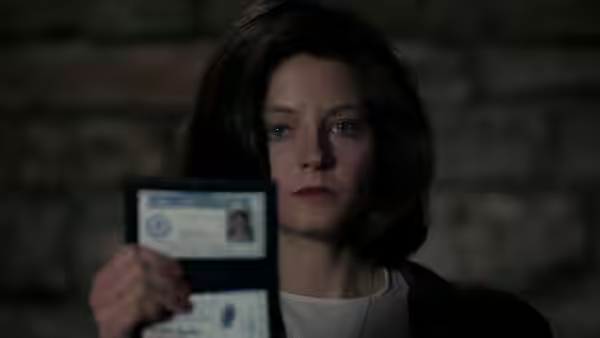
Jodie Foster makes that pressure readable without making Clarice seem helpless. Her determination has effort in it; we can believe that this trainee has to work to hold her own against Lecter. A less careful performance could have reduced the encounters to an opportunity for Anthony Hopkins to be entertainingly sinister. Foster keeps pulling our attention back to the person who has to deal with him, and the film is considerably more frightening because we care how she manages.

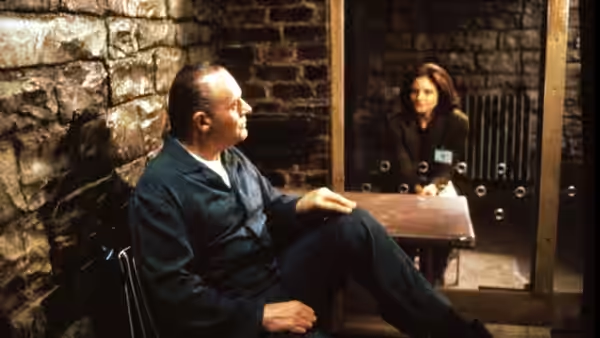
Hopkins is theatrical, and occasionally the pleasure of his performance threatens to make Lecter too enjoyable. But his attention to Clarice is what unsettles us most: he makes listening seem intrusive. We felt cornered during their conversations. Demme and cinematographer Tak Fujimoto bring the faces close enough for each response to matter, and the close-ups leave us little chance to stand back and enjoy a clever exchange. We keep watching Foster for the effect of what he says.

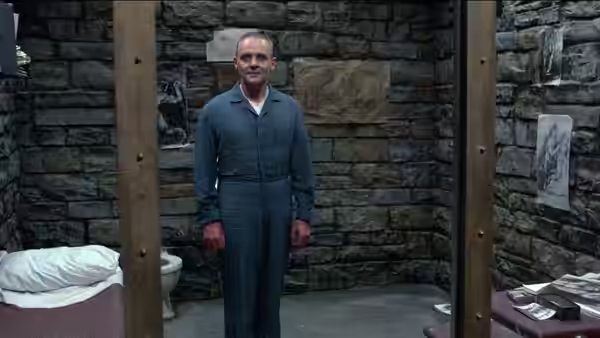
Kristi Zea’s production design supplies a gothic gloom that could easily have overwhelmed the people in it. It works because the settings feel oppressive without becoming the chief attraction; we remain interested in who is doing the talking. Howard Shore’s music supports that unease, giving the encounters weight without doing the actors’ work for them. Demme is careful about how insistently he presents the disturbing material, and generally stops short of making every unpleasant detail an occasion for display.

Editor Craig McKay keeps the investigation moving briskly enough that the return to ordinary detective work seldom feels like an interruption. Yet the balance is imperfect. The hunt for Buffalo Bill becomes less compelling whenever we are waiting for Clarice and Lecter to speak again, and Ted Levine has the difficult job of competing with a relationship that already commands our attention. He brings a disturbing force to the part, but the script cannot give both strands the same pull.

Demme’s restraint with violence also distinguishes the film from thrillers that measure menace in injuries. Much of the macabre material stays off-screen, and this is a useful discipline when the subject already offers so many opportunities for excess. The film still invites us to enjoy Lecter, sometimes more than seems wise. But it returns our attention to Clarice’s vulnerability and determination, rather than relying on another grisly detail to keep us interested.

At 119 minutes, it has room for these encounters without letting the pursuit drift. The appeal reaches beyond an appetite for serial-killer stories, though the 18 certificate should discourage any expectation of a mild evening. We would give it our full attention and accept the discomfort. If the choice tonight is something to help everyone unwind, choose another film.

Critical consensus AI synthesised

88
Positive
7
Mixed
0
Negative
0

The consensus is strongly favourable, with praise centred on Jonathan Demme’s controlled direction and the psychological exchanges between Anthony Hopkins’s Lecter and Jodie Foster’s Clarice. Most critics find the suspense effective because Demme avoids cheap shocks and shows restraint with violence. Hopkins receives particular attention for making Lecter unnerving, while Foster’s performance gives the encounters emotional weight. Several reviews also value the gothic atmosphere and the attention to Clarice’s inner life.

The differences are chiefly matters of emphasis rather than outright dissent, and the scored reviews occupy a narrow, positive range. The Hollywood Reporter finds that the Buffalo Bill storyline is somewhat overshadowed by Clarice and Lecter, whereas Time Out singles out Levine’s performance for particular praise. The New Yorker expresses a broader reservation: the filmmaking is intelligent and careful, but the sensational material makes its response harder to settle. Elsewhere, that restraint is precisely what critics admire.

Radio Times
★★★★★ · John Ferguson
100

The critic highlights the film's success in elevating cinematic serial killers through Hopkins' Oscar-winning Lecter and Foster's Clarice, crediting Demme for an effortless shift to terror with gothic gloom, genuine suspense, and chilling mind games between the leads.

Read the full review →
Empire
1 January 2000 · Barry McIlheney
90*

The film is a triumph thanks to its narrative strength, Demme's confident direction, and its ability to frighten without resorting to cheap tricks. Hopkins and Foster deliver standout performances that elevate the adaptation of Harris's novel.

Read the full review →
Sight and Sound
6 November 2017 · Lizzie Francke
90*

The critic calls Demme's film a sombre masterpiece that neatly adapts the novel while focusing on Clarice Starling's emotional and psychological journey through trauma. It praises the gothic atmosphere, strong characterisation especially Hopkins' Lecter, and restraint in handling sensational material.

Read the full review →
Film Comment
1 January 1991 · Kathleen Murphy
85*

The critic examines Demme's film as a complex study of predation and pursuit, focusing on the intense psychological interplay between Clarice and Lecter.

Read the full review →
The Guardian
30 May 1991 · Derek Malcolm
85*

Demme's film is an exceptionally good one, perhaps his best, that elevates the horror genre into something that can be argued about as a treatise on its unsettling times. It incorporates grisly humour and ends on a black joke while showcasing a spectacular central performance from Hopkins.

Read the full review →
The Hollywood Reporter
4 February 1991 · Duane Byrge
85*

The critic calls the film a spellbinding Psycho-style thriller that excels in its cat-and-mouse scenes between Clarice and Lecter, thanks to Demme's masterful direction and Hopkins' unnerving performance. Foster holds her own as the determined trainee, though the Buffalo Bill plot is somewhat overshadowed.

Read the full review →

Straight answers AI written, from our review

Is The Silence of the Lambs worth watching?
The Silence of the Lambs is worth watching for almost anyone who can bear a frightening evening, and we scored it 91. Jodie Foster keeps our attention on the trainee who has to cope with Anthony Hopkins, which is why the conversations unsettle rather than merely entertain. The hunt for Buffalo Bill sometimes comes second, but not by enough to matter.
How long is The Silence of the Lambs, and what is it rated?
The Silence of the Lambs runs 1h 59m and is rated 18 by the BBFC in the UK. It is a crime and thriller film.
Where can I watch The Silence of the Lambs in the UK?
The Silence of the Lambs is streaming on Amazon Prime Video in the UK, and it is also available to rent from Amazon Prime Video from £3.49. Availability is checked daily; the links above go straight to each service.
How violent or frightening is The Silence of the Lambs, and is it suitable for children?
The Silence of the Lambs carries an 18 certificate in the UK and is not suitable for children. Much of the macabre material stays off-screen, and Jonathan Demme does not measure menace in injuries, but the subject is a serial killer and the conversations with Lecter left us feeling cornered. Squeamish adults will manage better than they expect; nervous ones should still choose another night.
How does The Silence of the Lambs compare to Manhunter?
The Silence of the Lambs is the warmer and more frightening of the two, because it keeps us close to Clarice Starling; Manhunter is colder and more controlled, with Brian Cox making restraint unnerving where Anthony Hopkins is theatrical. Both films make watching the investigator as troubling as watching the suspect. We recommend Demme's film to most readers and Mann's to anyone who prefers unease held at a distance.
Is The Silence of the Lambs based on a true story or a book?
The Silence of the Lambs is based on Thomas Harris's novel of the same name, adapted for the screen by Ted Tally; it is not a true story. Tally's script makes Clarice Starling's vulnerability part of the suspense, and knowing the book is not needed to follow or enjoy the film.
What should I watch after The Silence of the Lambs?
After The Silence of the Lambs, try Manhunter (1986, Fi1m 84): Another investigation where watching the investigator becomes as troubling as watching the suspect. Then Memories of Murder (2003, Fi1m 91): Patient detective work, institutional failure and humour that makes the horror harder to dismiss; and Cure (1997, Fi1m 85): For the dread of conversations whose danger becomes clear a little too late.

Cast

Awards

Academy Awards, 1992

Nominated
Best Film Editing
Nominated
Best Sound
Won
Best Actor
Won
Best Actress
Won
Best Director
Won
Best Picture
Won
Best Writing, Adapted Screenplay

BAFTA Film Awards, 1992

Won
Best Actor in a Leading Role
Won
Best Actress in a Leading Role

Writers Guild of America Award for Best Adapted Screenplay, 1992

Won
Writers Guild of America Award for Best Adapted Screenplay

Boston Society of Film Critics Award for Best Supporting Actor, 1991

Won
Boston Society of Film Critics Award for Best Supporting Actor

Chicago Film Critics Association Award for Best Actor, 1991

Won
Chicago Film Critics Association Award for Best Actor

Dallas-Fort Worth Film Critics Association Award for Best Actor, 1991

Won
Dallas-Fort Worth Film Critics Association Award for Best Actor

Directors Guild of America Award for Outstanding Directing – Feature Film, 1991

Won
Directors Guild of America Award for Outstanding Directing – Feature Film

Golden Globes, 1991

Won
Best Actress – Motion Picture Drama

Kansas City Film Critics Circle Award for Best Actor, 1991

Won
Kansas City Film Critics Circle Award for Best Actor

National Board of Review Award for Best Director, 1991

Won
National Board of Review Award for Best Director

National Board of Review Award for Best Supporting Actor, 1991

Won
National Board of Review Award for Best Supporting Actor

New York Film Critics Circle Award for Best Actor, 1991

Won
New York Film Critics Circle Award for Best Actor

New York Film Critics Circle Award for Best Actress, 1991

Won
New York Film Critics Circle Award for Best Actress

New York Film Critics Circle Award for Best Director, 1991

Won
New York Film Critics Circle Award for Best Director

Saturn Awards, 1991

Won
Best Actor

If you liked this, try…

  1. Manhunter (1986, Fi1m 84)Another investigation where watching the investigator becomes as troubling as watching the suspect.

  2. Memories of Murder (2003, Fi1m 91)Patient detective work, institutional failure and humour that makes the horror harder to dismiss.

  3. Cure (1997, Fi1m 85)For the dread of conversations whose danger becomes clear a little too late.

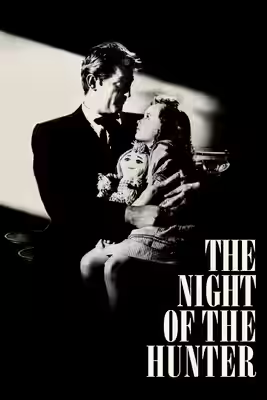
  4. The Night of the Hunter (1955, Fi1m 91)A courteous predator and vulnerable people, filmed with a different kind of menace.

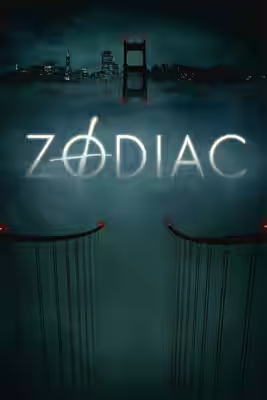
  5. Zodiac (2007, Fi1m 91)The pursuit takes over ordinary lives, with painstaking attention to what cannot be proved.

Free account

Know what to watch tonight

Two lists that know where things are streaming, collections you can share, your own score beside ours, and Discover that remembers what you have seen.

  • Want to see, sorted by what is streaming now
  • Seen, with your score out of ten
  • No adverts, ever