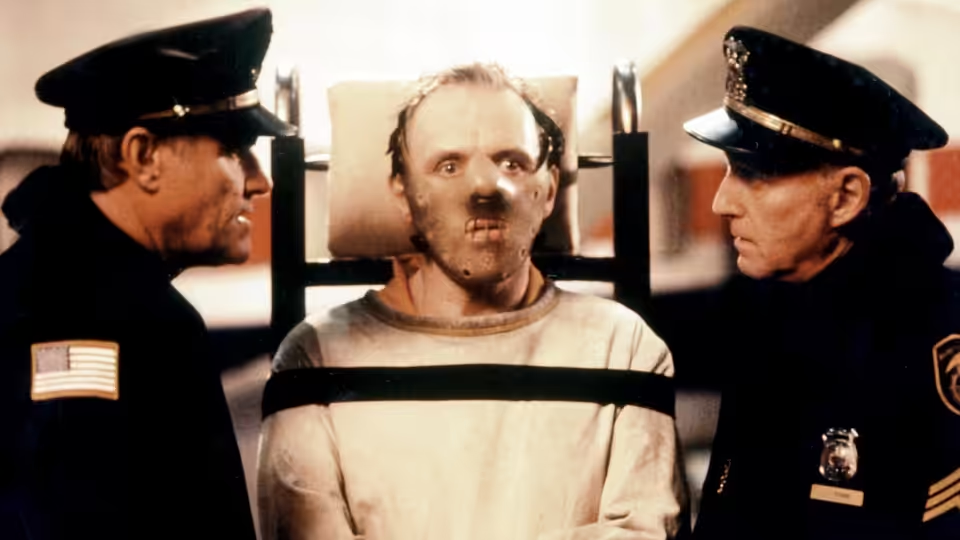
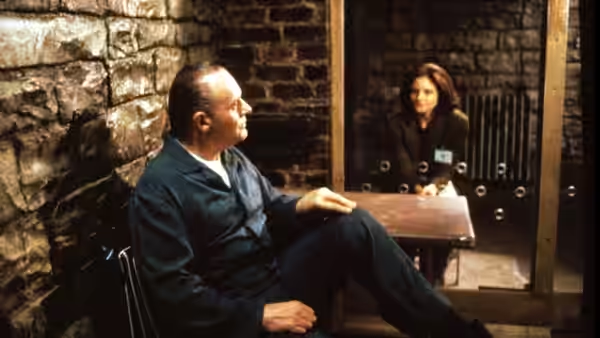
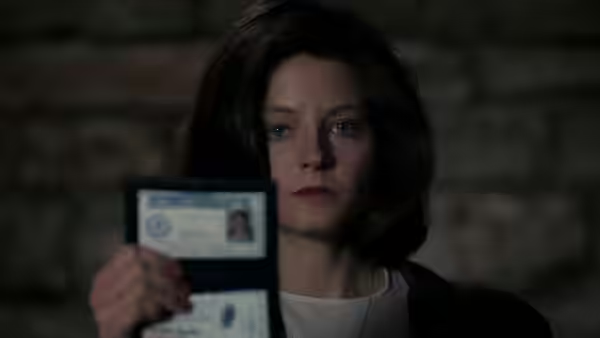
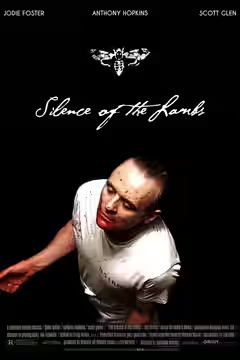
Jonathan Demme’s thriller is frightening because it keeps us close to Clarice Starling, with Jodie Foster holding her ground against Anthony Hopkins. The investigation sometimes comes second to their encounters, but this is a thriller we would recommend without hesitation.
The Silence of the Lambs is an exceptionally good thriller, and we would recommend it even to someone who usually avoids the genre. Jonathan Demme takes the pursuit of a serial killer and keeps our attention on the FBI trainee trying to understand him. Ted Tally’s adaptation of Thomas Harris’s novel makes Clarice Starling’s vulnerability part of the suspense. That gives the questioning an unusual pressure: she has to keep working while her own reactions are being examined.
Jodie Foster makes that pressure readable without making Clarice seem helpless. Her determination has effort in it; we can believe that this trainee has to work to hold her own against Lecter. A less careful performance could have reduced the encounters to an opportunity for Anthony Hopkins to be entertainingly sinister. Foster keeps pulling our attention back to the person who has to deal with him, and the film is considerably more frightening because we care how she manages.
Hopkins is theatrical, and occasionally the pleasure of his performance threatens to make Lecter too enjoyable. But his attention to Clarice is what unsettles us most: he makes listening seem intrusive. We felt cornered during their conversations. Demme and cinematographer Tak Fujimoto bring the faces close enough for each response to matter, and the close-ups leave us little chance to stand back and enjoy a clever exchange. We keep watching Foster for the effect of what he says.
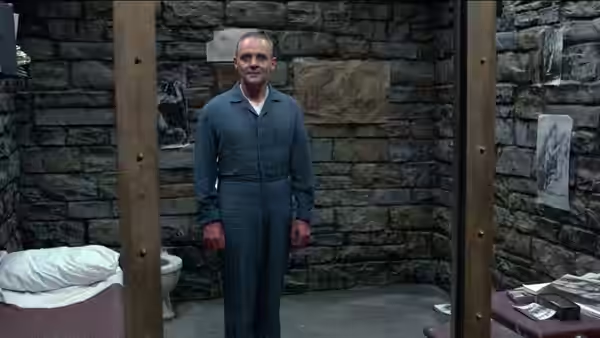
Kristi Zea’s production design supplies a gothic gloom that could easily have overwhelmed the people in it. It works because the settings feel oppressive without becoming the chief attraction; we remain interested in who is doing the talking. Howard Shore’s music supports that unease, giving the encounters weight without doing the actors’ work for them. Demme is careful about how insistently he presents the disturbing material, and generally stops short of making every unpleasant detail an occasion for display.
Editor Craig McKay keeps the investigation moving briskly enough that the return to ordinary detective work seldom feels like an interruption. Yet the balance is imperfect. The hunt for Buffalo Bill becomes less compelling whenever we are waiting for Clarice and Lecter to speak again, and Ted Levine has the difficult job of competing with a relationship that already commands our attention. He brings a disturbing force to the part, but the script cannot give both strands the same pull.
Demme’s restraint with violence also distinguishes the film from thrillers that measure menace in injuries. Much of the macabre material stays off-screen, and this is a useful discipline when the subject already offers so many opportunities for excess. The film still invites us to enjoy Lecter, sometimes more than seems wise. But it returns our attention to Clarice’s vulnerability and determination, rather than relying on another grisly detail to keep us interested.
At 119 minutes, it has room for these encounters without letting the pursuit drift. The appeal reaches beyond an appetite for serial-killer stories, though the 18 certificate should discourage any expectation of a mild evening. We would give it our full attention and accept the discomfort. If the choice tonight is something to help everyone unwind, choose another film.