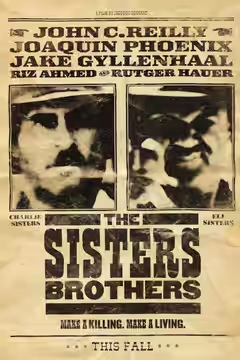
Jacques Audiard’s western is a kind, odd, frequently funny thing about two killers who would rather be doing something else, and it is worth your evening. It dawdles in the middle, and the strand following Gyllenhaal and Ahmed is thinner than the one it keeps interrupting.
Jacques Audiard, whose films have mostly been about hard men in small rooms, has gone to the American West and found it full of hard men who would rather be somewhere else. The Sisters Brothers, written with Thomas Bidegain from Patrick DeWitt’s novel, follows two hired killers south from Oregon on a job neither of them much wants. It is a kind, odd, frequently funny film, and it is worth your evening. It also dawdles, and for a stretch in the middle it seems as unsure of where it is going as its heroes are.
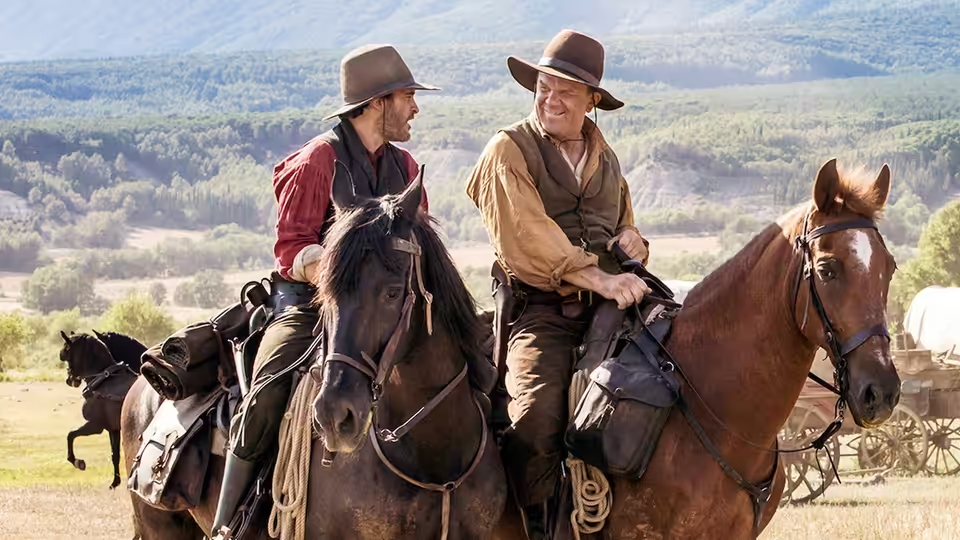
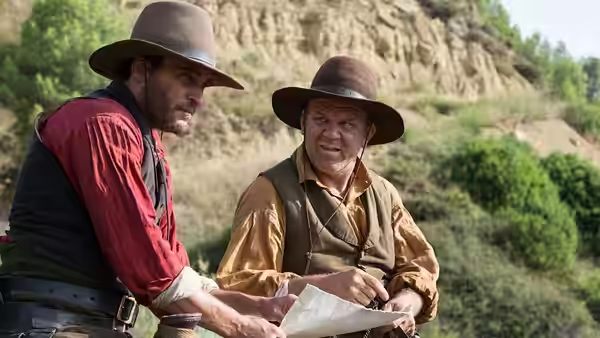
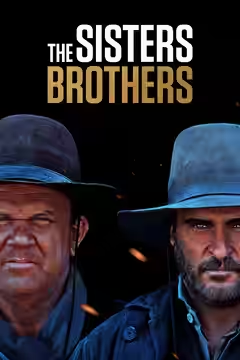
The brothers carry it. John C. Reilly, who also produced, plays Eli as a big, careful man who says sorry to his horse and means it. Joaquin Phoenix plays Charlie as a drunk who wakes up mean, shoots better than anyone in the territory, and needs his brother more than he will admit. Their arguments about who is the lead man, about their mother, about whether a toothbrush is a sensible purchase, are the best writing in the film. Watching Reilly work out what the little wooden brush is for, alone in a boarding-house room, we laughed and then felt oddly protective of him.
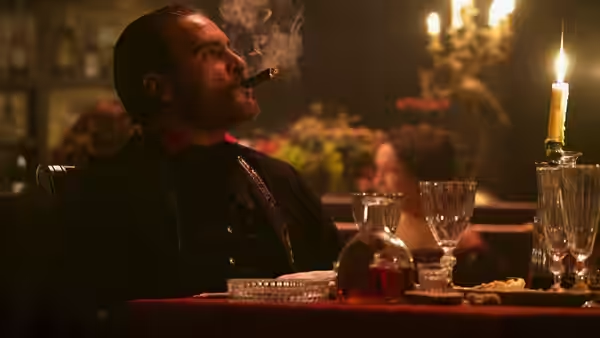
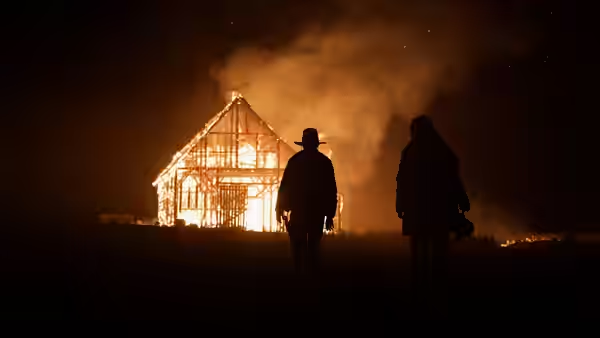
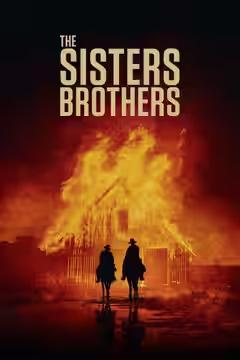
Benoît Debie shoots the opening raid in something close to total darkness, so that all we see of the fight is muzzle flash and, after a while, a barn going up. His days are green and gold and a little too bright. Michel Barthélémy builds the towns so that they get more finished the further south the brothers ride: tents, then boards, then a hotel with a flushing lavatory that stops Eli in his tracks. Milena Canonero puts Eli in a coat a size too big and Charlie in a red shirt. Alexandre Desplat’s score is plucked and sly, a saloon tune heard through a wall, and it keeps its good humour even when the film does not.
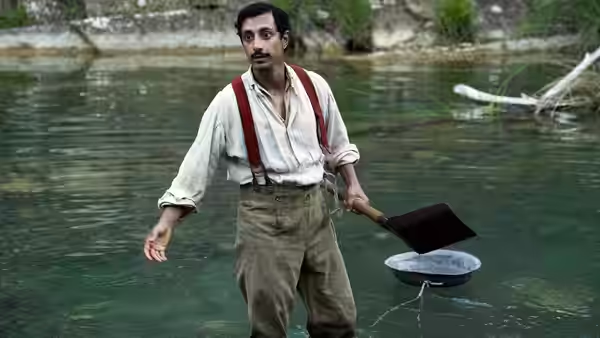
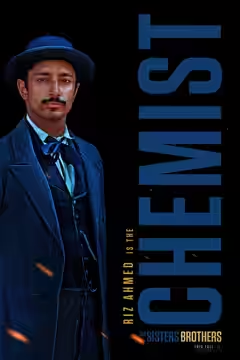
The other pair are stranger. Jake Gyllenhaal plays John Morris, the scout sent ahead, in a clipped, bookish voice that sounds as though he learned English from his own diary, which he reads aloud to us. Riz Ahmed’s Hermann Kermit Warm is a chemist with a formula that makes gold shine in a riverbed and a plan to spend the proceeds on a better kind of town. Ahmed is gentle and persuasive and Gyllenhaal thaws nicely, but their scenes are written thinner than the brothers’, and each time the film cuts to them it slows. Juliette Welfling cuts most scenes short, before the point has been made twice, which is a virtue elsewhere; here it means the Morris strand never quite settles.
What got us was the horse. Eli’s animal, Tub, is slow and plain and Charlie wants him replaced, and Eli will not have it. There is an encounter with a bear that we will not detail, and afterwards Reilly tends to the horse with a care he gives to nothing else in his life. It moved us more than we thought a horse in a western could, and it did so because Audiard holds on Reilly’s hands and face rather than on the wound. The same attention goes into a scene with a spider that had us squirming, and the film knows it can do both.
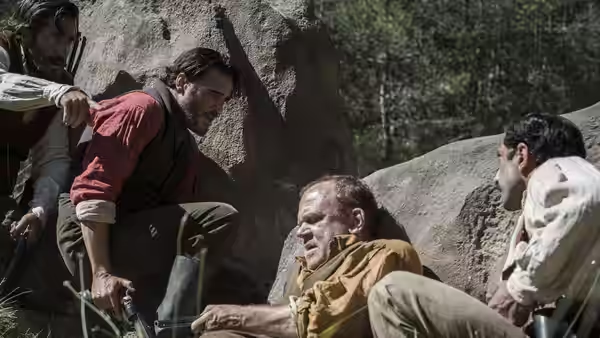
The trouble is pace. The middle hour drifts from camp to camp, and while every stop has something in it, including a saloon in Mayfield run by a woman of the same name (Rebecca Root), the film loses its pull. The violence, when it comes, is fast and ugly and the score stays cheerful, and that gap works about half the time. The last stretch takes a turn we will not describe. Some critics found it soft; we thought it was earned, and that it says what the previous hour had been circling about men who kill for a living and what it costs them.
A Prophet (2009) was Audiard’s harshest film and this is his gentlest, and it is odd how alike they feel underneath: men stuck in a trade and looking for a way out. It runs 121 minutes and carries a 15. See it for Reilly, for the toothbrush and the horse, and for a western that thinks a hired gun might be a man who wants to go home.