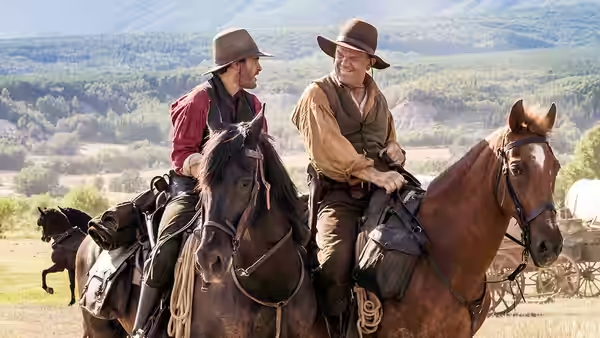
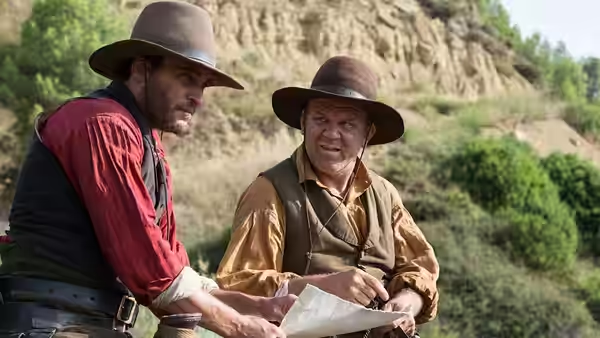
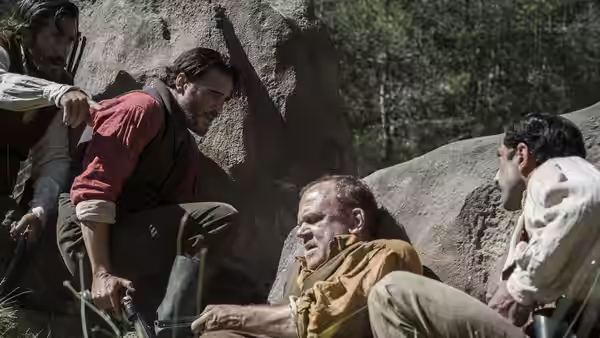
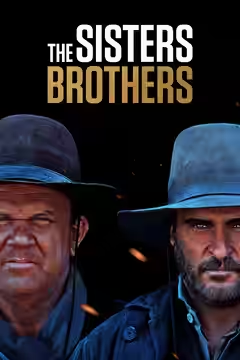
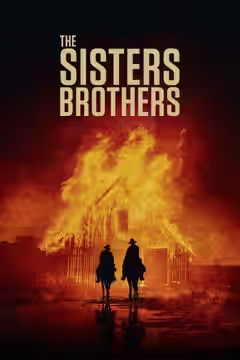
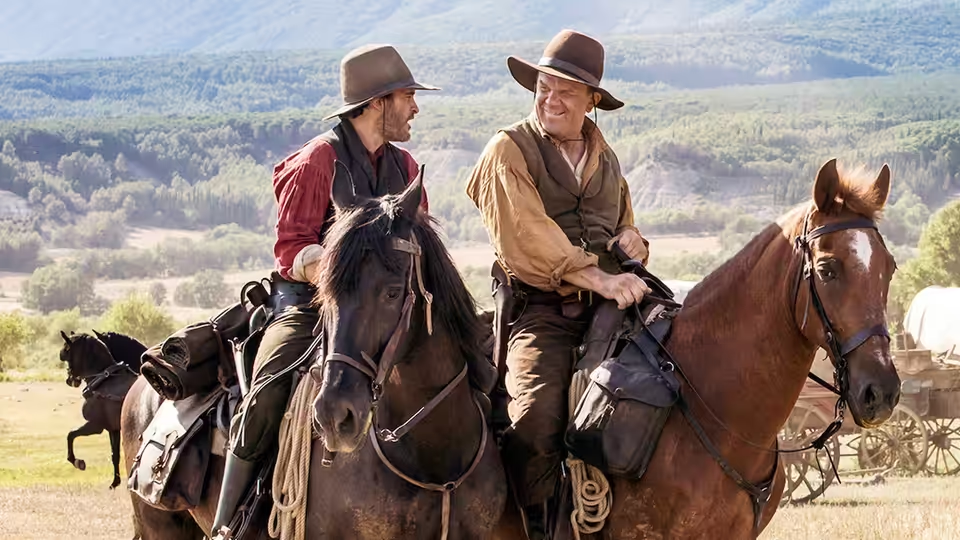
Charlie Sisters (Joaquin Phoenix) and Eli Sisters (John C. Reilly) ride horses across open country
Film review

The Sisters Brothers

2018 · Directed by Jacques Audiard · 2h 01m

In a sentenceTwo hired guns ride south to kill a chemist and one of them discovers the toothbrush on the way

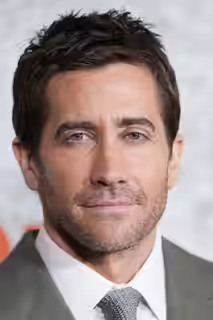
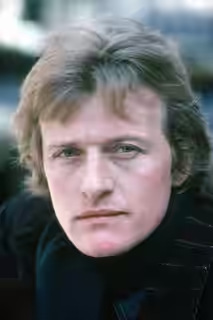
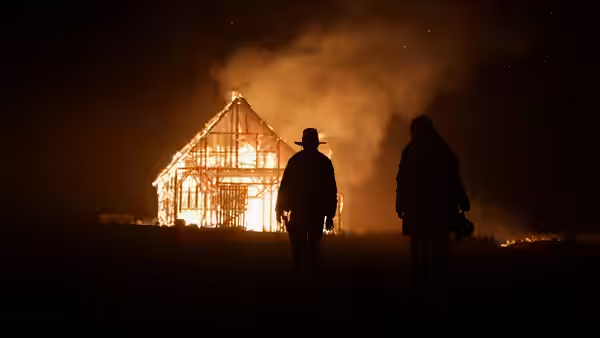
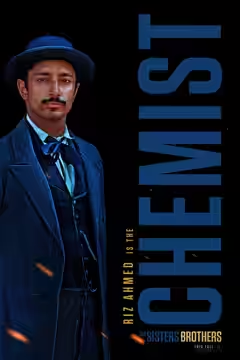
Oregon, 1851. Eli Sisters (John C. Reilly) and his brother Charlie (Joaquin Phoenix) kill people for money on behalf of a man known as the Commodore (Rutger Hauer), and the film opens with them at work: a night raid on a farmhouse, lit only by gunfire, that ends with a barn burning. Their next job is a chemist, Hermann Kermit Warm (Riz Ahmed), who is heading south towards the California goldfields and is said to have taken something from the Commodore. Ahead of them rides John Morris (Jake Gyllenhaal), a scout paid to find Warm and hold him until the brothers arrive. Charlie drinks and wants to be the lead man. Eli wants a quieter life, carries a schoolteacher’s shawl in his coat, and buys himself a toothbrush.

Plays from YouTube when you press play; nothing loads from them until then.

Fi1m review

Jacques Audiard’s western is a kind, odd, frequently funny thing about two killers who would rather be doing something else, and it is worth your evening. It dawdles in the middle, and the strand following Gyllenhaal and Ahmed is thinner than the one it keeps interrupting.

Jacques Audiard, whose films have mostly been about hard men in small rooms, has gone to the American West and found it full of hard men who would rather be somewhere else. The Sisters Brothers, written with Thomas Bidegain from Patrick DeWitt’s novel, follows two hired killers south from Oregon on a job neither of them much wants. It is a kind, odd, frequently funny film, and it is worth your evening. It also dawdles, and for a stretch in the middle it seems as unsure of where it is going as its heroes are.

The brothers carry it. John C. Reilly, who also produced, plays Eli as a big, careful man who says sorry to his horse and means it. Joaquin Phoenix plays Charlie as a drunk who wakes up mean, shoots better than anyone in the territory, and needs his brother more than he will admit. Their arguments about who is the lead man, about their mother, about whether a toothbrush is a sensible purchase, are the best writing in the film. Watching Reilly work out what the little wooden brush is for, alone in a boarding-house room, we laughed and then felt oddly protective of him.

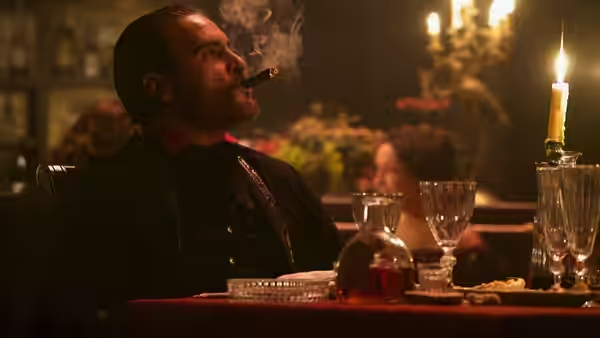
Benoît Debie shoots the opening raid in something close to total darkness, so that all we see of the fight is muzzle flash and, after a while, a barn going up. His days are green and gold and a little too bright. Michel Barthélémy builds the towns so that they get more finished the further south the brothers ride: tents, then boards, then a hotel with a flushing lavatory that stops Eli in his tracks. Milena Canonero puts Eli in a coat a size too big and Charlie in a red shirt. Alexandre Desplat’s score is plucked and sly, a saloon tune heard through a wall, and it keeps its good humour even when the film does not.

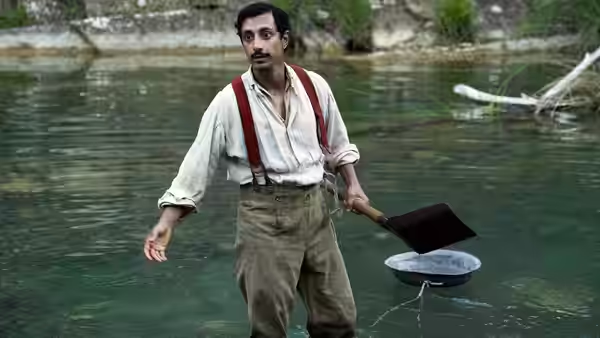
The other pair are stranger. Jake Gyllenhaal plays John Morris, the scout sent ahead, in a clipped, bookish voice that sounds as though he learned English from his own diary, which he reads aloud to us. Riz Ahmed’s Hermann Kermit Warm is a chemist with a formula that makes gold shine in a riverbed and a plan to spend the proceeds on a better kind of town. Ahmed is gentle and persuasive and Gyllenhaal thaws nicely, but their scenes are written thinner than the brothers’, and each time the film cuts to them it slows. Juliette Welfling cuts most scenes short, before the point has been made twice, which is a virtue elsewhere; here it means the Morris strand never quite settles.

What got us was the horse. Eli’s animal, Tub, is slow and plain and Charlie wants him replaced, and Eli will not have it. There is an encounter with a bear that we will not detail, and afterwards Reilly tends to the horse with a care he gives to nothing else in his life. It moved us more than we thought a horse in a western could, and it did so because Audiard holds on Reilly’s hands and face rather than on the wound. The same attention goes into a scene with a spider that had us squirming, and the film knows it can do both.

The trouble is pace. The middle hour drifts from camp to camp, and while every stop has something in it, including a saloon in Mayfield run by a woman of the same name (Rebecca Root), the film loses its pull. The violence, when it comes, is fast and ugly and the score stays cheerful, and that gap works about half the time. The last stretch takes a turn we will not describe. Some critics found it soft; we thought it was earned, and that it says what the previous hour had been circling about men who kill for a living and what it costs them.

A Prophet (2009) was Audiard’s harshest film and this is his gentlest, and it is odd how alike they feel underneath: men stuck in a trade and looking for a way out. It runs 121 minutes and carries a 15. See it for Reilly, for the toothbrush and the horse, and for a western that thinks a hired gun might be a man who wants to go home.

Critical consensus AI synthesised

72
Positive
19
Mixed
6
Negative
2

Most critics like this one, and they like it for the same reasons. The praise gathers around John C. Reilly, whose Eli several reviews name as the film’s emotional centre, and around his bickering, affectionate interplay with Joaquin Phoenix. Beyond the performances, critics enjoy the way Jacques Audiard turns a violent Western into something humane and mournfully comic, with the humour puncturing the brutality rather than softening it. A handful also single out Benoît Debie’s cinematography and the detailed production design.

Where the reviews part is on pace and freshness. Several find the film languid or rambling, and a few think its subversion of the genre is less new than it believes. Variety finds it witty but plodding and familiar, and Vulture faults the brothers’ story and an ending it considers unearned; Vulture and the Evening Standard both prefer the quieter strand between Riz Ahmed and Jake Gyllenhaal. The spread is otherwise narrow, with only two outright negatives among twenty-seven.

Empire
1 April 2019 · Nick de Semlyen
85*

The critic finds it a terrific, funny, unpredictable Western that deftly undercuts the genre’s conventions. They especially praise John C. Reilly and Joaquin Phoenix’s pugnacious, charming performances and interplay.

Read the full review →
Los Angeles Times
20 September 2018 · Justin Chang
85*

Chang finds the film soulful and affecting, blending a comic western with a tender story of brotherhood and unexpected connection. He especially praises the lakeside sequence, where the four men briefly bond and the film nearly breaks the viewer’s heart.

Read the full review →
Evening Standard
5 April 2019 · ★★★★ · Charlotte O'Sullivan
80

O'Sullivan finds the western erudite, visceral, and chuckle-worthy, with a mysterious shift in focus that makes it feel distinctive. She especially praises Riz Ahmed and Jake Gyllenhaal, singling out their intense chemistry and Ahmed's striking performance.

Read the full review →
Little White Lies
1 April 2019 · 4/4/4 · Hannah Strong
80

The review finds the film a bittersweet, entertaining tale elevated by its warmth and comic pathos. It praises the chemistry and performances of John C. Reilly and Joaquin Phoenix, while wishing Jake Gyllenhaal and Riz Ahmed had more screen time.

Read the full review →
Radio Times
★★★★ · Emma Simmonds
80

Simmonds finds Audiard’s adaptation a rugged, searing take on the Western. She praises its authenticity and the flashes of humanity that puncture its brutality.

Read the full review →
Sight and Sound
4 September 2018 · festival review · Jessica Kiang
80*

Kiang finds the film a mournfully comic western that builds to a moving, compassionate conclusion. She especially praises its tender humor and the brothers’ gradual emotional development.

Read the full review →

Straight answers AI written, from our review

Is The Sisters Brothers worth watching?
The Sisters Brothers is worth watching, and we scored it 78: a kind, odd, frequently funny western about two hired killers who would rather be doing something else. It suits anyone who likes their westerns talkative and slow rather than lean, and who can forgive a middle hour that drifts from camp to camp before the film finds its pull again.
How long is The Sisters Brothers, and what is it rated?
The Sisters Brothers runs 2h 01m. It is a western and drama film.
Where can I watch The Sisters Brothers in Greece?
The Sisters Brothers is not on any streaming or rental service in Greece at the moment. It is available in 25 other countries; change your country at the top of the page to see where. Availability is checked daily.
How violent or frightening is The Sisters Brothers, and is it suitable for children?
The Sisters Brothers carries a 15 and is not for children. The violence is fast and ugly when it arrives, including a night raid seen only by muzzle flash and an encounter with a bear, and there is a scene with a spider that had us squirming. Older teenagers who can take a hard western should be fine; the squeamish should brace for the animal scenes.
How does The Sisters Brothers compare to McCabe & Mrs. Miller?
The Sisters Brothers is the warmer and funnier of the two, and McCabe & Mrs. Miller is the sadder and, we think, the better film. Altman builds a muddy, mumbling town where business matters more than gunfights; Audiard follows two brothers on the road and keeps his eye on their bickering. Choose Altman if you will listen closely, Audiard if you want company.
Is The Sisters Brothers based on a true story or a book?
The Sisters Brothers is based on a novel, not a true story: Patrick DeWitt's book of the same name, adapted by Jacques Audiard and Thomas Bidegain. The setting is Oregon and the California goldfields in 1851, but the brothers, the chemist and his gold-finding formula are fiction. You do not need to have read the novel to follow or enjoy the film.
What should I watch after The Sisters Brothers?
After The Sisters Brothers, try McCabe & Mrs. Miller (1971, Fi1m 90): Altman’s muddy, mumbling frontier, where the town matters more than the gunfight. Then Dead Man (1995, Fi1m 84): Jarmusch sends an accountant west to die slowly; funny, strange and black and white; and Slow West (2015, Fi1m 77): A short, odd, tender western from a Scottish director, with Fassbender riding shotgun.

Cast

If you liked this, try…

  1. McCabe & Mrs. Miller (1971, Fi1m 90)Altman’s muddy, mumbling frontier, where the town matters more than the gunfight.

  2. Dead Man (1995, Fi1m 84)Jarmusch sends an accountant west to die slowly; funny, strange and black and white.

  3. Slow West (2015, Fi1m 77)A short, odd, tender western from a Scottish director, with Fassbender riding shotgun.

  4. The Proposition (2005) · not on Fi1m yetAustralia’s outback as the West, brothers again, and Nick Cave writing the words.

  5. A Prophet (2009, Fi1m 86)Audiard’s prison film: the same trapped men, none of the sunlight.