Leni Riefenstahl’s documentary is accomplished, exhausting and repellent in its treatment of obedience as a public pleasure. We recommend it for critical study, with no pretence that its handling of light and ceremony can be separated from its politics.
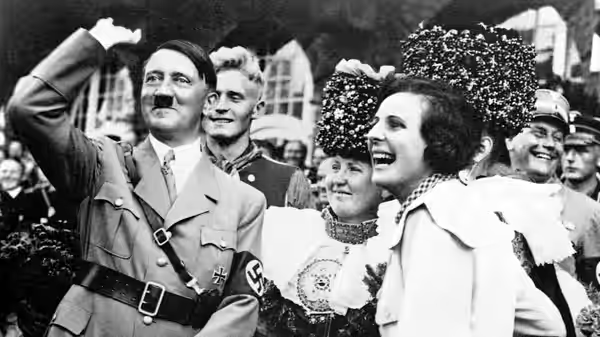
Triumph of the Will is worth studying, though we would hesitate to call it a rewarding evening’s viewing. Leni Riefenstahl’s documentary gives Adolf Hitler and the Nuremberg rallies a disciplined, forceful presentation, and the discipline becomes exhausting. Its skill is plain, and that skill serves Nazi propaganda. We come away with a better understanding of how a leader can be made to look unquestionable, and a strong desire to question the choices the film has made.
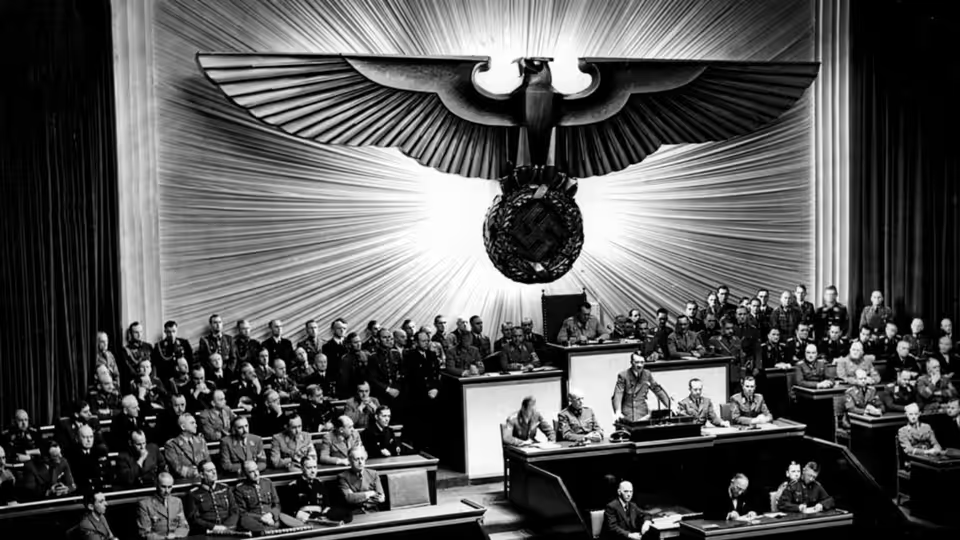
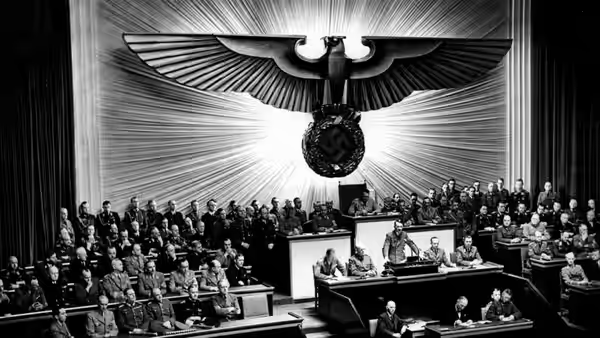
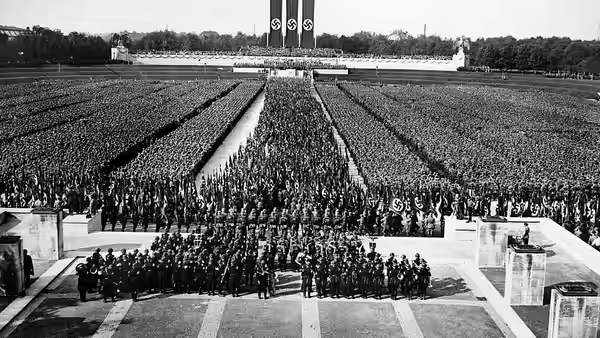
The director concentrates on the public display of allegiance. Political symbols and rhythmic ceremony make the gathered people appear to have one feeling and one wish, with Adolf Hitler at the centre of both. That is a claim about the crowd, however smoothly the images encourage us to accept it. Against the basic documentary expectation that we might learn something about people by watching them, this is a constricting approach: the people matter chiefly because they agree.
The cinematography is credited to a large team, including Sepp Allgeier, Walter Frentz and Werner Bohne, so assigning the achievement to one pair of eyes would be careless. The use of light gives the pageantry force, while the prominence of political symbols keeps its meaning insistently clear. We can see where our attention is meant to settle, and there is little difficulty in grasping what we are meant to feel. The photography works persuasively even when we resist what it is asking us to accept.
As editor, Leni Riefenstahl makes the rhythm of the pageantry do much of the persuading. Movement, ceremony and emphasis seem to confirm one another, until an awkward interruption feels almost unimaginable. Herbert Windt’s music helps sustain that directed response, though we find the insistence wearing. The effects are controlled enough to make each display feel like further proof of the same proposition. Over 114 minutes, the lack of room for another response becomes a serious limitation.
We were repelled by the reassurance offered by the organised spectacle. What did it was the treatment of collective obedience as something to take pleasure in looking at, with the lighting and ceremonial rhythm encouraging that pleasure. The crowd’s appearance of agreement is asked to settle questions that a documentary ought to leave us free to ask. It is disturbing to watch a film work so hard at making our own judgement seem unnecessary.
There are stretches when we feel the film has already made its case and is merely making it again. The director can organise a spectacle, but she offers little variation in what we are supposed to take from it. The repeated assurance of unity grows deadening, and technical fluency cannot keep repetition interesting for nearly two hours. We are left waiting for some change in emphasis, and the film offers too little of it.
For anyone studying political cinema, there is plenty to scrutinise here in the handling of collective feeling. We cannot recommend setting its purpose aside to enjoy the photography, since that photography is being used to glorify Adolf Hitler. Treating the people on screen as evidence of unanimous belief is precisely the habit we should resist. Choose it for that examination, and allow time afterwards to discuss what it has left out.