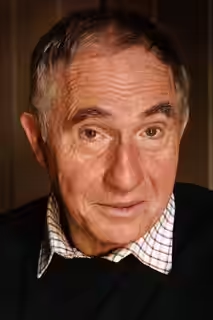
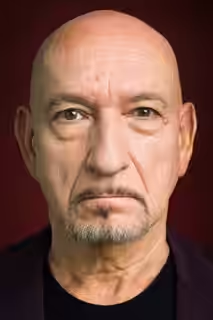
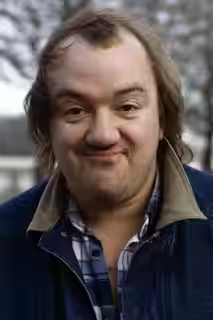
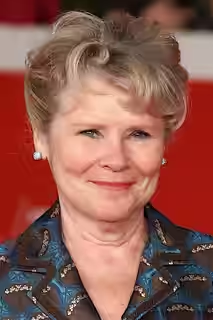
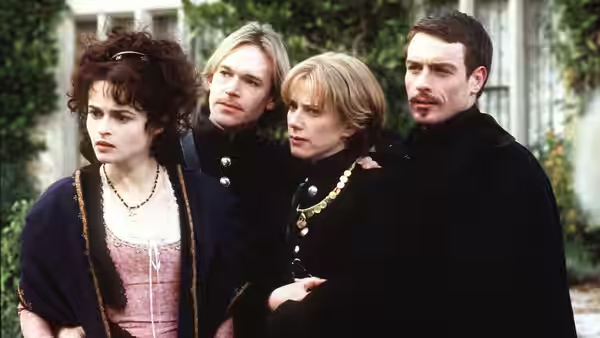
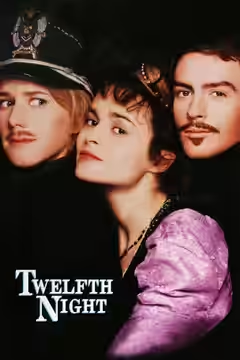
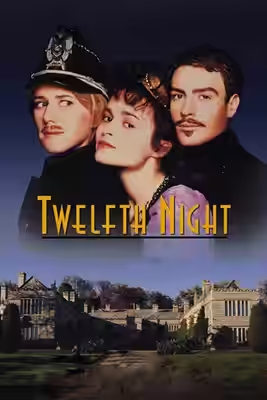
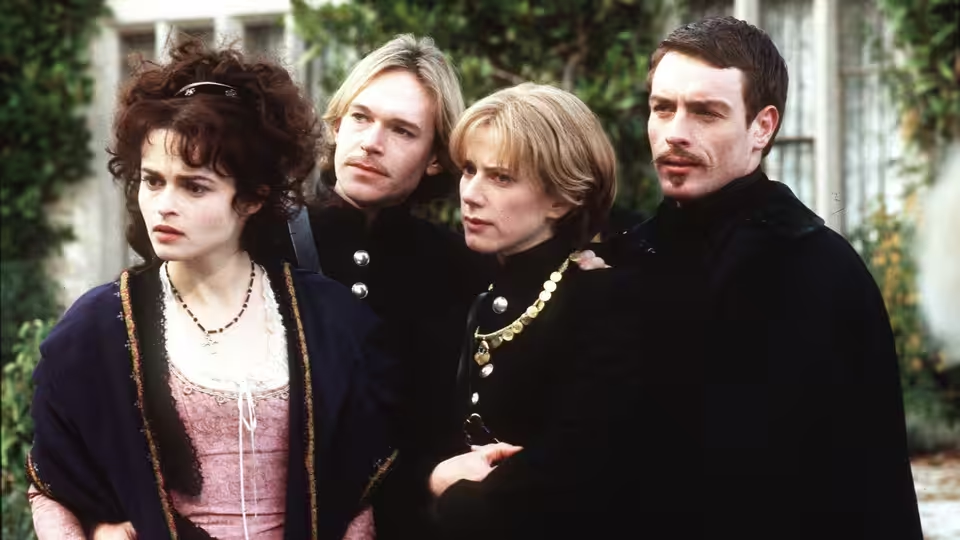
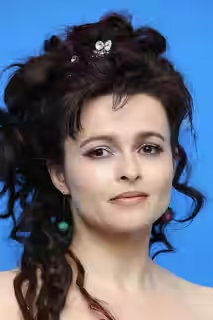
Olivia stands with three companions outdoors, all looking toward something beyond the frame
Film review

Twelfth Night

1996 · Directed by Trevor Nunn · 2h 14m

In a sentenceA comedy in which it rains on the clowns, and the clowns have noticed

Illyria, late nineteenth century. A steamer goes down off a rocky coast and Viola (Imogen Stubbs) is pulled from the sea by its Captain (Sidney Livingstone), believing her twin Sebastian (Steven Mackintosh) drowned. She cuts her hair and takes service as the boy Cesario with Duke Orsino (Toby Stephens), who pines for Countess Olivia (Helena Bonham Carter). Olivia is in mourning for her brother and will see no suitors. Orsino sends Cesario to plead his case; Olivia falls for the messenger; Viola has fallen for Orsino. Below stairs, Olivia’s drunken uncle Sir Toby Belch (Mel Smith), Sir Andrew Aguecheek (Richard E. Grant), the maid Maria (Imelda Staunton) and the fool Feste (Ben Kingsley) are at war with the steward Malvolio (Nigel Hawthorne), who wants the noise to stop.

Plays from YouTube when you press play; nothing loads from them until then.

Fi1m review

Trevor Nunn moves Shakespeare’s comedy to a grey, lamplit nineteenth century and plays it as sadly as the text allows. It is handsomely acted, slow in the middle and funnier than its reputation, and Nigel Hawthorne’s Malvolio is the reason to see it.

Trevor Nunn ran the Royal Shakespeare Company, and his Twelfth Night has the virtues and habits of a man who has staged the play more than once. He knows the text, where to cut it, which jokes still land. He is less sure what a camera is for. It is handsome, sad and slow, with five or six performances that carry it, and we recommend it to anyone who likes the play. The undecided should know it runs 134 minutes and takes every one of them.

Nunn moves Illyria to the late nineteenth century: braided tunics for Orsino’s men, a country house hung with black for Olivia, a coast of cliffs, rain and a wrecked steamer. The opening is his own: Viola and Sebastian doing a parlour act aboard ship, both veiled and in dresses, one pulling off a false moustache, moments before the ship goes down. Not a line has been spoken and the film has already told us what it is about.

Nigel Hawthorne’s Malvolio is the reason to see it. He plays the steward as a man polished into a pillar and terrified of being touched, the voice pitched half a tone too high for its own dignity. Richard E. Grant’s Sir Andrew is all elbows and hope, and Mel Smith’s Sir Toby is a sodden bully who knows how much he can take from him. Imelda Staunton’s Maria runs the house between them. Ben Kingsley plays Feste as an old man with a squeezebox, and sings the songs himself in a voice that is not pretty and does not need to be.

Imogen Stubbs is a quick, likeable Viola, best when Cesario is being looked at and does not know where to put his hands. Helena Bonham Carter’s Olivia drops her mourning in the time it takes to cross a room, which is funny and right. Toby Stephens’s Orsino is the weak corner, a boy in a big uniform who lies about waiting for other people’s scenes, and we never see why two people love him. Nunn pulls the camera back whenever Cesario gets close enough to Olivia or Orsino to make anyone wonder. The play is interested; the film cuts away.

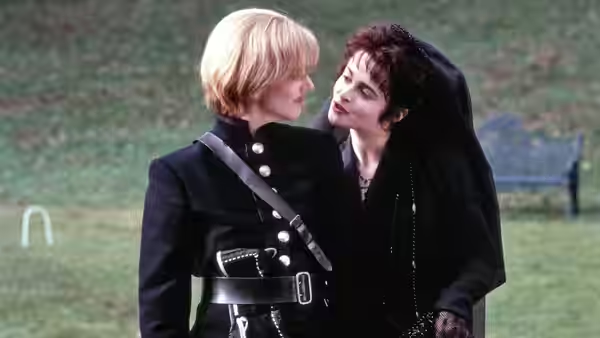
Clive Tickner shoots it in greys and greens, outdoors under cloud off the sea, indoors by candle and lamp so faces come out of brown. Sophie Becher gives Olivia dark wood and drawn curtains; Toby’s kitchen is the one warm room in Illyria. John Bright dresses Malvolio in a black frock coat and chain of office, and Olivia in heavy mourning black. Shaun Davey’s score is fiddle and low strings, best when it gets out of Kingsley’s way. Peter Boyle cuts the two households side by side, clearer than the play and slower, because every scene runs full length.

Here is what got at us. The letter trick played on Malvolio is the play’s biggest laugh and we laughed as hard as anyone; Hawthorne reading it aloud and persuading himself, line by line, that it means what he wants it to mean is a lesson in self-deception. What follows for him we will not describe, except that Nunn and Hawthorne refuse to let it stay funny, and we had stopped laughing some minutes before we noticed we had. Many productions hurry past that. This one sits in it.

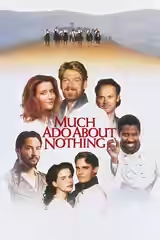
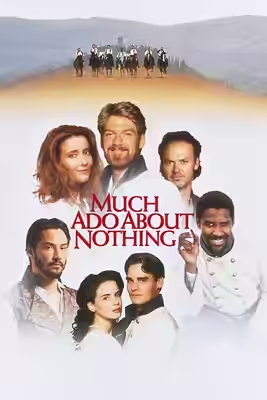
The cost is pace. There is a long middle in which the duel between Cesario and Sir Andrew is set up, deferred and set up again, and Nunn, who wrote the screenplay, keeps more of it than a film needs. Around the ninety-minute mark we were watching the weather. Kenneth Branagh’s Much Ado About Nothing (1993) made the opposite bet, cut hard and ran at the sun: a shallower film and a brisker evening.

See this one on a wet Sunday afternoon, when its mood will match yours, and stay for Kingsley’s last song, sung to nobody, which closes the film properly. It carries a U certificate. Accurate, and a little misleading: there is nothing here a child cannot watch, and a fair amount they will not understand the adults going quiet over.
Critical consensus AI synthesised

60
Positive
2
Mixed
1
Negative
1

With only 4 reviews in so far, the verdict on this adaptation is split down the middle. Two critics find it engaging and sophisticated, with praise for the ensemble, Richard E. Grant’s Sir Andrew Aguecheek, Imogen Stubbs’s Viola and Nigel Hawthorne’s Malvolio named across the reviews. Most agree the film is handsome, the design and autumnal photography drawing approval even from those less taken with it. The reservations cluster around tone: Variety finds it too often tedious and unfunny to generate much emotion, while Radio Times faults the direction for skirting the play’s social and sexual themes, leaving a wistful, dark film that is not a laugh riot.

Empire
1 January 2000 · Angie Errigo
75*

Errigo finds this a fascinating, sophisticated adaptation, though its dark, wistful tone is not a laugh riot. She praises the ensemble, particularly Richard E. Grant’s comic performance as Sir Andrew Aguecheek.

Read the full review →
RogerEbert.com
20 December 1996 · ★★★/4 · Roger Ebert
75

The review finds the film engaging and effective. It particularly praises the performances and the production’s handling of Shakespeare’s comedy.

Read the full review →
Radio Times
★★★ · David Parkinson
60

The review finds this a handsome but surprisingly underwhelming adaptation. It praises the design and autumnal photography, while faulting the direction for skirting the play’s social and sexual themes.

Read the full review →
Variety
16 September 1996 · festival review · Todd McCarthy
30*

McCarthy finds the adaptation handsome and competently performed but too often tedious and unfunny to generate much emotion. He praises Imogen Stubbs’s spirited Viola, while noting Nigel Hawthorne’s Malvolio as a standout in the comedy.

Read the full review →

Straight answers AI written, from our review

Is Twelfth Night worth watching?
Twelfth Night is worth watching for anyone who already likes the play, and we scored it 70. Nigel Hawthorne's Malvolio is the reason to see it, and the below-stairs cast around him are funnier than the film's reputation suggests. The undecided should know it runs 134 minutes, plays sadly, and sags in the middle.
How long is Twelfth Night, and what is it rated?
Twelfth Night runs 2h 14m. It is a drama and comedy film.
Where can I watch Twelfth Night in Azerbaijan?
Twelfth Night is not on any streaming or rental service in Azerbaijan at the moment. It is available in 13 other countries; change your country at the top of the page to see where. Availability is checked daily.
How does Twelfth Night compare to Much Ado About Nothing?
Twelfth Night is the slower and sadder of the two, and Much Ado About Nothing the brisker evening. Nunn keeps the text nearly whole and plays it under grey skies and lamplight; Branagh cuts hard and runs at the sun. Branagh's is the shallower film and the easier one to watch; Nunn's has more to sit with, if you have the patience.
What should I watch after Twelfth Night?
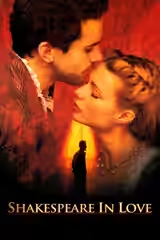
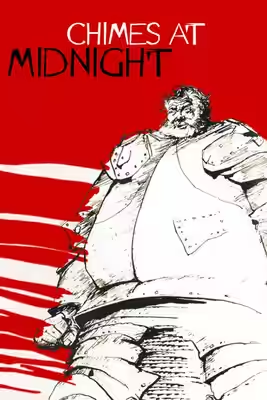
After Twelfth Night, try Much Ado About Nothing (1993, Fi1m 78): Branagh’s sunlit Shakespeare comedy, cut fast and played loud; the brisk evening this one is not. Then Chimes at Midnight (1965, Fi1m 88): Orson Welles as Falstaff, for anyone who wanted more of Sir Toby’s sadness; and Shakespeare in Love (1998, Fi1m 79): A playful fiction about where Viola came from, with Imelda Staunton below stairs again.

Cast

If you liked this, try…

  1. Much Ado About Nothing (1993, Fi1m 78)Branagh’s sunlit Shakespeare comedy, cut fast and played loud; the brisk evening this one is not.

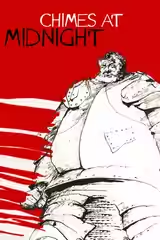
  2. Chimes at Midnight (1965, Fi1m 88)Orson Welles as Falstaff, for anyone who wanted more of Sir Toby’s sadness.

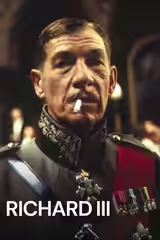
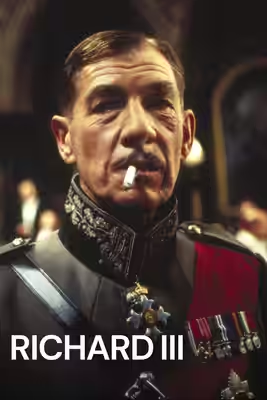
  3. Richard III (1995) · not reviewed yetIan McKellen’s Shakespeare moved to a fascist 1930s England; the relocation actually earns its keep.

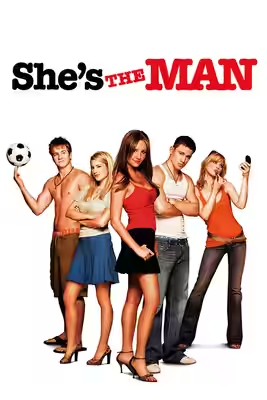
  4. She's the Man (2006) · not reviewed yetThe same plot in an American high school, loud and silly and surprisingly faithful.

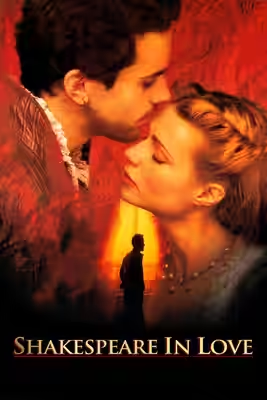
  5. Shakespeare in Love (1998, Fi1m 79)A playful fiction about where Viola came from, with Imelda Staunton below stairs again.

Free account

Know what to watch tonight

Two lists that know where things are streaming, collections you can share, your own score beside ours, and Discover that remembers what you have seen.

  • Want to see, sorted by what is streaming now
  • Seen, with your score out of ten
  • No adverts, ever