Michelle Pfeiffer steadies a domestic thriller with some carefully managed scares, but Robert Zemeckis cannot keep its tangled story moving. A qualified choice for anyone who enjoys watching an elaborate scare being set up.
What Lies Beneath is good at making us apprehensive and much less good at making its story hold together. Robert Zemeckis directs a domestic thriller that spends 130 minutes keeping suspicion alive, sometimes through patient staging and sometimes through another abrupt jolt. There is pleasure here for anyone who enjoys waiting for something ordinary to go wrong. The trouble is how often Clark Gregg’s screenplay has to complicate matters to keep that waiting going.
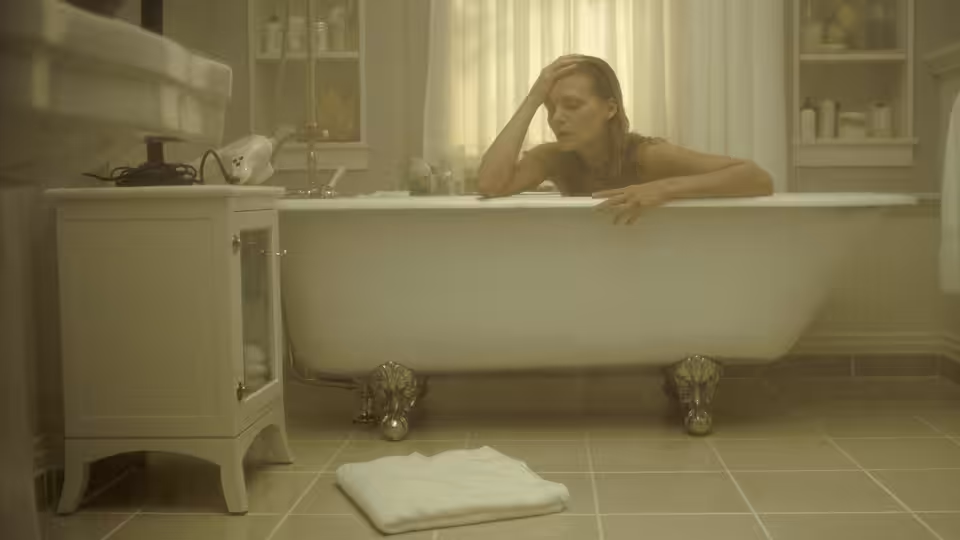
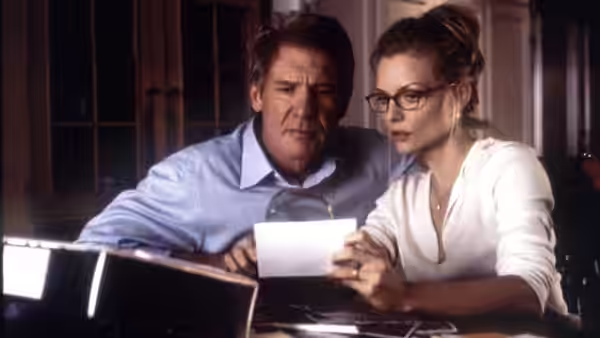
Michelle Pfeiffer gives Claire Spencer enough composure for her nervousness to matter. She does not need to make every moment of unease a performance in itself, and that restraint helps a film which is rarely restrained elsewhere. Her distress remains believable even when the plotting begins to strain our patience. The characterisation gives her relatively little to work with, but she makes it possible to care about the woman doing the worrying.
The clearest evidence of Robert Zemeckis’s skill is the business with a faulty door latch. We tensed up at that latch, because the film makes a small mechanical failure worth watching closely. Don Burgess’s fluid widescreen photography gives the suspense time and space to develop, rather than treating every shot as preparation for a shock. In passages like this, the camera keeps us looking when we would rather the moment were over.
The production design by Rick Carter and William James Teegarden serves this close attention to domestic surroundings. Their work gives the suspense somewhere credible to happen, which matters when the plotting is already asking for considerable indulgence. Alan Silvestri’s music is less discreet. It keeps insisting on the suspense, and too often that insistence draws attention to how familiar the scene is rather than making it more frightening.
The larger pacing is harder to defend. Arthur Schmidt’s editing can sustain an individual scare, but the middle drags, with Clark Gregg’s screenplay adding complications without making the people much more interesting. Over this running time, the thin characterisation becomes a practical problem: there is too little to think about between the jolts. The plotting also asks for more belief than it earns, and its increasing complexity does not repay the time spent waiting for an explanation.
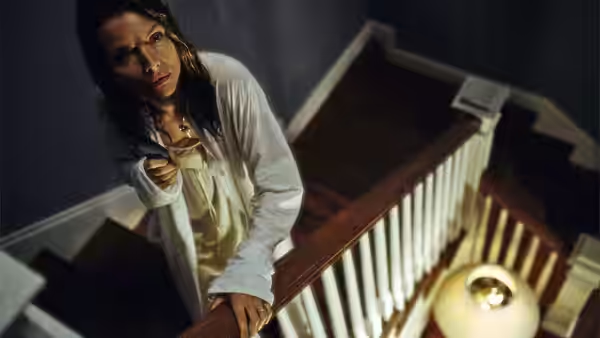
Against the standards of domestic suspense, the weakness is not that the film uses familiar devices. A door, an uneasy woman and a home that no longer feels reassuring are enough if the director can control what we notice. Robert Zemeckis often can, but he also reaches for too many jolts. Those interruptions make the patient stretches less effective, because we begin to anticipate the next sudden scare instead of attending to Claire Spencer.
Our recommendation is limited to suspense enthusiasts who are willing to forgive a mystery that strains their patience. There are enough well-managed scares to make that bargain reasonable, but not enough to make it an easy choice. If implausible plotting is what usually takes you out of a thriller, leave this one for another evening.