Bassam Tariq’s crime drama is worth seeing for Mahershala Ali’s tender, troubled father. The search for breast milk gives it an urgent purpose, though abrupt changes in tone and underwritten women keep it from working throughout.
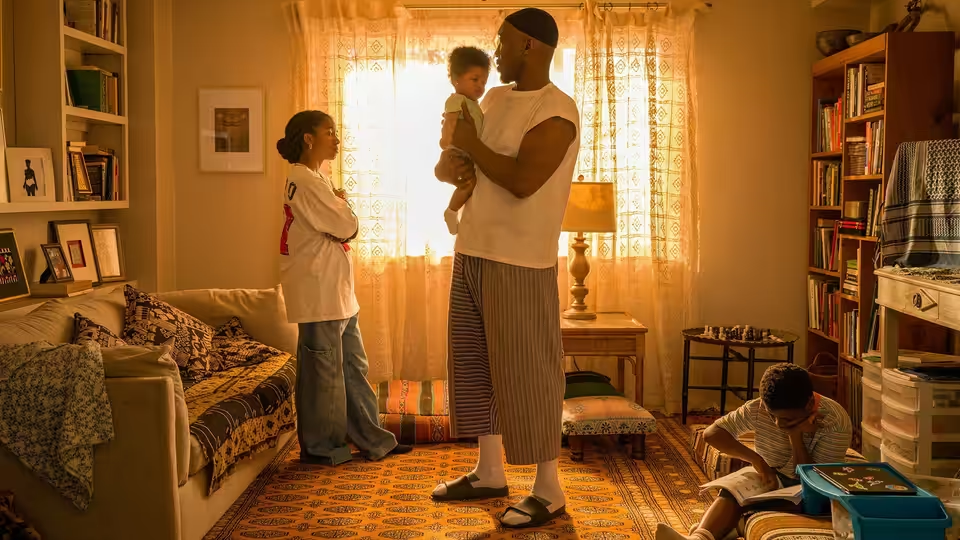
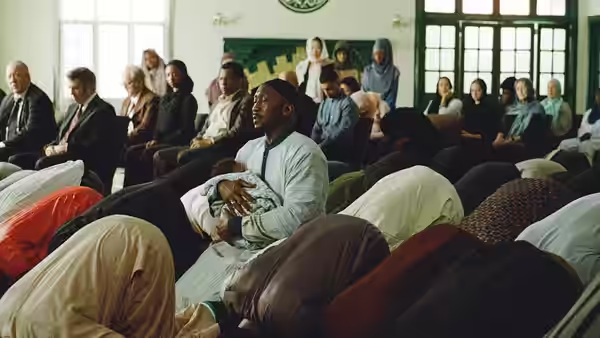
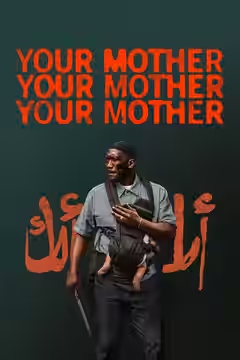
Your Mother Your Mother Your Mother is a good, uneven crime drama, worth seeing for the care Mahershala Ali brings to its troubled father. Bassam Tariq, who writes and directs, gives Latif a desperate search for breast milk, then asks that search to carry questions about faith, grief and violence. We were moved by the warmth of the performance: even with so much sorrow in the story, the task of caring for a child remains urgent. That practical need gives the film something definite to pursue whenever its religious questions grow vague.
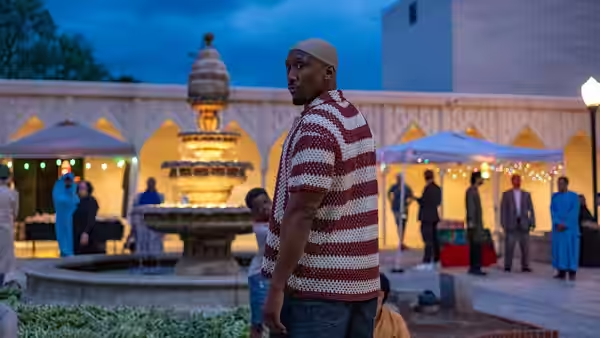
Mahershala Ali makes regret legible without turning every moment into an announcement of suffering. His physical presence matters, too, because the film needs Latif to be credible as a caring father caught up in action. We believe the tenderness, and that makes the violence more troubling. The performance gives a familiar crime-drama question, what a man will do for his family, a particular urgency through the need to find milk.
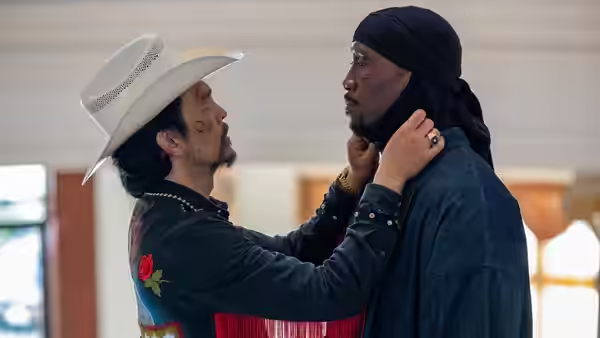
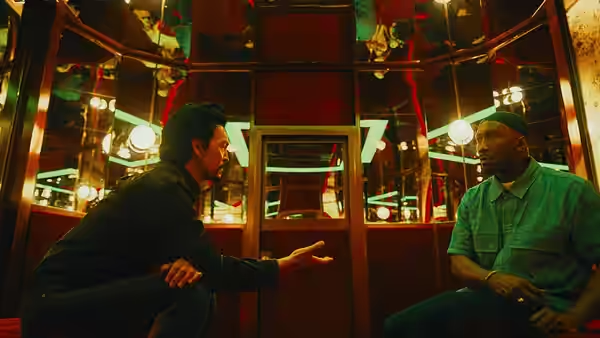
Katelin Arizmendi’s cinematography is especially persuasive in the action, with compositions that give the violence weight. There is an unpleasant physical force to the fighting, appropriate to a story that takes the consequences of male strength seriously. Ryan Lott, Ian Chang and Rafiq Bhatia provide the music, and Akin McKenzie is the production designer. The action makes bodies look vulnerable enough to keep the possibility of injury in mind.
The changes of tone are less assured. Cam McLauchlin’s editing has to bring together family drama, action and eccentric humour, and the transitions sometimes interrupt our concern for Latif. Tariq’s earnestness is welcome, but he introduces subjects that need more attention than the film gives them. We wanted the religious and sexual taboos examined with the same care given to the father’s immediate need.
Adia gives Fatiha a vulnerability that deserves more space. Tariq’s writing does not give the women comparable room, and the imbalance matters in a film so concerned with family. Their experiences ought to complicate Latif’s view of what responsibility means, rather than leave him carrying so much of the discussion himself. The attention keeps returning to his burdens, leaving some of the people around him less fully imagined.
As a variation on the Western, the film is most interesting when it puts masculine self-sufficiency under strain. The father needs something that physical force alone cannot provide, which gives the familiar emphasis on a capable leading man a useful complication. Tariq is less convincing when the competing demands of thriller and religious drama pull him away from that need. His treatment of fatherhood is more persuasive because it has a concrete task attached to it: a child needs feeding.
There is enough feeling here to make the unevenness worth accepting, particularly for anyone drawn to crime stories with family obligations at their centre. The action earns its place, even when the discussion of faith remains unfinished and the humour arrives awkwardly. Give it an evening if the father’s predicament interests you; allow for a film that sometimes wanders away from its strongest material.