Alex Hirsch’s two series about twins spending a summer in a strange Oregon town are funnier, odder and better built than a children’s cartoon has any need to be. The first run takes a while to find its shape. Stay with it.
Gravity Falls runs to two series of twenty episodes, carries a PG certificate, and was made for a children’s channel. It is also as good a piece of television as we have seen from that world in a long while. Alex Hirsch created it, wrote on it and voices four of its characters, and the whole thing has the feel of one person’s notebook, filled over years, finally opened.
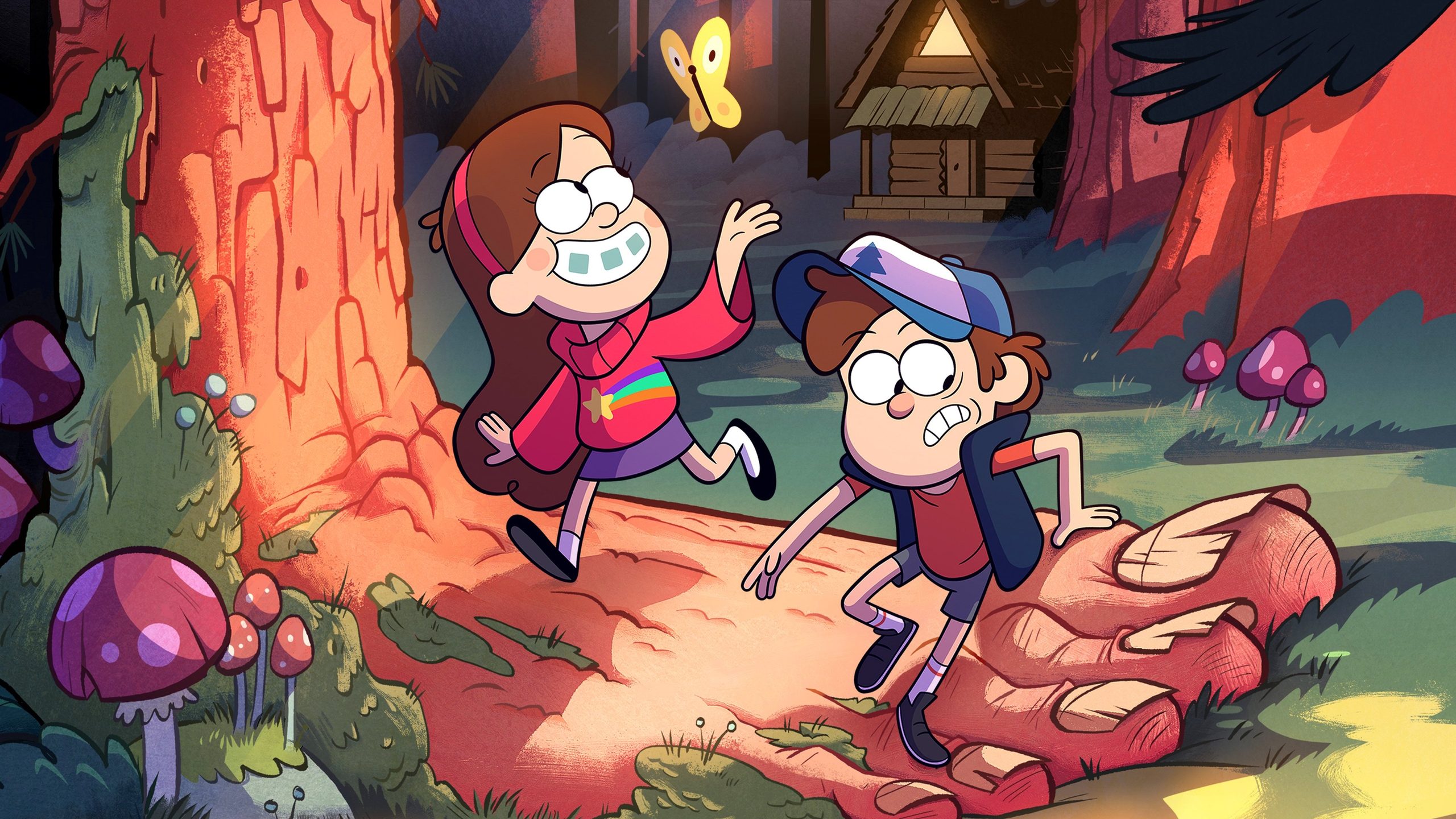
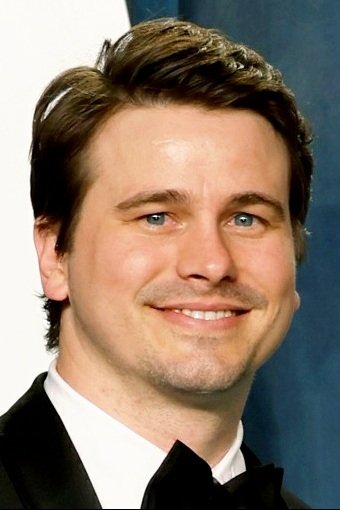
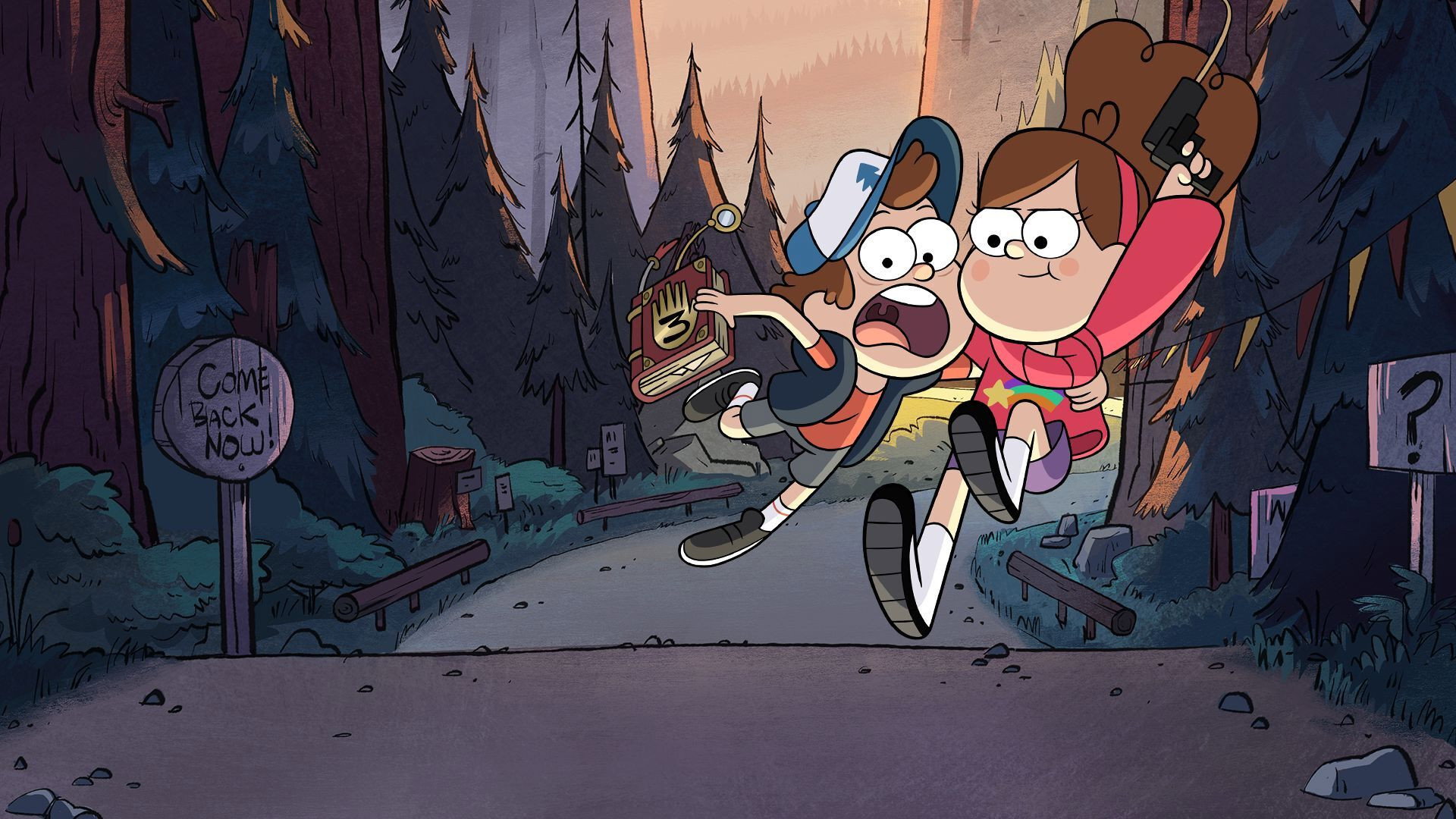
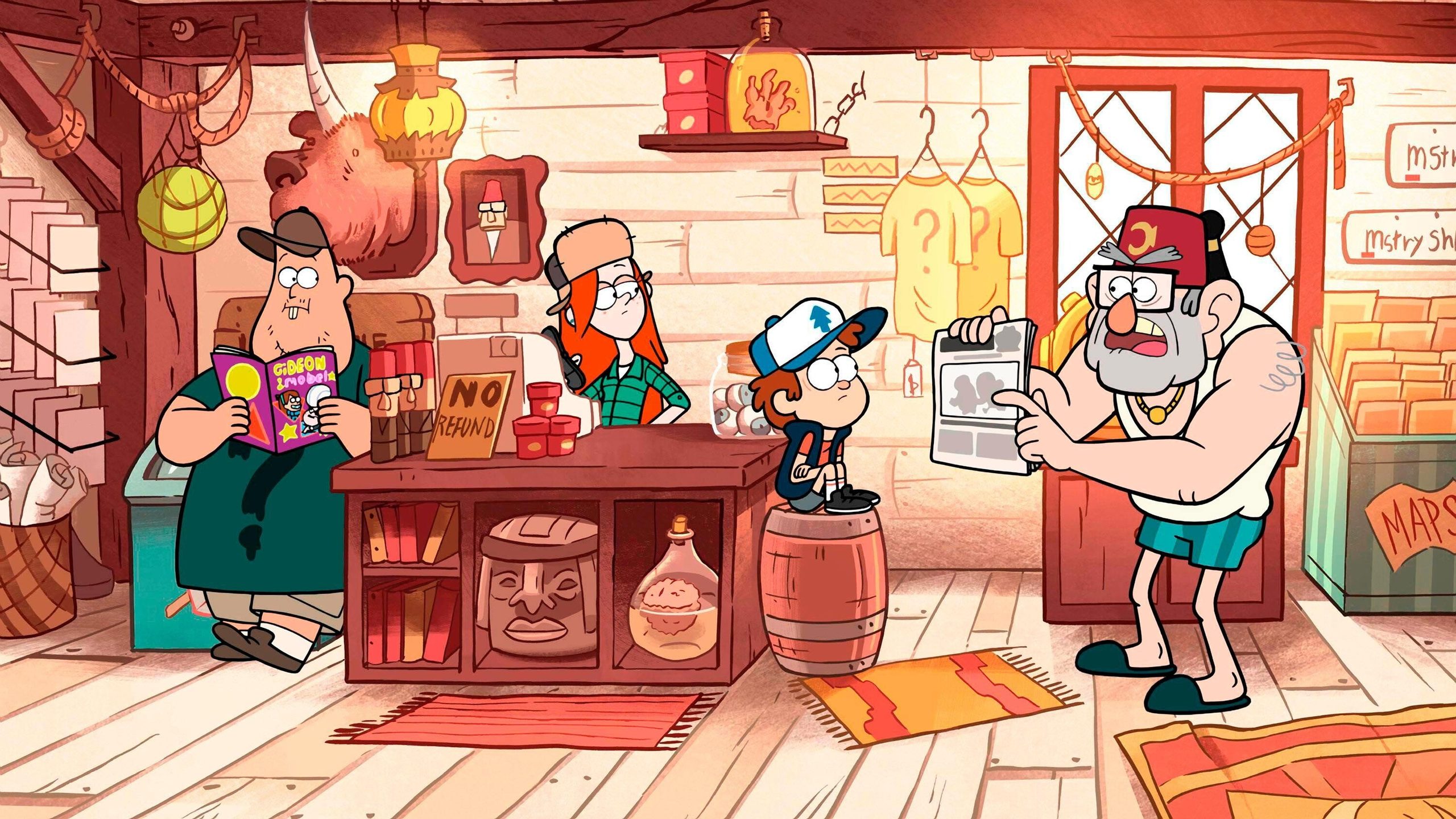
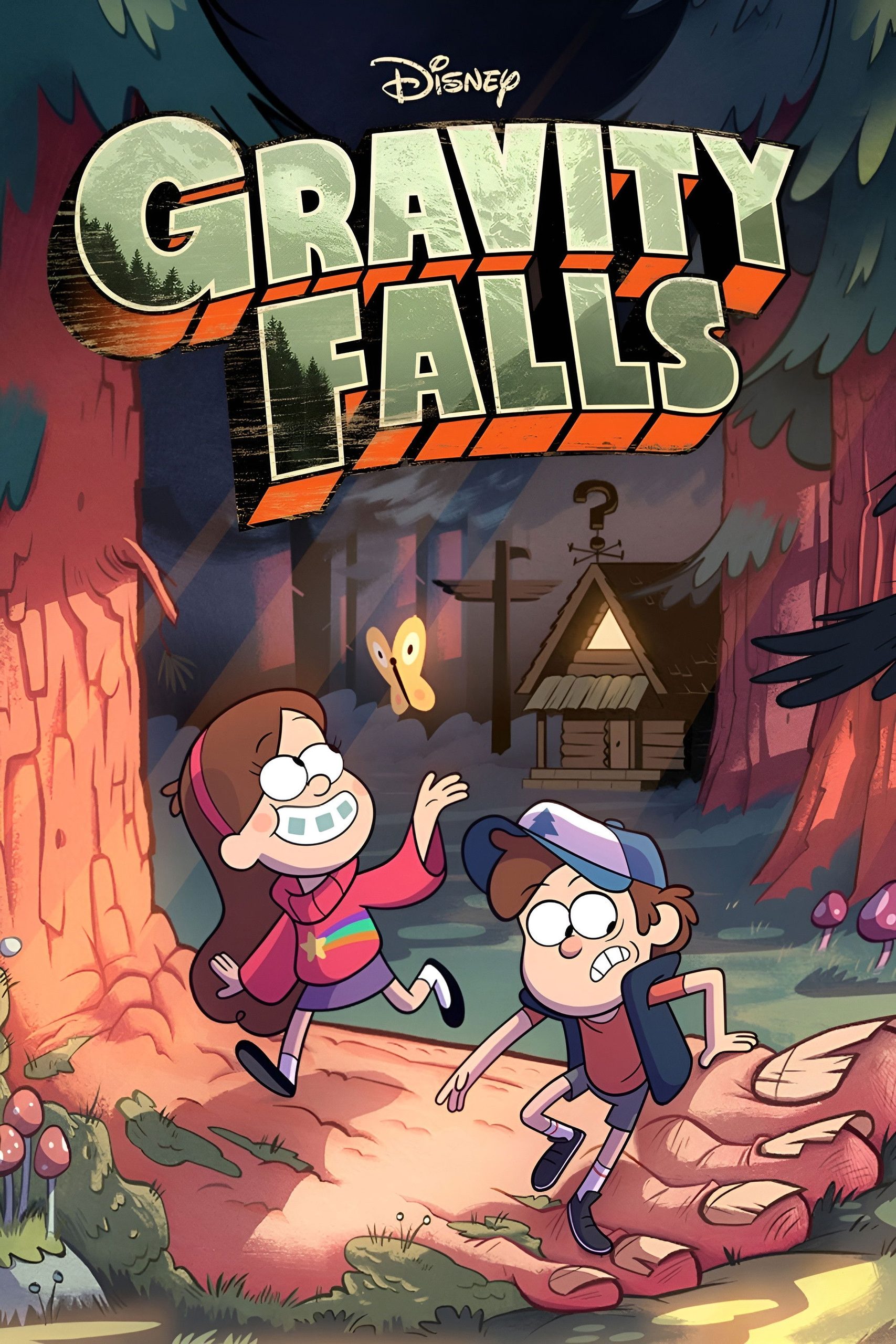
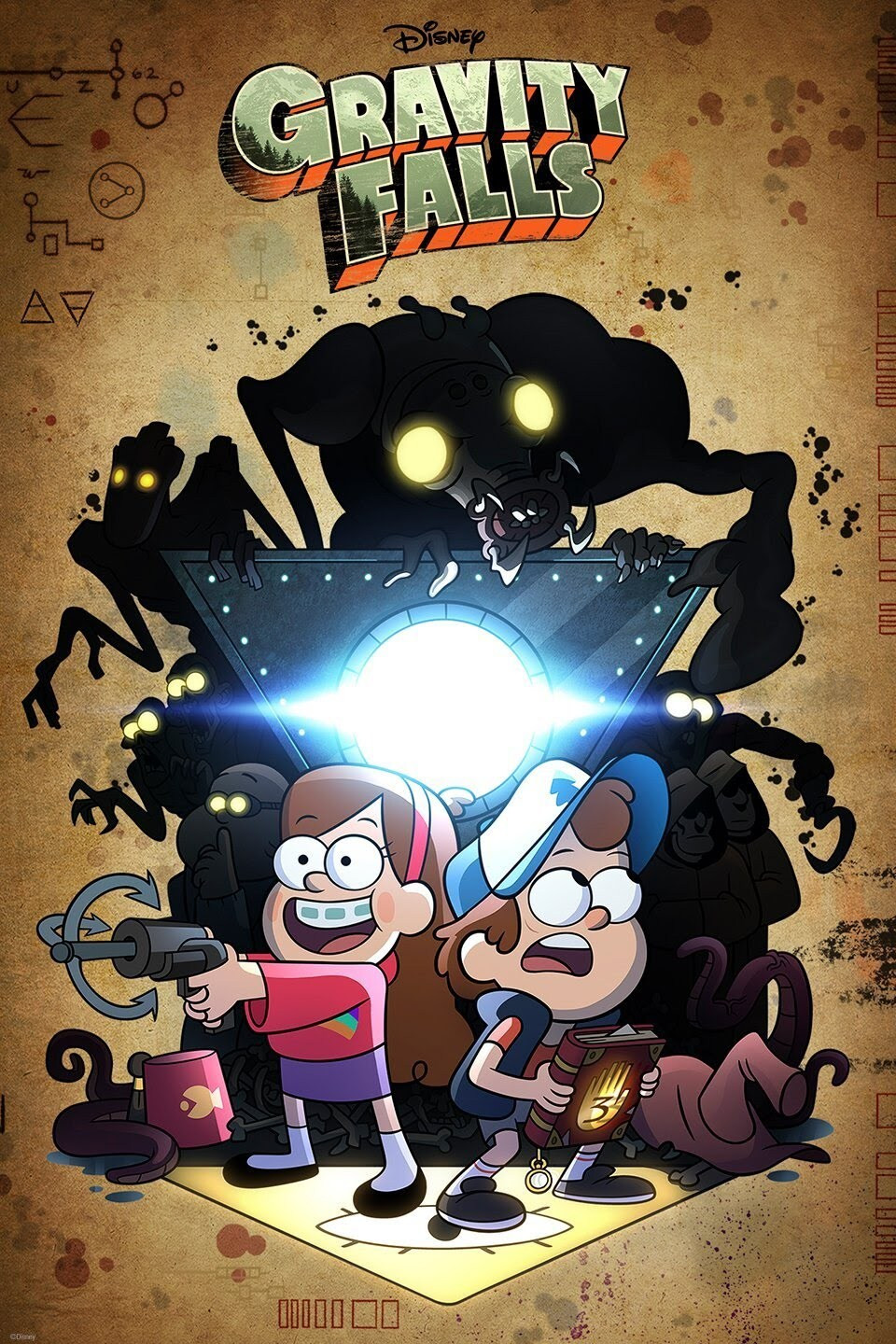
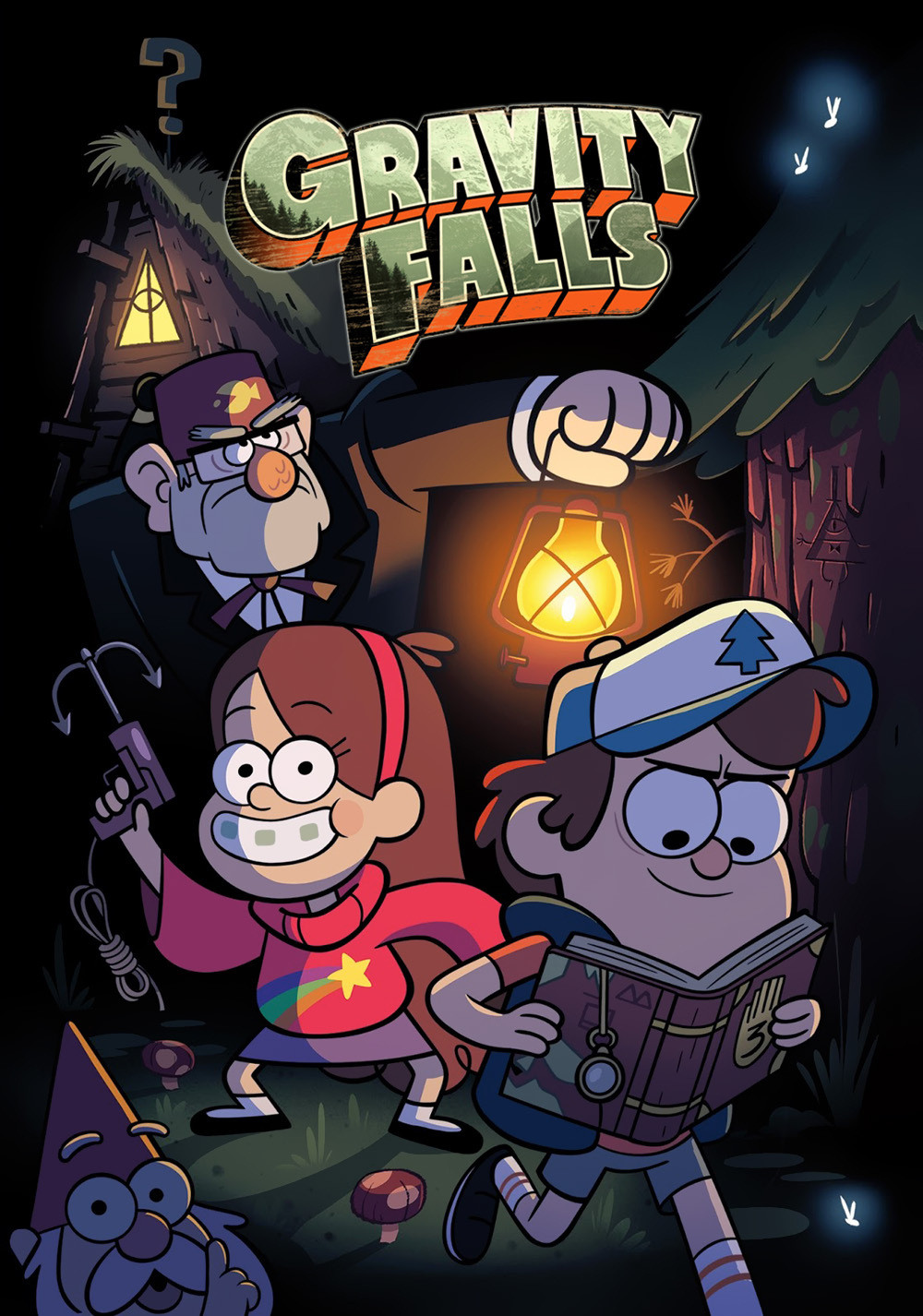
The premise is a small town in the Oregon woods where something is wrong and the adults have stopped noticing. The twins notice. Dipper, voiced by Jason Ritter with a permanent crack in the voice, is the one with the journal and the theories. Mabel, voiced by Kristen Schaal, is the one with the jumpers and the grappling hook. Schaal’s laugh arrives a beat before her own jokes, and it is the sound of the series: a child who has decided the summer is going to be wonderful and will not be told otherwise. Ritter plays against her, tight and worried, and the two of them sound like siblings who have shared a room for twelve years.
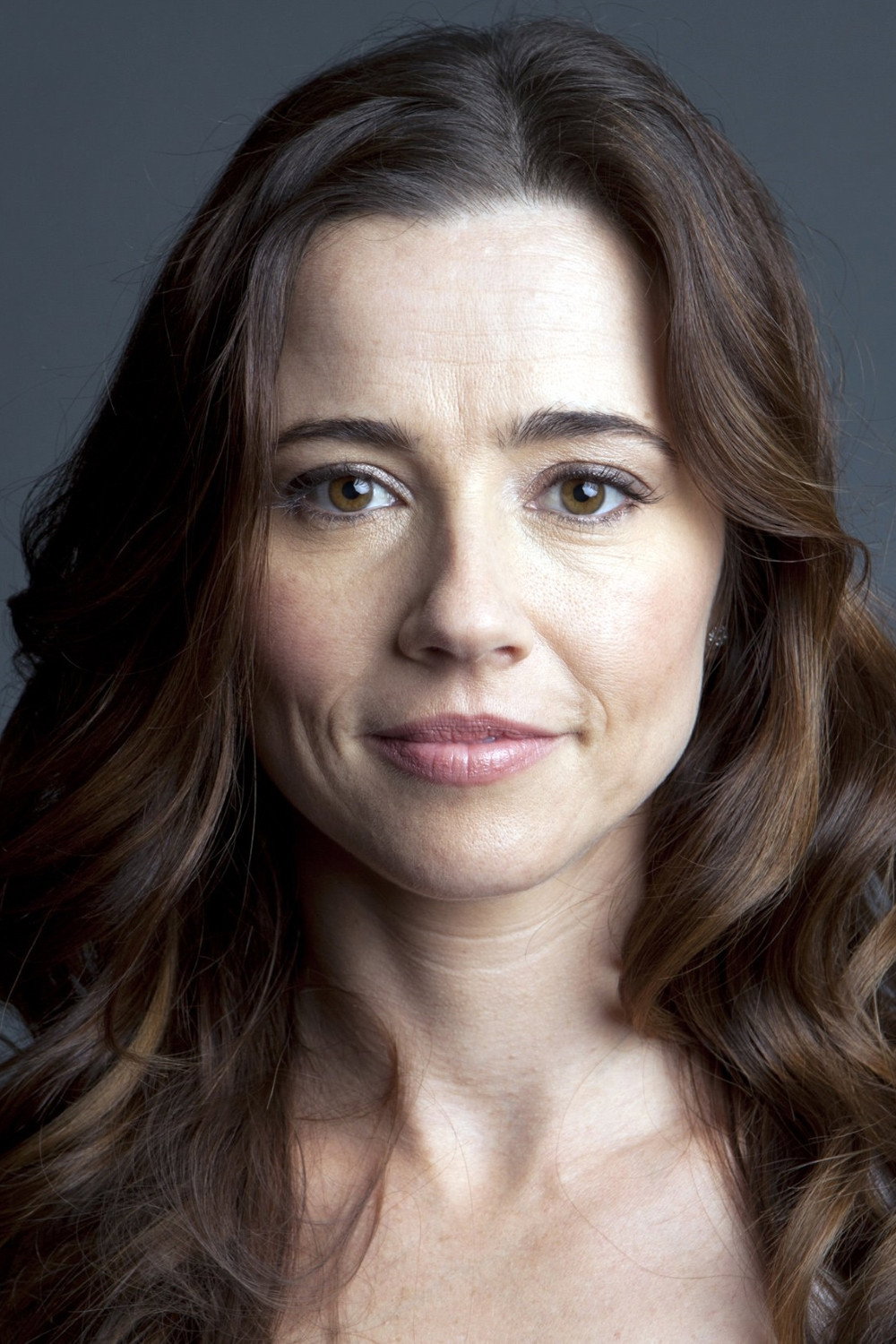
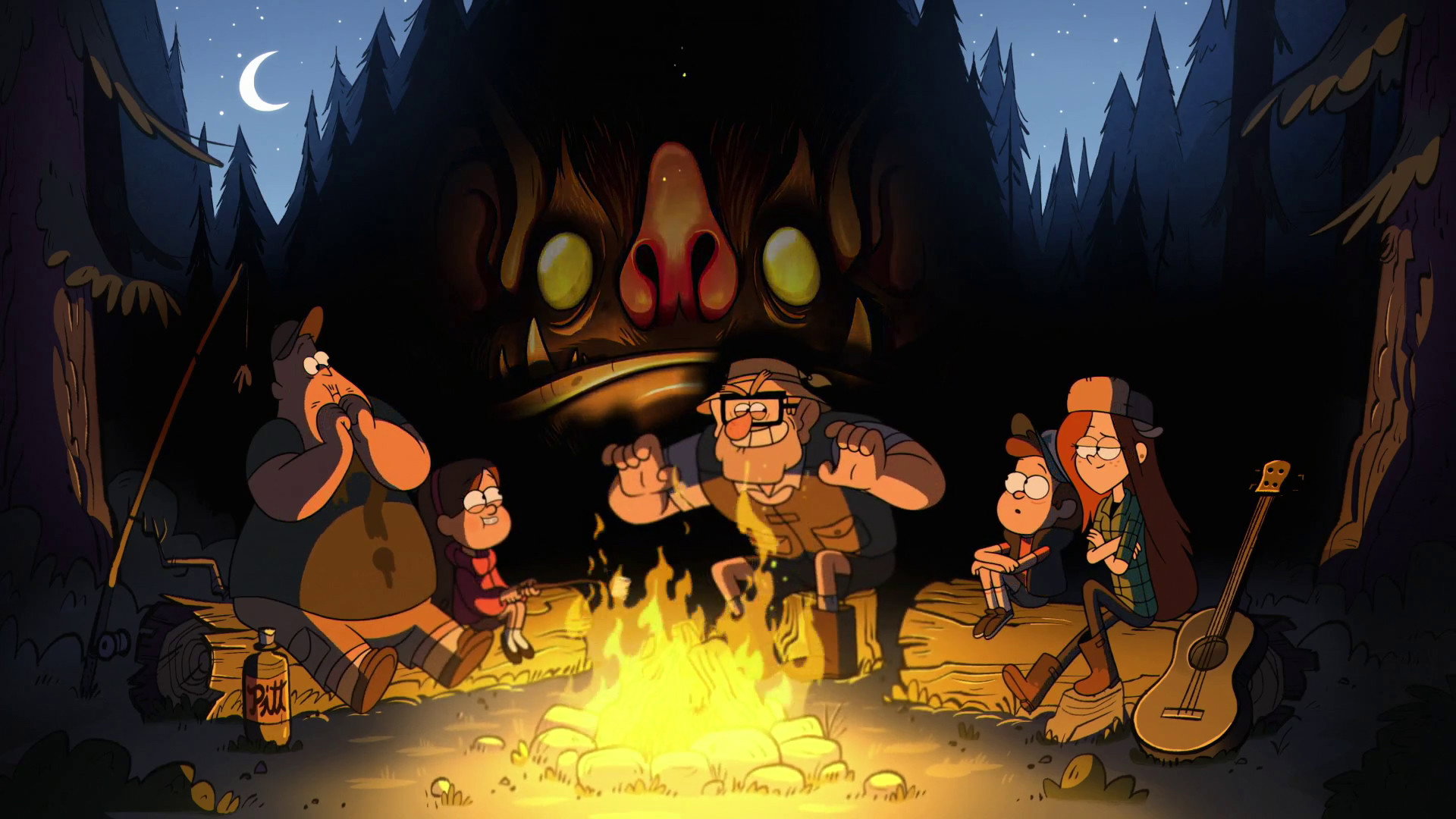
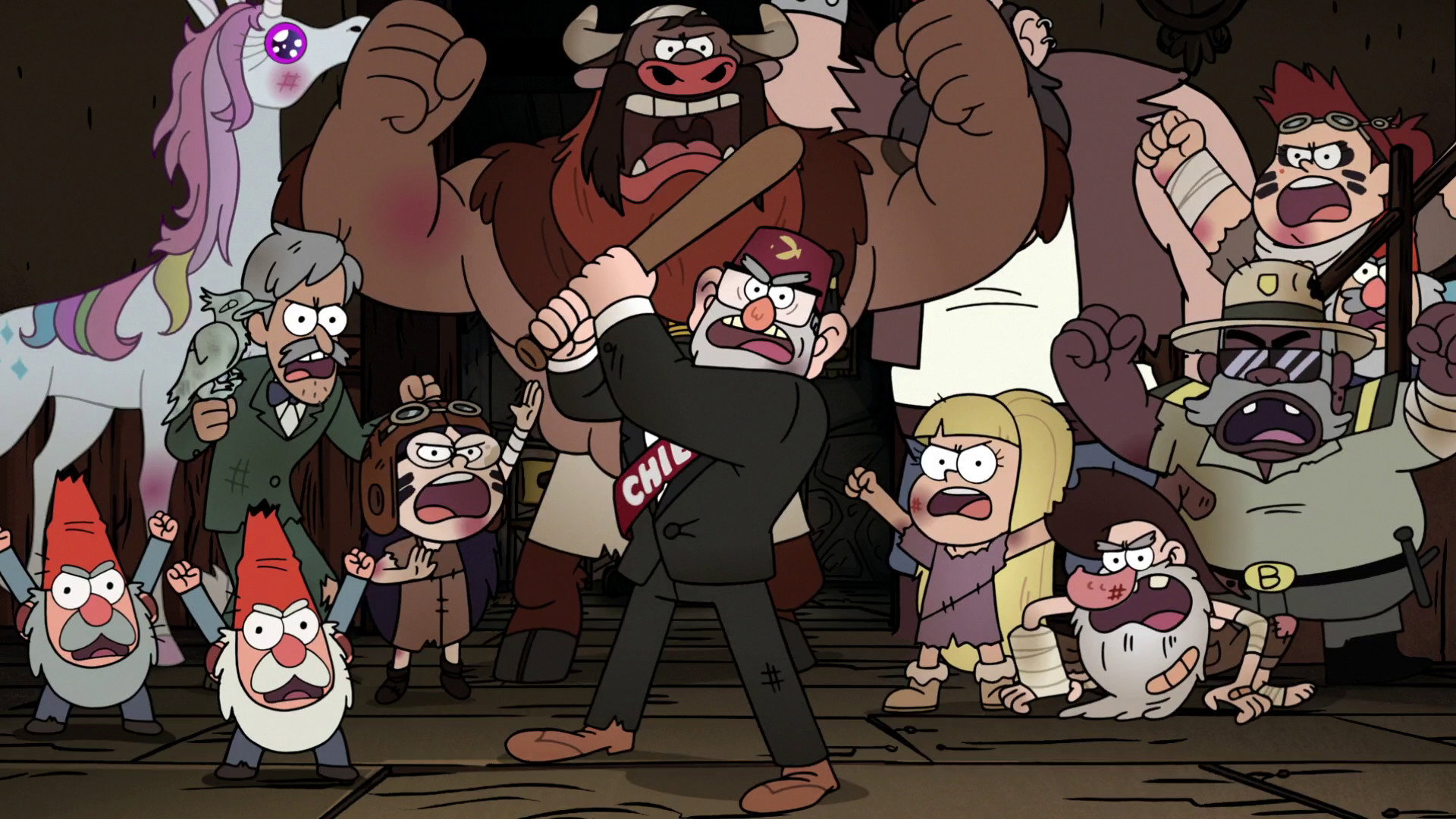
Hirsch gives Grunkle Stan a voice like gravel in a tin and the moral outlook of a man who charges for the toilet. He also voices Soos, the handyman, all warmth and no judgement, and Old Man McGucket, the town’s resident lunatic. Linda Cardellini’s Wendy is bored, kind and entirely uninterested in Dipper, which is exactly right. Thurop Van Orman’s Gideon Gleeful, a child psychic with a pompadour and a grudge, is the villain the first series needed. Jennifer Coolidge turns up as a diner waitress with one working eyelid. There is nobody in the cast we would swap.
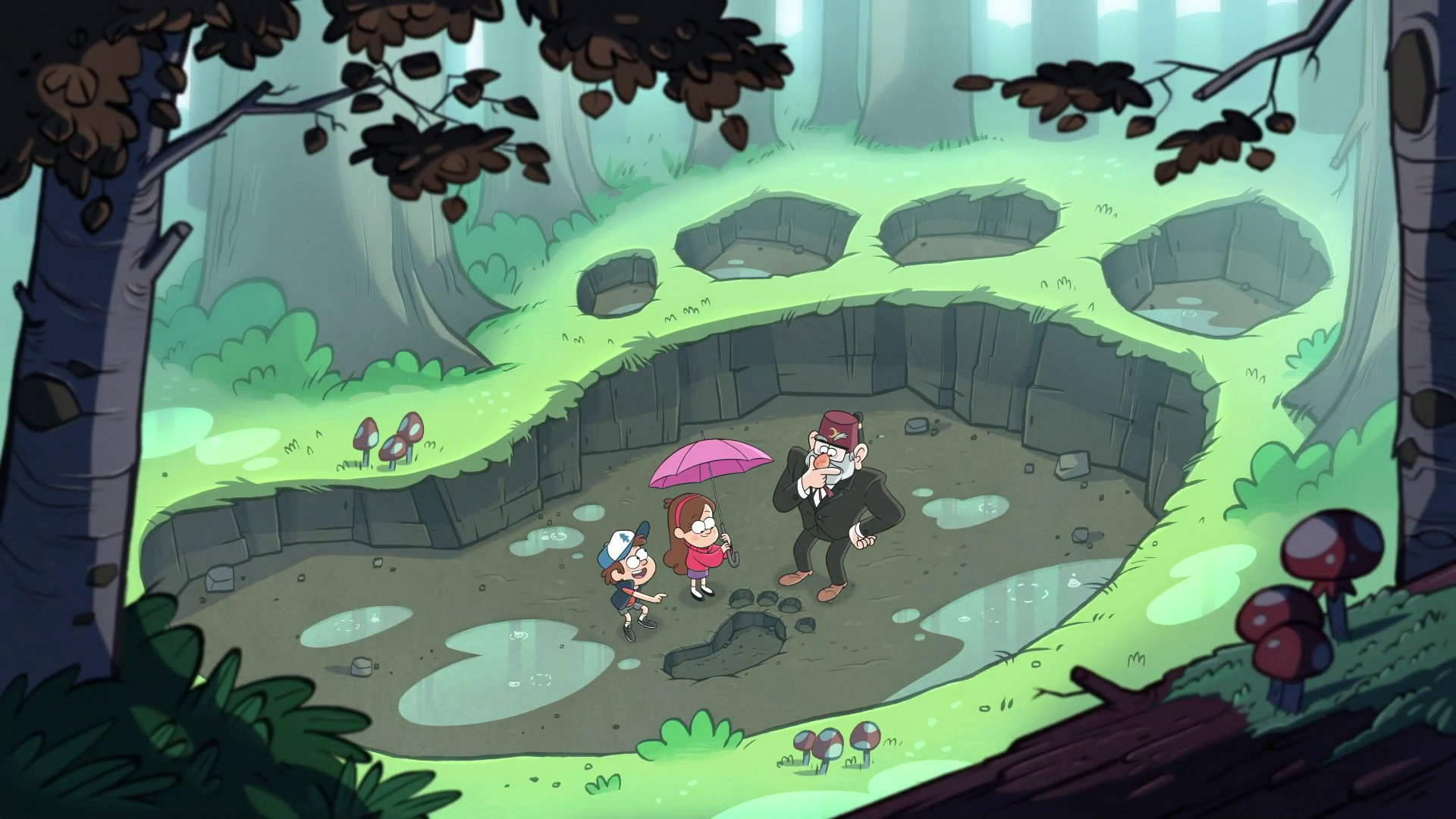
The town is drawn dense. The forest is grey-green and close, the Shack is cluttered to the ceiling with Stan’s fakes, and the character shapes are simple enough to read at a distance: Mabel is a circle, Dipper a stick, Stan a slab under a fez. Every episode ends its credits with a coded message, and the backgrounds are salted with symbols that mean nothing until, much later, they do. Brad Breeck’s title tune is a minute of galloping drums and synthesiser that promises a bigger series than the channel usually pays for, and the promise is kept. Seven directors are credited across the run, including Matt Braly, Rob Renzetti and Aaron Springer, and the tone holds from first episode to last.
We laughed, often and out loud, at things a cartoon for children is not supposed to be this precise about. The writers’ room, with Shion Takeuchi, Matt Chapman, Mike Rianda, Jeff Rowe and Josh Weinstein among the names, lets the children be selfish, wrong and occasionally cruel, and then lets them notice. The jokes come fast and most of them are about character rather than noise. Stan’s response to any crisis is to check whether it can be sold.
Not all of it lands. The early stretch of the first series is monster-of-the-week, and a handful of episodes lean on randomness: a character shouting something odd and the scene cutting away, which is the laziest kind of cartoon joke. Mabel’s parade of summer crushes wears thin by the third one. And the second series turns so thoroughly serialised that anyone picking it up halfway will be lost within ten minutes. That is a compliment to the series and a warning to the viewer.
The second half takes a turn we will not describe, and it got to us. We sat down expecting to be amused by a children’s programme and were instead, by the last episodes, moved more than we thought possible, because the series had spent forty episodes making us care whether these two children would still like each other in September. Very few series for adults bother to earn that. Watch it from the beginning, in order, with children if you have them and without them if you do not.