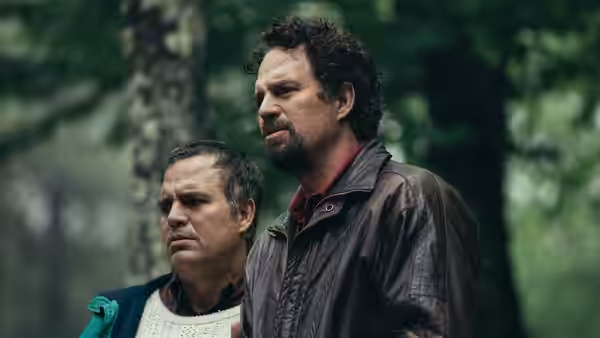
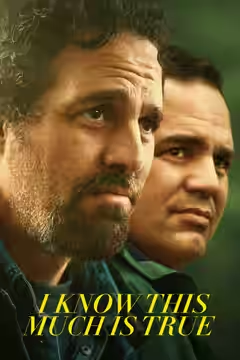
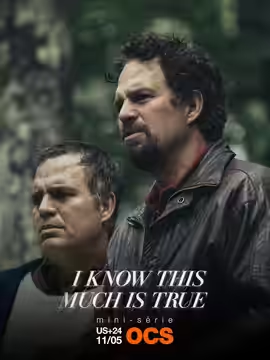
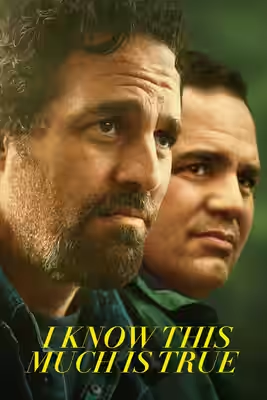
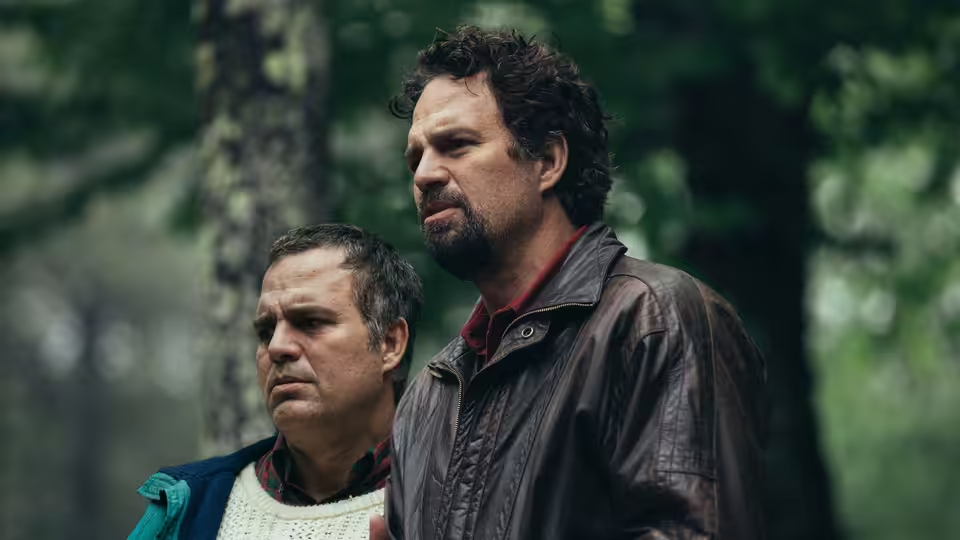
Two men standing among trees in a forest looking ahead intently
Series review

I Know This Much Is True

2020 · Created by Derek Cianfrance · Series · 1h 00m

In a sentenceMark Ruffalo plays twins, and neither of them is allowed one good afternoon in six hours

Three Rivers, Connecticut, autumn 1990. Thomas Birdsey (Mark Ruffalo), a paranoid schizophrenic, walks into the public library and cuts off his own hand to stop the coming war in the Gulf. His identical twin Dominick (also Ruffalo), a divorced housepainter, learns that Thomas has been committed to Hatch, the state’s locked forensic hospital, and cannot come out without a hearing. Dominick wants him home. In his way stand the hospital’s doctors and his own temper. Trying to help are Lisa Sheffer (Rosie O’Donnell), a social worker who is on his side more than he notices, and Dr. Patel (Archie Panjabi), a psychologist who keeps asking about their childhood. Their mother has recently died; their stepfather Ray (John Procaccino) is still alive.

Plays from YouTube when you press play; nothing loads from them until then.

Fi1m review

Mark Ruffalo’s two performances are as fine as anything on television, and Derek Cianfrance frames them with care. Six hours of grief laid on grief wears down what it means to build; we admired it and were glad when it ended.

Derek Cianfrance, who made Blue Valentine and The Place Beyond the Pines, has turned Wally Lamb’s novel into six hours of television about two brothers and everything that has ever gone wrong for them. Mark Ruffalo plays both. Dominick is a housepainter in Three Rivers, Connecticut, divorced, tight-mouthed and angry at almost everyone; Thomas is his identical twin, schizophrenic, and in the first minutes he walks into the town library and cuts off his own hand. The rest of the series is Dominick trying to get him out of the locked hospital he is sent to, while the family’s past comes open a drawer at a time. It is well made, acted about as well as television gets, and a punishment to sit through.

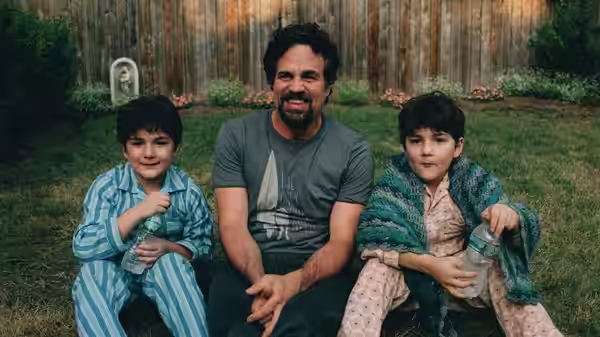
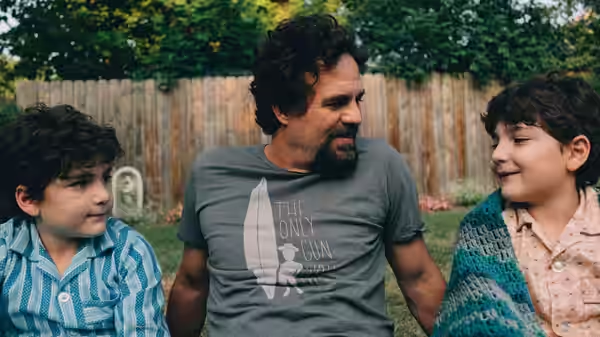
The two Ruffalos are the reason to go. Thomas is heavier, slower and gentler, his voice pitched up, his eyes drifting to some point over your shoulder; Dominick keeps his jaw shut and cannot sit still. They share the frame, with Gabe Fazio credited as the acting double, and within minutes we had stopped looking for the join. There is a scene early on, in a visiting room at the hospital, where Thomas explains to his brother, patiently, as if to a child, why the hand had to go, and Dominick has nothing to say back. It moved us more than we expected. The ill twin is the calm one, and the well twin is the one coming apart.

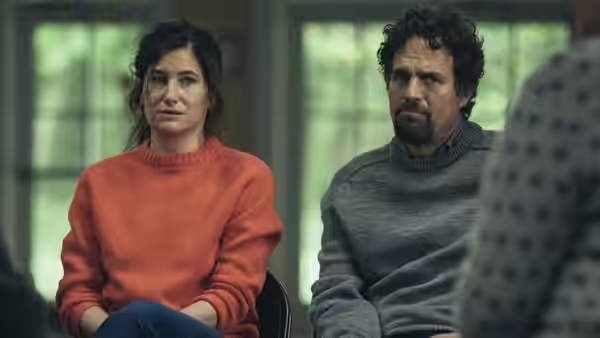
Around them is a cast that would carry a lesser show alone. Melissa Leo’s Ma is seen mostly in the past, soft, watchful and frightened of the wrong man. John Procaccino plays Ray, the stepfather the boys grew up afraid of, without asking for our sympathy. Rosie O’Donnell’s Lisa Sheffer, the social worker, is the one person on screen who seems to have had breakfast. Archie Panjabi’s Dr. Patel listens, which in this family is a radical act. Kathryn Hahn does a great deal with almost nothing as Dessa, the ex-wife, and Michael Greyeyes gives Ralph Drinkwater, who knew the twins as boys and now mops the hospital’s floors, a stillness that says more than his lines. Rob Huebel’s Leo supplies the only jokes.

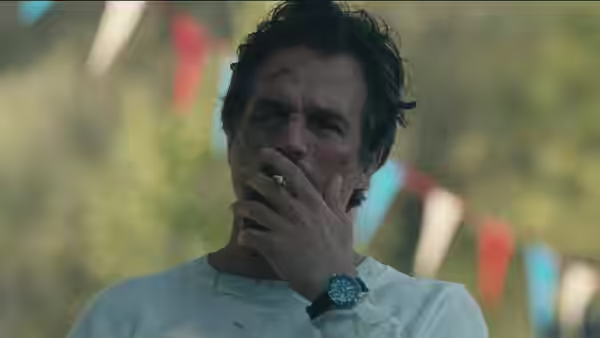
It looks like an American film from the seventies. Jody Lee Lipes shoots on grainy stock in the brown and grey light of a Connecticut autumn, handheld and close, so the faces fill the frame and the town is a blur of wet leaves behind them. Inbal Weinberg gives the hospital locked doors and thick glass, and Ma’s kitchen a look of not having been touched since the twins were boys. Kasia Walicka Maimone puts Dominick in paint-spattered work clothes he never seems to change. Harold Budd’s score is a few piano notes with long silences between them, and often there is no score at all, only a fridge humming.

The trouble is what the show takes drama to be. Cianfrance and his co-writer Anya Epstein lay grief on grief: the hand, the dead mother, the divorce, the stepfather, the hospital, and then more we will not describe. Each is written with care, and each arrives as the last one lands, and by the fourth hour we noticed we were bracing rather than feeling. Dominick wants one thing from the first episode to the last, and the obstacles simply queue up. Five editors are credited, and the cutting between 1990, the brothers’ childhood and the life of their grandfather Domenico (Marcello Fonte), whose memoir Dominick has had translated, is deft moment to moment and shapeless over the run.

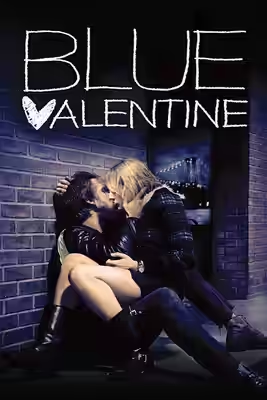
Blue Valentine had two people and one marriage, and Cianfrance found everything he needed in their faces. Here he has a town’s worth of misfortune and not enough of that pressure. Four episodes might have held it; six lets it sprawl, and the grandfather’s story, which has a pull of its own, keeps stopping the one we care about.

See it for Ruffalo, who is doing something we have not seen him do before, and for a supporting cast that never lets him down. Take it an episode at a time, with days between, and with someone to talk to afterwards. The certificate is 15, and it is earned in the first ten minutes.
Critical consensus AI synthesised

62
Positive
7
Mixed
3
Negative
3

Most critics agree on two things: Mark Ruffalo’s dual performance as the twins is the reason to watch, and the series is relentlessly grim. Nearly every review calls the acting exceptional, several singling out how completely Ruffalo separates the two brothers, and the supporting cast is praised alongside him. Derek Cianfrance’s direction is generally judged handsome and controlled, with the adaptation of Wally Lamb’s novel described as sensitive and serious.

The split is over whether six hours of suffering is earned. The warmer reviews find grace in the way the series handles trauma and call it devastating but rewarding. The cooler ones describe compassion fatigue, a lack of narrative tension and little wider insight. The Independent admires the writing and acting but finds it impossible to recommend, and The i Paper calls it a waste of an excellent cast. The spread is wide, from enthusiastic to outright dismissal, with the middle ground conceding the craft while questioning the point.

IndieWire
7 May 2020 · Ben Travers
70*

The adaptation is a soul-crushing portrait of twin brothers struggling with their painful past and worsening future. Ruffalo delivers a standout dual performance in Derek Cianfrance's unrelenting HBO limited series.

Read the full review →
The AV Club
1 May 2020 · B- · Ines Bellina
70

The series is rich but unrelenting in its misery, with stellar performances from Ruffalo and the supporting cast elevating it to prestige television. It excels in heartfelt moments but sags under the weight of its self-indulgent trauma and bleak tone.

Read the full review →
The Hollywood Reporter
29 April 2020 · Daniel Fienberg
70*

Tremendous performances, especially Ruffalo's, reward viewers for enduring six hours of tragic wallowing in this unrelenting family tragedy adapted from Wally Lamb's novel. The critic praises the grounded misery and acting but notes it may not lead to much revelation.

Read the full review →
The Guardian
11 May 2020
60*

The series is praised for Mark Ruffalo's dual performance as the twins but criticised for its unrelenting focus on suffering that leads to compassion fatigue. It is seen as a heavy, mood-driven mood piece without much light or wider insight.

Read the full review →
Variety
4 May 2020 · Daniel D'Addario
60*

Ruffalo's dual performance carries the series through its unremitting sadness and episodic structure, but the show struggles with credibility and pacing over six episodes, ending up as the sum of his two parts despite Cianfrance's talents. The critic singles out Ruffalo's nuanced portrayal of the twins for praise amid the grim narrative.

Read the full review →
The Independent
11 May 2020
40*

The series is called sensitively written, stylishly directed and brilliantly acted, especially Ruffalo's dual role, but ultimately impossible to recommend due to its unrelenting procession of trauma and despair. It is described as television as an endurance exercise.

Read the full review →

Straight answers AI written, from our review

Is I Know This Much Is True worth watching?
I Know This Much Is True is worth watching for Mark Ruffalo's two performances as the twins, and we scored it 63. Six hours of grief laid on grief wears a viewer down, and by the fourth hour we were bracing rather than feeling. Take it an episode at a time, with days between, and with someone to talk to afterwards.
How long is I Know This Much Is True, and what is it rated?
I Know This Much Is True has episodes of about 1h 00m. It is a drama series.
Where can I watch I Know This Much Is True in Chile?
I Know This Much Is True is streaming on HBO Max in Chile. Availability is checked daily; the links above go straight to each service.
How violent or frightening is I Know This Much Is True, and is it suitable for children?
I Know This Much Is True carries a 15 certificate and earns it in the first ten minutes, when Thomas cuts off his own hand in the town library. The rest is emotional rather than physical punishment: mental illness, a locked hospital, a feared stepfather and a family's past coming open. It is not for children, and the squeamish should know what the opening holds.
How does I Know This Much Is True compare to Manchester by the Sea?
I Know This Much Is True and Manchester by the Sea are both about grief in a small town, and the film is the better of the two. Lonergan lets his sorrow be awkward and occasionally funny; Cianfrance's series piles misfortune on misfortune for six hours and loses the pressure it needs. Choose the series only if Ruffalo playing twins is the draw.
Is I Know This Much Is True based on a true story or a book?
I Know This Much Is True is based on Wally Lamb's novel of the same name, not on a true story. Derek Cianfrance and Anya Epstein keep the book's setting of Three Rivers, Connecticut, in 1990, and its shifts between the brothers' present, their childhood and their grandfather's memoir. You need not know the novel to follow it.
What should I watch after I Know This Much Is True?
After I Know This Much Is True, try Manchester by the Sea (2016, Fi1m 89): Casey Affleck’s grief, handled with the restraint this series keeps reaching for and missing. Then Blue Valentine (2010, Fi1m 82): Cianfrance with two people, one marriage and none of the sprawl; and Olive Kitteridge (2014, Fi1m 84): Another miniseries about a hard New England life, and it remembers to be funny.

Cast

If you liked this, try…

  1. Manchester by the Sea (2016, Fi1m 89)Casey Affleck’s grief, handled with the restraint this series keeps reaching for and missing.

  2. Blue Valentine (2010, Fi1m 82)Cianfrance with two people, one marriage and none of the sprawl.

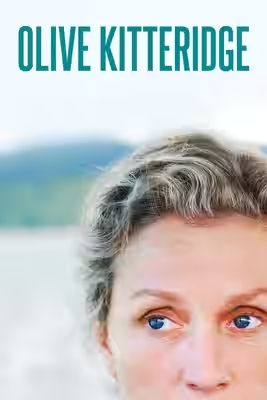
  3. Olive Kitteridge (2014, Fi1m 84)Another miniseries about a hard New England life, and it remembers to be funny.

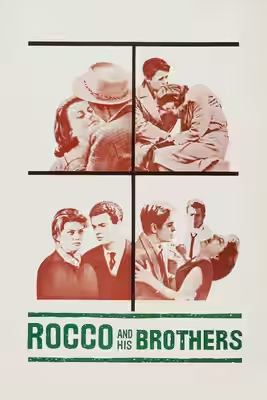
  4. Rocco and His Brothers (1960) · not reviewed yetVisconti’s Italian brothers ruin one another with love, at feature length and with more shape.

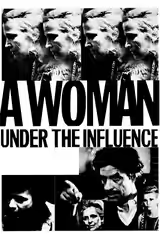
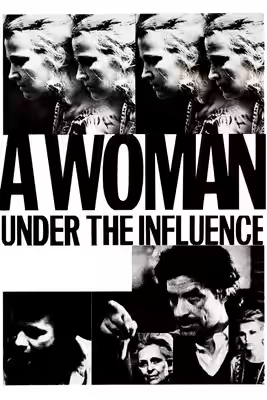
  5. A Woman Under the Influence (1974, Fi1m 86)Cassavetes on mental illness inside a marriage, filmed as close and raw as Lipes gets here.

Free account

Know what to watch tonight

Two lists that know where things are streaming, collections you can share, your own score beside ours, and Discover that remembers what you have seen.

  • Want to see, sorted by what is streaming now
  • Seen, with your score out of ten
  • No adverts, ever