Molly Smith Metzler’s ten-part drama about a young mother cleaning houses to keep her daughter counts the money down to the last dollar, and Margaret Qualley makes exhaustion watchable for ten hours. It runs two episodes long, and it knows which of our strings it is pulling.
Maid is adapted from Stephanie Land’s memoir of the years she spent cleaning houses in Washington state while raising a small daughter, and Molly Smith Metzler’s ten-episode version keeps the book’s central discipline: it counts. When Alex Russell (Margaret Qualley) buys petrol, the total appears on screen and her balance drops. When a client hands her a tip, it goes back up. Most dramas about poverty want you to feel poor. This one wants you to do the sums, and by the third episode we were doing them before she was.
Alex has left Sean Boyd (Nick Robinson), a bartender who drinks and does not hit her, and that turns out to be the difficulty. Denise (BJ Harrison), who runs the shelter, has to explain to Alex that what she has been living with counts as abuse, and Alex does not believe her. Robinson is well cast. He is soft-faced and apologetic and plausible, and the series is careful never to let him become a monster, because monsters are easy to leave. Her mother, Paula Langley (Andie MacDowell), paints, lives in a trailer with whichever man is current, and answers every request for help with a speech about energy. MacDowell is Qualley’s mother in life, and the two of them argue with the shorthand of people who have been doing it for decades.
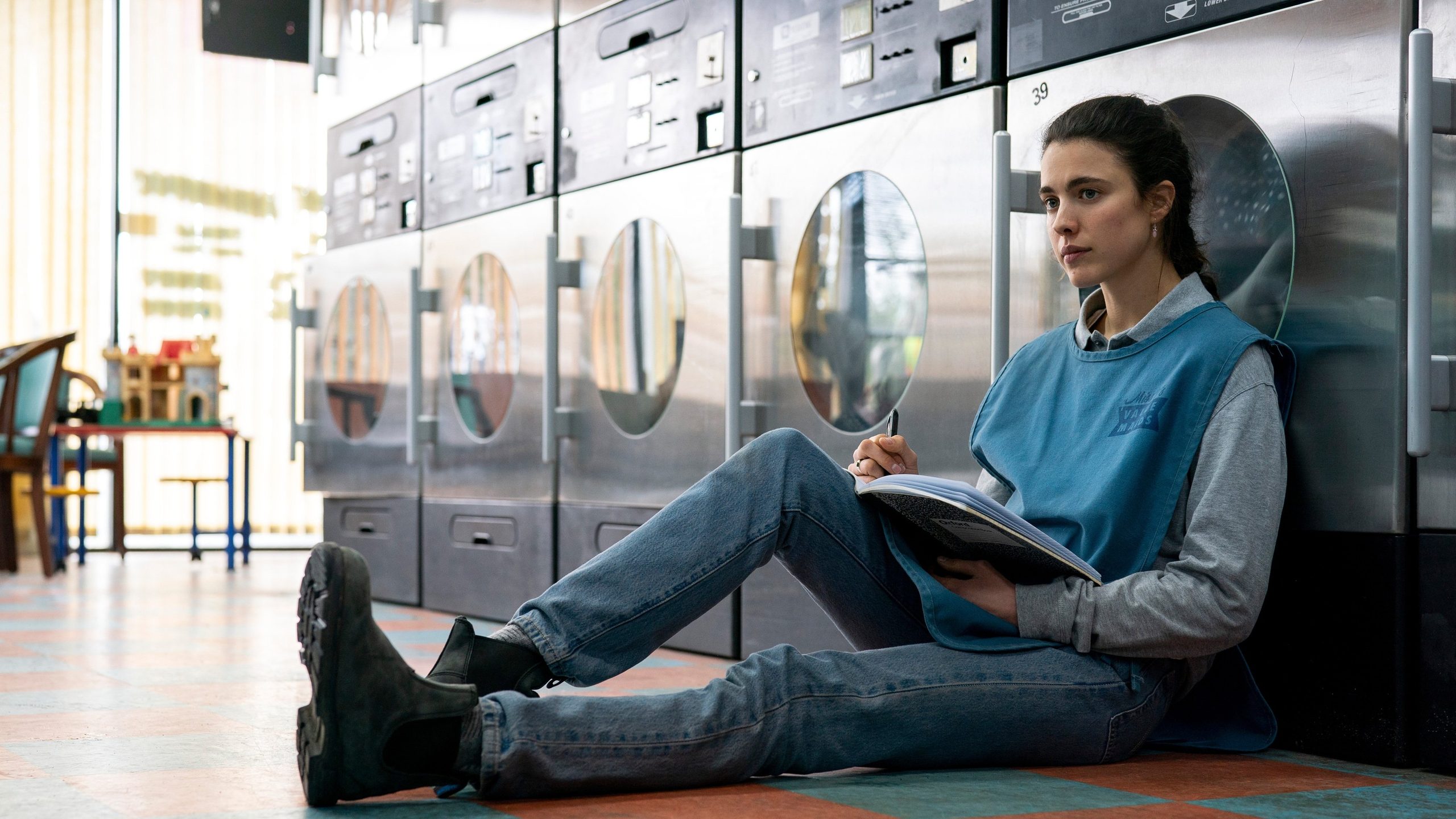
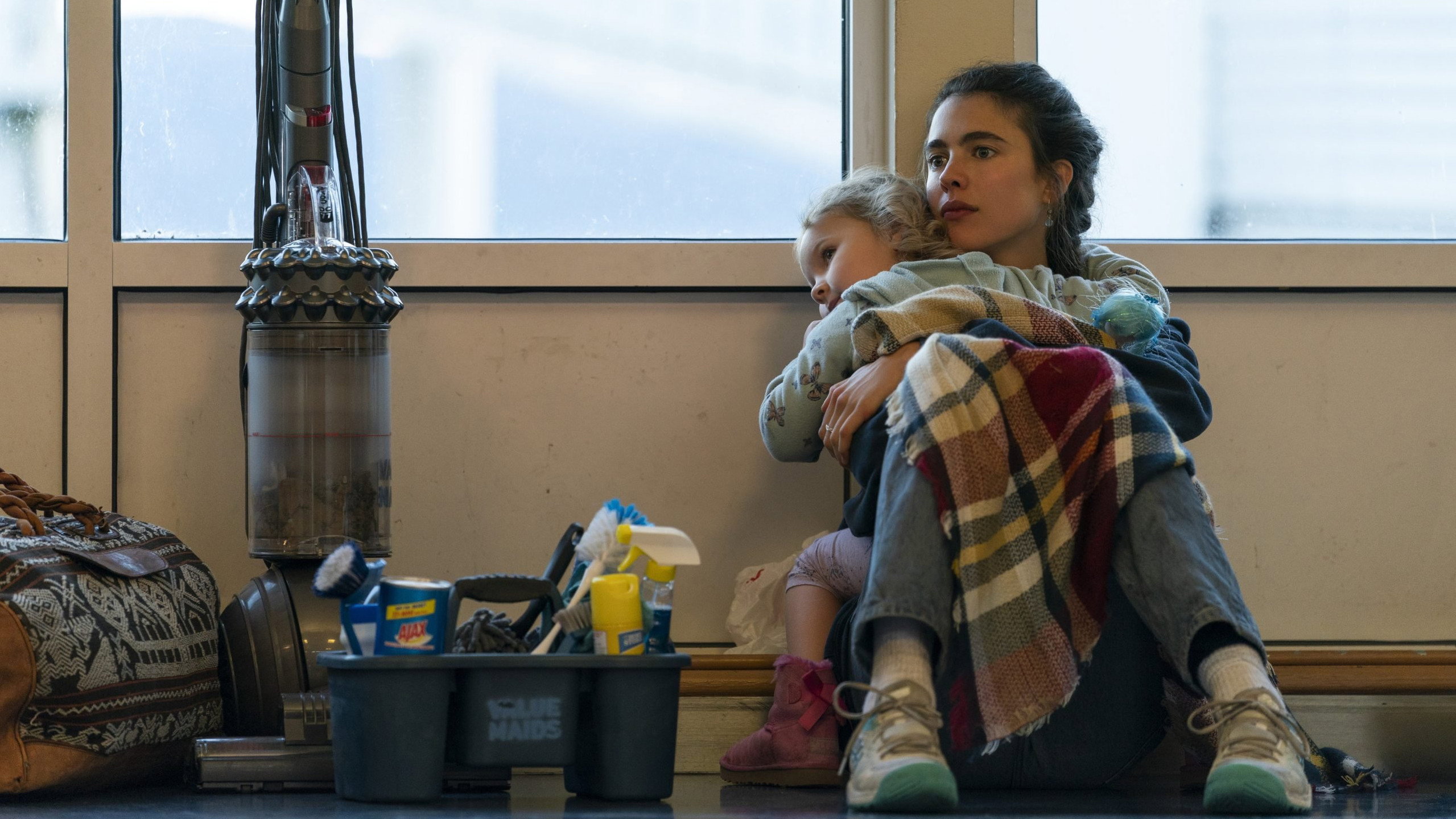
Qualley carries it. She has a long, watchful face and she uses it to think on camera; you can see Alex working out whether she can afford the ferry, whether the caseworker is on her side, whether the man offering a lift is safe. She is in nearly every scene of ten hours and she does not run out of ways to be tired. The moment that got us comes early, in a family courtroom, where the legal language coming at her from three directions turns on the soundtrack into a single repeated word, and Alex sits there nodding as if she understands. We were angry, and not at Sean. We were angry at the form.
Quyen Tran, who shoots much of it and directs an episode, keeps the camera low and close to Alex and finds a grey-green Pacific light that makes the whole town look damp. Renée Reâd’s production design does the work of a script. The shelter is bright and clean and furnished with other people’s cast-offs, Paula’s trailer is a nest of canvases, and the house on Fisher Island that Alex cleans is all white surfaces that show every mark. Lyn Paolo and Lorraine Carson give Alex one pair of jeans and one hooded top, and you notice when they change. Christopher Stracey and Este Haim’s music is low and spare and mostly stays out of the way.
There are five directors, among them John Wells and Lila Neugebauer, and three editors, Annette Davey, Jacquelyn Le and Annie Eifrig, and the seams rarely show. The cleaning montages are cut fast, brushes and taps and a stopwatch, and they are the closest the series comes to fun.
The flaws are structural. Ten episodes is two more than the story has, and the middle stretch keeps sending Alex back to square one. That is true to life. It is also tiring to watch, and the point, that any progress is fragile, is made by episode five and then made again. Some of the devices tip over. Alex has a habit of sinking, in her imagination, into whatever sofa she is sitting on, and the first time it is a good image and the fourth it is a tic. The wealthy client whose house she cleans gets more screen time and more improvement than she needs, and the series’ fondness for letting everyone learn something from Alex is where you can feel the writers’ room. We were moved, often, and now and then we could see the lever being pulled.
As a record of what an American safety net asks of the people who need it, the phone queues, the document you cannot get without the other document, it is as precise as anything we have seen on television. Ken Loach would have done it in a hundred minutes and left angrier. Metzler has the time to show the waiting, and the waiting is the point.
It is a 15 and it earns it, not for anything shown but for what it asks you to sit through. Watch two episodes at a time and no more. The dread accumulates, and Alex’s bank balance does not.