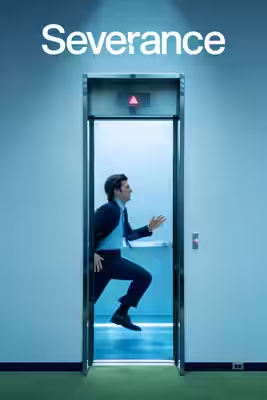
Severance makes its divided-memory premise frightening through Adam Scott’s performance and an office built to unsettle. The first season takes too long to gather pace, but its workplace satire earns the patience it asks for.
The first season of Severance is a strong, unsettling workplace thriller, with an opening that asks for more patience than it needs. Its employees undergo a procedure that keeps their memories of work separate from everything they experience outside it. We can understand the appeal until we consider the person who only knows the office and cannot remember a moment away. Dan Erickson and his fellow writers take that consequence seriously, allowing room for jokes without treating the people caught in it as the joke. The loss of ordinary choice makes the premise frightening.
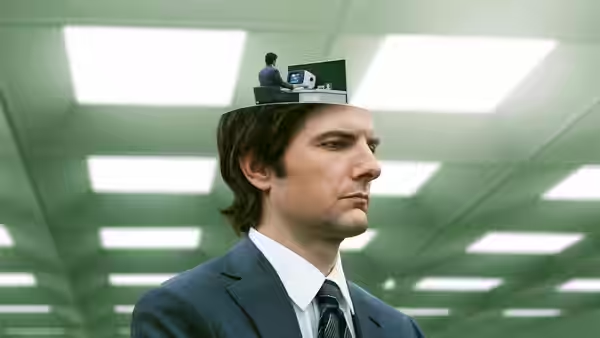
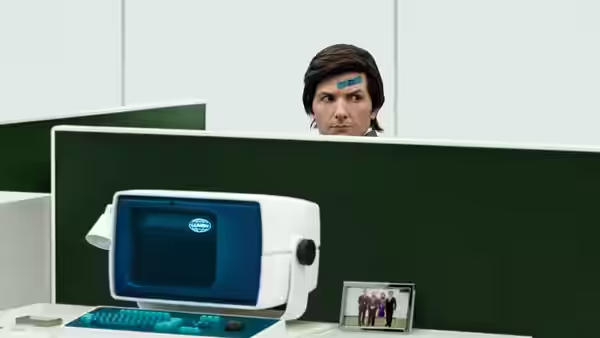
Adam Scott gives that premise someone to hurt. As Mark Scout, he makes the differences between the working and non-working selves legible without making either feel like an acting exercise. We felt trapped watching Scott’s office-bound self, because his performance gives the loss of a life outside work such an ordinary, recognisable face. He lets us see the limits of what Mark can know without playing those limits as stupidity. The performance keeps us concerned about him when the larger mystery threatens to occupy all our attention.
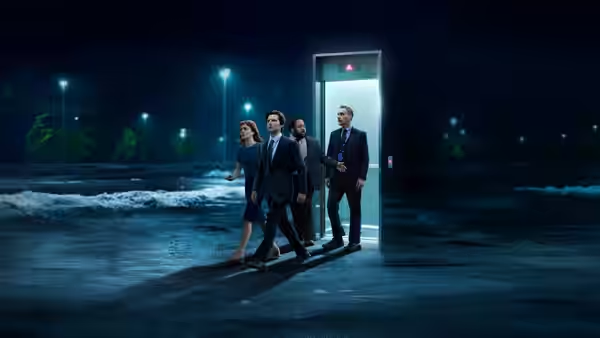
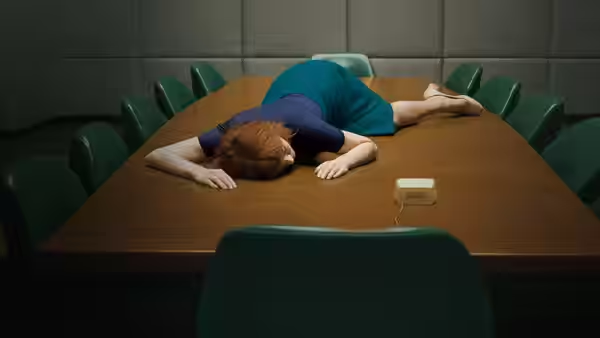
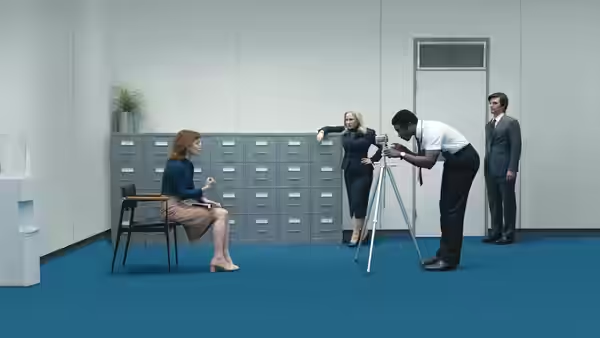
Ben Stiller and Aoife McArdle direct with a useful unwillingness to hurry past discomfort. Jeremy Hindle’s production design gives Lumon’s offices their retro-futurist character, making the workplace difficult to place in a reassuringly familiar period. It resembles somewhere we might have worked, though we would struggle to say when. Jessica Lee Gagné’s cinematography helps distinguish the office from the outside world so firmly that a change of surroundings carries some of the story. Theodore Shapiro’s music keeps the unease present without crushing the humour, an important contribution in a programme where laughter rarely means that anyone is safe.
Patricia Arquette, as Harmony Cobel, is especially good at keeping us uncertain about how to read her. Her composure fits the corporate setting while giving it another reason to feel unsafe. The ensemble’s command of the comedy matters just as much: workplace absurdity remains funny even when the consequences have stopped being harmless. The actors make it possible to laugh without making the employees’ predicament look trivial, and their performances give the programme reasons to hold our attention beyond the next unanswered question.
The early pacing is less assured. Editors including Geoffrey Richman allow pauses enough room to become uncomfortable, a useful choice that the opening stretch sometimes overuses. Once the workplace has been established as oppressive, keeping us there longer does not always add anything to our understanding of it. The slow start would benefit from firmer cutting, even if some of that carefully maintained chill went with it.
For a science-fiction thriller, the series is unusually interested in how much of a person’s life an employer feels entitled to take. The procedure takes a recognisable wish for distance from work and follows it far enough to become cruel. When the pace improves, the conspiracy becomes compelling because the actors have made its human consequences matter. We want answers partly because we want these people to understand what is being done to them.
There is enough humour and feeling here to reward viewers who have little interest in keeping elaborate notes about clues. We recommend the first season with one practical warning: its early pace gives little indication of how gripping it becomes. Give it time, but there is no obligation to pretend the waiting is a virtue.