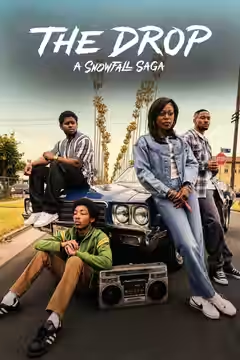
The two available reviews suggest an appealing but uneven drama, with a convincing ensemble, lively music and persuasive surroundings. Their shared reservation is substantial: the storytelling does not give those strengths enough support.
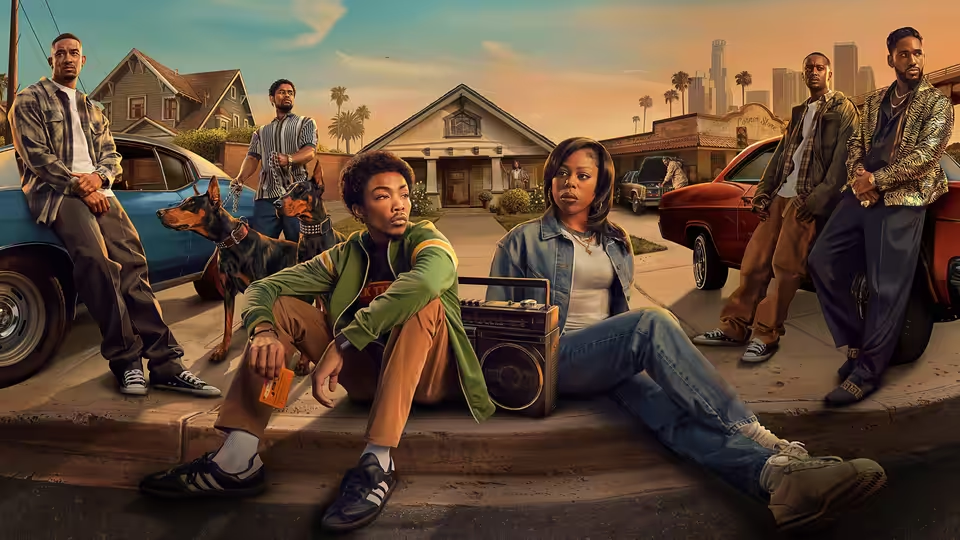
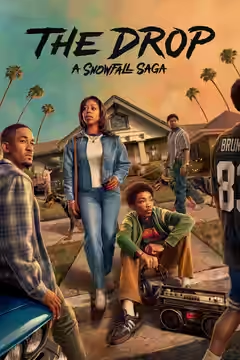
The two available reviews describe The Drop: A Snowfall Saga as a decent but uneven drama, with enough appeal to interest viewers who value atmosphere and an ensemble. Their shared reservation is that the storytelling does not match the confidence of the production. Malcolm Spellman is the creator, and the first season comprises eight episodes. Those accounts suggest a qualified recommendation: convincing surroundings can sustain curiosity for a while, but a series needs to establish what makes its people worth following.
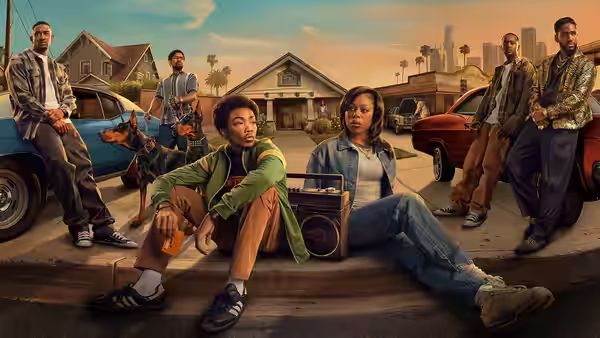
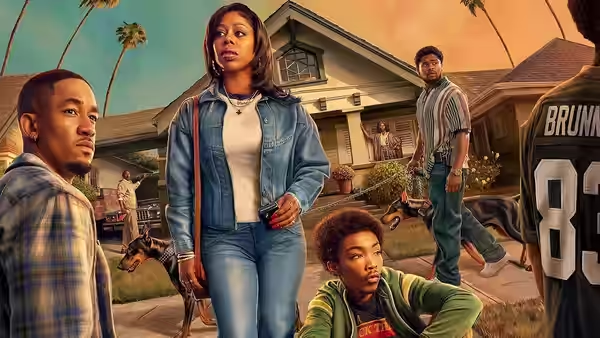
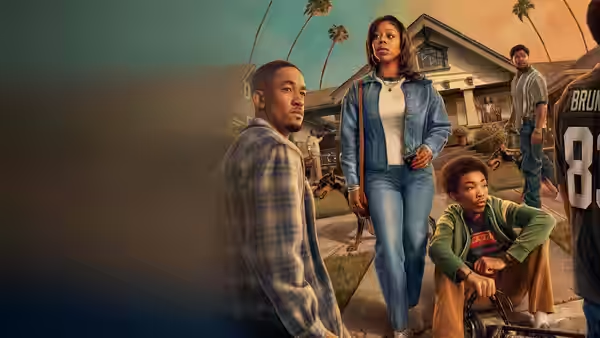
Variety singles out the sense of South L.A. and the period detail, finding the production more persuasive than the story. The Hollywood Reporter finds brightness in its depiction of early-’90s South Central. We warmed to that description: the neighbourhood sounds like somewhere people might enjoy living, which is an encouraging starting point for a drama. The reservation is that the series has to give that appealing place something substantial to contain, and both reviews find the storytelling uneven.
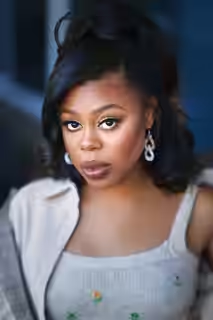
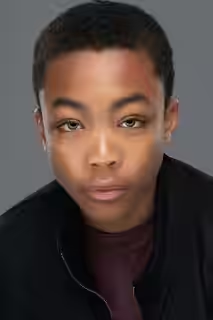
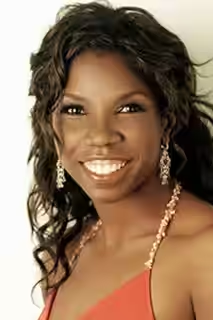
The Hollywood Reporter praises the ensemble’s authenticity, an important virtue in a series asking for sustained attention to a group of people. Gail Bean plays Wanda Bell, Isaiah John plays Leon Simmons, and Asante Blackk plays Lamar Kinsey. Peyton Alex Smith plays James Kinsey, with Mykelti Williamson as James ‘Big Daddy’ Kinsey and Nicki Micheaux as Gerty Kinsey. The favourable account of the acting offers a reason to remain interested, although the complaint about unclear direction leaves a substantial question about how well the series uses that ensemble.
The soundtrack is another encouragement in The Hollywood Reporter’s account, which emphasises its liveliness alongside the period atmosphere. Music can do useful work in a drama of this kind, giving pace to a scene and suggesting a life continuing beyond the people immediately in front of us. It is also easy to enjoy a soundtrack while losing interest in what the characters are doing. Those reservations about direction remain relevant even if the music helps make the neighbourhood inviting.
The Hollywood Reporter also sees a spin-off still working towards an identity of its own, which makes the uncertain storytelling a more consequential concern. A new series needs to make clear what its particular characters want and why their choices should hold our attention. Familiarity can help at the beginning, but it cannot supply that purpose across a season. The review’s praise for the ensemble and soundtrack leaves room for optimism, alongside its explicit concern about the programme finding its own identity.
Both accounts describe an uneven series, and neither makes the case for an unqualified recommendation. Their agreement is limited to two reviews, but the recurring weakness is clear enough: the programme’s attractions are more convincing than its narrative direction. For viewers drawn to period detail, music and an ensemble, that may be an acceptable compromise. If a firmly driven plot is essential to your evening, those reservations are worth taking seriously.