Veena Sud’s American remake of a Danish hit has two detectives worth following and a grief worth watching, and it rations both across far too many wet episodes. Worth starting for Enos, Kinnaman and Michelle Forbes; be ready to wait.
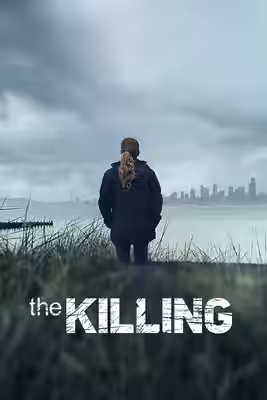
Veena Sud’s The Killing is a remake of the Danish series Forbrydelsen, from 2007, and it borrows the shape that made the original famous: one murder, one season, each episode covering roughly a day of the investigation. The city is Seattle, the weather is permanent rain, and the dead girl is a teenager called Rosie Larsen. Across four seasons and 44 episodes, from 2011 to 2014, the series tries to build a police procedural around grief instead of plot. When it manages that, it is good. It does not manage it often enough.
The Larsens are the reason to start. Michelle Forbes plays Mitch, the mother, and Brent Sexton plays Stanley, the father, and the opening episodes give them the kind of time American television almost never gives the family of a victim. We were not prepared for Forbes. There is a moment early on when the news reaches the Larsen kitchen and she does not scream or collapse; she simply stops being able to hear anyone, and the camera holds on her while the household carries on around her. It hollowed us out, and we had switched on expecting a whodunit. Sexton matches her in a quieter key, a large man trying to stay useful because the alternative is unthinkable.
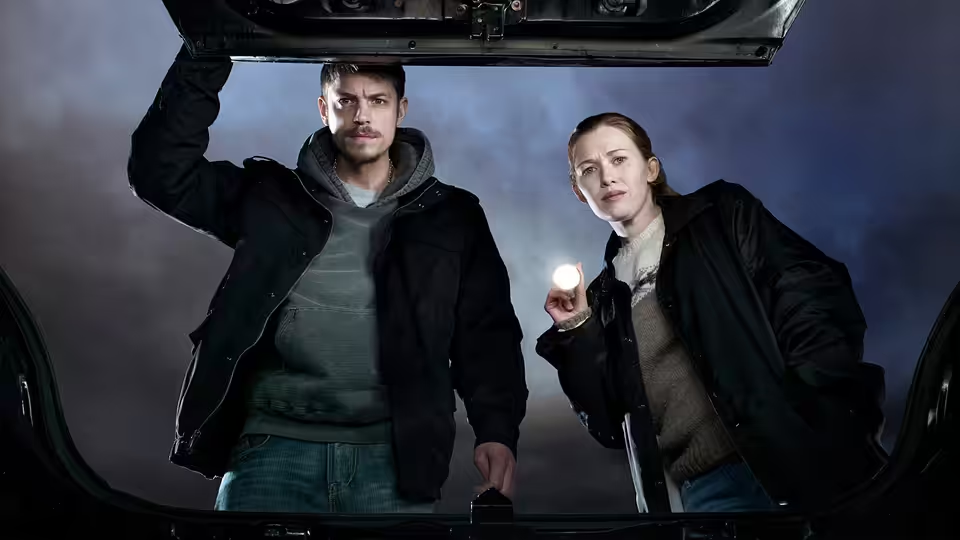
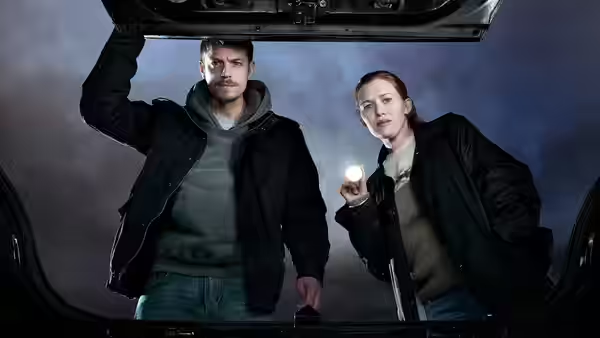
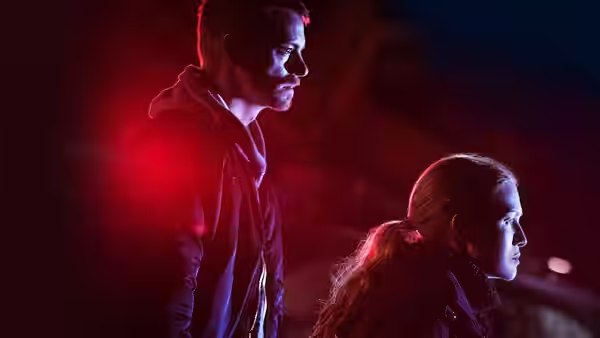
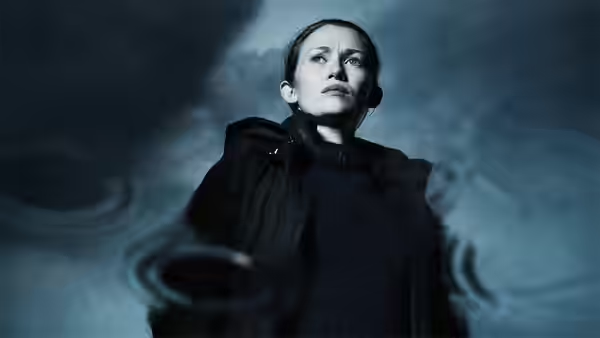
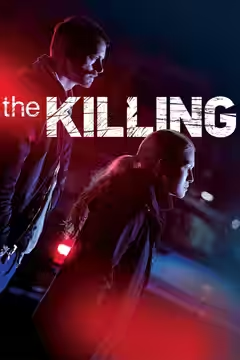
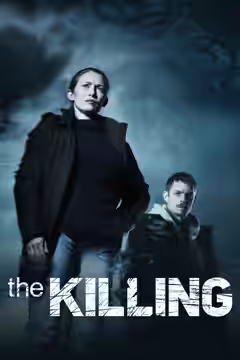
The detectives are the reason to keep going. Mireille Enos plays Sarah Linden as a woman with one jumper, a packet of nicotine gum and no small talk, a detective who is supposed to be leaving the city and keeps finding a reason to stay another day. Joel Kinnaman’s Stephen Holder arrives from narcotics in a hooded top, talking like a teenager and eating like one, and for the first few episodes we took him for a mistake. He is not. Kinnaman plays the slang as a costume Holder is hiding inside, and the slow business of Linden working that out, mostly in a parked car with the wipers going, is the best-written strand the series has. Nobody on screen is ever allowed to be charming, and over 44 hours that gets tiring.
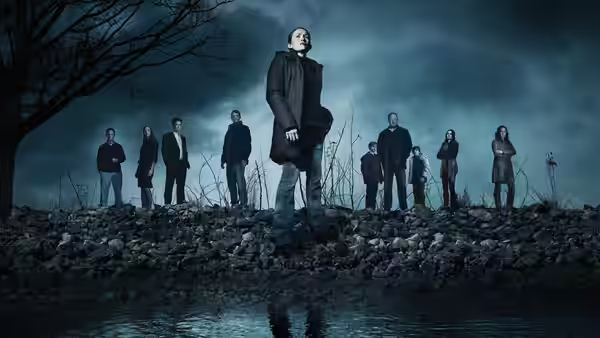
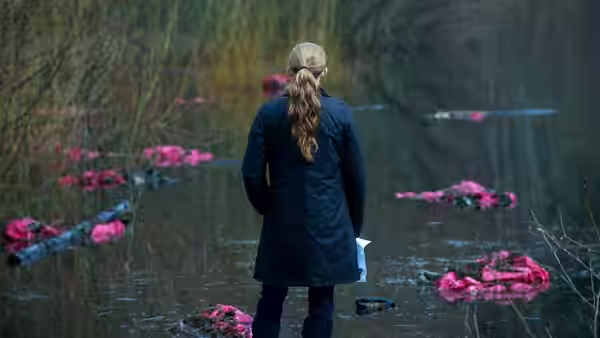
It looks like what it is about. The nineteen credited directors, who include Patty Jenkins on the opening episode and, further on, Jonathan Demme and Agnieszka Holland, keep the camera low and the colour drained to green and grey, so that a lit window at dusk reads as the warmest thing in the frame. Interiors are underlit even by the standards of the genre. The sound mix does a good deal of the work: rain on car roofs, a kettle, a phone nobody wants to answer. It is a consistent look across a great many hands, which tells you how firmly Sud ran the programme.
The problem is time. The Larsen case runs across the first two seasons, 26 episodes, and a mystery that long has to be fed, so the writers feed it suspects. Each gets a few episodes of suspicion, a scene in which Linden stares at him, and a quiet exit. The strand set inside the mayoral campaign, with Eric Ladin as Jamie Wright and Kristin Lehman as Gwen Eaton working the phones, is where this shows most; it is competently acted and we could never make ourselves care which way the vote went. By the middle of the second season we were counting episodes, which we had not done once in the first. A series this slow cannot afford a viewer who is counting.
The third season starts a new case over 12 episodes and moves faster, and the fourth, six episodes with Joan Allen arriving as Margaret O’Neal, plays like a series that knows it is being allowed to finish and is grateful for it. Neither recovers the first season’s grip on grief, because by then the Larsens are gone and nobody is written to replace them.
It has better actors in the two lead roles than the original, and less nerve about everything else. Most critics were split down the middle, and we can see both camps from here. Our recommendation is narrow: watch the first season for Forbes, Sexton, Enos and Kinnaman, and decide at the end of it whether you are willing to wait for an answer.