Bertolucci’s five-hour account of one Italian estate through the century is two films joined at an interval. The first, a golden summer of two boys and a farm, is close to wonderful; the second turns its people into speeches and keeps them there.
The Conformist and Last Tango in Paris bought Bernardo Bertolucci five hours and an international cast. 1900 tells the story of the twentieth century in Italy through one estate in Emilia and two boys born on it the same day, one to own it and one to work it. It runs 317 minutes, built to be shown in two parts. The first is among the best things Bertolucci made. The second is the same people delivering a lesson we had already learned.
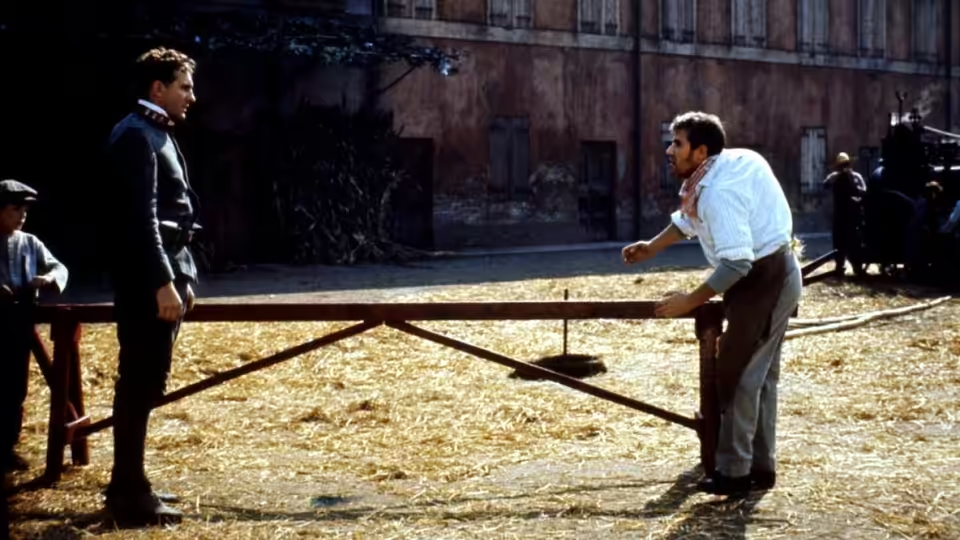
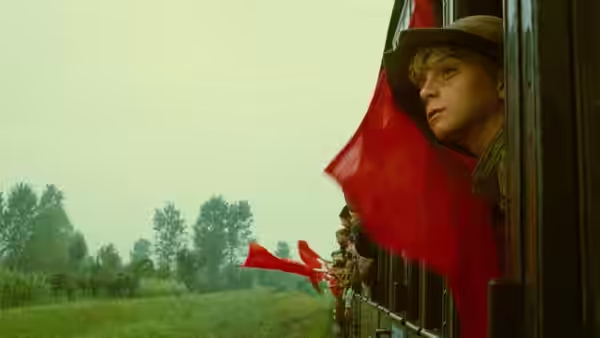
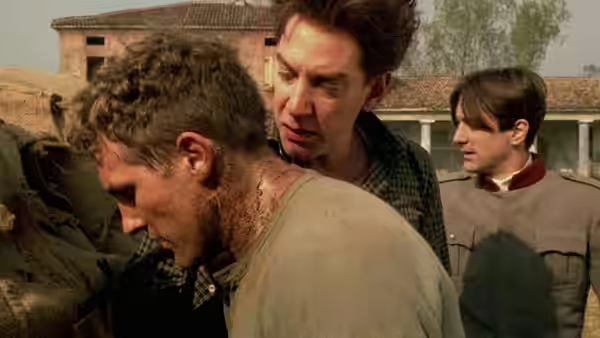
Vittorio Storaro shoots the first half as one long summer. The wheat is the colour of the actors’ skin, the farmyard is lit through dust, and the peasants eat at a table so long the camera has to travel it. Gianni Quaranta and Maria Paola Maino give the Berlinghieri villa dim shuttered rooms, and the Dalcò farmhouse one big kitchen where everyone sleeps, argues and is born. Gitt Magrini puts the peasants in white linen washed to grey and the landowners in black wool they cannot be comfortable in. Ennio Morricone’s main theme, strings with an accordion underneath, returns at every gathering and never wore out.
The childhood scenes moved us more than we expected. Olmo lies down between the rails and lets a train pass over him because Alfredo will not; Alfredo follows him into every place he is forbidden. Sterling Hayden’s Leo Dalcò is weathered and nearly silent, and every scene he is in bends towards him. Burt Lancaster’s old padrone shouts, no one jumps, and Lancaster lets us watch him notice. Stefania Sandrelli’s Anita, the schoolteacher Olmo marries, lies down in a road with the other women in front of mounted soldiers, and the horses stop.
Then it is winter, and Donald Sutherland arrives. Storaro turns the picture grey and brown, fog in the poplars and frost in the yard, and the change is right. What happens in front of it is not. Attila Mellanchini, the foreman who becomes the local fascist, is a grinning brute with no inner life, and Laura Betti’s Regina, Alfredo’s cousin, eggs him on with the same lack of shading. The script, by Bertolucci, his brother Giuseppe Bertolucci and the editor Franco Arcalli, has decided that fascists are monsters and peasants are saints, and has nothing further to find out. There is a sequence involving Attila and a cat that we watched appalled, and its point had been made an hour before.
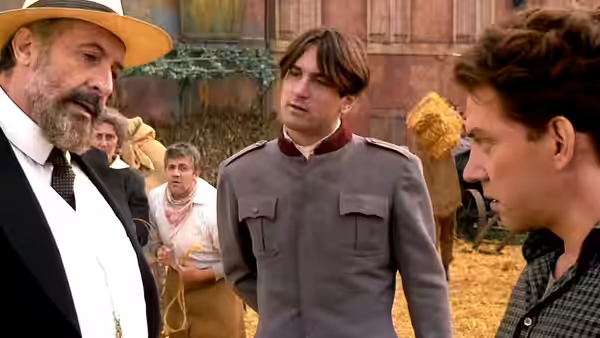
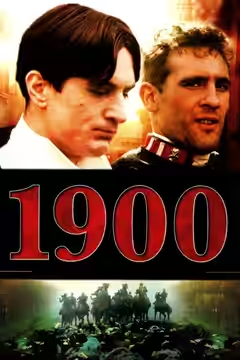
Robert De Niro has the hardest job. Alfredo is a man things happen to; he inherits, he marries, he lets Attila run the estate because stopping him would mean a decision. De Niro plays that faithfully, and for three hours he is the least interesting person in the frame. Depardieu is all appetite, laughing, eating and shouldering into rooms. Dominique Sanda’s Ada, who marries into the villa and drinks, is the one figure in the second half who seems to have a private life. She suffers most from the dubbing. The cast spoke several languages, and the version most of us will see puts other voices over their mouths, so the second half’s many scenes of talk land a beat late on every face.
Arcalli cuts the first half as if he had all the time in the world, and he did. He cuts the second the same way, and here it reads as reluctance to lose anything. The 1945 frame returns, and the peasants put their case against the padrone at length, and then again. By the fourth hour we were bored, and then cross about it, because the images were still fine and the people in them had stopped being people.
The Conformist (1970) got inside fascism through one frightened man and hardly a speech, and is the better film. 1900 treats history as a pageant with sides, and once you know which side you are on there is little to do but watch the light. Storaro makes that worth doing more often than not.
See the first half on the biggest screen you can find, as a film about two boys and a farm. Take a proper break. The second half is for those who want to know how it comes out and can bear being told twice.