Jean-Pierre Jeunet brings Ripley back as a clone and the Alien series back as a freak show. Sigourney Weaver is remarkable and the pictures are like nothing else in the series; Joss Whedon’s script keeps interrupting both with a wisecrack.
Five years after Alien 3 (1992) killed Ripley off, the series has her back, and the film knows how strange that is. Joss Whedon’s script has the military grow her from a blood sample two hundred years on, not for her sake but for the alien queen she was carrying when she died. Jean-Pierre Jeunet, who made Delicatessen (1991) and The City of Lost Children (1995) with Marc Caro, directs his first film in English and brings the wide lenses and the sickly light with him. What he makes is the oddest of the four films, the funniest and the least frightening. It is worth an evening for the interested and for nobody else.
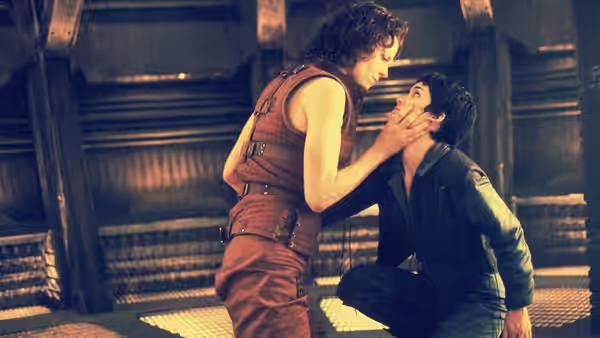
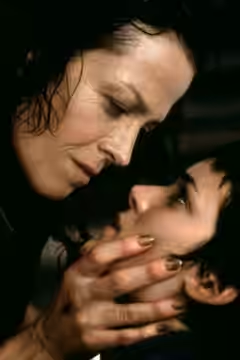
Weaver first. She plays the clone as something that remembers being Ripley without quite being her, and she does it mostly with her body: a loose, unhurried walk, a habit of sniffing the air before she looks, a smile that arrives a beat late. She beats Ron Perlman’s Johner at basketball without appearing to try, then puts him on the floor. The performance has stopped asking for our sympathy and is more interesting for it.
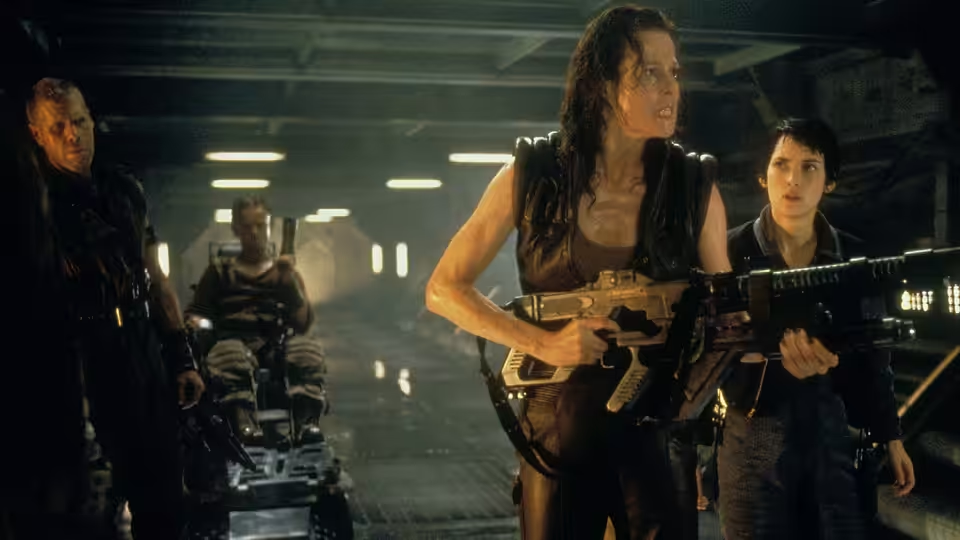
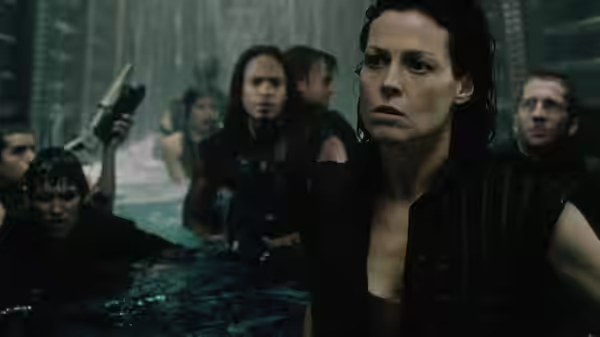
Darius Khondji lights the Auriga in the colours of a hospital at night, greens and dirty ambers with the shadows left black, and Nigel Phelps designs it as a laboratory rather than a haunted house: glass tanks, steel tables, corridors with the plumbing on the outside. Bob Ringwood puts the Betty’s crew in scuffed leather and knitwear that looks slept in. Around the midpoint there is a long sequence underwater, in a flooded galley, with the creatures swimming after the humans, the one stretch where Jeunet’s taste for the strange and the series’ need to frighten pull the same way. We held our breath with them. It is the best set piece in the film by a distance.
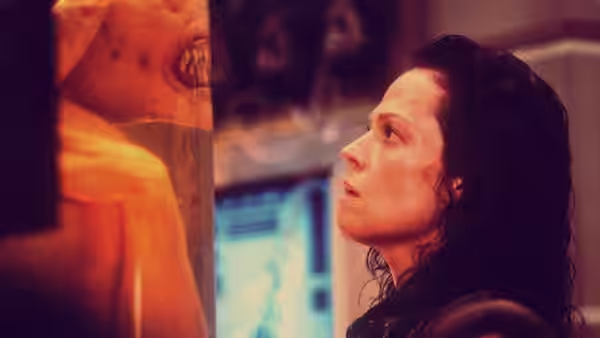
Then there is a room. Roughly halfway, Ripley opens a door, and what is behind it is the film’s one serious scene, played nearly in silence. We will not describe it. We will say it horrified us in a way nothing with teeth in the film managed, because it is about what was done to a person rather than what a monster might do next, and Weaver plays it with a stillness the rest of the picture never asks of her. Then it is back to the corridors.
The corridors are where the trouble is. Whedon writes the Betty’s crew as a gang with a line ready for every death: Perlman’s brute, Dominique Pinon’s Vriess in a chair with a gun bolted to it, Gary Dourdan’s Christie with pistols strapped to his forearms. Some of the lines are funny; all of them cost tension, and John Frizzell’s score, thick with brass and choir, keeps announcing dread the dialogue has just waved off. Winona Ryder’s Call has the only conscience on board, and Ryder plays her as if she had wandered in from a quieter film, and the second half explains why. Hervé Schneid cuts the action fast and from many angles, and we sometimes lost track of who was where.
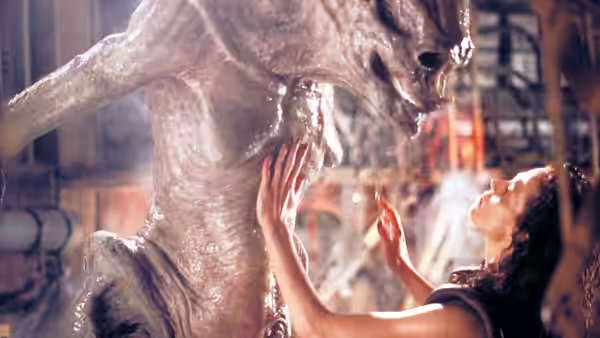
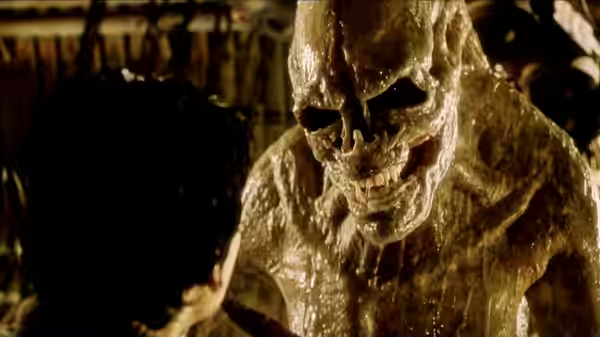
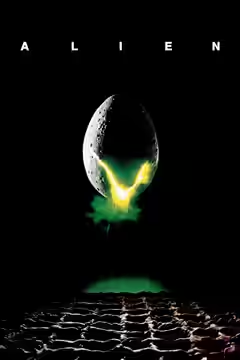
Whedon has since disowned the result and blamed the direction rather than the words; having listened to the words, we are not sure he is right. The pictures are of a piece from first frame to last; it is the script that keeps stopping the horror film to tell a joke about it. Alien (1979) was one monster in one ship. Aliens (1986) was a war film. Alien 3 was a funeral. This one is a sideshow, with Jeunet as the barker, and the second half takes a turn we will not describe, except to say that the last twenty minutes are the silliest in the series.
See it if you liked Delicatessen and wondered what Jeunet would do with a monster and someone else’s money, or to watch Weaver take a character she has played three times and make her unfamiliar. Do not see it expecting the fourth chapter of the story you were following; that is the hope that leaves people angriest. It runs 109 minutes and carries an 18 certificate, which for once is not a formality.