Gary Oldman’s Churchill is cruel, funny, frightened and impossible to look away from, and Joe Wright keeps two hours of talk moving. But Anthony McCarten’s script makes the same point six times and never once asks whether the great man might be wrong.
Joe Wright’s film covers about three weeks of May 1940, from the night Neville Chamberlain loses the confidence of the Commons to the day Winston Churchill tells the House that Britain will fight on the beaches. Anthony McCarten’s script keeps the war offstage and the argument indoors: will the new Prime Minister hold his nerve while the men around him press him to ask for terms? The performance at its centre is better than the script it serves. Gary Oldman is worth the ticket. The rest is decent and repeats itself.
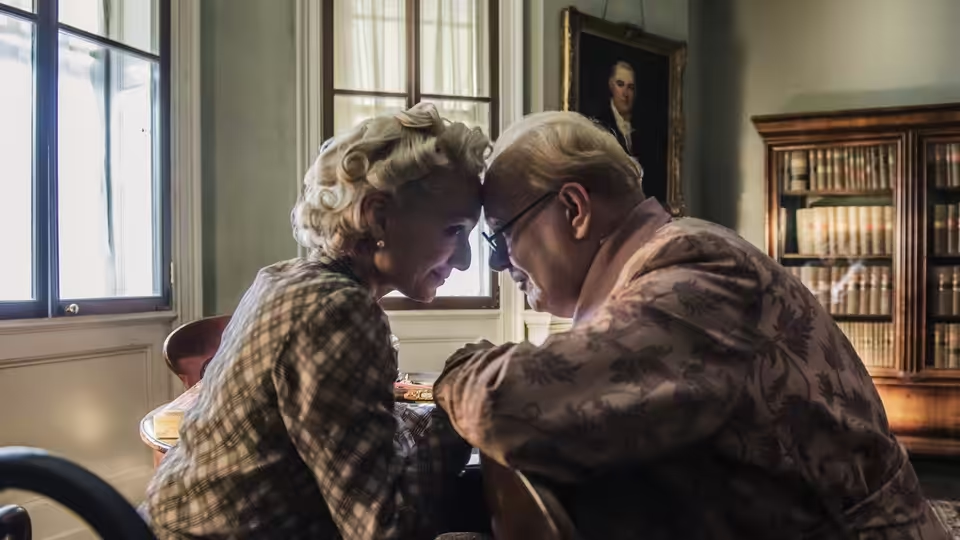
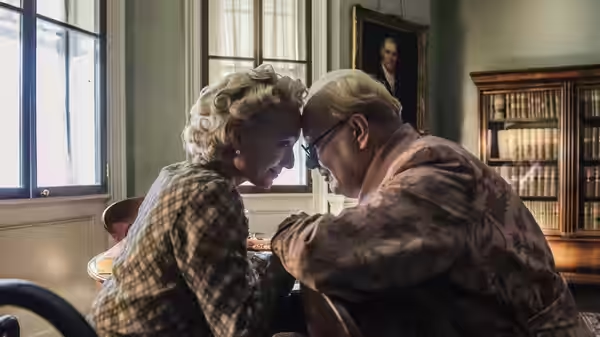
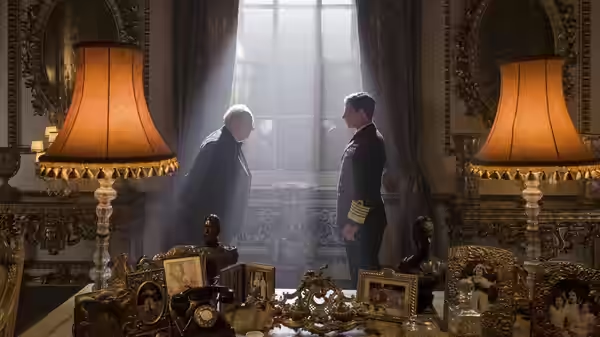
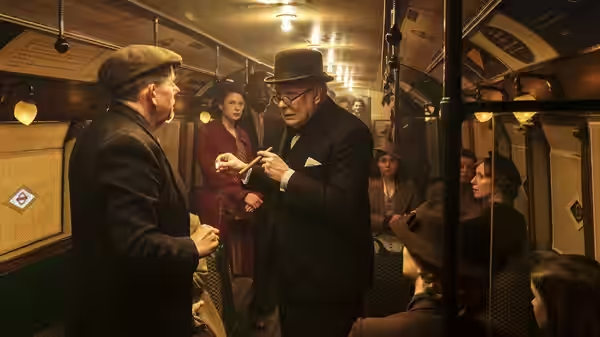
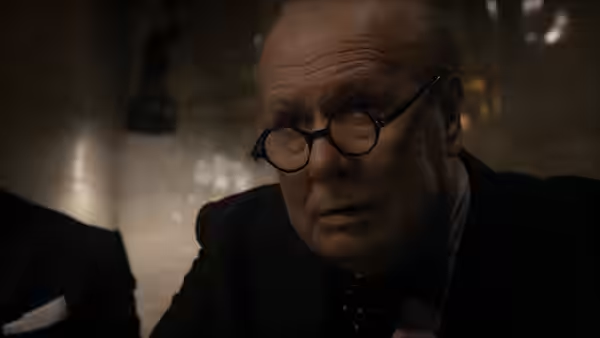
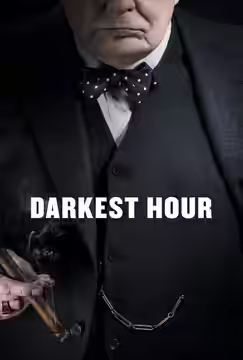
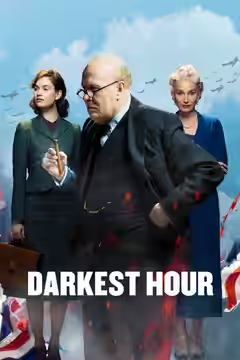
Oldman plays Churchill under a great deal of prosthetic and it takes about one scene to stop noticing. He begins the day in bed with a tray, a cigar and a whisky, shouts at his new typist Elizabeth Layton (Lily James) for single-spacing a page, and then goes off to be made Prime Minister by a King who plainly wishes it were anyone else. The voice is a mumble with edges, and Oldman uses the pauses as much as the words. What surprised us was how frightened he lets the man be. Alone in the lift down to the war rooms, this Churchill looks like someone who suspects he may be wrong and cannot afford to say so, and that moved us more than any of the speeches.
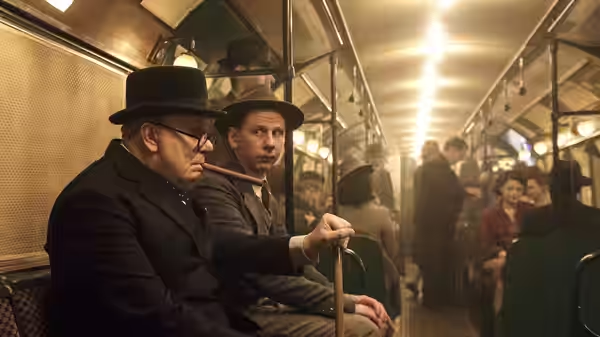
Wright and his cinematographer Bruno Delbonnel shoot Whitehall as if it were already underground. Corridors are lit by single lamps, ministers sit half in shadow, and daylight arrives through high windows in hard white shafts that nobody stands in for long. Sarah Greenwood’s war rooms are low, cluttered and yellowing, all telephones and pinned maps, and Jacqueline Durran dresses the appeasers in greys so pale they seem to be fading out of the picture. Dario Marianelli’s score runs on a piano figure that never settles, which is right for a film about waiting for news.
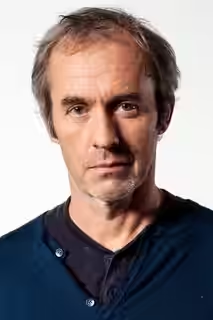
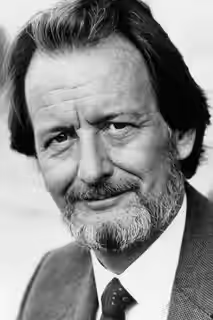
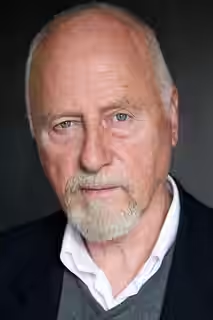
Stephen Dillane’s Halifax is the best of the supporting cast, a cold, reasonable man who believes peace talks are the only responsible course; the film is fairest when he is on screen. Ronald Pickup plays Chamberlain as a tired man already ill, and Ben Mendelsohn gives George VI a wary stiffness that thaws in one good late scene. Kristin Scott Thomas, as Clemmie, gets to be dry about her husband’s temper and not much else. James’s Layton is our way into the building, and the script forgets to give her anything to want.
The trouble is that McCarten has one scene and writes it six times. Halifax proposes talks through Italy, Churchill refuses, somebody reminds him about Gallipoli, and then he makes a speech. Valerio Bonelli cuts these exchanges briskly, but by the fourth war cabinet we could predict who would speak next. Churchill’s failings are named only so that his resolve can be admired more, and the film never asks whether a man this sure of himself might have been a danger in a different month.
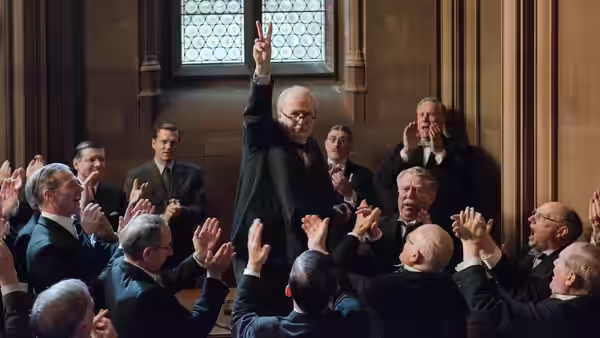
The speeches are the set pieces, and Wright stages them like engagements. The camera circles the despatch box, Delbonnel drops the benches into near-darkness, and Oldman’s voice comes up from somewhere near the floor before it fills the chamber. They work. We were stirred, and a little uneasy about it, because the film has spent the previous hour arranging for us to be.
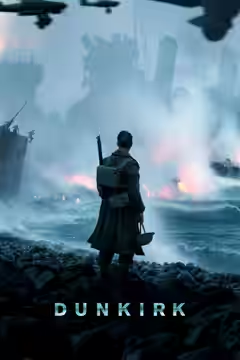
Wright’s Atonement (2007) put the camera on the beach at Dunkirk for one long unbroken shot; here Dunkirk is a name on a map and a few glimpses from the air. He has never let a room stay still, and here that mostly helps. Set beside Christopher Nolan’s Dunkirk (2017), which shows the beaches and never mentions the politics, this is a tidy companion piece and the lesser film.
See it for Oldman, who gives us a man where a monument would have done for most audiences, and see it knowing the script will explain the same thing several times. It runs 125 minutes and carries a PG, so the war stays out of shot and the arguing stays in.