Marcel Carné’s claustrophobic crime drama earns its bleakness through Jean Gabin’s wounded force and a sharply contrasting cast. The gloom can grow insistent, but the performances make confinement painfully absorbing.
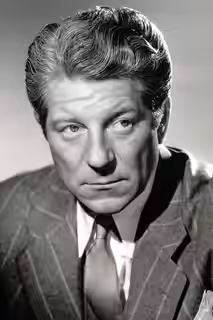
Marcel Carné’s Daybreak is a gripping crime drama, with a strain of self-pity that its actors mostly keep in check. François (Jean Gabin) is trapped in an attic, surrounded by police, and the confinement gives the film an immediate pressure. Carné asks us to stay close to a man who is difficult to comfort and difficult to dismiss. Across 93 minutes, the chief attraction is watching Gabin make that predicament feel personal.
Gabin’s force comes from how little protection his toughness seems to offer him. He can look formidable without making François seem safe, and the wounded quality never turns him into someone merely asking for our sympathy. We felt trapped with him. With the police outside the attic, his inability to look at ease makes even the available space feel insufficient. That is a difficult performance to sustain: the distress has to remain legible without becoming the only thing we see.
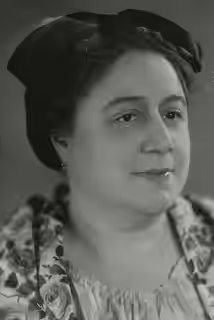
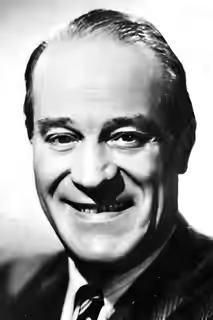
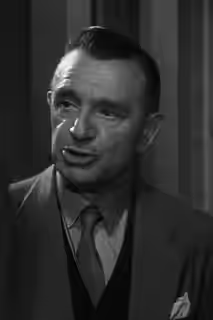
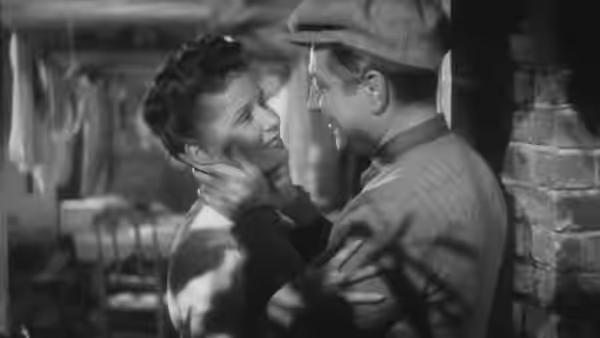
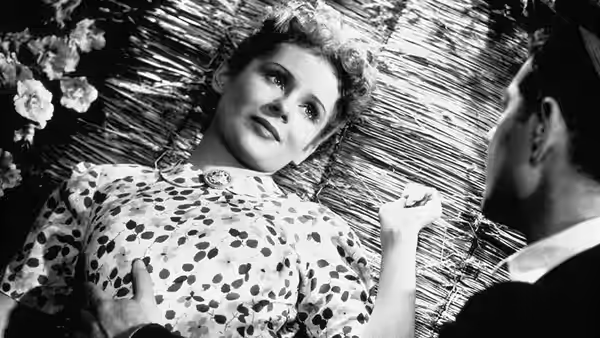
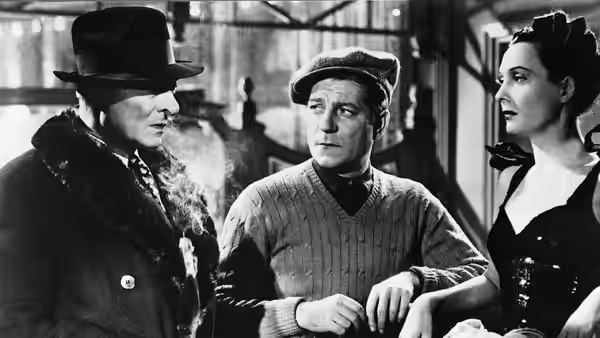
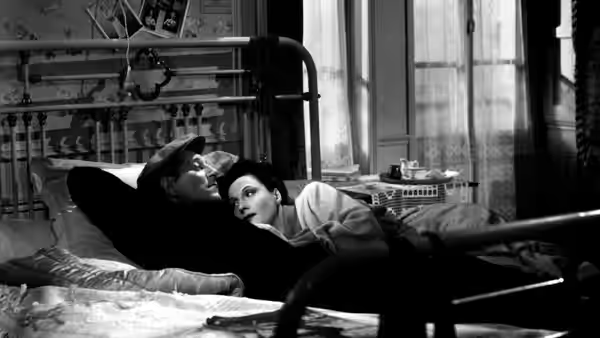
Jules Berry’s M. Valentin gives that restraint something useful to work against. Berry’s broader manner could unbalance the film, but the difference in acting styles makes the company more lively and less predictably solemn. Arletty’s Clara has a dry intelligence that is welcome in such oppressive surroundings. Jacqueline Laurent’s Françoise makes less of an impression; beside these strongly defined performances, she seems too easily reduced to the feeling a scene requires. The imbalance matters, though it does not undo the hold of the central performance.
The writing, credited to Jacques Viot and Jacques Prévert, also helps keep the gloom bearable. There is a sexual knowingness to the dialogue that makes these people sound capable of enjoying themselves, however uncomfortable their circumstances. We welcome that frankness, because a crime drama can become tiresome when everyone speaks as though conscious of their own tragedy. Carné does sometimes encourage that solemnity. The film is less convincing when its insistence on suffering crowds out the less orderly feelings the actors suggest.
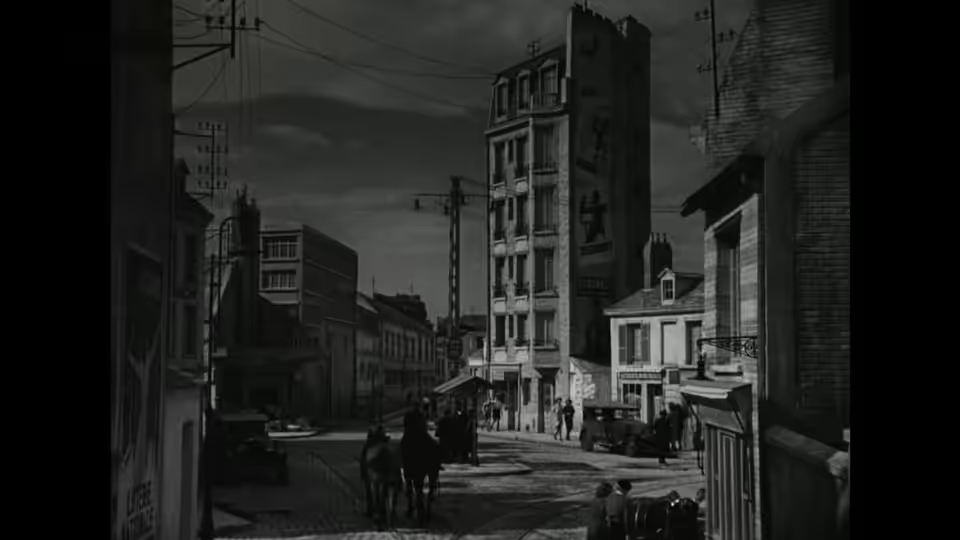
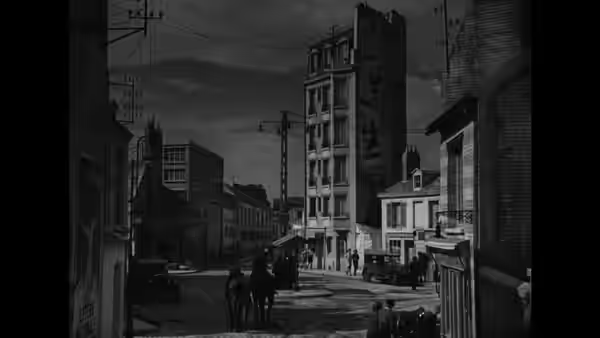
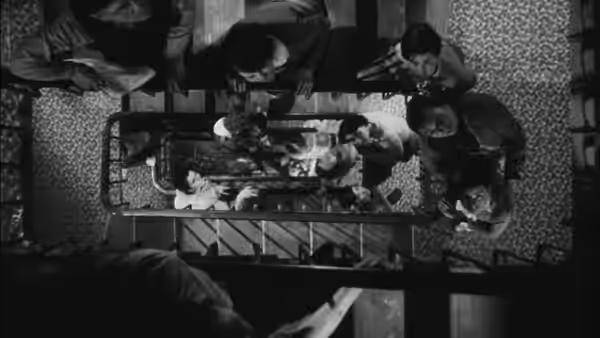
Alexandre Trauner’s production design makes the attic an effective source of discomfort. Its position above the police offers no reassuring sense of distance; François remains enclosed, and the attic keeps that physical fact before us. The photography is credited to Philippe Agostini, Albert Viguier, André Bac and Curt Courant, and its attention to Gabin’s face makes the confinement harder to endure. We keep looking for some sign that he can be comfortable there.
René Le Hénaff’s editing allows the performances time to register and holds the pressure steadily, although the expectation of disaster occasionally becomes wearing. Maurice Jaubert’s music adds to that weight, sometimes too insistently for our taste. Gabin supplies enough pain without much assistance. Yet Carné’s control remains persuasive: the claustrophobia comes from staying with François long enough to feel the strain, and there is usually enough life in the performances to prevent the sadness becoming monotonous.
We would choose it for an evening when there is no need to be cheered up. The dialogue rewards attention, and the performances are too finely judged to leave running while something else gets done. Allow the film its oppressive mood; if that is not tonight’s appetite, leave it for another night.