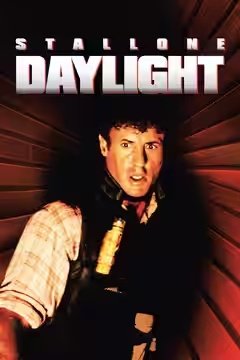
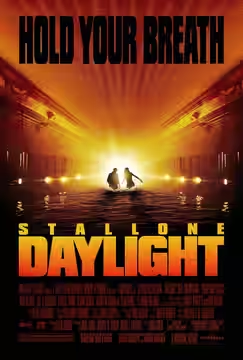
Rob Cohen stages the opening explosion with real conviction, and then asks us to spend ninety minutes in the dark with people the script has not bothered to make bearable. Stallone, quieter than usual, nearly carries it. Nearly.
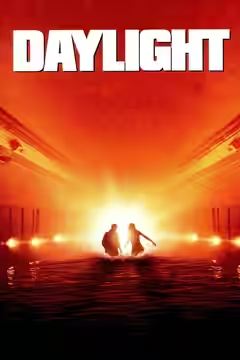
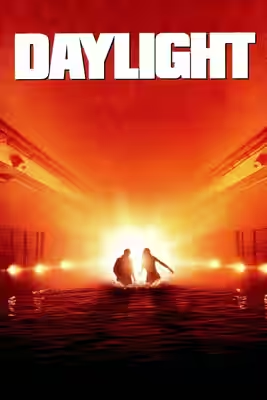
Daylight is a disaster film in the old 1970s manner: gather some strangers, drop something enormous on them, and see who behaves. Leslie Bohem’s script takes a road tunnel under the Hudson, puts a truck of toxic waste in one end and a carload of jewel thieves in the other, and closes both ends with the fire that results. The explosion is the best thing in the film. At 115 minutes, that leaves a good deal of film afterwards.
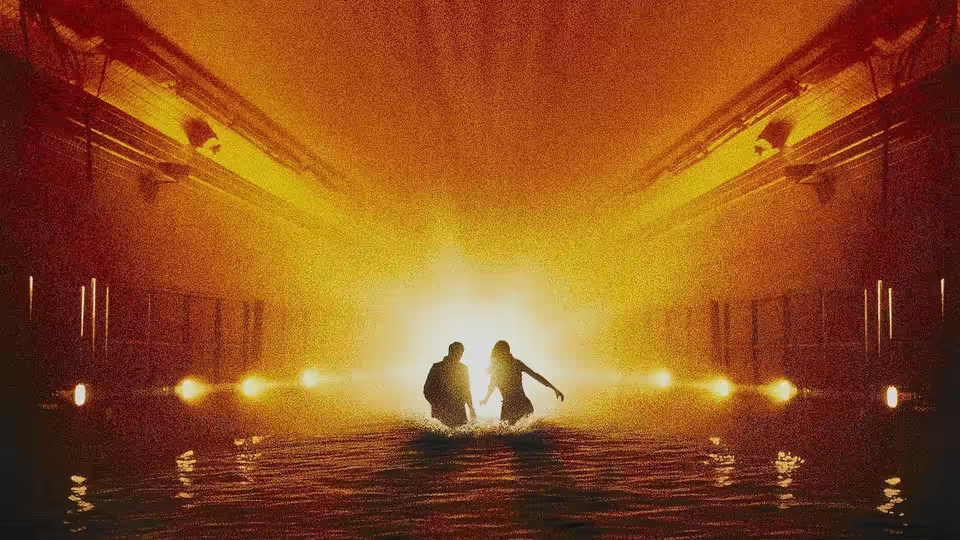
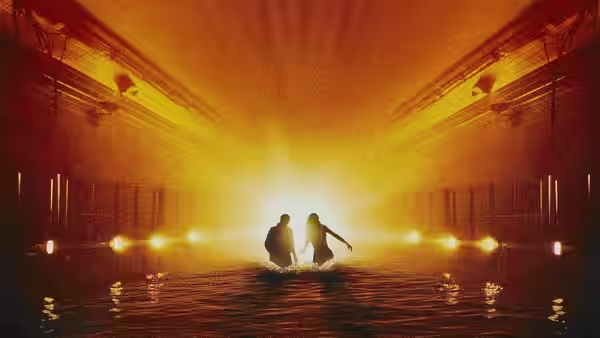
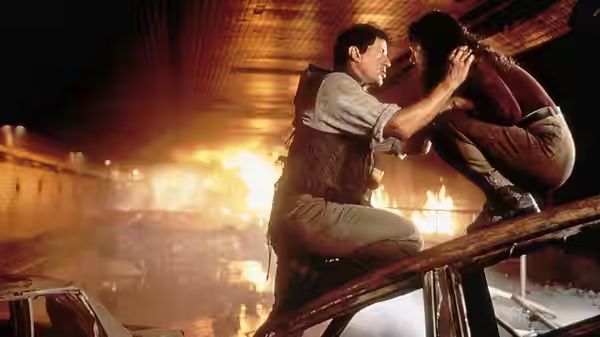
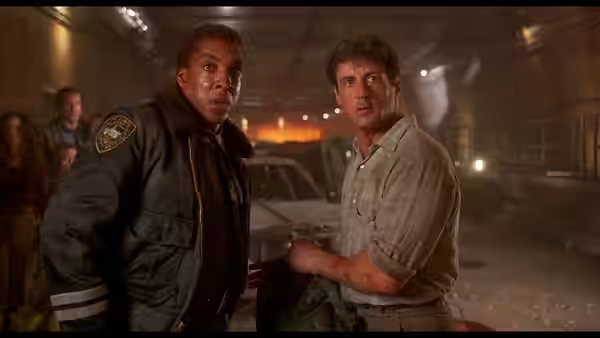
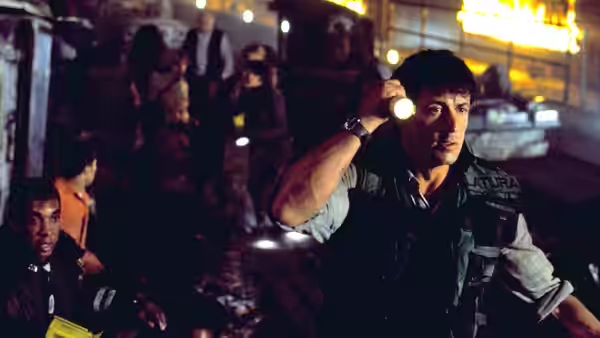
It is a fine explosion, though. Peter Amundson cuts it as a chase, the fire rolling along the tiled roof car by car while drivers turn in their seats to see it coming, and we flinched, properly, when it reached the coach. David Eggby lights what remains in sodium orange and torch beams, so that survivors appear out of the smoke and vanish back into it. Benjamín Fernández’s set, a tiled tube with a floor of crushed cars and water already pooling at the kerb, is a real place rather than a backdrop. The first quarter of an hour promises a tighter film than the one we get.
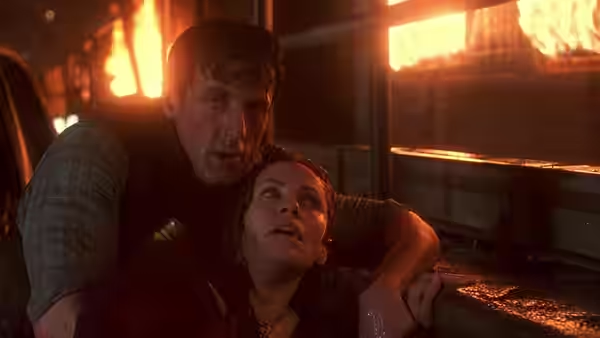
Stallone is better than the film around him. Kit Latura is a disgraced former emergency chief now driving a cab, and Bohem makes him carry that shame instead of a gun. Stallone plays him low and unsure, a man who needs telling he is still useful, and he gets through the ventilation fans with his face rather than his arms. Those fans, with blades the size of a house and a timing problem the film explains clearly and then exploits, gave us the one stretch where our hands went cold. Rob Cohen handles that sequence with patience, which he does not show elsewhere.
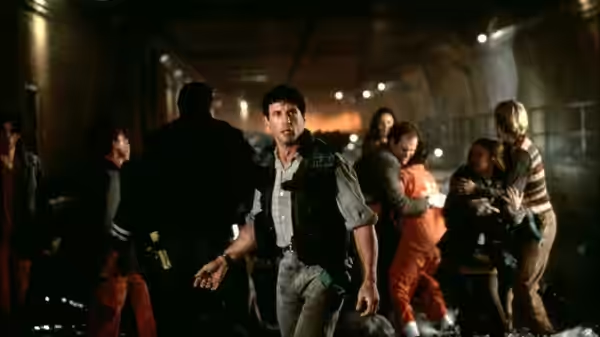
Viggo Mortensen’s Roy Nord, a rich adventurer who sells climbing gear and means to climb out, is the only person in the tunnel with an idea of his own, and Mortensen plays him as a cheerful egotist who is probably right about half of it. The film does something with him we will not describe, except to say the tunnel is duller afterwards. The others are the problem. Bohem has written a playwright (Amy Brenneman) leaving town, an elderly couple (Claire Bloom and Colin Fox) with a dog, a family (Jay O. Sanders and Karen Young) with a sullen daughter, a van of young offenders led by Mikey (Renoly Santiago), and a tunnel officer, George Tyrell (Stan Shaw), who is the only one of them we would trust with a torch. They shout. They blame Kit. They argue about who goes first. By the hour mark we were bored by them, and then irritated, because the water was rising and the film kept stopping to let people be unpleasant to one another.
Above ground, Barry Newman and Dan Hedaya sit in a control room and tell each other what might go wrong next. Randy Edelman’s score announces how we should feel with brass that arrives a bar before anything has happened. Thomas Casterline and Isis Mussenden dress everyone in sensible coats that get wetter and greyer as the night goes on, which is about the only thing in the film that changes gradually.
Against The Poseidon Adventure and The Towering Inferno, the films it is openly copying, it is shorter, better lit and more modestly cast, and it lacks the one thing they had, which was a survivor you were sorry to lose. Cohen had just made Dragonheart, and he directs the big set pieces well here; it is the talking in between that he cannot make matter, and there is a lot of talking.
Most critics landed where we have, somewhere between tolerant and tired, and we see no reason to argue with them. It carries a 12 certificate, so the water does more damage than anyone’s language. See it for the first fifteen minutes and for the fans. At home you can get up and make tea while the survivors argue, which we suspect Kit would have liked to do as well.