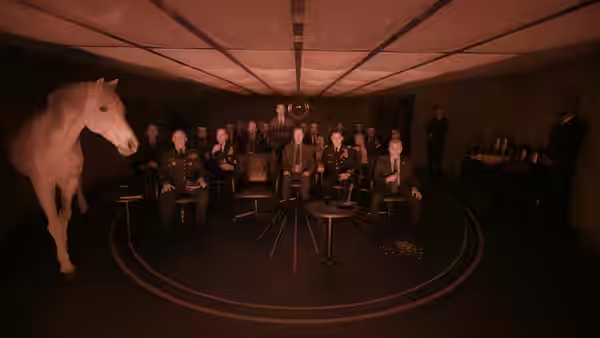
Digger Rockwell (Tom Cruise) stands on a globe in a suit and cowboy hat
Film review

Digger

2026 · Directed by Alejandro González Iñárritu · 2h 09m · FSK 14

In a sentenceA film about a man who will not stop talking, directed by a man who will not stop talking either

Rockwell (Tom Cruise) is a Texas oilman, loud, rich and certain he is right, and the planet he has spent his life drilling into is in trouble. Rather than apologise, he sets out to control the story: to persuade President Compson (John Goodman), the Vice President (Michael Stuhlbarg) and a gathering of European leaders that the man who caused the problem is the only man who can be trusted to fix it. Around him are Ganesh (Riz Ahmed), Emma (Sandra Hüller) and Kenny (Jesse Plemons). The first act is a farce of podiums, press rooms and speeches, with Rockwell talking over everyone in them, before the film shifts the way it is telling its story in a manner we will not describe.

Plays from YouTube when you press play; nothing loads from them until then.

Fi1m review

Tom Cruise, transformed into a bellowing Texas oilman, gives Iñárritu’s end-of-the-world farce a great deal of energy and one good speech. The sets are remarkable and Riz Ahmed is a pleasure; the satire itself shouts a single point for 129 minutes.

Alejandro González Iñárritu has made a comedy about the end of the world and cast Tom Cruise as the man most to blame for it. Rockwell is a Texas oilman who speaks in capitals, and the film follows him from podium to press room to private office as he tries to turn a catastrophe of his own making into a story about his courage. The screenplay, by Iñárritu with Alexander Dinelaris Jr., Nicolás Giacobone and Sabina Berman Goldberg, from a story Iñárritu wrote with Berman Goldberg and Jez Butterworth, has a target worth hitting. It hits it in the first ten minutes and then keeps hitting it, louder each time, for 129 minutes.

Cruise has not played anyone this unpleasant since Magnolia, and he goes at it with everything: the drawl, the swagger, the grin held a second too long. It is a brave performance, and the film never lets us forget it. Somewhere in the first hour we stopped watching Rockwell and started watching Cruise being daring. A scene in which he confronts himself in a mirror is meant to be the heart of the film and plays as an acting exercise.

Then comes the speech to the European leaders, and for a few minutes the film works. Emmanuel Lubezki’s camera circles Rockwell without a cut while he lays out, with real relish, the case for the defence, and Cruise drops the clowning and lets the man’s logic do the work. We sat up. We had not expected to, and it is the one passage in which the film’s anger makes sense as drama rather than as noise. It does not last, but it is there.

Riz Ahmed is the other reason to stay. His Ganesh underplays everything, times his reactions a beat late and gets the biggest laughs in the film by saying the least. John Goodman’s President Compson and Michael Stuhlbarg’s Vice President are allowed one note each. Sandra Hüller, who can do more with a look than most actors can with a page, is given almost nothing to do. Jesse Plemons and Emma D’Arcy drift through a subplot the film forgets about for long stretches.

The craft is where the money shows. Dennis Gassner and Richard L. Johnson have built a world that is slightly wrong in every dimension, offices too large, halls too clean, flags too bright, like a country designed by someone who has only seen it on television. Lubezki shoots it on lenses so wide the walls bow and faces swell when they come near, in long takes that Conor O’Neill and Stephen Mirrione join so that one shout runs straight into the next. For twenty minutes this is unsettling in the right way. By the end it is a headache, and we suspect Iñárritu knows it and has decided a headache is the point. Cosmo Sheldrake’s score is the quietest thing in the film and often the wittiest, ticking and chirping under men who believe they are the only ones making a sound.

The second half takes a turn we will not describe, except to say that the advertising calls it “Same film. Different truths” and that is accurate. Some critics took it as the moment the film becomes thoughtful. We took it as the point where the film begins to explain itself, in monologues that repeat what the pictures have already said and a play within the film that is as laboured as plays within films usually are.

Iñárritu made a comedy about a vain man once before, in Birdman, and it was funny because it liked him a little. This one does not like anybody, which is permitted, but it does not seem to find anybody funny either, which in a farce is fatal. The reviews so far split almost down the middle, as many critics dazzled as exhausted, and we have landed a little below the midpoint, admiring the sets and the speech and wishing somebody had turned the sound down.

See it in a cinema if you see it at all, because the lenses and the long takes are the whole method and shrink badly on a television. Take someone to argue with.


Critical consensus AI synthesised

47
Positive
9
Mixed
8
Negative
16

The reviews lean negative, and even those who recommend the film describe it as divisive. Most critics agree it is ambitious: an abrasive, farcical climate satire built around a Tom Cruise transformation. The praise clusters on the craft and the star. Cruise’s uninhibited, committed performance is admired across the spread, even by critics who dislike the film, and Riz Ahmed is repeatedly named the supporting standout. The production design and Emmanuel Lubezki’s long-take cinematography draw consistent credit.

The reservations cluster on the satire itself. A large group finds it toothless, didactic and short on laughs, with hectoring monologues and incessant shouting in place of wit. The spread is wide, from five stars at the Evening Standard to half a star at Slant. The trade and entertainment press are warmest; the British broadsheets are harshest. A few, including Screen Daily and The i Paper, break from the consensus on Cruise, arguing he never convinces as a Texas oilman.

Evening Standard
29 September 2026 · ★★★★★ · Nick Howells
100

Howells finds the film audacious, risky and terrific fun, while praising Cruise’s grandstanding performance. He also singles out the film’s climate-change warning as it builds toward a heartbreaking conclusion.

Read the full review →
The New Yorker
30 September 2026 · Justin Chang
70*

Chang finds the film a daring, meticulously realized, proudly unlikable comedy of errors that is ultimately more invigorating than depressing. He especially praises the production design and the playful visual craft, which he says transcend gimmickry.

Read the full review →
Radio Times
1 October 2026 · Rosie Fletcher
65*

Fletcher describes the film as brilliant but sometimes overwhelming. The farcical satire’s dense richness is singled out as both a strength and a drawback.

Read the full review →
The New York Times
1 October 2026
64*

The page is identifiable as a review, but its text is inaccessible. Its verdict and any specifically praised or criticized element cannot be determined.

Read the full review →
Time Out
64*

The accessible page identifies this as a review of the supplied film, but exposes no critical verdict. No specific element of praise or complaint is available in the page text.

Read the full review →
IndieWire
29 September 2026 · C+ · David Ehrlich
63

Ehrlich calls the film a surreal misfire, though a nobler and more rewarding failure than Iñárritu’s earlier films. He praises its darkly funny final shot while faulting its clumsy comedy and overextended satire.

Read the full review →

Straight answers AI written, from our review

Is Digger worth watching?
Digger is worth watching only for the curious, and we scored it 52. Tom Cruise is loud and brave as a Texas oilman blamed for the end of the world, Riz Ahmed is a pleasure, and the sets and one long speech are remarkable, but Iñárritu's farce makes a single point for 129 minutes and does not find anybody funny. See it in a cinema if you see it at all.
How long is Digger, and what is it rated?
Digger runs 2h 09m and is rated 14 by the FSK in Austria. It is a comedy and drama film.
Where can I watch Digger in Austria?
Digger is not on any streaming or rental service in Austria at the moment. Availability is checked daily.
How violent or frightening is Digger, and is it suitable for children?
Digger carries a UK 15 and a US R certificate, which here means adult language and a sustained, shouting nastiness rather than violence or horror. It is a satire of podiums and press rooms, not a frightening film, and we noticed nothing in it that would alarm the squeamish. It is not for children, who would in any case find two hours of men bellowing about oil very dull.
What should I watch after Digger?
After Digger, try Network (1976, Fi1m 86): Television eats itself; Chayefsky’s shouting is funnier and far better aimed than Rockwell’s. Then Dr. Strangelove (1964, Fi1m 93): The end of the world as farce, done briskly and without a single lecture; and Birdman (2014, Fi1m 82): Iñárritu, Lubezki and a vain man in long takes, back when the joke landed.

Cast

If you liked this, try…

  1. Network (1976, Fi1m 86)Television eats itself; Chayefsky’s shouting is funnier and far better aimed than Rockwell’s.

  2. Dr. Strangelove (1964, Fi1m 93)The end of the world as farce, done briskly and without a single lecture.

  3. Birdman (2014, Fi1m 82)Iñárritu, Lubezki and a vain man in long takes, back when the joke landed.

  4. Triangle of Sadness (2022, Fi1m 66)Östlund’s rich fools adrift; the satire is crueller and a good deal more patient.

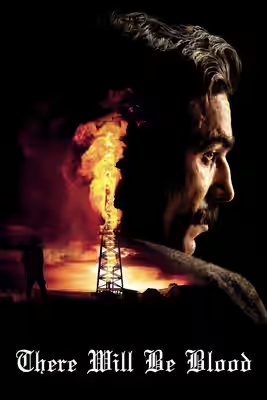
  5. There Will Be Blood (2007, Fi1m 88)An oilman’s greed taken seriously, with Daniel Day-Lewis making the monster a man.

Free account

Know what to watch tonight

Two lists that know where things are streaming, collections you can share, your own score beside ours, and Discover that remembers what you have seen.

  • Want to see, sorted by what is streaming now
  • Seen, with your score out of ten
  • No adverts, ever