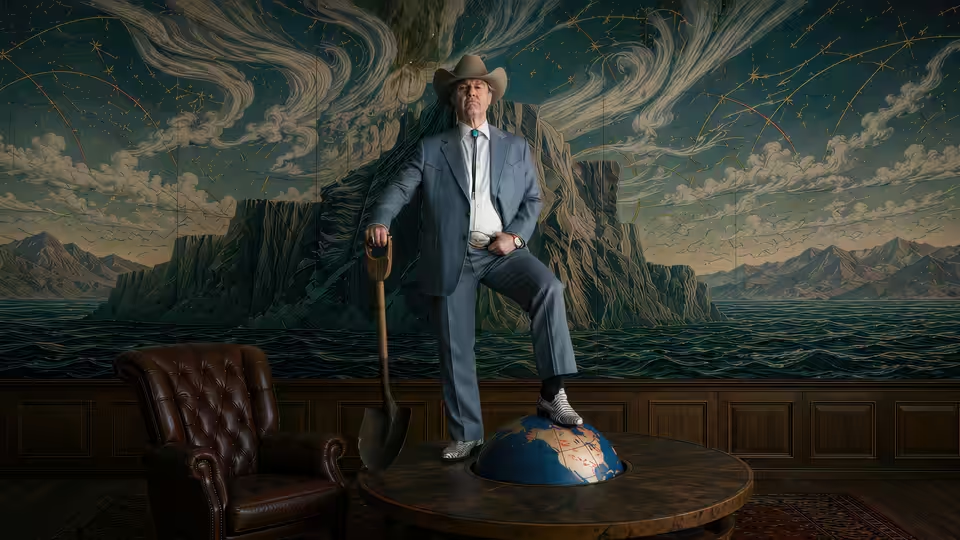
Tom Cruise, transformed into a bellowing Texas oilman, gives Iñárritu’s end-of-the-world farce a great deal of energy and one good speech. The sets are remarkable and Riz Ahmed is a pleasure; the satire itself shouts a single point for 129 minutes.
Alejandro González Iñárritu has made a comedy about the end of the world and cast Tom Cruise as the man most to blame for it. Rockwell is a Texas oilman who speaks in capitals, and the film follows him from podium to press room to private office as he tries to turn a catastrophe of his own making into a story about his courage. The screenplay, by Iñárritu with Alexander Dinelaris Jr., Nicolás Giacobone and Sabina Berman Goldberg, from a story Iñárritu wrote with Berman Goldberg and Jez Butterworth, has a target worth hitting. It hits it in the first ten minutes and then keeps hitting it, louder each time, for 129 minutes.
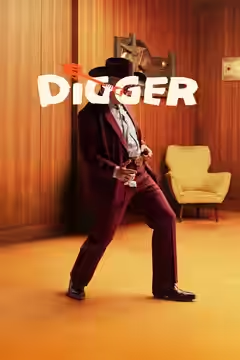
Cruise has not played anyone this unpleasant since Magnolia, and he goes at it with everything: the drawl, the swagger, the grin held a second too long. It is a brave performance, and the film never lets us forget it. Somewhere in the first hour we stopped watching Rockwell and started watching Cruise being daring. A scene in which he confronts himself in a mirror is meant to be the heart of the film and plays as an acting exercise.
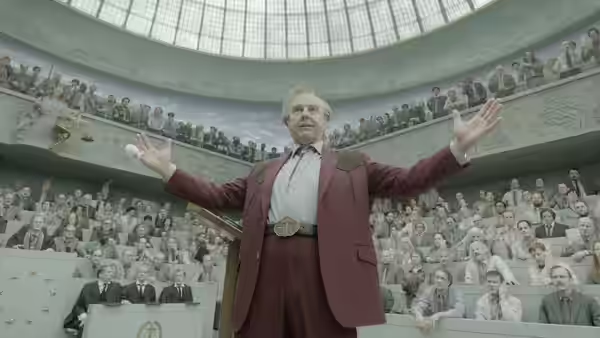
Then comes the speech to the European leaders, and for a few minutes the film works. Emmanuel Lubezki’s camera circles Rockwell without a cut while he lays out, with real relish, the case for the defence, and Cruise drops the clowning and lets the man’s logic do the work. We sat up. We had not expected to, and it is the one passage in which the film’s anger makes sense as drama rather than as noise. It does not last, but it is there.
Riz Ahmed is the other reason to stay. His Ganesh underplays everything, times his reactions a beat late and gets the biggest laughs in the film by saying the least. John Goodman’s President Compson and Michael Stuhlbarg’s Vice President are allowed one note each. Sandra Hüller, who can do more with a look than most actors can with a page, is given almost nothing to do. Jesse Plemons and Emma D’Arcy drift through a subplot the film forgets about for long stretches.
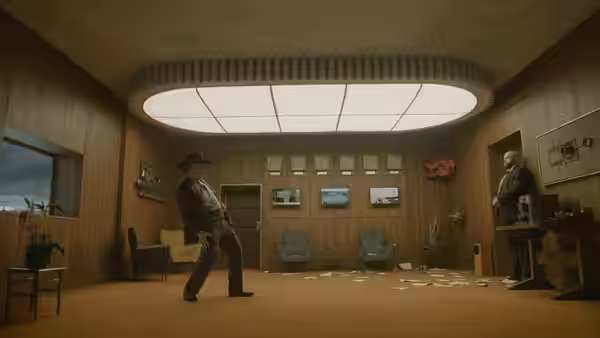
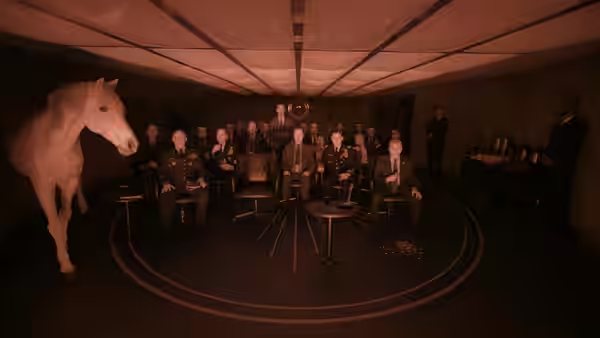
The craft is where the money shows. Dennis Gassner and Richard L. Johnson have built a world that is slightly wrong in every dimension, offices too large, halls too clean, flags too bright, like a country designed by someone who has only seen it on television. Lubezki shoots it on lenses so wide the walls bow and faces swell when they come near, in long takes that Conor O’Neill and Stephen Mirrione join so that one shout runs straight into the next. For twenty minutes this is unsettling in the right way. By the end it is a headache, and we suspect Iñárritu knows it and has decided a headache is the point. Cosmo Sheldrake’s score is the quietest thing in the film and often the wittiest, ticking and chirping under men who believe they are the only ones making a sound.
The second half takes a turn we will not describe, except to say that the advertising calls it “Same film. Different truths” and that is accurate. Some critics took it as the moment the film becomes thoughtful. We took it as the point where the film begins to explain itself, in monologues that repeat what the pictures have already said and a play within the film that is as laboured as plays within films usually are.
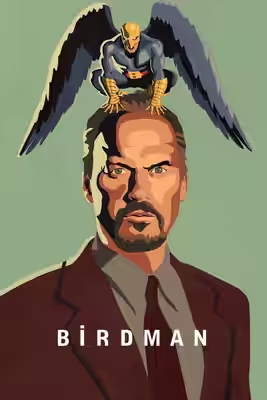
Iñárritu made a comedy about a vain man once before, in Birdman, and it was funny because it liked him a little. This one does not like anybody, which is permitted, but it does not seem to find anybody funny either, which in a farce is fatal. The reviews so far split almost down the middle, as many critics dazzled as exhausted, and we have landed a little below the midpoint, admiring the sets and the speech and wishing somebody had turned the sound down.
See it in a cinema if you see it at all, because the lenses and the long takes are the whole method and shrink badly on a television. Take someone to argue with.