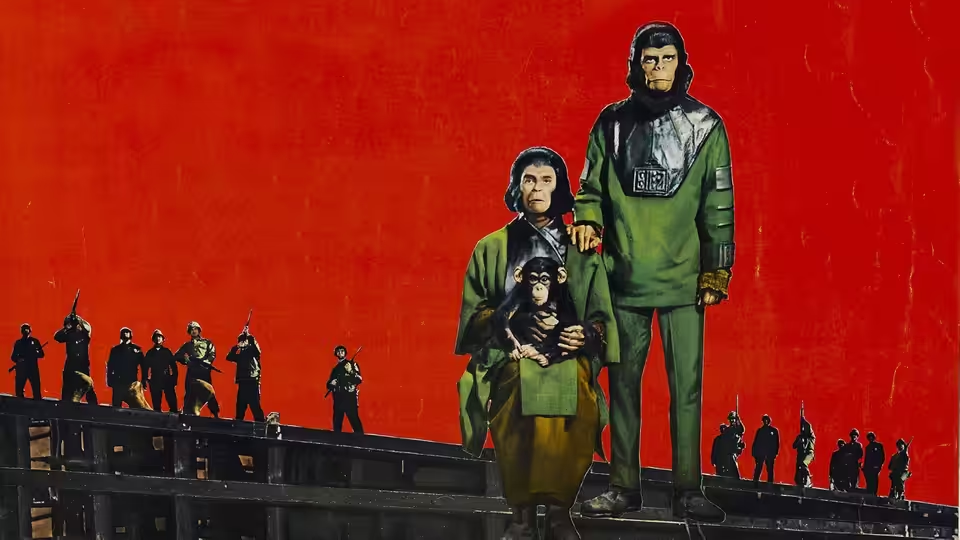
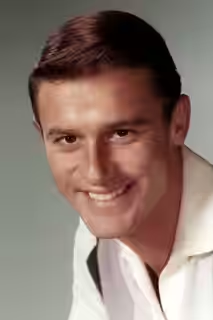
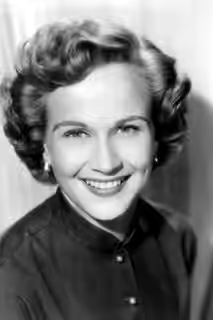
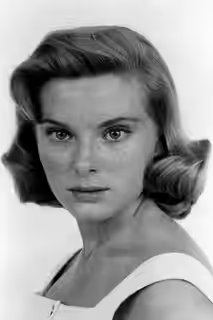
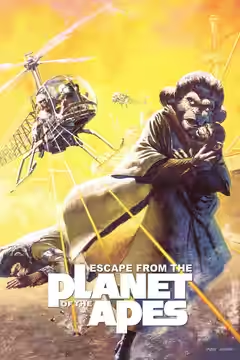
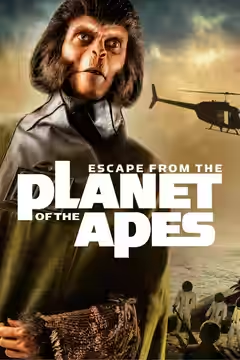
Don Taylor turns the series inside out: two talking chimpanzees land in present-day California and are lionised, then feared. Roddy McDowall and Kim Hunter make it the funniest entry and, in its second half, the saddest. The budget shows in every frame.
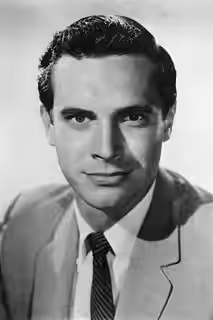
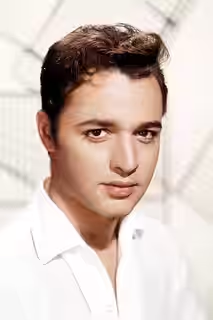
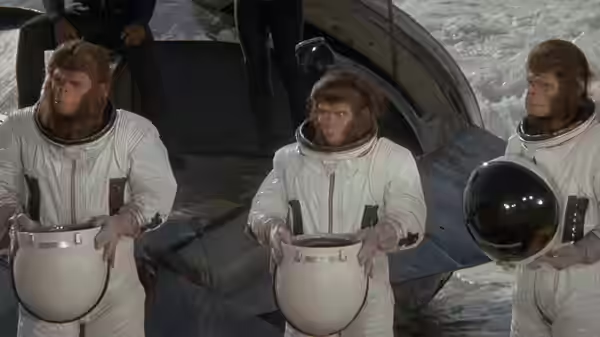
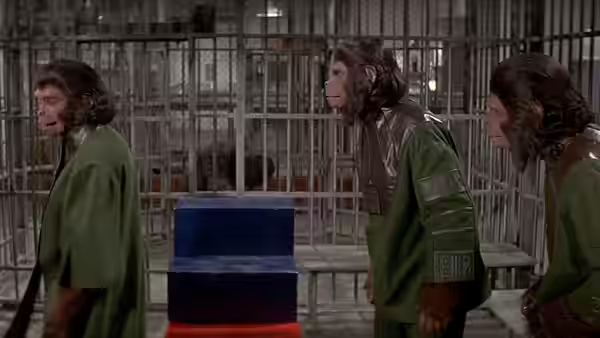
The first two Planet of the Apes films sent men into a world run by apes. Escape runs the idea backwards. A spacecraft comes down off the California coast and three chimpanzees in flight suits climb out: Cornelius (Roddy McDowall), Dr. Zira (Kim Hunter) and Dr. Milo (Sal Mineo). They are taken to a zoo in Los Angeles and examined by two animal psychologists, Dr. Lewis Dixon (Bradford Dillman) and Dr. Stephanie ‘Stevie’ Branton (Natalie Trundy). Then Zira, bored of being tested, says so aloud. Paul Dehn’s script builds a proper film from that moment on almost no money, and it is the best of the sequels by some distance. We recommend it to anyone who liked the first film and gave up on the rest.
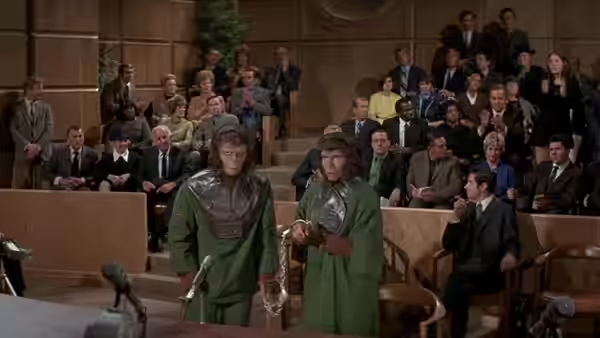
The first half is a comedy of manners with the manners the wrong way round. The apes are brought before a Presidential commission chaired by John Randolph, where Zira announces that she does not care for bananas and the commission laughs with her rather than at her. They are put up in a hotel, taken shopping, toasted at parties. Hunter plays Zira as a woman delighted to be the cleverest person in every room, and McDowall gives Cornelius the careful good manners of a husband who suspects the invitations will stop. We laughed, and often; the scene in which Zira discovers a hotel bathroom is the happiest stretch in the whole series.
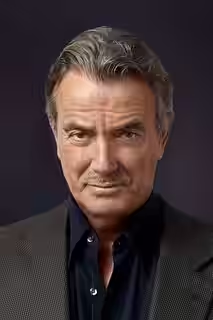
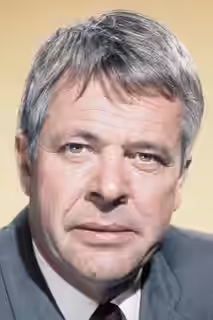
Watching from the edge of the frame is Otto Hasslein (Eric Braeden), the President’s science adviser, and he is the reason the film is more than a novelty. Braeden does not play him as a villain. He plays a tired, reasonable man who asks the apes where they came from, listens to the answer, and starts to do the sums. The second half takes a turn we will not describe. We can say that ten minutes after laughing at Cornelius in a lounge suit, we watched Hasslein lay out his reasoning to the President (William Windom) and felt cold. Nobody shouts. He sounds like a man ordering stationery, and that frightened us more than any gorilla on horseback the series has produced.
It looks cheap, and it is. Joseph F. Biroc shoots Los Angeles in the flat, even light of television, and the zoo, the hotel and the committee room could be sets from any American series of the period. That suits the film. The apes are the only strange thing on screen, and that is as it should be. Marion Rothman cuts fast through the montage of the apes as celebrities and slows right down once the mood turns; the last twenty minutes have few cuts they do not need. Jerry Goldsmith, who scored the 1968 film with drums and scraped metal, writes something jaunty here, brass and electric guitar, and then takes it away almost entirely for the closing stretch. The chimpanzee make-up has not improved since 1968, and Hunter and McDowall act through it anyway; you can read every thought in Zira’s eyes.
The flaws are the ones a film made quickly usually has. Dillman and Trundy are pleasant and have almost nothing to play; Dixon and Branton exist to be kind and to drive cars. Mineo, as Milo, gets the least to do of the three apes, which is a waste of him. A few of the first-half gags, a shopping trip, a night at the boxing, run past their laugh, and Don Taylor does not stop them. The business of how the apes got here is explained in one speech and then everyone agrees not to mention it again.
Against the series’ own standards this is the one that remembers the 1968 film was about ideas. It has none of that film’s scale and none of the bleakness of Beneath the Planet of the Apes, and it is the better for both. Most critics put it a little higher than we do, and we see why: the ending takes a risk few studio films of its period would have taken. We cannot pretend the middle half hour is as sharp as what surrounds it, or that the sets would survive a large screen.
The certificate is PG. Children will enjoy the first hour. Sit with them for the second.