Matt Reeves’s sequel spends its first hour with apes who sign more than they speak, and Andy Serkis and Toby Kebbell are the best things in it. The humans are not, and that keeps a fine film short of a great one.
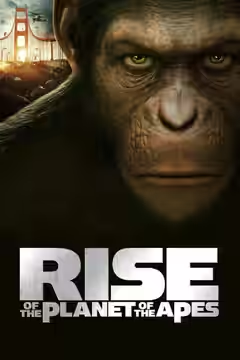
Rise of the Planet of the Apes (2011), directed by Rupert Wyatt, was a small film with a large title: a chimpanzee, a scientist, a virus in a vial. Matt Reeves, who made Cloverfield and Let Me In, picks the story up ten years on and does something almost no summer sequel does. He opens with apes hunting elk in the rain, talking in sign language with subtitles, and no human says a word for a quarter of an hour. It is a better film than the one before it, and everything wrong with it is on the human side.
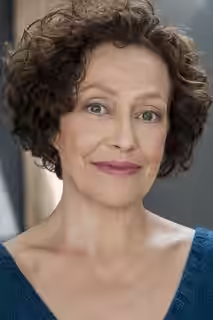
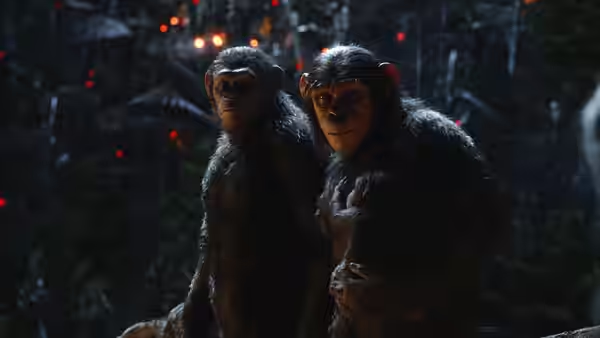
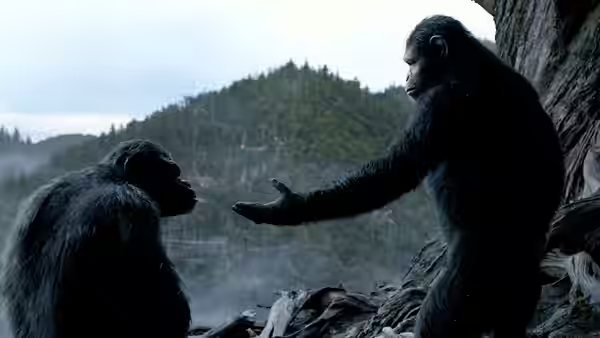
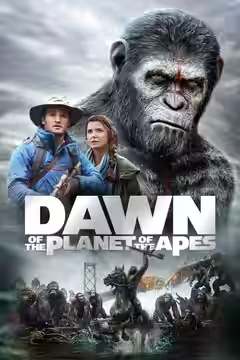
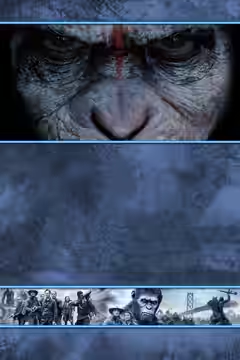
Caesar (Andy Serkis) is older now, with a wife, Cornelia (Judy Greer), a teenage son, Blue Eyes (Nick Thurston), and a new baby. The colony lives in a fort of lashed timber in the redwoods, and James Chinlund’s design gives it a school, where the orangutan Maurice (Karin Konoval) teaches the young to read, and a wall carved with one rule: ape not kill ape. Weta Digital put rain on the fur and breath in the cold air, and it is tempting to give them all the credit. Watch Serkis instead. Caesar hardly speaks in the first hour, and when he shouts one English word at a party of armed men, the men freeze, and so did we. We had not expected a film of this size to trust us with fifteen minutes of sign language, and it moved us that it did.
Toby Kebbell’s Koba is the reason the film has a second half. He is a bonobo with a milky eye and a face crossed with scars from the laboratory that made him, and the script, by Rick Jaffa, Amanda Silver and Mark Bomback, is fair to him: he hates humans because of what humans did to his face, and he has a point. There is a scene in which he plays the fool for two men with rifles, hooting and rolling about, and we laughed, and then we stopped laughing, and the switch happens entirely in Kebbell’s eyes. He is a better villain than the genre usually manages, and he never raises his voice.
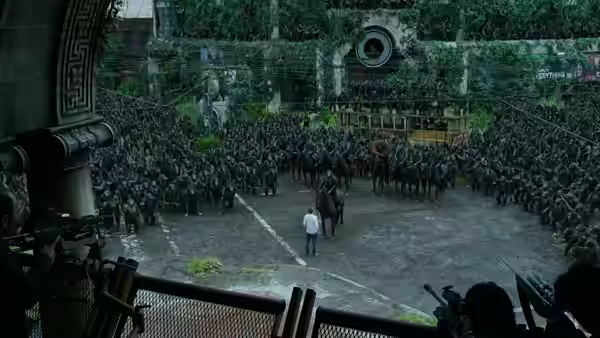
Michael Seresin shoots the forest in grey daylight and rain, and at night by fire, so the apes are orange against black. The humans, when we reach them, live in the concrete shell of a tower behind a stockade, in a San Francisco that Chinlund has left overgrown rather than bombed. Michael Giacchino’s score clatters with wooden percussion and low brass and saves its strings for the apes. William Hoy and Stan Salfas let the first hour breathe, and it is that patience, more than the effects, that makes the place feel lived in.
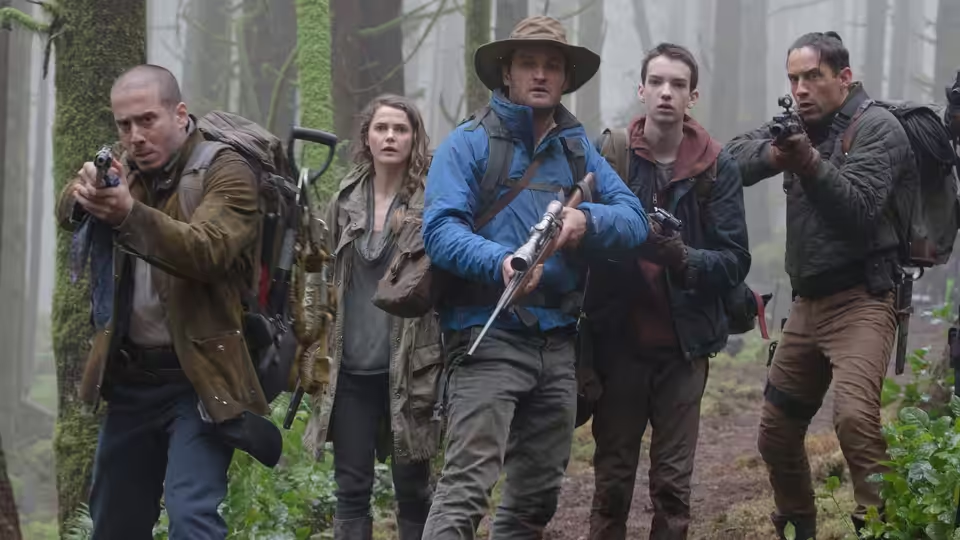
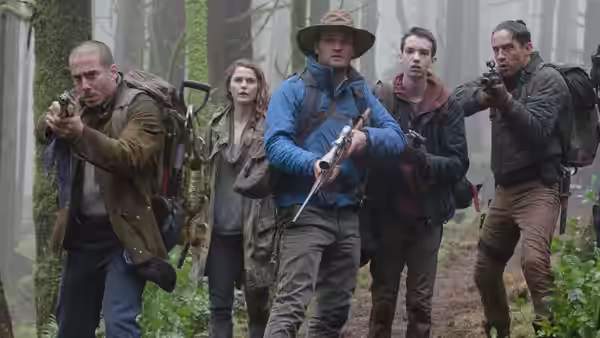
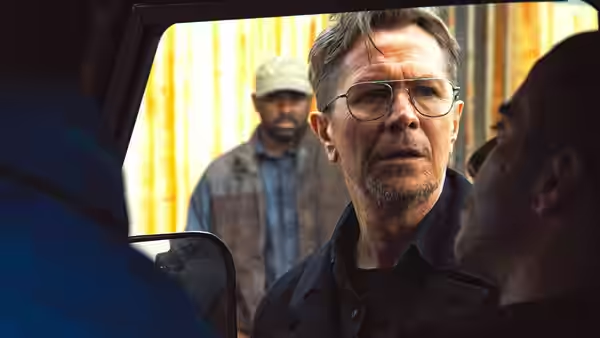
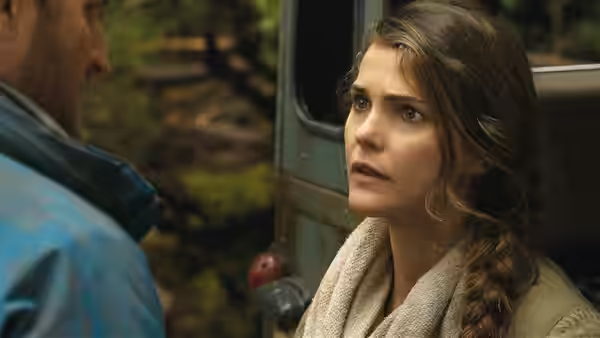
Then there are the people. Jason Clarke’s Malcolm is decent and reasonable and that is the whole of him; he exists so that one human can be trusted. Keri Russell’s Ellie is a nurse with a bag of antibiotics and little else to do. Kodi Smit-McPhee’s Alexander has a sketchbook, which he shows to Maurice, and that is the one human friendship the film bothers to build. Gary Oldman is on screen for perhaps fifteen minutes as Dreyfus, the colony’s leader, and has one scene, alone with a tablet that flickers back to life and shows him his family, in which he says nothing and does more than the rest of the humans put together. You can see where the plot is going by the end of the first act.
The second half turns, and we will not say how. What we can say is that the big night battle is staged with a clarity most action films cannot manage, in rain, by firelight, and that Reeves puts his camera on the turret of a tank for one slow unbroken revolution while the fight goes on around it. We were gripped, and a little sick. The last twenty minutes end as these films end, with a fight in a high place, and it is the only stretch where we could have been watching any other film with this much money in it.
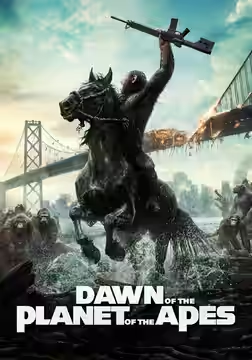
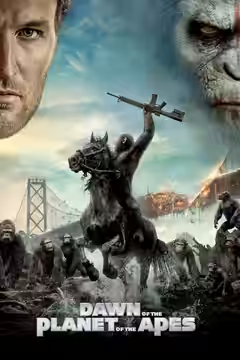
The 12A is earned: there is an ape on horseback firing two machine guns, and a good deal of it will frighten a nine-year-old. See it on the largest screen you can, because Seresin’s darks turn to mud on a small one. At 130 minutes it earns most of them. The apes have built a society in ten years; the humans have built a wall and a generator, and the film knows which it finds more interesting.