Wes Ball’s continuation of the series is handsome, unhurried and decent-hearted, with an overgrown world worth the ticket and a young chimp worth following. It is also 145 minutes long and does not have enough story to fill them.
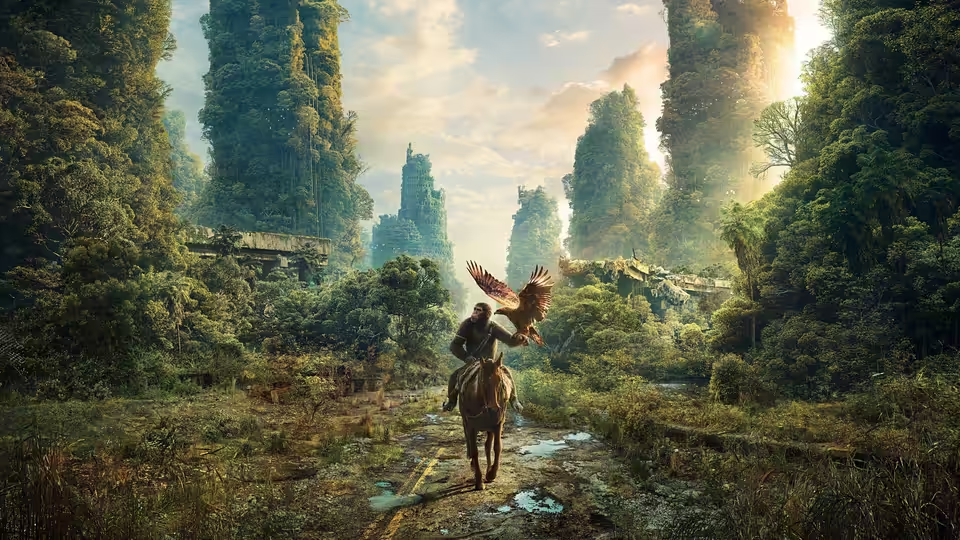
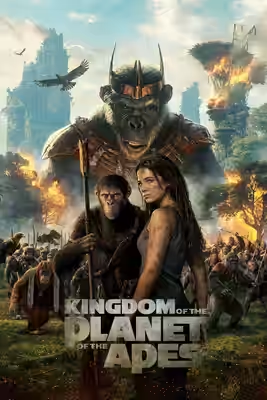
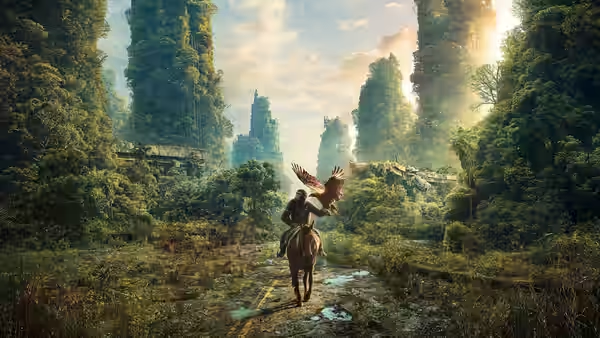
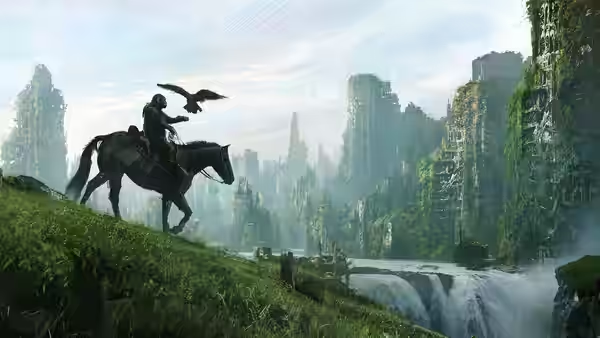
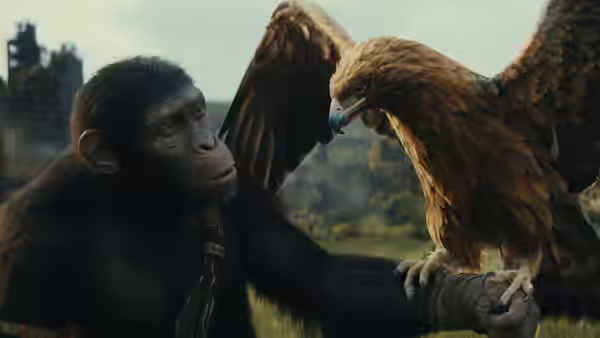
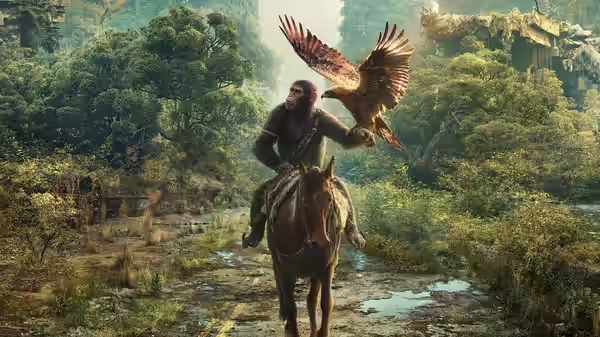
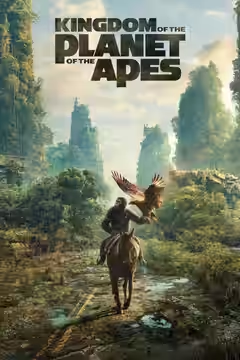
Caesar has been dead for generations when Kingdom of the Planet of the Apes opens. Wes Ball takes over the series and moves it centuries on: the apes ride horses, keep eagles and talk, the humans are mute scavengers the apes call echoes, and the cities are green mounds with windows in them. It is a good-looking, good-natured film that runs 145 minutes and has perhaps ninety minutes of story. We liked being in its world more than we liked what happened there.
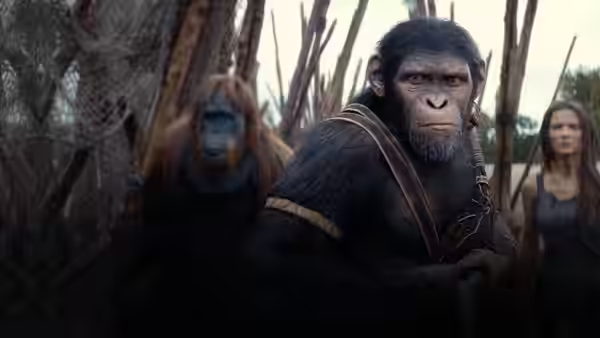
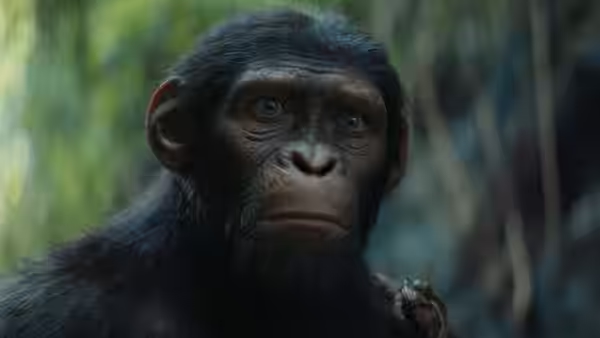
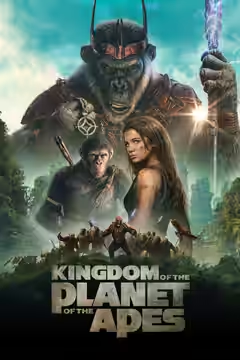
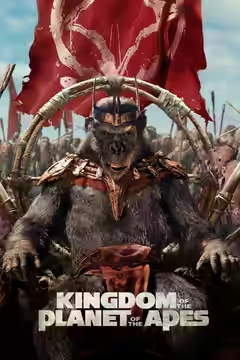
Noa (Owen Teague), a young chimpanzee of a clan that raises eagles, climbs a cliff with his friends Anaya (Travis Jeffery) and Soona (Lydia Peckham) to take an egg for his coming of age. That night masked apes on horseback burn his village, and he wakes among ashes. He follows them, and is joined on the way by an old orangutan, Raka (Peter Macon), who keeps the words of Caesar the way a monk keeps scripture, and a silent human girl (Freya Allan). The trail leads to a kingdom on the coast, ruled by a bonobo calling himself Proximus Caesar (Kevin Durand).
Gyula Pados shoots the world Ball and Daniel T. Dorrance have built with patience. The eagle clan’s village is lashed into the trees; a motorway flyover has become a hanging garden; on a beach a rusted ship the length of a town serves as Proximus’s palace. Nobody points at the drowned tower block; the apes walk past it as we would a hill. Mayes C. Rubeo dresses the raiders in hammered metal masks and Proximus’s court in scraps of human pageantry, so the kingdom looks like a civilisation making itself up as it goes.
The opening climb had us properly held: three young apes on a sheer face at dawn, the birds circling. The raid that follows is the film’s one scene of real fear, torches in the trees, prods crackling blue in the dark, apes we have only just met dragged off screaming, and we felt the loss of a place we had known for fifteen minutes. Then Noa sets out, and for the next hour we watched him walk. We were not bored, exactly; we were waiting, and somewhere past the hour mark we realised the film was waiting too.
Teague gives Noa a boy’s slouch and a way of looking up from under his brow that reads as doubt, and he is the first lead in this series who is allowed to be ordinary. Macon’s Raka is the film’s warmth, a gentle pedant amused by nearly everything. Durand plays Proximus as a performer, a king who greets each morning with the same booming line and means it a little less every time. Allan does a great deal with a stare. William H. Macy plays Trevathan, a human who reads to the king, as a man who made a bargain and has stopped pretending it was a good one.
Josh Friedman’s script has one good idea, that a dead leader’s words will be quoted by whoever wants power next, and states it three times. The middle hour is a walk with conversations. Dirk Westervelt and Dan Zimmerman cut the journey as if every valley crossed were a turn in the plot, and John Paesano’s score, drums and low brass, insists on wonder at each new vista when Pados had already shown it to us. The final stretch is well staged, and it is the only part of the film that moves faster than its characters can walk.
Rise (2011), Dawn (2014) and War (2017) had Andy Serkis’s Caesar, and every scene was about what he had lost. Noa loses his village in the first twenty minutes, and after that nobody wants anything as badly as Caesar wanted to go home. The thoughts about myth and scripture are there. They are not attached to anyone we minded about enough.
Worth an evening if you liked the earlier films and can forgive a long walk between the two good hours. Watch it at home, where the green world loses a little and the pace loses nothing. It carries a 12A, and the raid is the part younger children will remember.