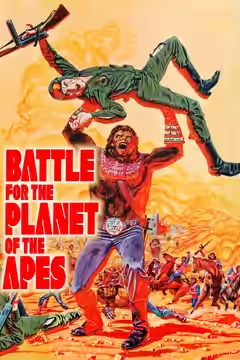
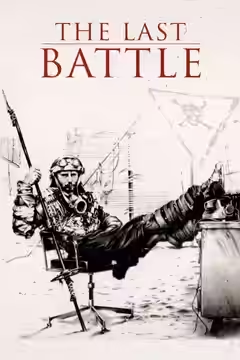
The fifth and last of the original Apes films arrives with the budget gone and the ideas mostly gone with it. Roddy McDowall holds it together from behind the mask, but the battle of the title is a scuffle in a wood.
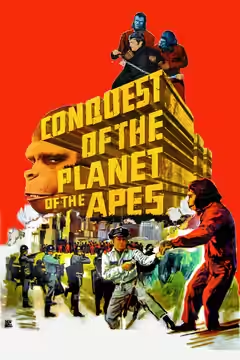
Paul Dehn’s story wants to end the series on a kinder note than the four films before it managed. J. Lee Thompson, who directed Conquest of the Planet of the Apes (1972), picks up some years after that film’s riot. The bombs have fallen, the cities are ash, and Caesar (Roddy McDowall) has built a village where apes and humans farm and argue together, with the humans a step below. The question the film asks is whether the future the first picture showed us is fixed or can be argued out of. That is a good question. The film has 93 minutes to answer it and spends most of them on horseback.
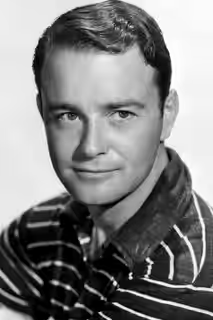
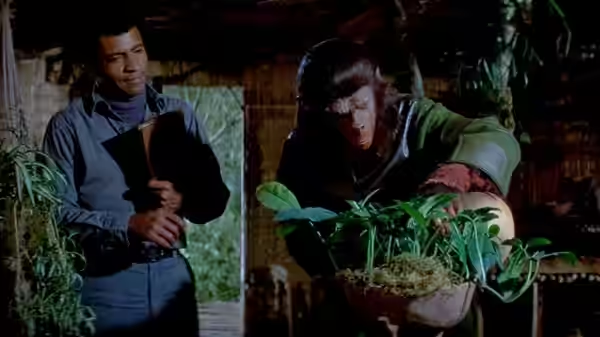
McDowall is the reason to stay. He has played this ape across two films now and knows how to act through the appliance: the tilt of the head, the way Caesar’s hands go still when he is angry. There is a scene in the ruined city where he sits at a console and listens to his dead parents’ voices on tape, and we were moved more than we expected to be by a man in rubber staring at a reel-to-reel. It is the one moment where the film’s idea, that a leader might want to know his own history before making anyone else’s, is felt rather than stated. Severn Darden’s Kolp, running his underground garrison in a greatcoat and a permanent sneer, is good value too, and Paul Williams gives the orangutan Virgil a fussy warmth the script does not otherwise provide. Lew Ayres appears for one scene as Mandemus, who keeps the armoury, and lectures everyone about guns with such gravity that we rather wished he had been given the film.
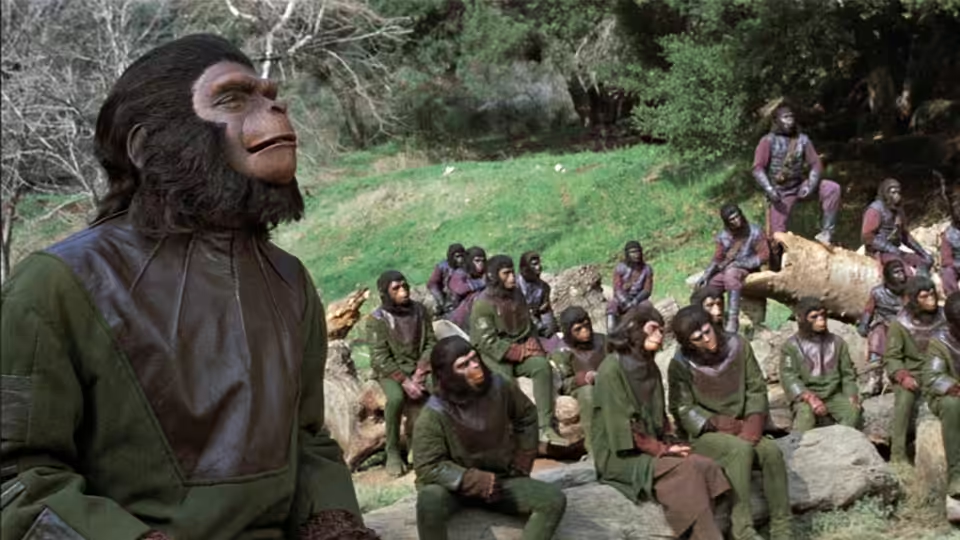
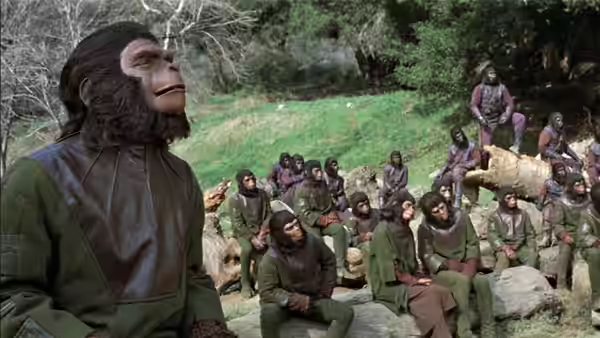
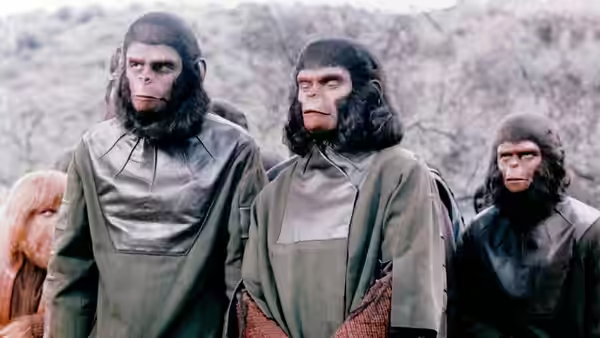
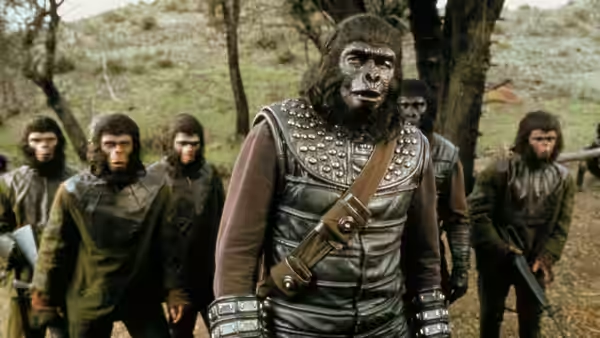
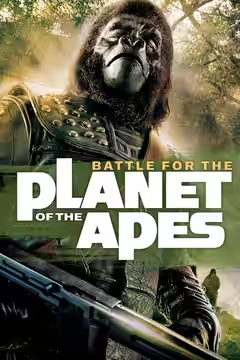
Then there is the money, and there is not much of it. Ape City is a dozen thatched huts on a hillside. The Forbidden City is a few blocks of rubble and a corridor. Morton Haack’s costumes are the tunics of the earlier films, and they still look right on the principals, but in the wide shots the extras wear pull-over masks that do not move when they speak and have no eyes behind them, and the film keeps cutting to them. Richard H. Kline shoots the whole thing in flat midday sun, so nothing is hidden. In the ruins he manages a few frames of grey dust and long shadow that suggest what a properly funded film might have looked like, and then we are back in the wood.
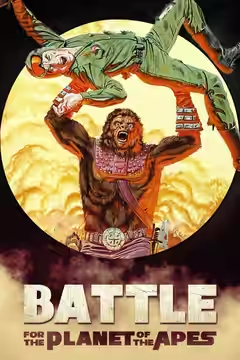
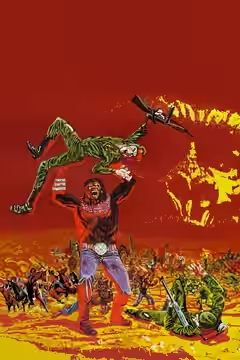
The battle of the title arrives late and is over quickly. Jeeps drive into a clearing, apes drop out of trees, men in fatigues fall over. Alan Jaggs and John C. Horger cut it so that we are seldom sure where anyone is standing, and the second half of the fight is the first half with different extras. We were bored, and then we were embarrassed for the stunt performers in their loose masks, and then we were bored again. Leonard Rosenman scores it with bugles and snare drums, a march that promises a scale the picture never reaches.
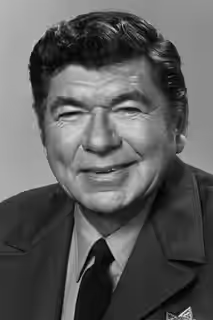
John William Corrington and Joyce Hooper Corrington’s screenplay is mostly council meetings. Apes sit in a circle and say what they believe; humans stand at the edge and say what they are not allowed to believe; Claude Akins’s gorilla general Aldo bellows that apes should rule and is told to sit down. The one sharp idea is small: in Caesar’s village a human may not say the word “no” to an ape, and the schoolroom scene in which Noah Keen’s teacher says it anyway has more tension than the battle. The film knows this is its best scene and does nothing with it.
Planet of the Apes (1968) ended on a beach with an image nobody who saw it has forgotten. Conquest had anger in it, a riot that felt like a riot. This one has a hopeful speech and a fight in a field, and the hope is not earned because we have not seen the two sides do anything together but quarrel.
Fans of the series will want to see how it ends, and they should, once, in an afternoon, with low expectations. The tagline calls it the most suspenseful showdown ever filmed. Somebody in the publicity department had not seen the film, or had, and decided to be kind.