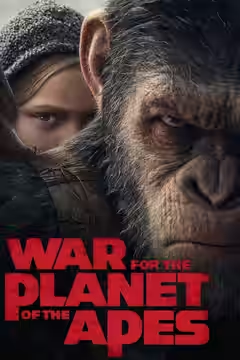
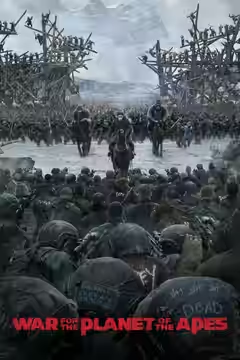
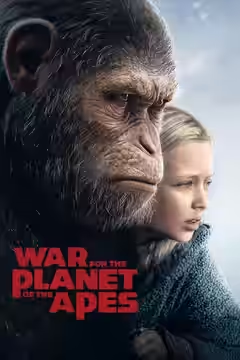
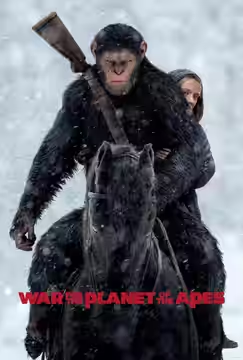
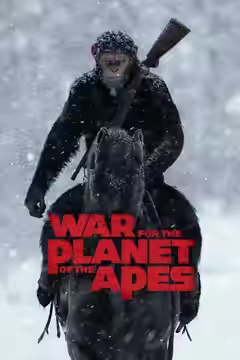
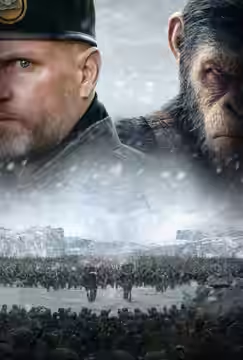
Matt Reeves closes the trilogy with a slow, snowbound revenge story and the best-acted ape ever put on screen. It is handsome, serious and half an hour too long, and its humans are far less carefully drawn than its chimpanzees.
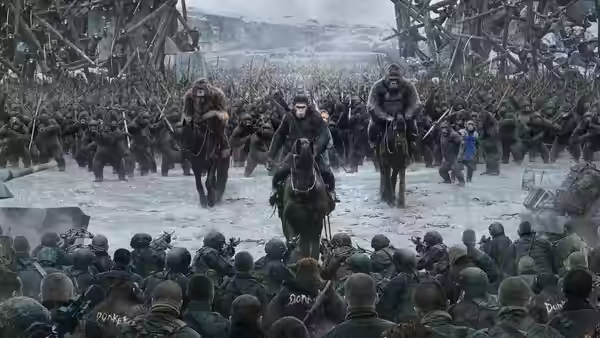
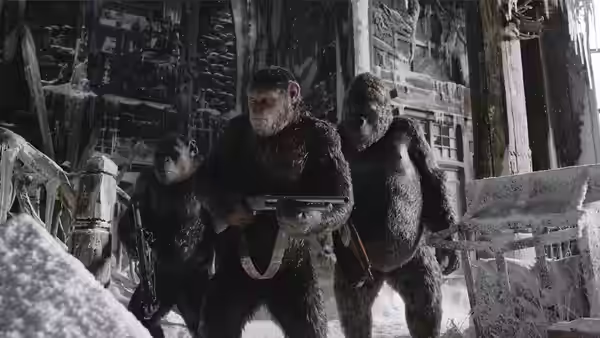
Matt Reeves’s third and last film about Caesar begins with a battle in the woods and then spends most of its 140 minutes refusing to give us another one. Soldiers with slogans painted on their helmets creep through ferns towards an ape position; arrows and gunfire follow; and when it is over Caesar (Andy Serkis) sends the survivors home alive with a message for their commander. That is the whole film in one scene: the apes have learned mercy and the humans have forgotten it. Reeves and his co-writer Mark Bomback then build a revenge western on top of a war film, with a prison-camp story waiting in the second half, and they mostly hold it together.
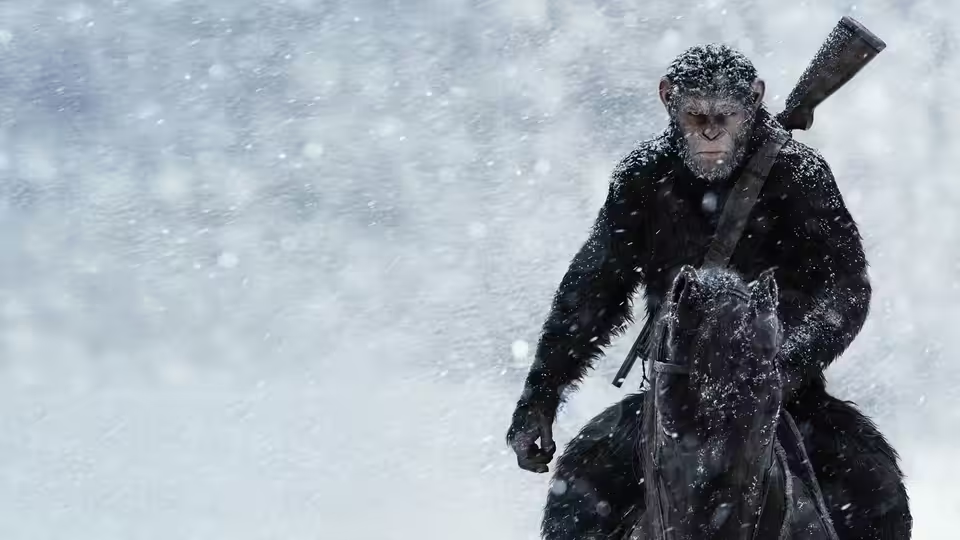
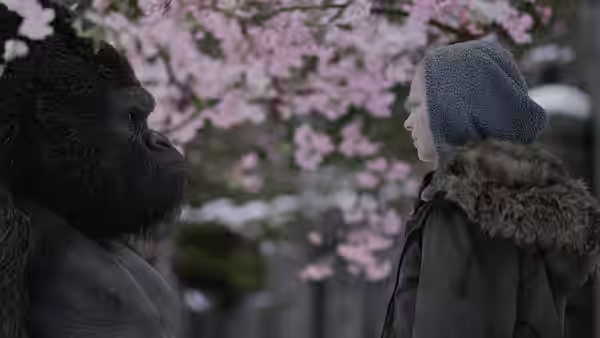
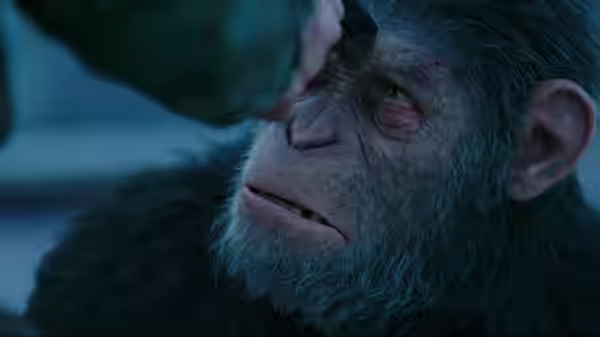
Serkis is the reason it works as often as it does. Caesar is older, greyer and angrier than before, and the effects have reached a point where we stopped thinking about the technique within minutes and simply watched an actor. His face does most of the talking. The apes sign more than they speak, and the film has the patience to let a subtitle sit under a stare. Karin Konoval’s Maurice, the orangutan who has been Caesar’s conscience since Rise, gets the quietest scenes, most of them with Amiah Miller’s silent girl, and Toby Kebbell’s Koba, Caesar’s enemy from Dawn, turns up in a way the film does not explain and does not need to.
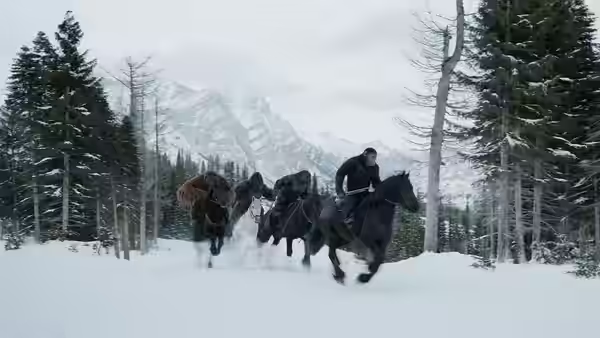
Michael Seresin shoots the first hour in wet green and the second in snow, and the switch does what the story needs: the world empties out around Caesar as he rides north. The night raid on the apes’ hideout is lit by hand torches and little else, and we were more shaken by it than we expected to be, because Reeves keeps the camera on Caesar’s face rather than on what he has found. James Chinlund’s production design gives the Colonel a camp in the mountains built into an old army depot, and it is the most convincing place in the film. Michael Giacchino’s score leans on drums and low woodwind and there is a great deal of it; when the film goes quiet, which is often, we wished it went quieter. William Hoy and Stan Salfas cut the opening assault so that we always know which side of the ridge we are on, and cut the long middle at a pace some will call patient and we, around the ninety-minute mark, called slow.
Woody Harrelson’s Colonel is the problem, or rather the writing around him is. He shaves his head, wears aviator sunglasses and has decided that the end of humanity justifies anything. Melissa Bruning’s costumes put him in a scarf and a leather jacket that owe an obvious debt to Apocalypse Now, and the film knows it, which does not make the debt smaller. He gets one long speech across a table explaining himself, and Harrelson delivers it well, but it is a speech, and the apes have spent an hour making the same points with their eyebrows. The other humans are given rifles and little else. Gabriel Chavarria’s Preacher, a young soldier Caesar spares early on, is set up to matter more than the film lets him.
Steve Zahn’s Bad Ape, a zoo chimpanzee who has survived alone in a ski lodge and speaks in nervous half-sentences, is the one concession to lightness. We laughed at him, and then wondered whether a film this grim should be reaching for a laugh quite so often. He is also the one performance where we could see the actor behind the ape, which after Serkis is a step down.
Set beside Rise (2011) and Reeves’s own Dawn (2014), this is the best-looking of the three. It is also the slowest. Dawn had a villain who wanted something we understood; the Colonel wants a wall. At 140 minutes the film is around half an hour longer than its story, though the last twenty minutes justify more of the wait than we expected.
It carries a 12A certificate, and it is a hard one: apes are whipped, shot and starved, and a child who loved the earlier films could reasonably come out having enjoyed none of this. Grown-ups who liked the first two will find plenty to admire and a fair amount to sit through. Take the biggest screen available and do not expect the war the title promises.