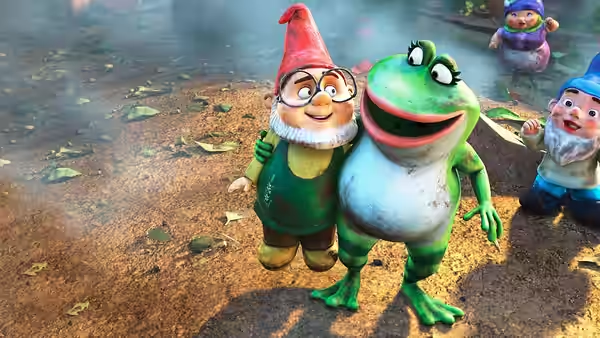
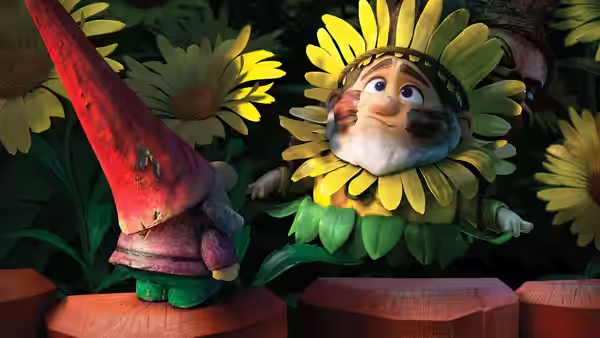
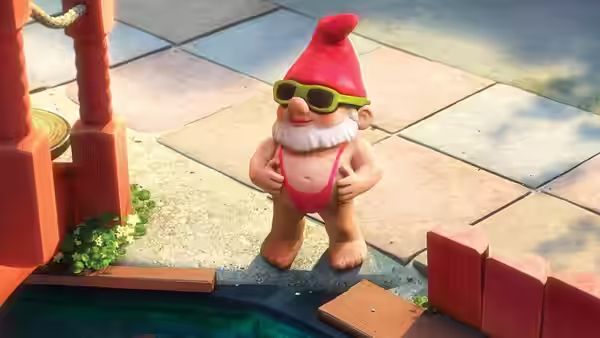
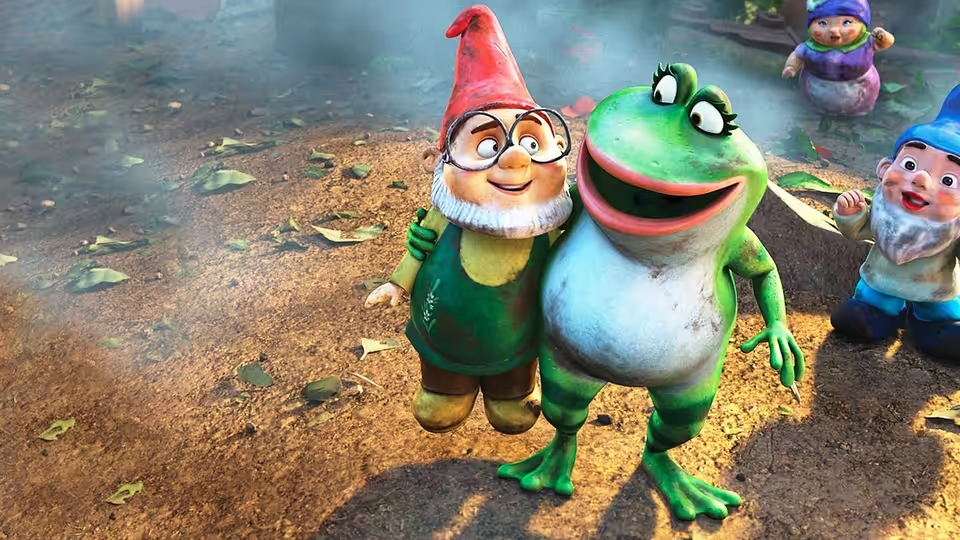
A garden gnome stands arm-in-arm with a smiling frog among scattered leaves
Film review

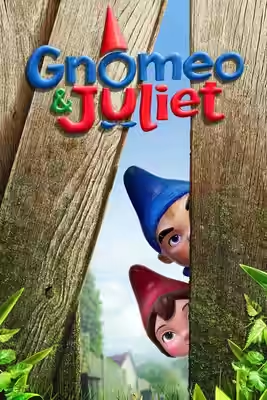
Gnomeo & Juliet

2011 · Directed by Kelly Asbury · 1h 24m

In a sentenceTwo gardens, one lawnmower race, nine screenwriters, and the frog gets all the best lines

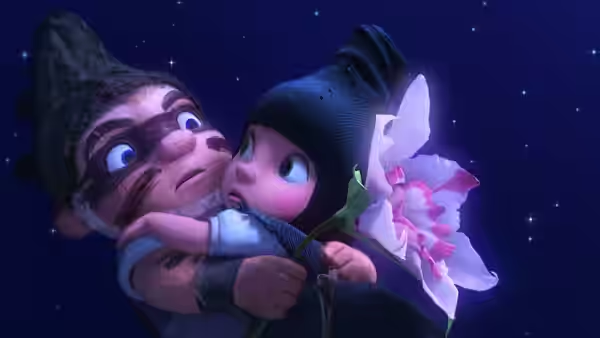
Two neighbours have hated each other for years, and so have their garden gnomes. Miss Montague (Julie Walters) keeps the blues, led by Lady Bluebury (Maggie Smith); the man next door keeps the reds, ruled by Lord Redbrick (Michael Caine). Whenever the humans go indoors the gnomes come to life, race lawnmowers and settle scores across the fence. Gnomeo (James McAvoy), the blue champion, has a running feud with the red bruiser Tybalt (Jason Statham) and wants to come out on top of it. Juliet (Emily Blunt), watched closely by her father, wants to prove she is not breakable and slips out alone after an orchid. They meet in a greenhouse, both in disguise, and fall for each other before either has seen the other’s colour.

Fi1m review

Kelly Asbury’s garden-gnome Romeo and Juliet is bright, brisk and good-natured, with Emily Blunt and James McAvoy doing more than the script asks of them. It is also slighter than it knows, padded with puns and Elton John, and children will enjoy it more than you.

Kelly Asbury takes Romeo and Juliet, moves it to two adjoining back gardens, and recasts the Montagues and Capulets as blue and red garden gnomes who come alive when the humans go indoors. It sounds like a pub joke and the film knows it; the tagline promises the greatest love story we have never gnome, which is about the level of the wordplay throughout. What Asbury has made is a bright, brisk, good-natured 84 minutes with a U certificate, fine for a wet afternoon with children and thinner than its premise or its cast deserves. Adults will smile more often than they laugh.

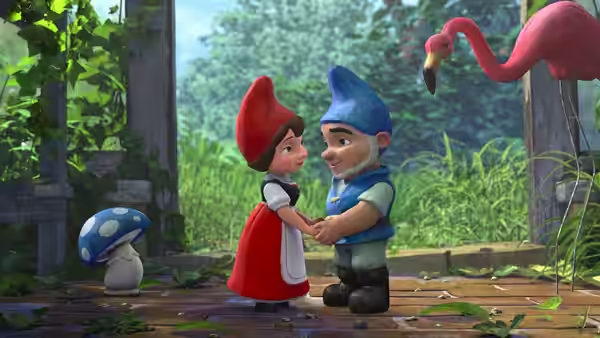
The gardens are the best thing in it. Richard Chen and Karen deJong design two mirror-image plots divided by a fence, one red glaze and roses, one blue glaze and hydrangeas, and give every gnome a chipped nose or crazed paintwork so that we never forget these people are pottery. That matters, because a fall off a wall here is a death, and the film is at its best when it remembers it. The opening lawnmower race between Gnomeo (James McAvoy) and the red enforcer Tybalt (Jason Statham, growling happily) is cut by Catherine Apple with real snap, the camera low in the grass. Nothing in the second half moves as well.

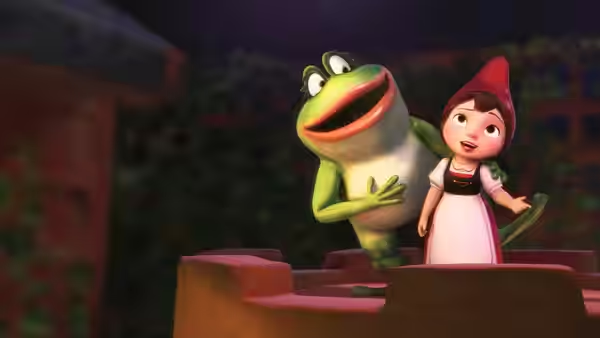
Emily Blunt plays Juliet as a girl with no patience for being treated as breakable, and her struggle with her father Lord Redbrick (Michael Caine), who would rather she stayed exactly where she is, is the film’s one honest emotional thread. McAvoy gives Gnomeo a swagger that drops the instant he sees her. Their first meeting, in a greenhouse with both of them after the same orchid, is a proper sequence, a chase across glass and guttering that someone has thought about shot by shot, and for ten minutes the film is as good as it wants to be. Maggie Smith and Caine bicker over the fence as two parents who have forgotten why they hate each other and are too proud to ask. Ashley Jensen gets the laughs as Nanette, a garden frog who treats the romance as a soap opera she is lucky to be watching, and Patrick Stewart appears as a statue of Bill Shakespeare, drily unimpressed by what the gnomes have done with his play.

Nine writers share the screenplay credit, Asbury among them, and it shows in how often the film changes its mind about what sort of comedy it is. One minute it is a gentle fable about two frightened families; the next a gnome is doing a film parody for the parents, and the two never sit together. The soundtrack is built from Elton John’s back catalogue, with Bernie Taupin credited on the music alongside Chris Bacon and James Newton Howard, and David Furnish among the producers. The songs arrive like guests who have not read the invitation: a scene is going along nicely and then stops for a chorus everyone over forty already knows. Bacon and Howard’s underscore, when it is allowed out, is warmer than the hits it has to make room for.

We smiled for most of it and laughed properly perhaps three times, twice at the frog. What got at us more than we expected was Blunt in the early scenes, lifting her chin at a father who thinks loving a daughter means never letting her move. It is written for a laugh and she plays it as something she means, and we were on her side for the rest of the film. We also winced, every time, at a gnome pun. There are many.

Like the Shrek films, this has the habit of winking at the grown-ups over the children’s heads, without the confidence that made the winking land there. It is not in the class of the Aardman films, which build their jokes out of character, or the Pixar ones, which build them out of feeling. The film did not need to be deep. It needed to trust its gardens and its lovers a little longer before reaching for a song.

Watch it at home with a child under ten, who will not notice the jokes you do not laugh at and will care a great deal whether a blue gnome gets back over the fence. Without the child, it is 84 pleasant minutes you will struggle to recall by bedtime.

Critical consensus AI synthesised

60
Positive
5
Mixed
8
Negative
3

Most critics settle on the same word for Gnomeo & Juliet: charming. The reviews lean mildly positive, with the kindest calling it a cheerful, likeable children’s film that works better than its garden-gnome premise ought to allow. Praise clusters around the voice cast, the detailed animation of the rival red-and-blue gardens, and the affectionate, distinctly British way the film plays with Shakespeare rather than simply raiding him.

The reservations are almost all about the script. Many find the pop-culture gags lazy and the story too reliant on borrowed jokes, and the Elton John songs divide critics between those who find them a pleasure and those who hear them as recycled. The spread is wide, from warm approval to outright dismissal: Time Out and The Hollywood Reporter both judge it derivative and short on inspiration, while Den of Geek suspects it will amuse cynical adults more than the children it is aimed at.

Empire
19 April 2006 · David Hughes
75*

Hughes finds the film unexpectedly successful despite its crackpot premise. He praises its madcap invention and eccentricity, along with its recognisable voice cast.

Read the full review →
Los Angeles Times
11 February 2011 · Kenneth Turan
75*

Turan finds the film playful, inventive, and endearing, with a gently amusing and sweet tone. He singles out its imaginative garden-gnome premise and affectionate Shakespearean reworking as sources of old-fashioned fun.

Read the full review →
Variety
9 February 2011 · Justin Chang
75*

Chang finds the film an enjoyable, goofy diversion that succeeds despite its modest ambitions. He praises its sparkling vocal performances and balance of humor and emotion.

Read the full review →
IndieWire
24 May 2011 · Daniel Walber
70*

Walber finds the film charming overall, though its pop-culture jokes sometimes fall flat. He praises its vivid red-and-blue animation and affectionate, humorous handling of Shakespeare.

Read the full review →
The Guardian
10 February 2011 · Peter Bradshaw
65*

Bradshaw finds it a cheerful, likable children’s film with a big heart, though its comedy is only mildly funny. He singles out its warm-hearted appeal as stronger than its jokes.

Read the full review →
Screen Daily
22 February 2011 · Mark Adams
64*

The page identifies this as a review, but the paywall prevents access to the critic’s verdict. No praise or complaint is visible in the available text.

Read the full review →

Straight answers AI written, from our review

Is Gnomeo & Juliet worth watching?
Gnomeo & Juliet is worth watching with a child under ten, and we scored it 61. Kelly Asbury's garden-gnome Romeo and Juliet is bright, brisk and good-natured, with Emily Blunt and James McAvoy giving more than the script asks, but the puns and Elton John songs pad out a slight film. Adults will smile more than they laugh, and forget it by bedtime.
How long is Gnomeo & Juliet, and what is it rated?
Gnomeo & Juliet runs 1h 24m. It is an animation and family film.
Where can I watch Gnomeo & Juliet in Japan?
Gnomeo & Juliet is not on any streaming or rental service in Japan at the moment. It is available in 39 other countries; change your country at the top of the page to see where. Availability is checked daily.
How does Gnomeo & Juliet compare to Romeo + Juliet?
Gnomeo & Juliet is a U-certificate family comedy that borrows the plot of Romeo and Juliet for jokes, while Baz Luhrmann's Romeo + Juliet is a loud, gaudy romance that still takes the lovers seriously. Luhrmann's is the better film, with DiCaprio and Danes making the words land; Asbury's is the one to put on for children. Only Blunt's early scenes reach for the same feeling.
What should I watch after Gnomeo & Juliet?
After Gnomeo & Juliet, try Romeo + Juliet (1996, Fi1m 82): Luhrmann’s loud, gaudy version, and still the one that takes the lovers seriously. Then West Side Story (1961, Fi1m 80): The feud moved to Manhattan, and the dancing does what lawnmowers cannot; and Chicken Run (2000, Fi1m 84): Aardman’s prison-camp farce, where the jokes come from character and the jeopardy is real.

Cast

If you liked this, try…

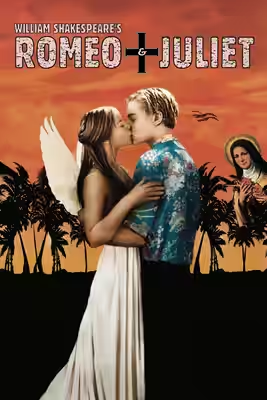
  1. Romeo + Juliet (1996, Fi1m 82)Luhrmann’s loud, gaudy version, and still the one that takes the lovers seriously.

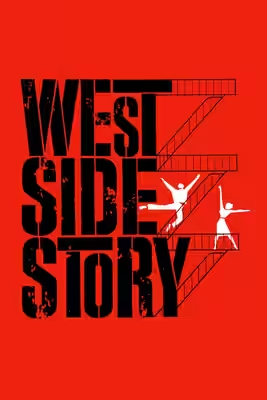
  2. West Side Story (1961, Fi1m 80)The feud moved to Manhattan, and the dancing does what lawnmowers cannot.

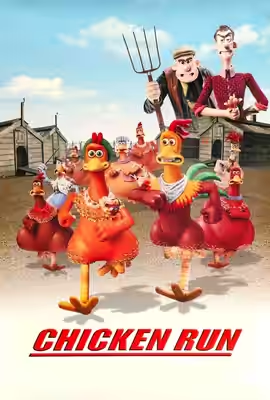
  3. Chicken Run (2000, Fi1m 84)Aardman’s prison-camp farce, where the jokes come from character and the jeopardy is real.

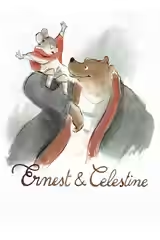
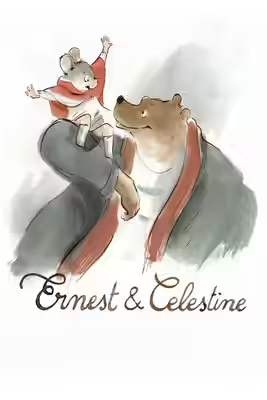
  4. Ernest & Celestine (2012, Fi1m 84)A French bear and mouse cross a far older divide, in watercolour, without a single pun.

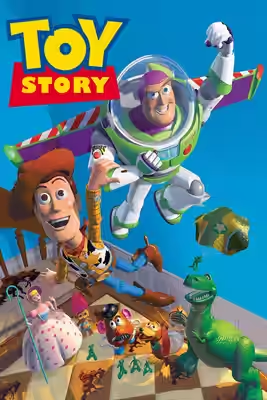
  5. Toy Story (1995, Fi1m 92)The template for things that come alive the moment the humans turn their backs.

Free account

Know what to watch tonight

Two lists that know where things are streaming, collections you can share, your own score beside ours, and Discover that remembers what you have seen.

  • Want to see, sorted by what is streaming now
  • Seen, with your score out of ten
  • No adverts, ever