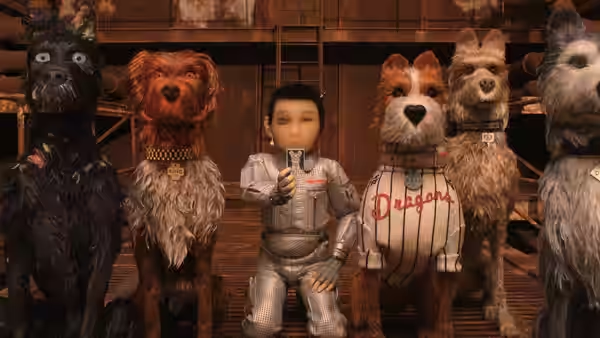
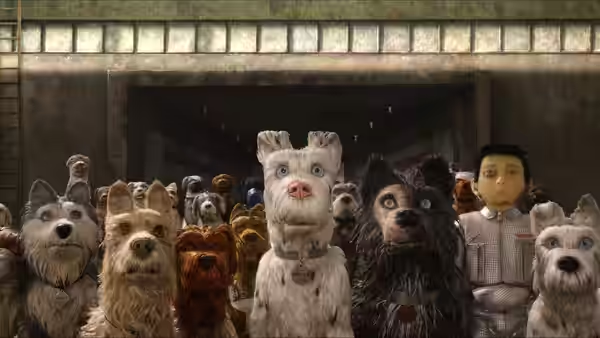
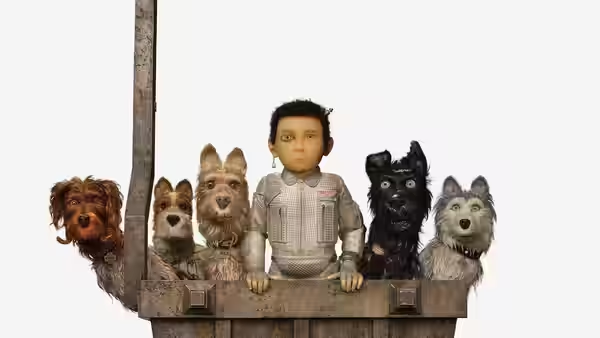
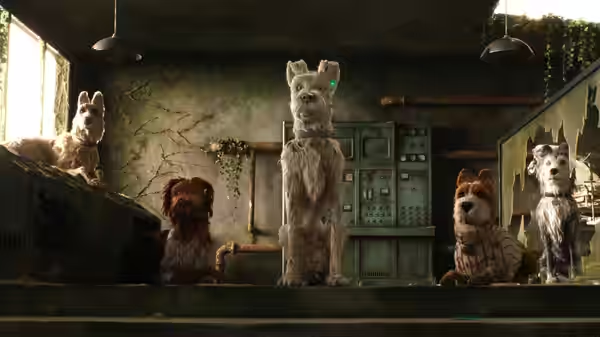
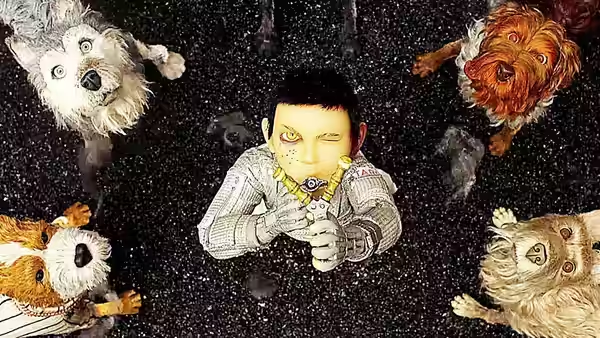
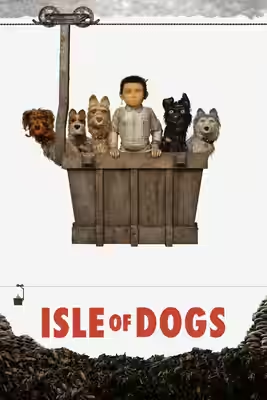
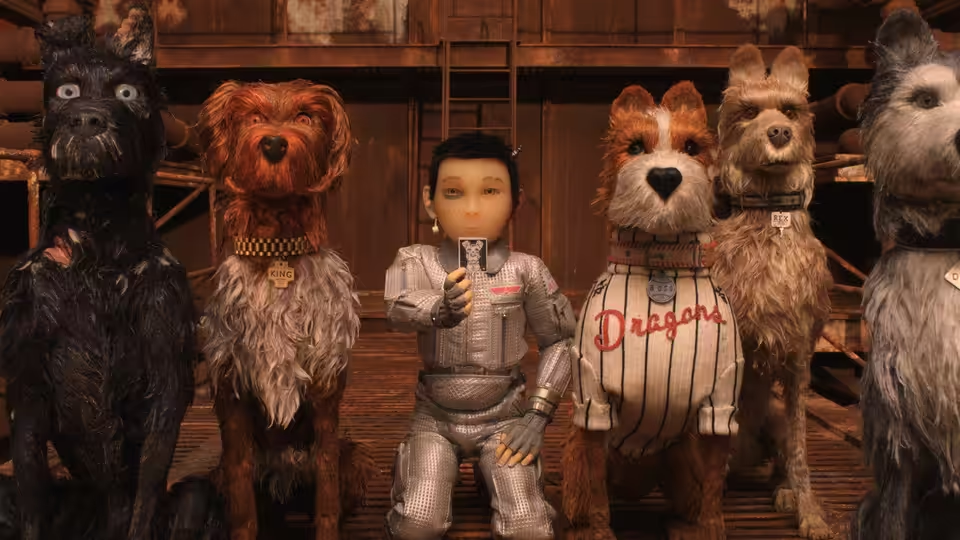
Boy in silver suit kneels among five dogs in a wooden interior
Film review

Isle of Dogs

2018 · Directed by Wes Anderson · 1h 41m · CNC U

In a sentenceThe dogs deserve rescuing from the rubbish, and occasionally from the plot

In a future Japan, a canine quarantine sends dogs to an island of rubbish. Atari Kobayashi (Koyu Rankin) sets out to rescue his dog, searching a place where the animals have been left to survive among the waste. There he encounters Chief (Bryan Cranston) and a group that includes Rex (Edward Norton), King (Bob Balaban) and Boss (Bill Murray). Atari wants to recover one companion, but the quarantine has stranded a whole community. His search brings him into the dogs’ struggle to survive away from the human population.

Plays from YouTube when you press play; nothing loads from them until then.

Fi1m review

Wes Anderson’s Isle of Dogs is a funny, touching adventure whose dogs deserve every minute we spend with them. The crowded plotting and the distance it keeps from its Japanese human characters are harder to excuse.

Wes Anderson’s Isle of Dogs makes a good, odd adventure out of a boy’s search for his dog, then gives that adventure more political business than it needs. A quarantine has put the dogs on a rubbish island in a future Japan, where being unwanted means having to learn to survive among the waste. The cruelty of that arrangement gives the jokes some weight and the search a reason to matter. The boy is Atari Kobayashi, voiced by Koyu Rankin.

Production designers Adam Stockhausen and Paul Harrod make the island worth inspecting without letting us forget what it contains. There is pleasure in the care lavished on the rubbish, but the place remains bleak enough to make the dogs’ predicament credible. Tristan Oliver’s cinematography makes the heaps feel large enough to get lost in, while keeping the dogs’ movements clear against them. This is an unusually unwelcoming setting for an animated adventure, and the animals have to live in it.

Bryan Cranston’s Chief holds our attention because the voice has enough weariness to make the dry delivery sound earned. The stop-motion animation gives the dogs small, distinct movements, and their physical expressiveness is as important as the spoken jokes. We were unexpectedly upset by their struggle to survive among the rubbish; the precision of those movements makes their discomfort hard to dismiss as a joke. The ensemble also offers drier pleasures, with Edward Norton as Rex, Bob Balaban as King and Bill Murray as Boss.

Alexandre Desplat’s score supplies welcome momentum, giving the journeys a lift without pretending that this is a cosy setting. Editors Ralph Foster and Edward Bursch have the harder task of keeping the chapter-structured story moving, and the divisions initially give the search a pleasing order. As the plot fills up, however, the same arrangement starts to feel fussy: another piece of explanation, another interruption before we can return to the animals. The increasingly hurried passages leave less time for the canine performances that make the search worth following.

The treatment of the Japanese human characters is harder to shrug off. Much of their dialogue arrives without subtitles, so we are asked to follow tone and behaviour where the dogs can explain themselves. There is a sensible animal’s-eye idea there, but Wes Anderson does not give the humans enough compensating individuality, and they can seem like people positioned to move the plot along. That distance matters when the film asks us to care about the politics as well as the search.

As a talking-animal adventure, this is welcome for its willingness to make its creatures awkward and vulnerable, rather than reliably comforting. The humour can be bleak, and the bursts of savagery deserve more notice than the PG certificate might suggest. At 101 minutes it is not a long film, though the accumulated plot can make it feel like one near the finish. Older children who enjoy the peculiar may take to it more readily than anyone expecting a reassuring pet story.

Critical consensus AI synthesised

78
Positive
20
Mixed
1
Negative
1

Most critics respond warmly to Isle of Dogs, with praise concentrated on its stop-motion animation and meticulous production design. The expressive dogs, densely detailed rubbish-island setting and dry visual humour repeatedly stand out, while several reviews find real tenderness in the central boy-and-dog story. Anderson’s precise staging is widely seen as well suited to animation, and the film’s bleakness gives its canine adventure an edge beyond the expected charm.

Reservations centre on a crowded, sometimes meandering plot and the handling of Japanese culture and human characters. The Los Angeles Times admires the miniature craft but finds the cultural treatment troubling; other broadly favourable reviews also raise concerns. The spread is mostly positive, though the Evening Standard is a clear dissenter, finding that the elaborate story struggles to sustain attention or sympathy. Even among admirers, the emotional impact and the busier later passages attract less consistent praise than the animation.

Sight and Sound
28 March 2018 · Kim Newman
90*

The critic praises the film's delightful detail, sympathy for its furry leads, and labor of love quality, highlighting a standout speech by Chief as perfectly written and staged.

Read the full review →
The Guardian
29 March 2018 · Peter Bradshaw
90*

Anderson delivers another distinctive, formally brilliant stop-motion film set in a dystopian future Japan, crammed with visual invention and hyper-intelligent gags. The critic singles out the expressive clarity of the dogs' movements and the bleak garbage-island landscape for particular praise.

Read the full review →
The Hollywood Reporter
15 February 2018 · festival review · David Rooney
90*

The review finds Wes Anderson's stop-motion film a thoroughly captivating and wildly distinctive tale of a boy's quest to rescue his dog amid a canine quarantine scheme. It singles out the vibrantly inventive visuals, meticulous production design, and chapter-structured narrative for particular praise.

Read the full review →
Vulture
22 March 2018
90*

The review calls the film sui generis and the most lyrically disjunctive movie ever made, one that harmonizes its disparate elements into a magical whole. It singles out the breathtaking stop-motion mise-en-scène and visual perfection for praise while noting the witty screenplay.

Read the full review →
Empire
23 February 2018 · Nick de Semlyen
80*

Anderson makes amends for past on-screen dog deaths with a joyous, visually splendid and entrancing stop-motion film full of whimsy, pathos and inventive details, though the charm falters slightly in the third act with some freneticism and uneven voice cast impact.

Read the full review →
Film Comment
1 March 2018 · Jonathan Romney
80*

The critic praises the film's visual richness, inventive mix of animation styles, and witty execution while acknowledging debates over its portrayal of Japanese culture.

Read the full review →

Straight answers AI written, from our review

Is Isle of Dogs worth watching?
Isle of Dogs is worth watching for anyone who likes their talking-animal adventures odd and a little bleak, and we scored it 78. Bryan Cranston's weary Chief and the precise stop-motion dogs carry the search for Atari's missing companion. The crowded, chapter-heavy plot and the distance kept from the Japanese human characters hold it back from a warmer recommendation.
How long is Isle of Dogs, and what is it rated?
Isle of Dogs runs 1h 41m and is rated U by the CNC in France. It is an adventure and comedy film.
Where can I watch Isle of Dogs in France?
Isle of Dogs is streaming on Disney+ in France, and it is also available to rent from Amazon Prime Video and Apple TV from €3.99. Availability is checked daily; the links above go straight to each service.
How does Isle of Dogs compare to Fantastic Mr. Fox?
Isle of Dogs is the darker and more crowded of Wes Anderson's two stop-motion animal films, and Fantastic Mr. Fox is the tighter one. The earlier film gives its animals a cleaner story with equally exact comic timing, while the dogs get a bleaker setting and more plot than they need. Start with the fox; come to the dogs if you want something stranger.
What should I watch after Isle of Dogs?
After Isle of Dogs, try Fantastic Mr. Fox (2009, Fi1m 84): The stop-motion animals get a tighter story and equally exact comic timing. Then My Life as a Courgette (2016, Fi1m 84): Stop-motion outsiders find companionship, with plain feeling and fewer narrative detours.

Cast

Awards

Academy Awards, 2018

Nominated
Best Animated Feature

Annie Award for Best Animated Feature, 2018

Nominated
Annie Award for Best Animated Feature

Critics' Choice Awards, 2018

Nominated
Best Animated Feature

If you liked this, try…

  1. Fantastic Mr. Fox (2009, Fi1m 84)The stop-motion animals get a tighter story and equally exact comic timing.

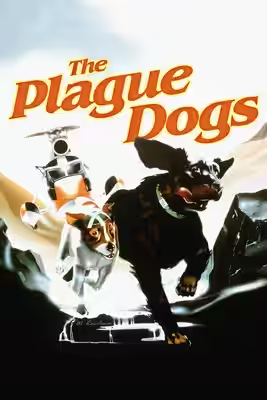
  2. The Plague Dogs (1982) · not reviewed yetAnother canine escape, drawn with fierce sympathy and considerably less reassurance for children.

  3. My Life as a Courgette (2016, Fi1m 84)Stop-motion outsiders find companionship, with plain feeling and fewer narrative detours.

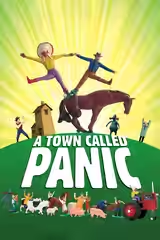
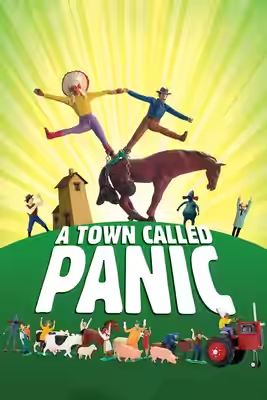
  4. A Town Called Panic (2009) · not reviewed yetHandmade chaos and deadpan timing, with little interest in behaving sensibly.

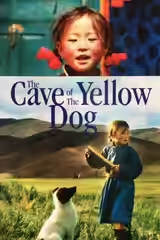
  5. The Cave of the Yellow Dog (2005) · not reviewed yetA child’s attachment to a dog, given patience, landscape and everyday stakes.

Free account

Know what to watch tonight

Two lists that know where things are streaming, collections you can share, your own score beside ours, and Discover that remembers what you have seen.

  • Want to see, sorted by what is streaming now
  • Seen, with your score out of ten
  • No adverts, ever