Chad Stahelski’s third John Wick film is the best-staged action of the series and also the longest, and those two facts are related. Come for the knives, the horse and the dogs; the mythology and the Moroccan desert you will have to sit through.
John Wick: Chapter 3 – Parabellum starts minutes after Chapter 2 ended and does not stop for a while. John Wick (Keanu Reeves) has killed a man inside the Continental, the New York hotel where assassins are forbidden to kill anyone, and the price is a bounty on his head and an hour’s head start. The whole of the first act is that hour. Chad Stahelski, a former stunt coordinator, has built the series on the belief that a fight is worth filming properly, and this is the film where he has the most money and the fewest excuses. It is the best-staged of the three and the longest, and we enjoyed it a great deal until we began to notice how long it was.
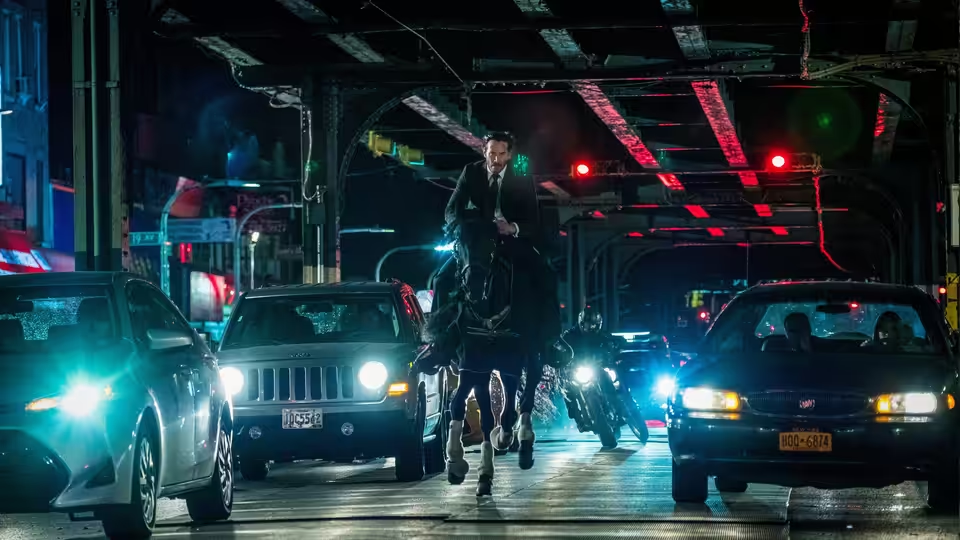
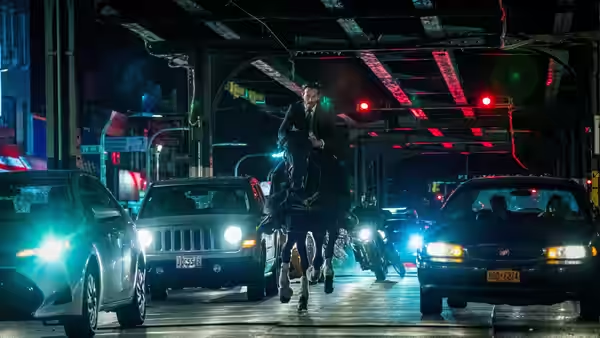
The fights are the point, and they are remarkable. Wick kills a giant in the New York Public Library with a hardback. He fights his way through an antiques shop whose display cases are full of knives, and the scene becomes a throwing contest, blades bouncing off glass and lodging in people. He escapes on a horse and has it kick a pursuer in the chest. We laughed out loud at the horse, winced at what the knives did, and then felt slightly ashamed of ourselves, which we suspect is exactly what Stahelski wanted. Each fight has its own rules: a room, an object, a problem to be solved with the body. Nothing is cut so fast that you lose track of who hit whom.
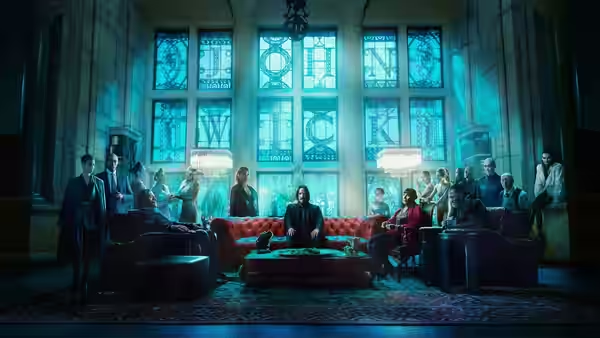
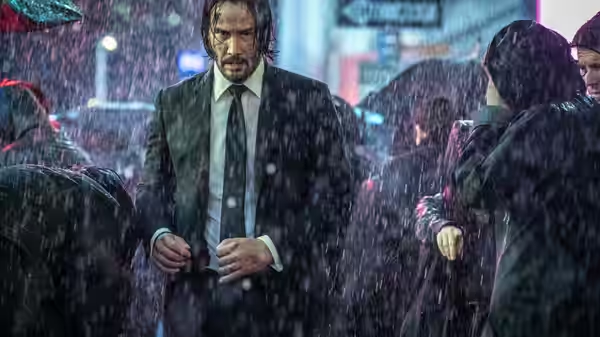
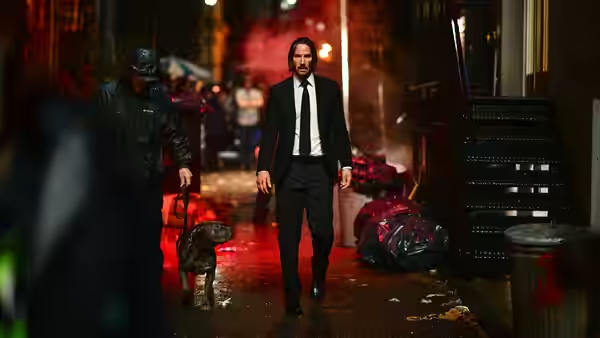
Dan Laustsen shoots New York as a wet city of blue and gold neon, so every puddle carries a second set of lights, then moves to the ochre of Casablanca and the white glare of the desert. Kevin Kavanaugh’s production design supplies the furniture of Wick’s world: the Continental’s brass and marble, the antiques shop, the library stacks. Evan Schiff holds shots long enough for the choreography to register and cuts on the pause rather than the punch, which is why you can follow the fights rather than merely hear them. Tyler Bates and Joel J. Richard provide a low electronic thud that rises and falls with the bodies and gets out of the way when it should.
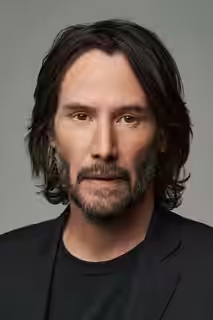
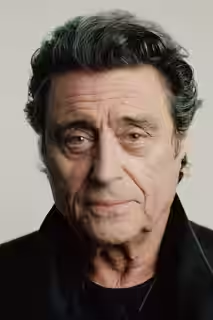
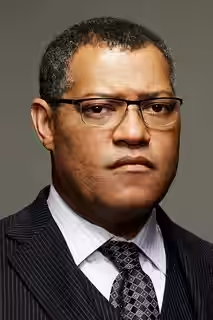
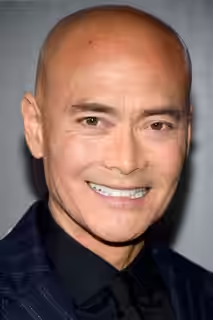
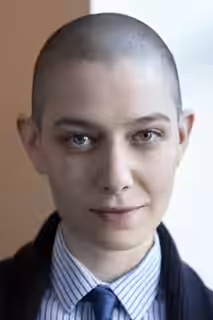
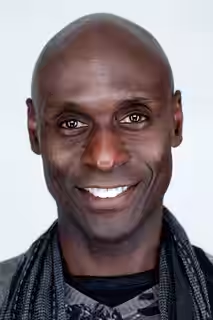
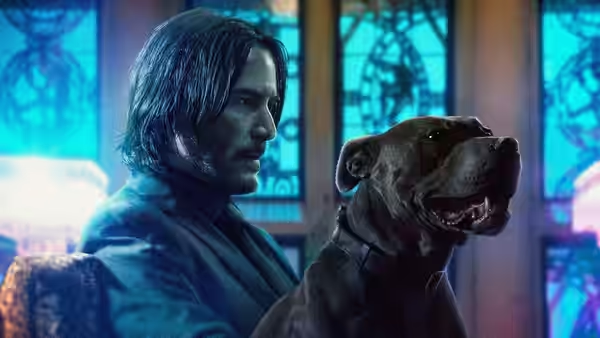
Reeves says perhaps two hundred words in 131 minutes, a good number of them “yeah”, and it does not matter. He plays Wick as a man tired to the bone who keeps going because stopping is worse, and his stiff, heavy way of moving has become the character. Ian McShane’s Winston is all raised eyebrow and Lance Reddick’s Charon is courtesy with a shotgun. Laurence Fishburne is given more speeches than he needs. Asia Kate Dillon plays the Adjudicator with a bureaucrat’s calm, and Mark Dacascos is the film’s best addition: Zero, a sushi chef turned assassin who is thrilled to be fighting his hero and says so mid-fight. Halle Berry’s Sofia gets one long sequence in Casablanca with two dogs who do more damage than she does.
The trouble is everything between the fights. Four credited screenwriters have thickened the mythology of the High Table with markers, oaths and an Elder in the desert, and none of it gives the violence anything to be about. The Casablanca stretch, which most critics have also flagged, brings the film to a halt for a long walk through sand and a lot of talk about fealty. Wick is thrown off buildings and hit by cars and gets up; the first film’s man who felt every blow is now nearer a cartoon. At 131 minutes it is the longest of the series, and twenty minutes could go without anyone noticing.
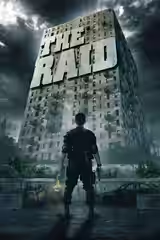
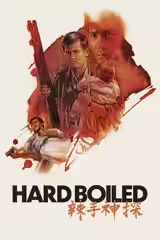
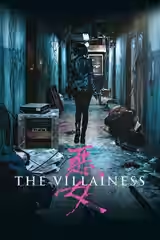
Against the series, it is more inventive than Chapter 2 and less of a film than the first John Wick, which had a story, a dead dog and a sense of when to finish. Most critics have been a few points warmer than we are; the difference is how much repetition one can take, and we found our limit around the ninetieth minute. Against the wider genre it sits comfortably beside the Indonesian and Hong Kong pictures it borrows from, and it is a good deal more coherent than most American action films of its size.
See it for the antiques shop, the horse and the dogs, and see it with someone who will not mind you laughing at violence. It is made by people who love the work of fighting, and the plot is slight because they know it is not why you came.