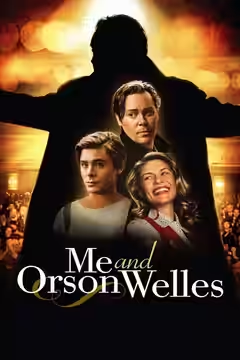
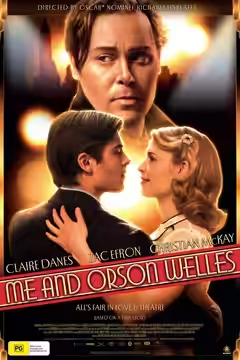
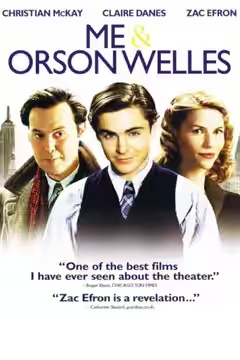
Richard Linklater’s backstage comedy is worth an evening for Christian McKay’s commanding Orson Welles. The theatre scenes have an infectious enthusiasm for the work, though the young protagonist and his romantic education are considerably less absorbing.
Me and Orson Welles is an enjoyable backstage comedy with a rather ordinary young man at its centre. Richard Linklater gives the theatre scenes enough attention to make the work itself interesting, and Christian McKay supplies an appetite for attention that is often funny to watch. The coming-of-age story is less absorbing, especially when romance takes over. For anyone interested in actors and the difficult business of getting them to work together, there is still plenty here to enjoy.
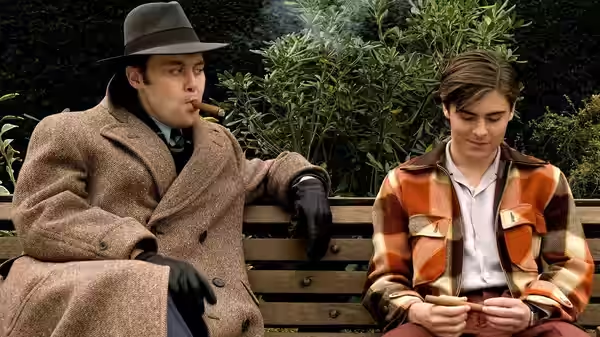
Christian McKay’s Orson Welles has the confidence of someone who expects an interruption to be followed by an apology. The voice is persuasive, but his easy assumption of authority makes the performance work: being surrounded by other actors seems only reasonable to this man. We laughed at his self-importance, then caught ourselves wanting everyone else to get out of his way. That response explains the performance’s appeal, and also why the film struggles whenever it turns its attention elsewhere.
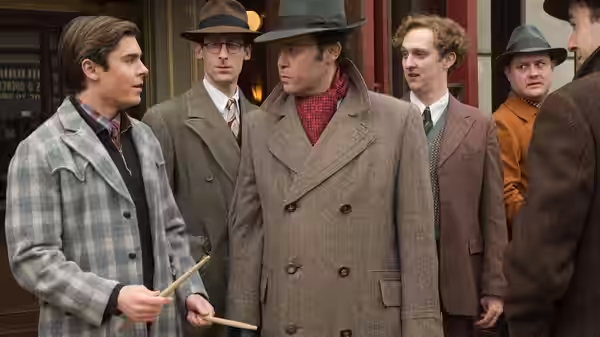
Richard Linklater handles the theatrical material with a welcome interest in how a performance is assembled. The staging of Julius Caesar has a precision of movement and rhythm that makes the company’s work worth watching in its own right. We are allowed to appreciate the actors doing their jobs, without needing every moment to deliver another lesson about ambition. Backstage dramas can become so occupied with personal grievances that they forget to make the production itself interesting; this one remembers.
Laurence Dorman’s production design is convincing in its period detail, though we sometimes notice how carefully everything has been arranged. Dick Pope’s cinematography contributes to that polish, with a clarity that suits the theatrical material but can make the surroundings feel a little too tidy. Nic Ede’s costumes belong comfortably within this carefully presented world. The craft is assured, even when the film could use a little more disorder around its performers.
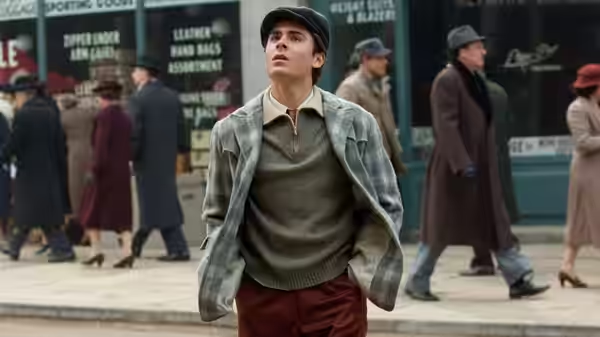
Zac Efron’s Richard Samuels is the difficulty. He is an agreeable presence, but his relative blandness becomes conspicuous beside a performance that can command a scene so easily. The screenplay by Vincent Palmo Jr. and Holly Gent, adapted from Robert Kaplow’s novel, gives the young protagonist familiar problems without making his responses particularly distinctive. Claire Danes brings more ease to Sonja Jones, yet the romance never develops enough urgency to justify the attention it receives. We understand why a young observer is useful to this story, but he needs to become interesting company himself.
Sandra Adair’s editing cannot quite disguise how unevenly the film holds our interest. The slow start asks for patience, and the stretches away from the theatre can feel longer than their dramatic importance warrants. Michael J. McEvoy’s music fits the amiable tone without giving the romance much extra force. None of this makes the film a chore, but it does mean its pleasures arrive less regularly than we would like.
There is no need for a backstage comedy to provide a complete account of a famous man’s character. It does need to make the people around him worth following, and Richard Linklater only partly manages that. The theatrical intelligence is enough to sustain a qualified recommendation, particularly for those who enjoy watching performers negotiate an oversized ego. If rehearsals are your idea of a good evening, the slower stretches are worth sitting through.