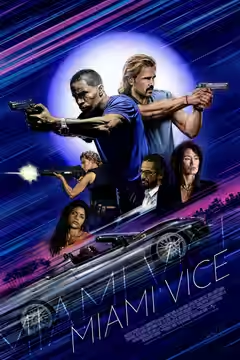
Michael Mann takes the television series he produced in the 1980s, strips out the pastels and the jokes, and shoots what is left on video in the dark. The pictures are remarkable; the story underneath them is told so quietly that we lost hold of it twice.
Michael Mann was one of the producers of the Miami Vice television series in the 1980s, and twenty years later he has gone back and removed nearly everything anyone remembers about it. No pastel jackets, no daylight to speak of, no jokes. What remains are two names and a method: undercover men who stay under so long they stop coming up. Mann wrote the script himself, and the film he has made from it is one we admired steadily and understood in patches.
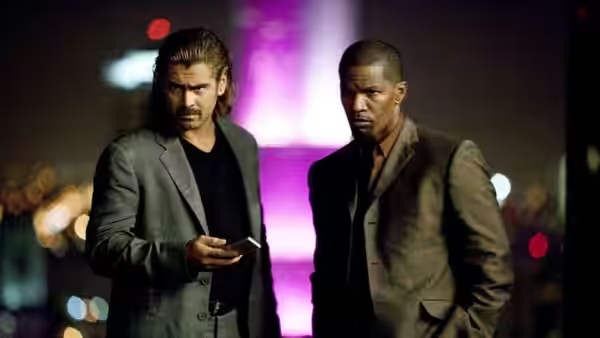
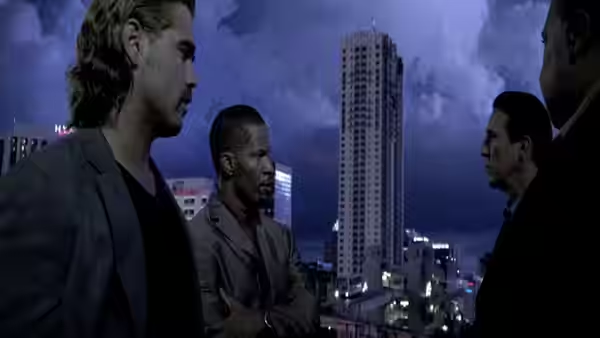
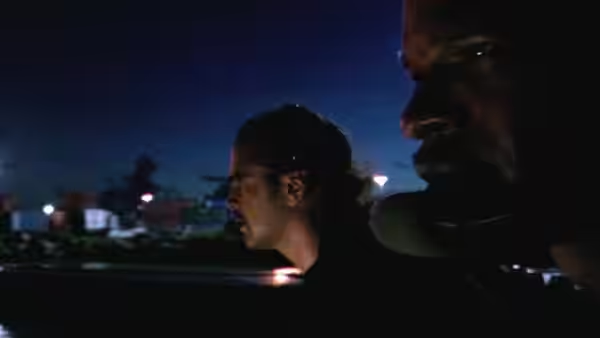
Dion Beebe shoots on digital video, as he did for Mann on Collateral (2004), and the cameras are used for the one thing film stock could not do, which is see at night. The skies over Miami and the sea have cloud in them, banked up and lit from below by the city, and lightning goes off on the horizon behind conversations that never mention it. Skin comes out grey and faintly grainy, headlights bloom, and water at speed looks like beaten metal. The film’s best passage has almost no dialogue: two fast boats crossing to Cuba for a drink. It moved us more than a scene of two people not talking had any right to, and we think it was the sky, and the fact that Mann simply let it run.
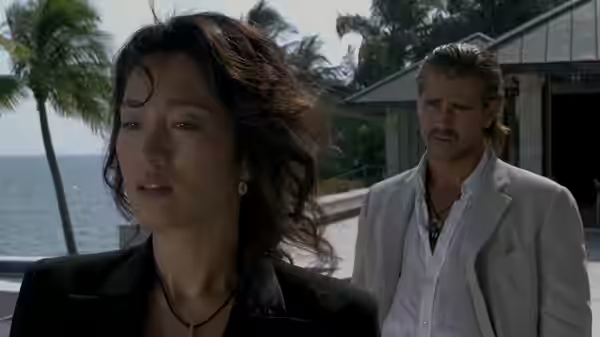
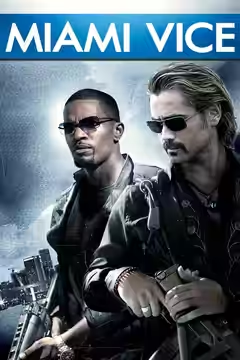
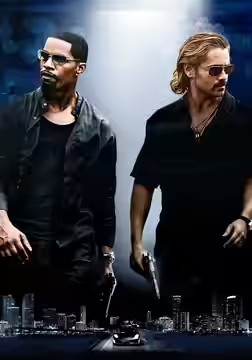
Colin Farrell wears a moustache and a mullet and talks in a low mutter that does not always reach the microphone. It is a choice, a man who has stopped performing for anyone, and it costs the film a number of lines we wanted. Jamie Foxx is the stiller of the two and the better for it; his Tubbs has a patience that reads as command. Their scenes together are short and businesslike, and anyone waiting for the old banter will wait through the whole film. Naomie Harris gives Trudy a warmth the film otherwise rations, and her scenes with Foxx at home are the only ones in which anybody looks comfortable. Gong Li’s English is stiff, and Mann plainly knows it; he shoots her face and lets the lines go, and that works about half the time.
John Ortiz plays Yero as a man who dislikes everyone at his table and has to keep smiling at them, and he is the most alive thing in the film. The gunfights are short and loud and the bullets sound as if they hurt; the late one had us properly frightened for people we were not sure we liked.
The trouble is the story the pictures are carrying. Mann tells it the way his characters talk, in the shorthand of people who already know, and Paul Rubell and William Goldenberg have cut it so that we arrive in each scene after it has started. That is a fair way to make a film about professionals, and Heat (1995) did it while still making sure we knew who wanted what. Here we twice lost hold of who was cheating whom and why a second set of criminals mattered at all, and the film did not slow down to help. Somewhere past the ninety-minute mark we noticed we were waiting for the next boat rather than the next development, which is the wrong thing to be waiting for in a thriller.
Michael Kaplan and Janty Yates put Farrell in pale linen that never quite sits right and Foxx in black that does. John Murphy’s score is washes of synthesiser under the surveillance scenes, and it is fine there; when it swells for the romance it is telling us to feel something the two faces on screen have not yet agreed to.
Against Mann’s own record this sits below Heat and beside Collateral, which had the same cameras and a far simpler story to tell. Mann cares more about how these men stand around waiting for a phone to ring than about what happens once it does, and if you can share that, there are stretches here you will not find in many other crime films. Watch it at night. The plot will not become clearer, but you will mind less, and that is roughly the deal on offer. It runs 132 minutes and carries a 15.