Michael Mann’s Dillinger film is shot on digital video, so the 1930s look like last Tuesday, and the gunfights are among the best he has staged. Between them it holds Dillinger at arm’s length, and we left knowing his coat better than his mind.
Michael Mann has made a film about John Dillinger that tells us nothing about him he would not have said himself. It is 1933, Dillinger (Johnny Depp) is robbing banks across the Midwest, and J. Edgar Hoover (Billy Crudup) means to build a national police force on the back of catching him. Melvin Purvis (Christian Bale) is handed the job. That is the plot, and Mann, writing with Ronan Bennett and Ann Biderman from Bryan Burrough’s book, keeps it that lean for 140 minutes. The result is cold, handsome and expertly staged, and we were gripped by it in bursts.
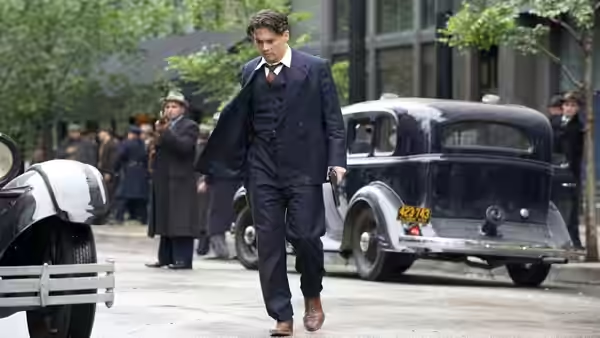
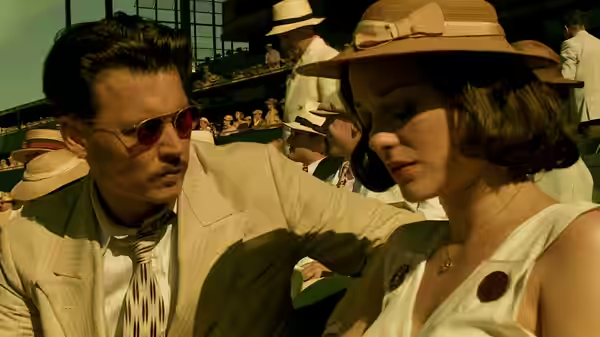
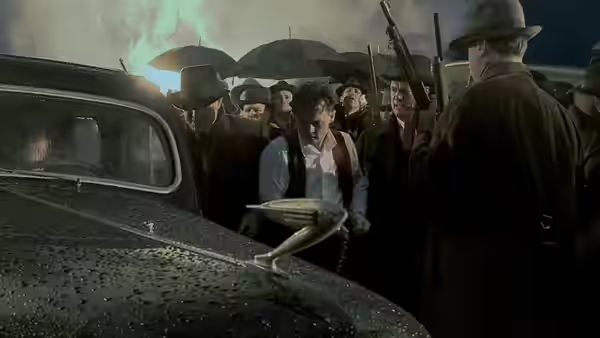
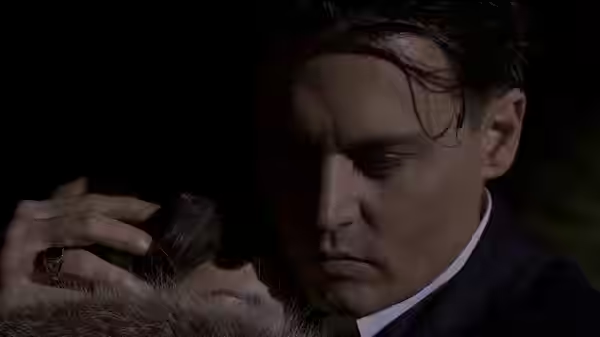
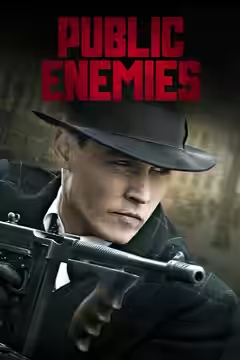
The look is the film’s big decision. Dante Spinotti shoots the 1930s on digital video, no grain, no softening, so the lacquer on the cars and the stubble on Depp’s jaw are there in flat, hard detail and the past stops looking like the past. In daylight, inside Nathan Crowley’s banks of marble counters and brass grilles, it can resemble a costumed reconstruction on the news. At night it is remarkable, and the night is where the film lives. Colleen Atwood keeps Dillinger in a camel coat and a fedora, and puts Billie Frechette (Marion Cotillard) in the black-and-red dress that starts their first argument.
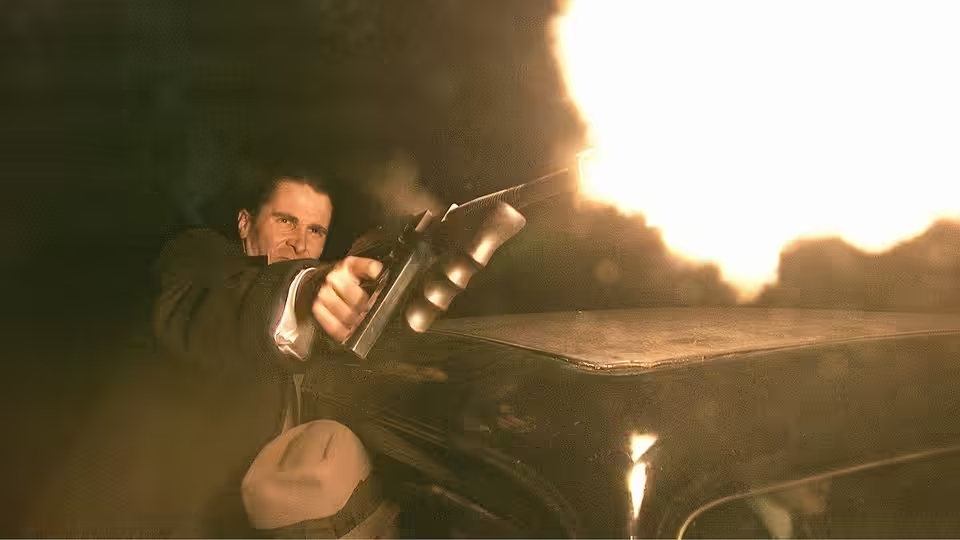
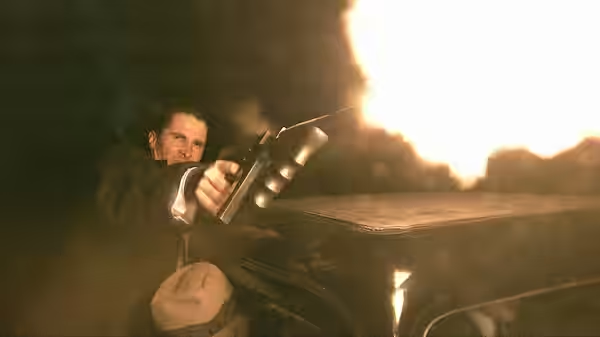
The gunfight at the Little Bohemia lodge is the reason to see it. Agents move through a Wisconsin wood in the dark, the gang comes out shooting, and for minutes the only light is muzzle flash: trees and faces lit white for a frame and gone. We were properly frightened, sat forward on the seat, and it was the sound that did it, gunfire recorded loud and dry with real silence in the gaps. Jeffrey Ford and Paul Rubell cut it so we always know who is behind which tree. Elsewhere their cutting is choppier; the early bank jobs run into one another.
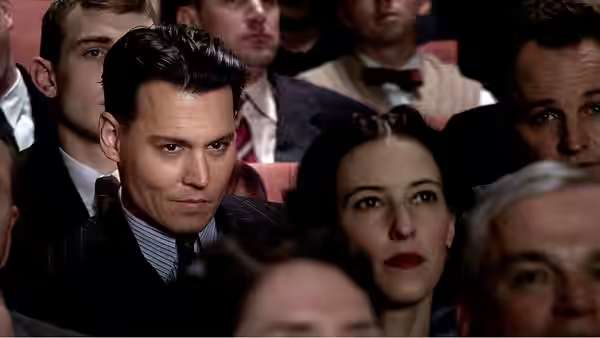
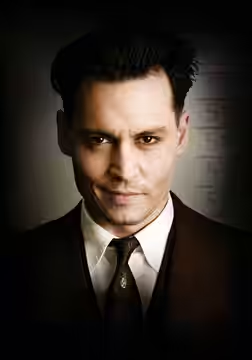
Depp plays Dillinger as a man who lives entirely in the present and has decided not to be afraid. He tells Billie who he is on their first night and lists what he likes, baseball, the pictures, good clothes, fast cars, whiskey and her, and that is as close as the script comes to a confession. The best scene has him stroll through the Chicago police squad room set up to catch him, read his own file on the wall and ask the detectives the baseball score while nobody looks up. Depp underplays all of it, rightly. Cotillard gives Billie nerve and a fear she keeps swallowing. The romance is given perhaps six scenes, and only the one in a police interrogation room earns its place.
The law gets the worse of it. Bale plays Purvis as a jaw and a hat brim, a decent man slowly realising the job is beyond him, and the script gives him nothing else. Crudup’s Hoover, vain and hungry for headlines, is the sharper creation, and Stephen Lang’s Charles Winstead, the Texas lawman brought in because the college boys cannot shoot, has perhaps a dozen lines and we remembered all of them. Across the line, Giovanni Ribisi’s Alvin Karpis and John Ortiz’s Phil D’Andrea tell Dillinger that the Syndicate makes more from telephone bookmaking than he does from banks, and that his face in the papers is bad for business. A robber made obsolete by the police and the mob at the same time is the film’s idea, and a good one. It is stated in two scenes and then left alone.
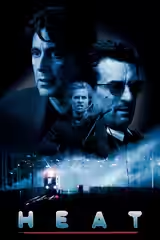
Against Mann’s own record this is the chilly one. Heat (1995) sat its cop and its thief down for a cup of coffee and gave both of them lives to lose. Here the two men meet once, through bars, and the scene tells us less about either than we had already guessed. Past the two-hour mark we noticed we wanted Dillinger caught, not from any feeling about justice but so the film would arrive somewhere, which is not a thought a Dillinger picture should allow. Elliot Goldenthal’s score, low strings used sparingly, stays out of the way; the songs in the clubs do more of the work.
See it in the dark on the biggest screen you have, with the sound up, for Little Bohemia and for the squad room. At home the digital image flattens into something nearer television, which is the one thing this film cannot afford to look like. It runs 140 minutes and carries a 15.