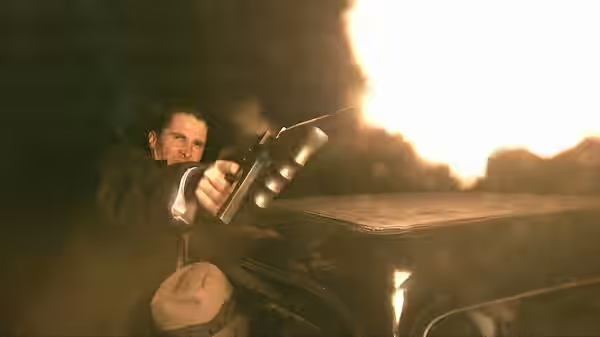
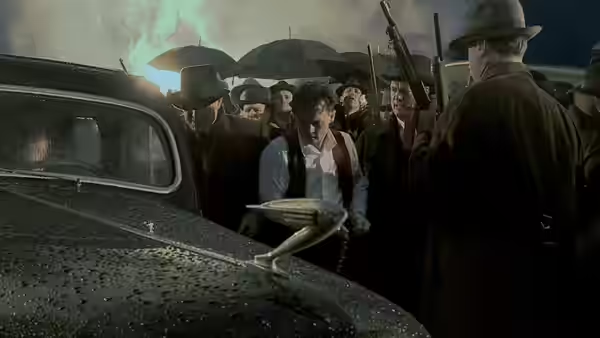
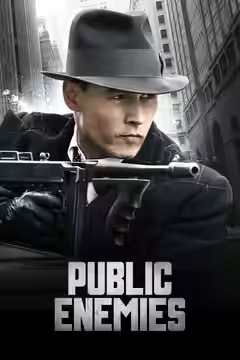
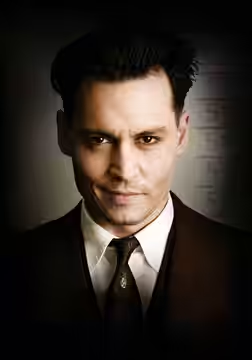
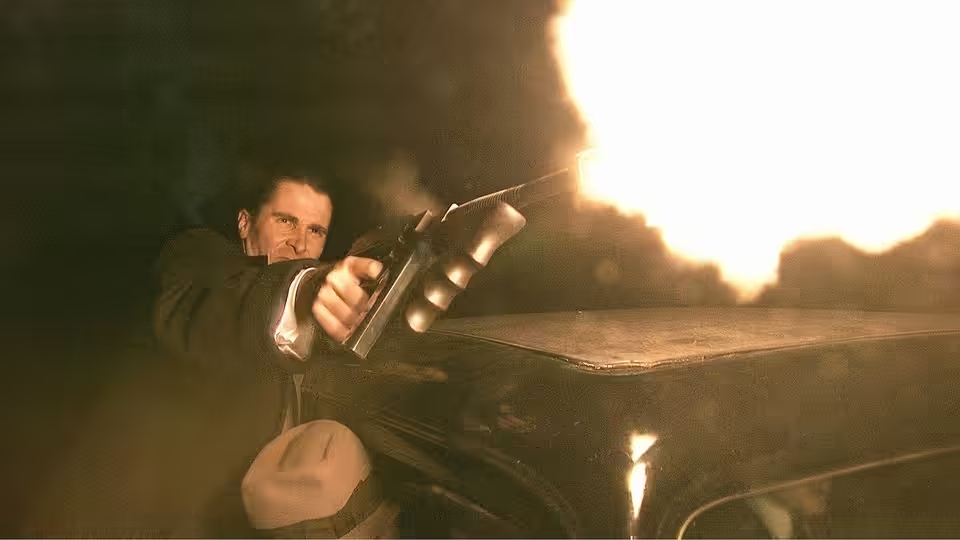
John Dillinger (Johnny Depp) aims a gun from beside a car as flames blaze behind him
Film review

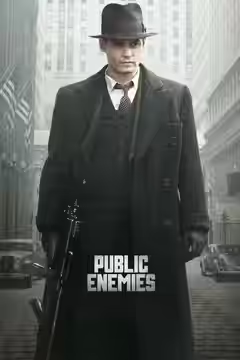
Public Enemies

2009 · Directed by Michael Mann · 2h 20m

In a sentenceDillinger robs the bank, and Michael Mann’s camera looks as though it got there before he did

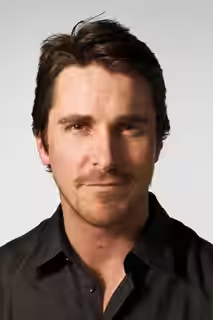
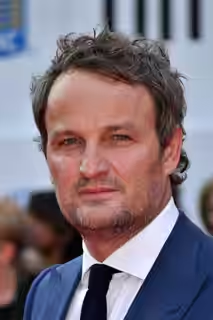
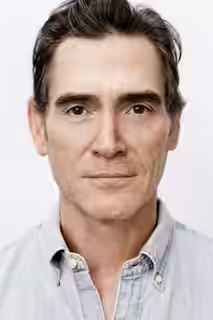
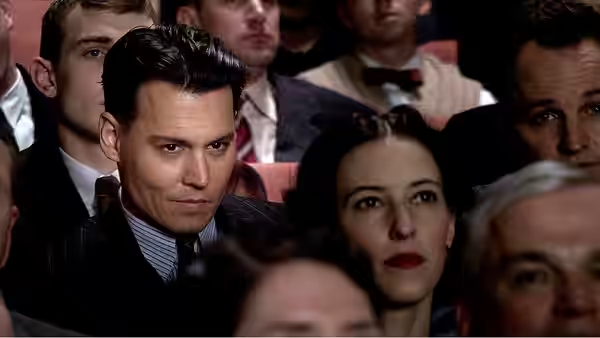
Indiana, 1933. John Dillinger (Johnny Depp) walks into the state penitentiary posing as a prisoner and walks out with his old crew, among them Harry ‘Pete’ Pierpont (David Wenham) and ‘Red’ Hamilton (Jason Clarke), then sets about robbing Midwestern banks in under two minutes apiece and giving the newspapers something to print. In Washington, J. Edgar Hoover (Billy Crudup) wants a federal police force and needs a famous criminal to justify it; he sends Melvin Purvis (Christian Bale), fresh from shooting a fugitive dead in an orchard, to run the Chicago office and bring Dillinger in. In a Chicago club, Dillinger meets Billie Frechette (Marion Cotillard), a hat-check girl, tells her exactly who he is, and asks her to come with him anyway.

Plays from YouTube when you press play; nothing loads from them until then.

Fi1m review

Michael Mann’s Dillinger film is shot on digital video, so the 1930s look like last Tuesday, and the gunfights are among the best he has staged. Between them it holds Dillinger at arm’s length, and we left knowing his coat better than his mind.

Michael Mann has made a film about John Dillinger that tells us nothing about him he would not have said himself. It is 1933, Dillinger (Johnny Depp) is robbing banks across the Midwest, and J. Edgar Hoover (Billy Crudup) means to build a national police force on the back of catching him. Melvin Purvis (Christian Bale) is handed the job. That is the plot, and Mann, writing with Ronan Bennett and Ann Biderman from Bryan Burrough’s book, keeps it that lean for 140 minutes. The result is cold, handsome and expertly staged, and we were gripped by it in bursts.

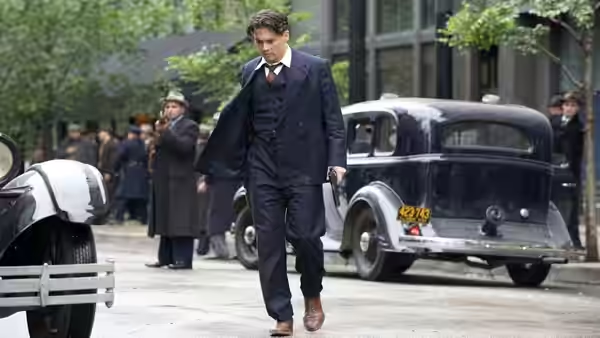
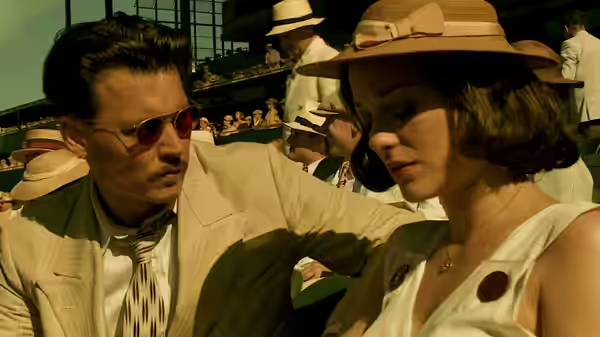
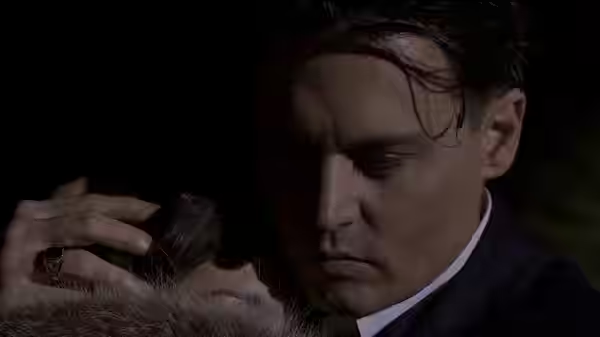
The look is the film’s big decision. Dante Spinotti shoots the 1930s on digital video, no grain, no softening, so the lacquer on the cars and the stubble on Depp’s jaw are there in flat, hard detail and the past stops looking like the past. In daylight, inside Nathan Crowley’s banks of marble counters and brass grilles, it can resemble a costumed reconstruction on the news. At night it is remarkable, and the night is where the film lives. Colleen Atwood keeps Dillinger in a camel coat and a fedora, and puts Billie Frechette (Marion Cotillard) in the black-and-red dress that starts their first argument.

The gunfight at the Little Bohemia lodge is the reason to see it. Agents move through a Wisconsin wood in the dark, the gang comes out shooting, and for minutes the only light is muzzle flash: trees and faces lit white for a frame and gone. We were properly frightened, sat forward on the seat, and it was the sound that did it, gunfire recorded loud and dry with real silence in the gaps. Jeffrey Ford and Paul Rubell cut it so we always know who is behind which tree. Elsewhere their cutting is choppier; the early bank jobs run into one another.

Depp plays Dillinger as a man who lives entirely in the present and has decided not to be afraid. He tells Billie who he is on their first night and lists what he likes, baseball, the pictures, good clothes, fast cars, whiskey and her, and that is as close as the script comes to a confession. The best scene has him stroll through the Chicago police squad room set up to catch him, read his own file on the wall and ask the detectives the baseball score while nobody looks up. Depp underplays all of it, rightly. Cotillard gives Billie nerve and a fear she keeps swallowing. The romance is given perhaps six scenes, and only the one in a police interrogation room earns its place.

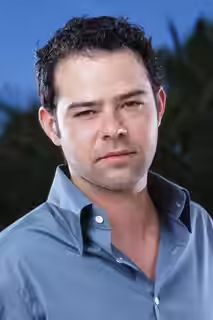
The law gets the worse of it. Bale plays Purvis as a jaw and a hat brim, a decent man slowly realising the job is beyond him, and the script gives him nothing else. Crudup’s Hoover, vain and hungry for headlines, is the sharper creation, and Stephen Lang’s Charles Winstead, the Texas lawman brought in because the college boys cannot shoot, has perhaps a dozen lines and we remembered all of them. Across the line, Giovanni Ribisi’s Alvin Karpis and John Ortiz’s Phil D’Andrea tell Dillinger that the Syndicate makes more from telephone bookmaking than he does from banks, and that his face in the papers is bad for business. A robber made obsolete by the police and the mob at the same time is the film’s idea, and a good one. It is stated in two scenes and then left alone.

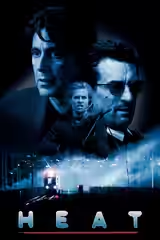
Against Mann’s own record this is the chilly one. Heat (1995) sat its cop and its thief down for a cup of coffee and gave both of them lives to lose. Here the two men meet once, through bars, and the scene tells us less about either than we had already guessed. Past the two-hour mark we noticed we wanted Dillinger caught, not from any feeling about justice but so the film would arrive somewhere, which is not a thought a Dillinger picture should allow. Elliot Goldenthal’s score, low strings used sparingly, stays out of the way; the songs in the clubs do more of the work.

See it in the dark on the biggest screen you have, with the sound up, for Little Bohemia and for the squad room. At home the digital image flattens into something nearer television, which is the one thing this film cannot afford to look like. It runs 140 minutes and carries a 15.

Critical consensus AI synthesised

61
Positive
7
Mixed
10
Negative
3

Most critics admire Public Enemies more than they enjoy it. Of twenty reviews, ten are mixed and only three are hostile, and the praise is almost unanimous about one thing: the way Michael Mann and his camera handle the 1930s. The nighttime shootouts, the Little Bohemia sequence above all, are singled out again and again, along with the production design and the natural light. Johnny Depp’s controlled Dillinger is the performance most often picked out, with Marion Cotillard a close second.

The complaints are just as consistent. Reviewers find the film emotionally cool, Dillinger himself opaque, the romance thin and the supporting figures, Christian Bale’s Purvis in particular, barely sketched. The spread is wide, from a strong recommendation at Empire down to outright dismissals at The Hollywood Reporter and Digital Spy. The digital look also divides: Radio Times calls the lighting vibrant, The AV Club finds it a flaw. The Guardian, almost alone, counts Depp’s restraint against the film.

Empire
13 January 2009 · Ian Nathan
85*

Nathan finds the film intelligent, challenging and worth the effort it demands. He particularly praises its immersive digital recreation of the 1930s and Marion Cotillard’s performance as the story’s emotional centre.

Read the full review →
Radio Times
★★★★ · Alan Jones
80

The critic presents the film as a strong, documentary-style crime drama. They praise its cast, sumptuous production design, and vibrant natural lighting.

Read the full review →
Total Film
16 June 2009 · ★★★★ · Rob James
80

The critic finds the film a startling, atmospheric crime epic, though its supporting characters remain ciphers. He praises Mann’s vivid visual style and the romance’s tragic heartbeat.

Read the full review →
RogerEbert.com
1 July 2009 · ★★★/4 · Roger Ebert
75

Ebert finds the film stylish but emotionally cool. He singles out Johnny Depp’s controlled performance as a strength.

Read the full review →
The New Yorker
28 June 2009 · David Denby
70*

Denby finds the film visually ravishing and expertly directed, but says its emotional distance and underdeveloped view of Dillinger keep it from greatness. He especially praises Mann’s lucid, fast-moving direction and elegant visual style.

Read the full review →
Variety
24 June 2009 · festival review · Todd McCarthy
65*

McCarthy finds the film admirable but not electrifying, with its meticulous historical tapestry making a stronger impression than its overall impact. He particularly praises the Little Bohemia shootout, where the nighttime cinematography and gunfire stand out.

Read the full review →

Straight answers AI written, from our review

Is Public Enemies worth watching?
Public Enemies is worth watching for Michael Mann admirers and for anyone who wants to see one of the best-staged gunfights he has made, and we scored it 64. The Little Bohemia shoot-out and the squad-room scene are the reasons to see it; between them the film keeps Dillinger at arm's length and runs cold. Watch it on the biggest screen you have, with the sound up.
How long is Public Enemies, and what is it rated?
Public Enemies runs 2h 20m. It is a crime and history film.
Where can I watch Public Enemies in Colombia?
Public Enemies is streaming on Amazon Prime Video and HBO Max in Colombia, and it is also available to rent from Amazon Prime Video and Apple TV from CO$9900.00. Availability is checked daily; the links above go straight to each service.
How violent or frightening is Public Enemies, and is it suitable for children?
Public Enemies carries a 15 in the UK and an R in the US, and it is a gunfight film, not one for children. The violence is loud and sudden rather than gory, with gunfire recorded dry and close and a night shoot-out in a wood that frightened us in the cinema. Older teenagers used to crime films should be fine; the squeamish will find the sound harder than the pictures.
How does Public Enemies compare to Heat?
Public Enemies is the chillier film and Heat the better one. Heat sits its cop and its thief down for a conversation and gives both men lives to lose; here Purvis and Dillinger meet once, through bars, and the scene tells us little. Choose Heat for character and patience, Public Enemies for the hard digital look and the gunfights, which are as good as anything in the earlier film.
Is Public Enemies based on a true story or a book?
Public Enemies is adapted from Bryan Burrough's book and deals with the real John Dillinger, J. Edgar Hoover and Melvin Purvis in 1933. Mann, Ronan Bennett and Ann Biderman keep the plot lean, and our review does not weigh how closely the film follows the book. You need no knowledge of the source: the film tells you what it wants you to know about Dillinger, which is not much.
What should I watch after Public Enemies?
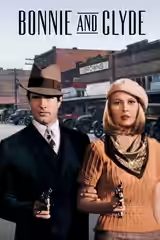
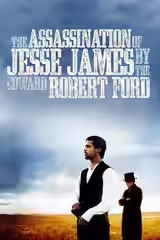
After Public Enemies, try Heat (1995, Fi1m 91): Mann gives the cop and the thief the conversation this film withholds. Then Bonnie and Clyde (1967, Fi1m 88): The same Depression banks, robbed by people the film actually lets us like; and The Assassination of Jesse James by the Coward Robert Ford (2007, Fi1m 84): Another American outlaw watched from a cold distance, and this time the distance is the point.

Cast

If you liked this, try…

  1. Heat (1995, Fi1m 91)Mann gives the cop and the thief the conversation this film withholds.

  2. Bonnie and Clyde (1967, Fi1m 88)The same Depression banks, robbed by people the film actually lets us like.

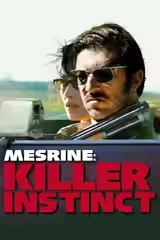
  3. Mesrine: Killer Instinct (2008) · not reviewed yetFrance’s own celebrity robber, played by Vincent Cassel with an appetite Depp keeps buttoned up.

  4. The Assassination of Jesse James by the Coward Robert Ford (2007, Fi1m 84)Another American outlaw watched from a cold distance, and this time the distance is the point.

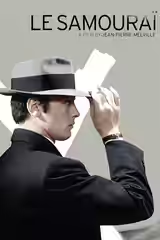
  5. Le Samouraï (1967, Fi1m 88)Melville’s hitman in hat and trench coat, saying even less than Dillinger does.