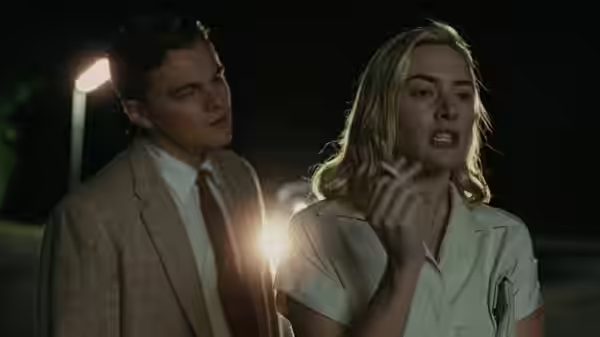
Sam Mendes’s film of Richard Yates’s novel is handsomely built and fiercely acted, and it explains itself more often than it needs to. Winslet and DiCaprio are reason enough to watch, and Michael Shannon, in two scenes, nearly steals it from them.
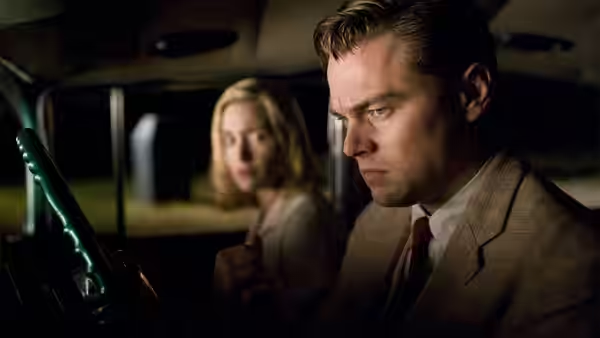
Sam Mendes takes Richard Yates’s novel of a marriage dying in a Connecticut suburb in 1955 and films it straight: the house, the commute, the drinks, the shouting. Frank Wheeler (Leonardo DiCaprio) sells business machines in Manhattan and tells everyone he is above it. April Wheeler (Kate Winslet) has worked out before the film begins that neither of them is going anywhere, and spends two hours trying to make that untrue. It is fiercely acted and handsomely built, and it would be a better film if it trusted its pictures and stopped explaining them. We liked it, with reservations, and the reservations are about the script.
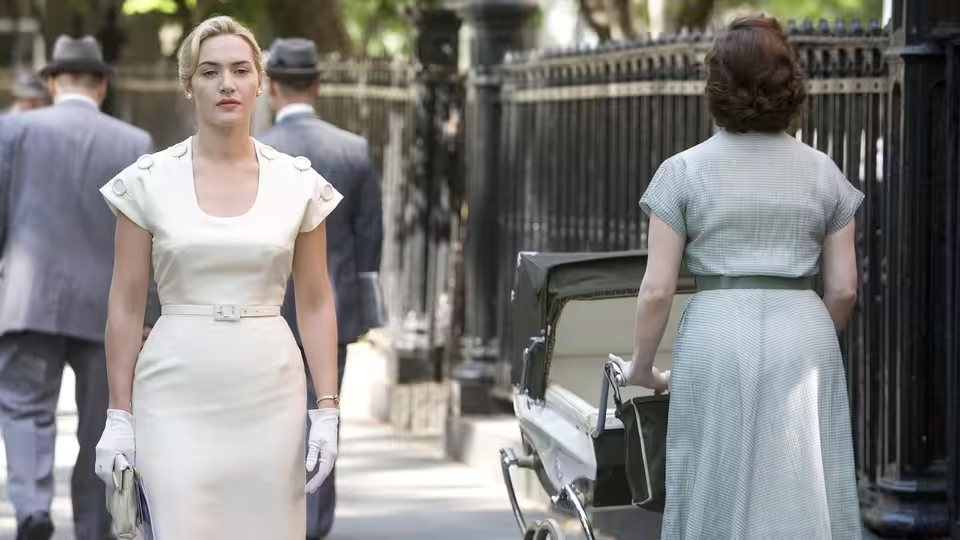
The house is the first thing the film gets right. Kristi Zea gives the Wheelers a white clapboard box with a picture window and pale, nearly bare walls, so every raised voice has somewhere to bounce. Roger Deakins lights the rooms with hard daylight through the glass and leaves no shadow a person could retreat into. His best shot is the morning commute, a station concourse full of men in identical grey hats filmed from above so that Frank is one more hat. Albert Wolsky dresses him in the same grey as the rest and April in dresses ironed for guests who are not coming.
Winslet plays April as a woman who has already decided. The scene in which she proposes Paris, laid out across the kitchen table like a balance sheet, is the film’s best, because the terrible thing about it is how sensible it sounds: she will type for the government, he will think, the children will learn French. DiCaprio has the harder job. Frank is a man who talks well and knows it, and his best moments are the small ones, agreeing to something and visibly looking for the exit as he does. His thirtieth birthday, spent at lunch with Maureen Grube (Zoe Kazan) from the typing pool, is played with no appeal for our forgiveness, and it is the most honest thing he does in the film.
Then there is Michael Shannon. He plays John Givings, son of the estate agent Helen Givings (Kathy Bates) who sold the Wheelers their house, brought round for lunch from the hospital where he is a patient. He looks at the consensus and says what he sees, and he is the best thing in the film. He is also where the trouble shows. Justin Haythe’s screenplay has thinned the novel’s interior voice, the long passages in which Frank talks himself into his own excuses, and without it the film needs somebody to state its case. John is that somebody, twice. The second time we found ourselves agreeing with him, and then disliking the film for arranging it so that we would.
The fights are the other problem, and it is one of quantity. Tariq Anwar holds them in long takes and lets the two actors go, which is right, and the roadside argument after April’s play had us wanting to be anywhere else, which is what it is for. But there are perhaps six of these and they all climb to the same pitch, so that by the fourth we were bracing rather than watching. Thomas Newman’s piano score is sparse and decent, and it arrives at precisely the moments when the scene had already done the work.
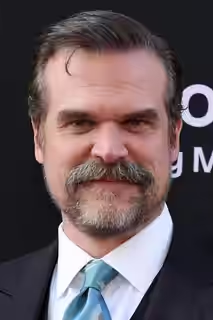
The supporting cast is better served, because nobody asks them to make a speech. Kathryn Hahn and David Harbour, as the neighbours Milly and Shep Campbell, watch the Wheelers with a longing neither would admit to, and Harbour in particular lets us see a man who would swap places with Frank and knows it. Dylan Baker’s Jack Ordway drinks through the office hours with the cheer of someone who gave up years ago. Bates talks like a woman who cannot bear a silence.
Mendes’s American Beauty (1999) looked at a similar cul-de-sac and found it funny. This one finds it only sad, and it offers no relief at all, which is what will decide whether you can sit through it. Putting DiCaprio and Winslet together again eleven years after Titanic (1997) is not an accident, and the film knows it. See it for Winslet, for DiCaprio’s small moments and for Shannon’s two scenes, and not on a night when you have already had an argument. It runs 119 minutes and carries a 15. The Wheelers have two children; you will not remember their names, and the film is quietly clear that their parents sometimes forget them too.