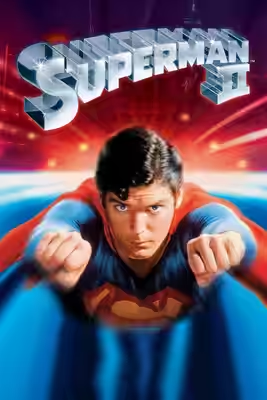
The second Christopher Reeve Superman film gives him three villains worth the trouble and a romance with Margot Kidder that is played straight. Richard Lester’s gags keep getting in the way, but there is a good deal here to enjoy.
Superman II has a simple idea and it is a good one: give Superman someone he cannot pick up and carry to prison. Three criminals from his own planet arrive with his powers and none of his manners, and for the first time the fights are between equals. Richard Lester directs, and Mario Puzo’s story, with a screenplay by David Newman and Leslie Newman, adds a second idea that is better still: a Clark Kent who would rather be a man than a god. The film also keeps stopping for jokes, and the jokes are the weakest thing in it.
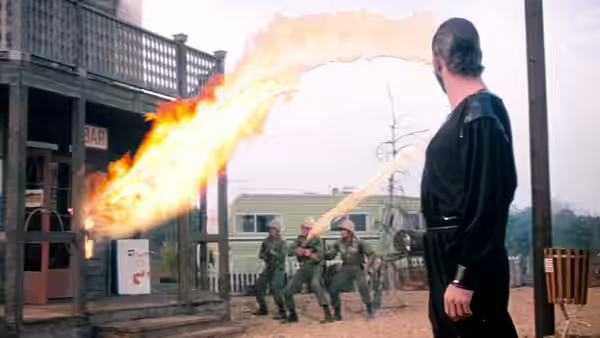
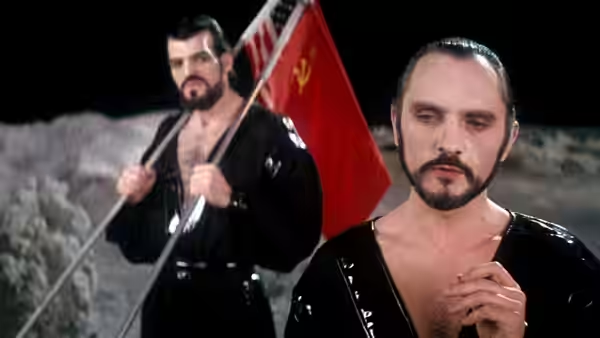
The villains carry it. Terence Stamp’s General Zod is a tyrant who finds conquest tiresome, and Stamp plays him at half volume, with a long stare and a voice that never lifts. Yvonne Blake and Sue Yelland dress the three in black from the throat down, no cape and no colour, so that against Christopher Reeve’s primary blue they look like mourners at a fairground. Sarah Douglas’s Ursa has a hungry smile and takes trophies from the men she hurts; Jack O’Halloran’s Non, who never speaks, has the dim patience of a large dog. Their arrival in a small American town, where a Sheriff (Clifton James) tries to arrest them, is the best sequence in the film. We laughed at Zod’s weariness and then stopped, because the joke is that he cannot be bothered to be cruel and is cruel anyway.
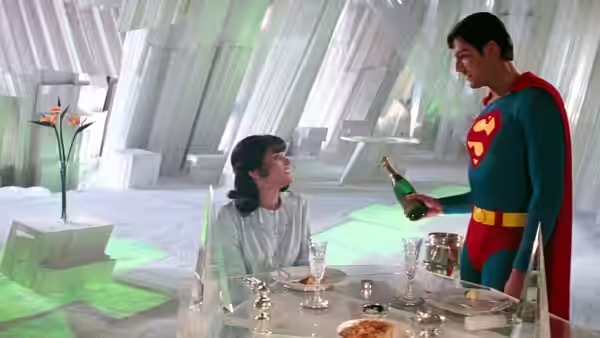
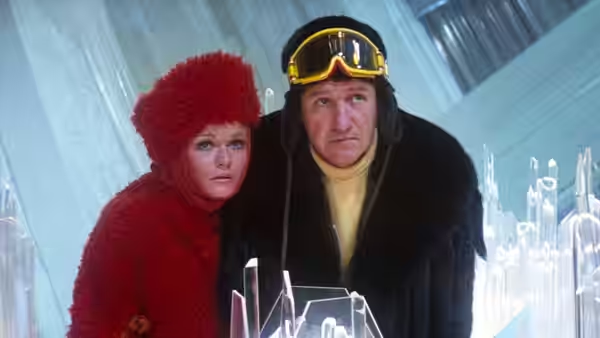
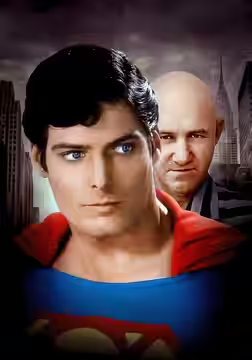
Reeve is doing something harder than it looks. His Clark is a stoop, a pair of glasses and a voice half an octave higher, and when he straightens up in Lois’s hotel room at Niagara Falls the change is all in the shoulders. Margot Kidder plays Lois as a woman who has decided to find out and will not be talked out of it, and she is funnier and sadder here than in the first film. A scene in the Fortress of Solitude, John Barry and Peter Murton’s cathedral of crystal, with Susannah York’s Lara speaking from inside the ice, moved us more than we expected a film with a man in a cape to manage. It is about a son asking his dead mother for permission, and it is played without a single joke. The second half grows out of what is decided there, and we will not describe it.
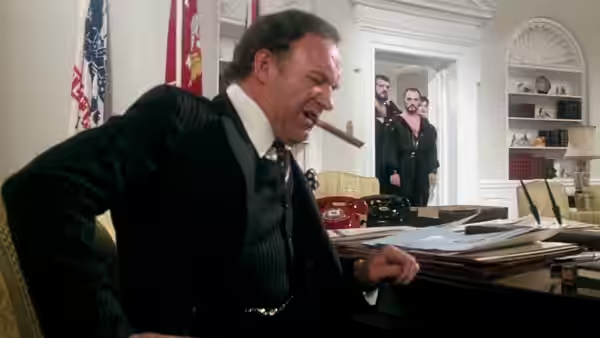
Gene Hackman’s Lex Luthor escapes prison early and spends the rest of the film offering himself to whoever looks like winning. Hackman plays him as a salesman who has found a client he is slightly afraid of, and he seems to enjoy having less to do. Ned Beatty’s Otis is left behind at the prison, which is a loss. Valerie Perrine’s Eve Teschmacher gets a balloon and not much else.
Then there is the comedy, and the comedy is where Lester and the film part company. Two cinematographers are credited. Geoffrey Unsworth’s footage has the soft, gauzy glow of the first film; Robert Paynter’s is harder and flatter, and John Victor Smith’s cutting puts the two side by side within single scenes. The long fight through the streets of Metropolis keeps cutting away from the Kryptonians to passers-by being blown along the pavement and a man on roller skates. Each gag is cheerful on its own. Together they tell us not to take any of it seriously, which is the opposite of what Stamp has spent an hour persuading us to do. We were impatient, then irritated, because the three in black deserved a better fight. Ken Thorne, credited with John Williams, reworks the Williams march, and it comes back brassier and thinner.
Lester made A Hard Day’s Night and The Three Musketeers, and he has always liked a crowd and a pratfall. There the clowning was the point. Here it sits on top of a story about a man choosing between duty and a woman, and the two halves never agree about what film they are in. Donner’s Superman took its own absurdity straight. Lester keeps winking at us, and we would rather he had not.
At 127 minutes it is a little long, and the PG certificate is honest: there is nothing here a nine-year-old could not watch, though the small-town sequence may follow them to bed. See it for Stamp, for Kidder and for the Fortress, and forgive it the roller skates if you can. We mostly could.